Earlier, headaches were mostly linked to stress or lack of sleep. Today, many people are experiencing a headache after screen time, especially with increased use of phones, laptops, and digital devices.
What is interesting is that most people assume the problem is their eyes.
In reality, when patients walk into a physiotherapy clinic, the cause is rarely limited to vision.
It is usually a combination of posture, muscle fatigue, reduced movement, and visual overload acting together.
Recent research shows that a significant percentage of regular digital device users experience symptoms like headache, eye strain, and fatigue, often without recognizing the connection early (Rosenfield, 2016)
Quick Answer
Headaches after long screen time are usually caused by a combination of neck strain, eye fatigue, and lack of movement rather than just eye problems alone. Prolonged sitting, forward head posture, and continuous visual focus overload the muscles and nervous system, leading to tension or cervicogenic headaches. Simple changes like proper screen height, regular breaks, and posture correction can significantly reduce these headaches.
Key Takeaways
- Screen headaches are not just eye-related, they involve neck, posture, and brain fatigue
- Forward head posture is one of the biggest contributors to recurring headaches
- Reduced blinking and constant focus increase eye strain and discomfort
- Lack of movement leads to muscle fatigue and reduced circulation
- Painkillers only provide temporary relief and do not fix the root cause
- Regular breaks and small posture corrections can prevent chronic headaches
- Physiotherapy helps address underlying causes and long-term relief
What Actually Happens in Your Body During Long Screen Use
To understand these headaches, it helps to look at what your body is doing during screen time.
You are not just “looking at a screen.” You are holding a fixed posture, focusing your eyes at a constant distance, and processing large amounts of information continuously.
Over time, this creates stress in multiple systems at once.
The Neck Takes the First Hit
One of the most overlooked causes of headaches is the position of your head.
When you look down at a screen, your head moves forward. This may feel harmless, but the load on your neck increases significantly.
Studies have shown that as the head tilts forward, the effective weight on the cervical spine increases several times, leading to muscle overload and joint stress Falla et al., 2018
In clinical practice, this often leads to tightness in the suboccipital muscles, which are small muscles at the base of the skull.
These muscles can refer pain directly to the head, creating what is known as a cervicogenic headache.
Patients often describe it as pain starting from the neck and spreading towards the temples or behind the eyes.
Your Eyes Are Working Harder Than You Think
While posture plays a major role, the visual system is also under constant demand.
When you stare at a screen for long periods:
- Your blink rate drops significantly
- Your eyes remain focused at a fixed distance
- The tear film becomes unstable
This condition is commonly referred to as digital eye strain.
It can lead to symptoms such as:
- Headache around the forehead
- Eye fatigue
- Blurred vision
Research has shown that prolonged screen exposure contributes to these symptoms due to continuous visual demand and reduced blinking Sheppard and Wolffsohn, 2018
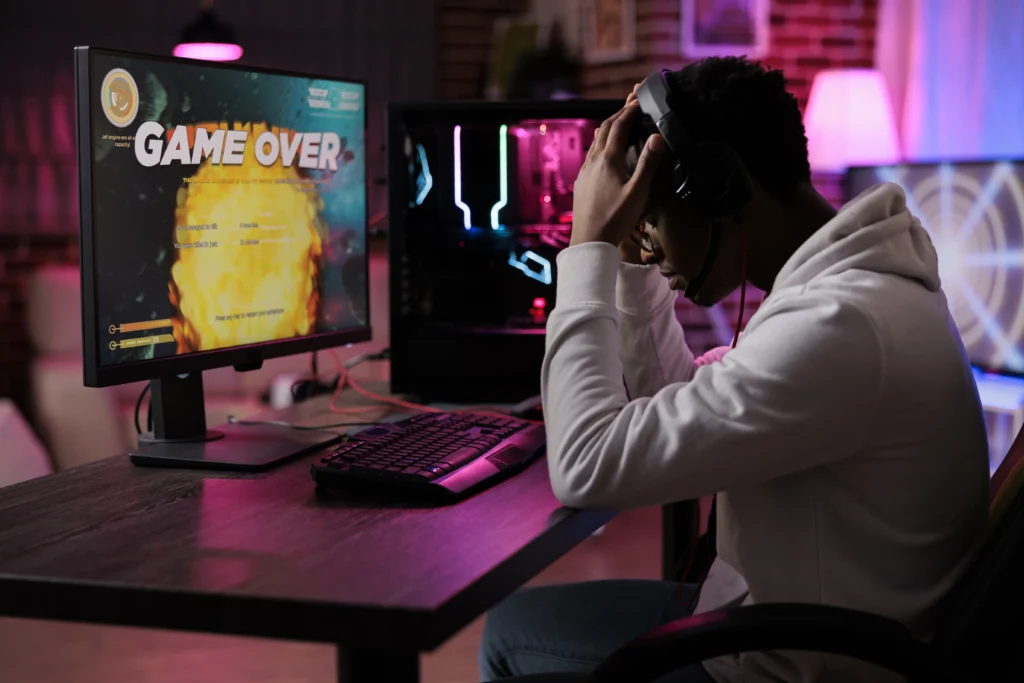
The Brain Also Gets Fatigued
This is something many people do not consider.
Working on screens is not just a physical task. It is cognitively demanding.
You are constantly reading, interpreting, and reacting to information.
This continuous mental load can lower your tolerance to discomfort and make you more sensitive to pain.
That is why headaches often feel worse towards the end of the day, even if your posture has not changed much.
Lack of Movement Is a Hidden Contributor
Your body is designed to move. When you stay in one position for a long time, circulation reduces and muscle fatigue builds up.
Over time, this leads to:
- Accumulation of metabolic waste in muscles
- Reduced oxygen supply
- Increased stiffness
All of these factors contribute to tension-type headaches.
Do You Have a Screen-Related Headache? Quick Self-Check
Ask yourself:
- Do your headaches start after 1–2 hours of screen use?
- Do you feel relief after lying down or changing posture?
- Is there stiffness in your neck or shoulders?
- Do you notice eye fatigue or dryness?
- Do headaches worsen by evening?
If you answered yes to most of these, your headache is likely related to screen use and posture rather than a serious medical issue.
Lesser Known Triggers That Most People Miss
Many patients are surprised when these factors come up during assessment.
Jaw Clenching During Work
A large number of people subconsciously clench their jaw while concentrating.
This activates the temporalis muscle, which sits on the side of your head.
Over time, this can create a dull aching pain in the temples.
Breathing Pattern Changes
When you are focused, your breathing often becomes shallow.
Instead of using the diaphragm, your body starts using neck muscles to assist breathing.
This increases tension in the neck and contributes to headaches.
Screen Switching Behavior
Constantly shifting between laptop and phone forces your eyes to repeatedly adjust focus.
This increases strain more than using a single screen continuously.
Sleep Disruption Due to Screen Exposure
Late evening screen use affects sleep quality by interfering with melatonin production.
Poor sleep is a known trigger for headaches.
Recent discussions highlight how blue light exposure can contribute to fatigue and headache patterns through sleep disruption rather than direct eye damage (Heiting, 2024)
Types of Headaches Commonly Seen with Screen Use
Understanding the type of headache helps in managing it correctly.
Tension-Type Headache
This is the most common type.
It feels like a tight band around the head and is usually linked to muscle tension and stress.
Cervicogenic Headache
This originates from the neck.
Pain typically starts at the base of the skull and may move towards the forehead or eyes.
It often worsens with neck movement or prolonged sitting.
Eye Strain Related Headache
This is felt around the eyes or forehead and is associated with visual fatigue.
Why Painkillers Provide Only Temporary Relief
Painkillers can reduce symptoms, but they do not address the underlying cause.
If the headache is due to:
- Muscle overload
- Poor posture
- Reduced movement
Then the symptoms will return once the effect of medication wears off.
This is why long term management needs a different approach.
Myths vs Facts
Myth: Screen headaches are only due to weak eyesight
Fact: Most are caused by posture and muscle strain
Myth: Blue light alone causes headaches
Fact: It mainly affects sleep and fatigue
Myth: Sitting straight all day prevents headaches
Fact: Movement is more important than posture alone
Practical Prevention Strategies
This is where small changes can make a big difference.
Set Up Your Workstation Thoughtfully
Your screen should be at or slightly below eye level.
Your back should be supported, and your feet should rest flat on the floor.
Even small adjustments can reduce strain significantly.
Quick Ergonomic Checklist
- Screen at eye level or slightly below
- Distance of about an arm’s length
- Chair supports lower back
- Feet flat on the floor
- Keyboard at elbow height
- Wrists in neutral position
Even small corrections here can reduce strain significantly.
Follow Structured Breaks Instead of Random Breaks
Taking breaks is helpful only when done consistently.
A simple method is:
- Every 30 to 40 minutes, pause for 2 minutes
- Move your neck and shoulders
- Look away from the screen
This helps reset both muscular and visual systems.
Train Your Postural Muscles
Stretching feels good, but strengthening is what creates lasting change.
Focus on:
- Deep neck flexor activation
- Shoulder blade stability
These reduce the load on your neck during daily work.
Combine Eye and Neck Relief
Instead of just looking away from the screen, combine it with movement.
For example:
- Look at a distant object
- Gently move your neck side to side
- Roll your shoulders
This approach addresses multiple causes at once.
Improve Your Breathing Pattern
Take a few moments during the day to breathe slowly through your nose and allow your abdomen to expand.
This reduces unnecessary tension in the neck muscles.
Stay Consistently Hydrated
Rather than drinking large amounts at once, maintain steady hydration throughout the day.
Even mild dehydration can increase fatigue and headache frequency.
Common Mistakes That Make Screen Headaches Worse
- Sitting in a “comfortable” but slouched position
- Taking breaks but continuing to use the phone
- Raising the laptop without adjusting chair height
- Ignoring early neck stiffness
- Relying only on painkillers
- Working for long hours without moving
These habits seem small but contribute significantly over time.
A Simple Daily Routine That Works
Morning:
- Gentle neck and shoulder mobility exercises
During work:
- Regular movement breaks
- Maintain screen alignment
Evening:
- Reduce screen exposure before sleep
- Light stretching to release tension
When You Should Seek Help
Most screen related headaches are manageable, but some signs should not be ignored.
Consult a professional if:
- Headaches occur daily
- Pain radiates to the arms
- You experience numbness or dizziness
- Symptoms are worsening over time
Red Flag Symptoms to Watch For
Seek immediate medical attention if you notice:
- Sudden severe headache unlike previous ones
- Vision loss or double vision
- Slurred speech or weakness
- Headache after injury
- Persistent vomiting
These symptoms are not typical of screen-related headaches.
A Common Case Seen in Practice
A 28-year-old IT professional came in with daily headaches for three months.
He believed it was due to eye power and had already changed his glasses.
On assessment, the real issue was:
- Forward head posture
- Tight neck muscles
- No movement breaks during work
After two weeks of posture correction, simple exercises, and scheduled breaks, his headaches reduced significantly without any medication.
This pattern is more common than most people think.
Final Thoughts from a Physiotherapist
A headache after screen time for long is not just a random occurrence.
It is your body’s way of telling you that something is out of balance.
It may be your posture, your movement habits, your visual load, or a combination of all three.
The good part is that these headaches are often reversible with the right approach.
Small, consistent changes can prevent them from becoming a long term problem.
Frequently Asked Questions
1. Why do I get headaches after using my laptop for long hours?
Headaches usually occur due to a combination of neck strain, eye fatigue, and prolonged sitting without movement. It is rarely caused by just eye problems alone.
2. How can I quickly relieve a screen-related headache?
Taking a short break, stretching your neck and shoulders, and resting your eyes can provide quick relief. Hydration and proper posture also help.
3. Are screen headaches a sign of weak eyesight?
Not always. In many cases, the main cause is poor posture and muscle strain rather than vision issues.
4. How often should I take breaks while working on a screen?
It is recommended to take a short break every 30 to 40 minutes to reduce strain on your eyes and muscles.
5. Can physiotherapy permanently fix these headaches?
Physiotherapy can significantly reduce or eliminate headaches by correcting posture, improving muscle strength, and restoring movement patterns.
6. Does blue light directly cause headaches?
Blue light mainly affects sleep quality, which can indirectly contribute to headaches rather than causing them directly.
7. Why do headaches get worse by evening?
This happens due to accumulated muscle fatigue, eye strain, and mental overload throughout the day.
Stay tuned with us for more health related topics.
Follow us on LinkedIn and Instagram for more.
More Read


Medical Disclaimer!
This article has been reviewed and written under the guidance of our Head Physiotherapist, Dr. Kruti Raj (PT, MUHS,CPT,CMPT). The information shared is intended for educational purposes only and should not be considered a substitute for personalized medical advice, diagnosis, or treatment.
Please consult us or any other qualified healthcare professional before beginning any exercise program, especially if you are experiencing pain, recovering from injury, or managing a medical condition.