
vcure long logo vcure long logo
  • Physiotherapy
  • Health & Fitness
  • News
Reading: All you need to know about breastfeeding- Part 2
V CureV Cure
Font ResizerAa
Search
Follow US
© Vcure Healthcare 2025. All Rights Reserved.
Child & Mother Carewomens health

All you need to know about breastfeeding- Part 2

VCure Healthcare
Last updated: May 11, 2022 8:06 PM
By VCure Healthcare
3 Min Read
Share
SHARE

Attachment during breastfeeding-

A baby needs to be well attached, to the womans body to stimulate and also to remove milk from the breast. A good attachment is also essential to ensure an adequate supply and a good flow of milk.

Important points to note-

  1. Hold your baby close.
  2. Let your baby’s head tip back.
  3. When your baby is attached properly, their chin will be pressed onto your breast.
  4. Your baby’s nose should be clear for easy breathing.
  5. In the correct position, your baby will be able swallow and also breathe comfortably.
  6. If your baby’s nose appears to be blocked, move their bottom closer to you. This will thus create a head tilt.
  7. Their cheeks will appear fuller.

Positioning

Position of the mother

The mother can sit or be lying down, or standing. She needs to be relaxed and also comfortable. It is essential that the back Is not strained. If sitting use a pillow for support, and she should not be leaning forward while holding the baby.

Position of the baby

  • The baby’s body should be straight. Also the baby’s head can be slightly extended at the neck.
  • The baby’s body should be close to the mother.
  • His or her whole body should be supported by pillows or also on mothers lap.

Some of the positions that can be used for breastfeeding:

  1. Laid back position: Shift your hips forward to create a semi-reclined position.You can also use pillows and cushions to provide support wherever you need it.

2. Cradle: Mother hold the head of the baby on the elbow of the same upper extremity from the breast in which she is feeding, while the buttock of the baby supported on the hand of the mother. It is recommended that the mother puts pillows behind her back and also under the elbow

3. Cross- cradle: The mother should sit upright and put pillows behind her back. If the infant is feeding at the left breast, the mother holds the infant with the right hand and vice versa.

4. Side-lying:

Mother and the baby lie down facing each other.(your neck and back should be supported.) Take the arm that you’re lying on to support your baby. You can use a pillow behind your baby’s back for support.

This position is usually not advisable as milk can enter into the ear.
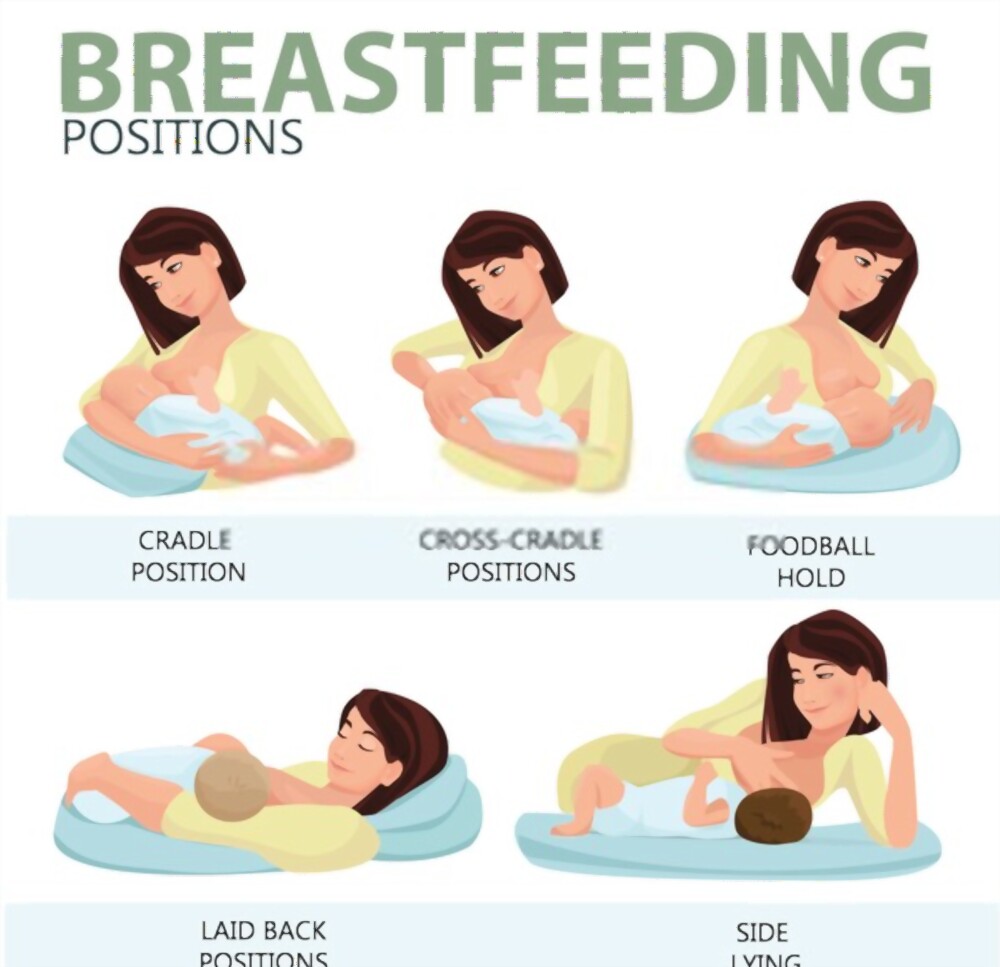
feeding- vcurehealthcare

Also read- https://vcurehealthcare.com/know-how-to-exercise-for-a-healthy-pelvic-floor/

You Might Also Like

What Are Auto-Immune Diseases? Know Everything About Them

Know The Fastest Way to Earn Your Patient’s Trust Without Talking!

Hydration During Pregnancy: How Much Water Do You Really Need?

20-Week Anatomy Scan: What Doctors Look For

Do You Suffer Hand And Wrist Pain Due to Excessive Typing?

TAGGED:vcurehealthcare
Share This Article
Facebook Email Copy Link Print

Latest

Fetal Echocardiography
Fetal Echocardiography: A Guide to Baby Heart Scan During Pregnancy
Physiotherapy womens health
Placenta Check During Pregnancy
Placenta Check During Pregnancy: What Doctors Look For and Why
Physiotherapy womens health
Fetal Heart Scan During Pregnancy
What Is a Fetal Heart Scan?
Physiotherapy womens health
Tests in Second Trimester of Pregnancy
Important Second Trimester Tests During Pregnancy: Week by Week
Physiotherapy womens health

More Articles

Placenta Check During Pregnancy
Physiotherapywomens health

Placenta Check During Pregnancy: What Doctors Look For and Why

By Dr. Kruti Raj (PT, MUHS, CPT, CMPT)
23 Min Read
20-Week Anatomy Scan

20-Week Anatomy Scan: What Doctors Look For

By Dr. Kruti Raj (PT, MUHS, CPT, CMPT)
Fetal Echocardiography
Physiotherapywomens health

Fetal Echocardiography: A Guide to Baby Heart Scan During Pregnancy

By Dr. Kruti Raj (PT, MUHS, CPT, CMPT)
23 Min Read
Physiotherapywomens health

What Is a Fetal Heart Scan?

For many parents, hearing the words "fetal heart scan" during their pregnancy, can trigger a mix…

By Dr. Kruti Raj (PT, MUHS, CPT, CMPT)
Physiotherapywomens health

Important Second Trimester Tests During Pregnancy: Week by Week

Tests in the second trimester of pregnancy help monitor : your baby’s growth, development, and your…

By Dr. Kruti Raj (PT, MUHS, CPT, CMPT)
Physiotherapywomens health

Anomaly Scan Explained: The Most Important Pregnancy Ultrasound

An anomaly scan in pregnancy is a detailed ultrasound that checks your baby’s growth and development…

By Dr. Kruti Raj (PT, MUHS, CPT, CMPT)
Physiotherapywomens health

Can Prenatal Tests Detect Genetic Disorders? A Complete Guide

Prenatal tests for genetic disorders help assess the chance of certain genetic or chromosomal conditions and…

By Dr. Kruti Raj (PT, MUHS, CPT, CMPT)
Physiotherapywomens health

NT Scan vs NIPT: Which Pregnancy Test Is Better?

NT scan vs NIPT is a common question among expecting parents, because both are prenatal screening…

By Dr. Kruti Raj (PT, MUHS, CPT, CMPT)
Physiotherapywomens health

High Risk Pregnancy Screening: Important Tests by Trimester

High risk pregnancy tests help doctors closely monitor the health of both mother and baby and…

By Dr. Kruti Raj (PT, MUHS, CPT, CMPT)
V Cure

Vcure Healthcare is All-in-One integrated Healthcare platform which helps to better manage chronic illnesses, prescription management & creates a continuum of care.

Categories

  • Physiotherapy
  • Health & Fitness
  • Child & Mother Care
  • Mental Health
  • Lifestyle
  • Diet & Nutrition
  • womens health
  • healthcare news

Quick Links

  • About Us
  • Contact

© Vcure Healthcare 2025. All Rights Reserved.

Welcome Back!

Sign in to your account

Username or Email Address
Password

Lost your password?

Not a member? Sign Up