Normal hCG levels in early pregnancy can vary widely, but they provide important clues about early pregnancy development and progression.
A positive pregnancy test is exciting.
But for many women, the excitement is quickly followed by a blood test report showing a number they have never paid attention to before.
hCG: 75 mIU/mL
hCG: 1,250 mIU/mL
hCG: 8,400 mIU/mL
Suddenly, the internet is full of questions.
Is my hCG too low?
Should it be higher?
Does a high hCG level mean twins?
Should hCG double every two days?
What if my numbers are not increasing fast enough?
Quick Answer
hCG (human chorionic gonadotropin) is the hormone that pregnancy tests detect. In early pregnancy, hCG levels usually rise rapidly, but there is a wide range of normal values. Doctors often pay more attention to how hCG changes over time rather than a single test result. A low or high hCG value does not automatically mean there is a problem.
As a women’s health physiotherapist, I often meet women who become extremely anxious while waiting for repeat blood tests.
Many compare their hCG values with friends, online forums, or pregnancy calculators.
The truth is that hCG is helpful, but it is only one piece of the puzzle.
A single number rarely tells the whole story.
Understanding what hCG does and how doctors use it can make the early weeks of pregnancy feel much less overwhelming.
Key Takeaways
- hCG stands for human chorionic gonadotropin, the pregnancy hormone.
- Pregnancy tests detect hCG after implantation occurs.
- Normal hCG levels vary widely between healthy pregnancies.
- A single hCG value rarely tells the whole story.
- Doctors often focus on hCG trends rather than one blood test result.
- Low hCG levels do not always mean a pregnancy problem.
- High hCG levels do not automatically mean twins.
- hCG levels generally rise rapidly during early pregnancy and peak during the first trimester.
- Home pregnancy tests detect hCG but do not measure the exact amount.
- Prenatal care involves much more than laboratory numbers alone.
What Is hCG?
hCG stands for human chorionic gonadotropin.
It is often called the pregnancy hormone because pregnancy tests detect its presence.
Where Does hCG Come From?
After a fertilized egg implants into the uterus, specialized pregnancy tissues begin producing hCG.
Interestingly, hCG is not produced by the baby itself.
It is produced by cells that later become part of the placenta. (Betz et al. 2025)
Why Is hCG Important?
During early pregnancy, hCG helps support hormonal processes that allow the pregnancy to continue developing.
Without hCG, pregnancy tests would remain negative.
When Does The Body Start Producing hCG?
The body does not produce hCG immediately after fertilization.
Implantation Happens First
After fertilization, the embryo travels toward the uterus.
Once implantation occurs, hCG production begins.
Why Timing Matters
This explains why testing too early may produce a negative result.
The body simply may not have produced enough hCG yet.
Every Pregnancy Is Different
The timing of implantation varies slightly from one woman to another.
This is one reason hCG levels differ between pregnancies.
What Does hCG Do During Pregnancy?
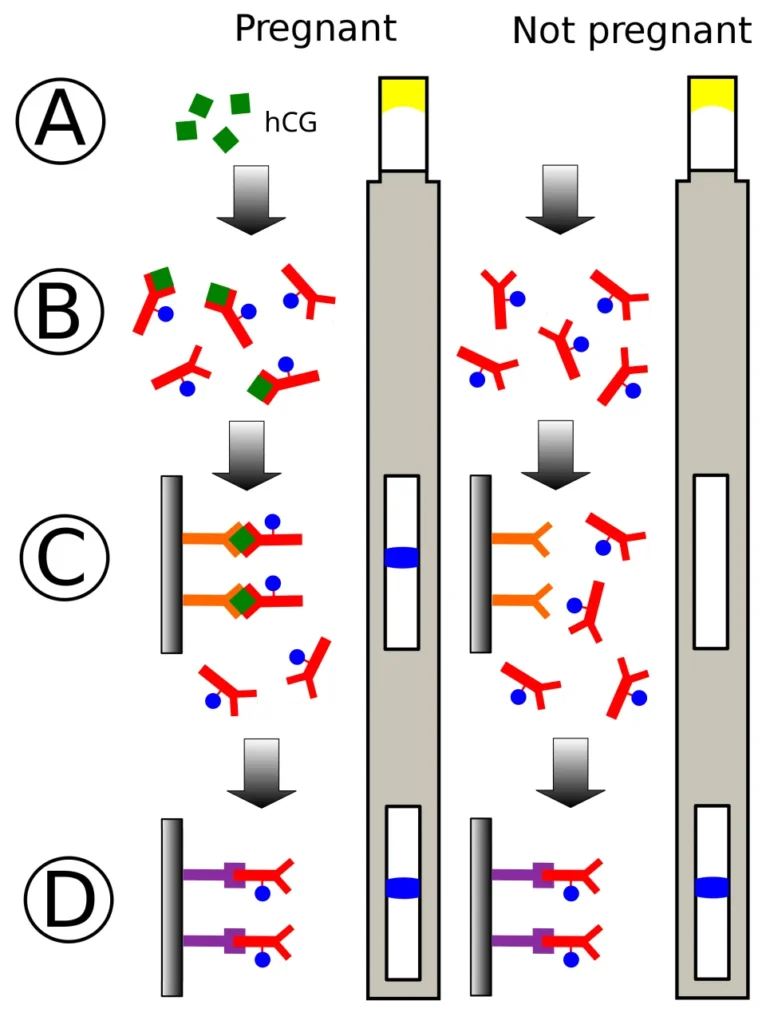
Many people know hCG as a laboratory number.
It actually plays an important biological role.
Supporting Early Pregnancy
hCG helps maintain hormonal conditions needed during the early weeks.
Helping The Placenta Develop
The hormone supports processes that are important while the placenta develops.
Why Symptoms May Appear
Rising hCG levels are thought to contribute to some common early pregnancy symptoms, including nausea.
However, symptoms vary greatly between women.
Understanding Normal hCG Levels
One of the biggest surprises for expecting mothers is how widely hCG levels can vary.
There Is No Single Perfect Number
Two healthy pregnancies can have very different hCG values.
For example, one woman may have an hCG level of 800 while another has 2,000 at a similar stage.
Both pregnancies may be completely normal.
Doctors Usually Consider More Than One Result
Healthcare providers often look at:
- Pregnancy timing
- Symptoms
- Ultrasound findings
- Changes in hCG over time
rather than focusing on a single number.
Avoid Comparing Numbers Online
Online forums often create unnecessary stress because every pregnancy develops differently.
Why hCG Numbers Vary Between Women
Several factors influence hCG levels.
Implantation Timing
A small difference in implantation timing can change hCG values significantly.
Pregnancy Dating
The estimated pregnancy week may not be exact.
Even a few days can make a noticeable difference.
Individual Variation
Just as people have different heights and heart rates, pregnancies naturally have different hCG patterns.
Should hCG Double Every 48 Hours?
This is one of the most common pregnancy myths.
The General Rule
In very early pregnancy, hCG often rises rapidly.
Many healthy pregnancies show substantial increases over approximately two days.
It Is Not A Perfect Rule
Not every healthy pregnancy follows exactly the same pattern.
The rate of increase can vary.
Trends Matter More Than One Number
Doctors are usually more interested in how hCG changes over time than in one isolated result. (Malpani Infertility Clinic)
hCG Facts at a Glance
hCG begins rising after implantation.
Blood tests can measure exact hCG levels.
Home pregnancy tests only detect hCG.
Doctors often care more about trends than one number.
hCG naturally peaks during the first trimester.
Normal hCG values vary greatly between pregnancies.
What Low hCG Levels May Mean
Seeing the word “low” on a laboratory report can be frightening.
Low Does Not Always Mean Something Is Wrong
A lower hCG value may simply mean:
- Pregnancy is earlier than expected.
- Implantation occurred later.
- Dating calculations are slightly different.
Doctors Look At The Whole Picture
Symptoms, repeat blood tests, and ultrasound findings all help provide context.
Avoid Jumping To Conclusions
A single low result rarely provides enough information on its own.
What High hCG Levels May Mean
High hCG levels can also cause anxiety.
Higher Does Not Always Mean Better
Many women assume a very high hCG value means a healthier pregnancy.
That is not necessarily true.
Why hCG May Be Higher
Several factors may contribute to higher values, including natural variation.
One Number Is Not Enough
Doctors rarely make decisions based on one elevated hCG result alone.
Can hCG Levels Predict Twins?
This is a popular question.
Twins May Have Higher hCG Levels
Some twin pregnancies have higher hCG values.
But hCG Cannot Confirm Twins
Many singleton pregnancies also have high hCG levels.
The only reliable way to confirm twins is through ultrasound.
Do Not Rely On Internet Calculators
Online calculators cannot accurately predict multiple pregnancies.
Did You Know?
Many people believe that very high hCG levels always mean twins. In reality, healthy singleton pregnancies can also have high hCG values. Ultrasound, not hCG, is the most reliable way to confirm a multiple pregnancy.
When Do hCG Levels Peak?
hCG does not continue increasing throughout the entire pregnancy. (Konrad et al. 2007)
The Peak Usually Occurs During The First Trimester
Levels generally rise rapidly during early pregnancy.
Later, they naturally level off and begin to decline.
This Is Normal
Many women become worried when they learn hCG is no longer rising.
This is a normal part of pregnancy physiology.
Why Doctors Monitor hCG Trends
The pattern of hCG change often provides more useful information than a single value.
Repeat Blood Tests
Healthcare providers may recommend repeating blood work after a short interval.
Combining Information
Doctors may use:
- hCG trends
- Symptoms
- Physical examination
- Ultrasound findings
to better understand the pregnancy.
Pregnancy Is More Than A Number
Laboratory results are only one part of prenatal care.
Can Home Pregnancy Tests Measure hCG Levels?
Many women assume that a darker line means a higher hCG level.
Home Tests Detect hCG
They do not measure the exact amount.
Line Darkness Is Not Reliable
The intensity of the line can vary for many reasons.
It should not be used to estimate hormone levels.
Blood Tests Measure hCG
Only blood tests can determine the exact amount of hCG circulating in the body.
A Physiotherapist’s Advice For The Waiting Period
Waiting for repeat blood tests can be emotionally exhausting.
Stop Comparing Your Numbers
Every pregnancy follows its own path.
Focus On What You Can Control
Eat well.
Stay hydrated.
Rest when needed.
Move your body gently.
Limit Internet Searching
Looking at thousands of other people’s hCG results often increases anxiety.
Breathe
Simple breathing exercises and light physical activity can help manage stress during uncertain moments.
Physiotherapist’s Advice
Waiting for repeat hCG tests can be emotionally exhausting. Focus on what you can control by staying hydrated, getting enough rest, eating balanced meals, and engaging in gentle movement. Avoid comparing your hCG numbers with online forums because every pregnancy develops differently.
When To Contact Your Healthcare Provider
Always seek professional advice if you experience:
- Heavy bleeding
- Severe abdominal pain
- Significant one-sided pain
- Severe dizziness
- Fainting
- Any symptom that feels unusual or concerning
Never rely solely on hCG values to judge your pregnancy.
🔍 hCG Myths vs Facts
❌ Myth: There is one perfect hCG number for every pregnancy.
✅ Fact: Healthy pregnancies can have very different hCG values.
❌ Myth: High hCG always means twins.
✅ Fact: Only an ultrasound can reliably confirm a multiple pregnancy.
❌ Myth: A single low hCG result always means miscarriage.
✅ Fact: Doctors usually consider repeat blood tests, symptoms, and ultrasound findings before drawing conclusions.
Final Thoughts
Early pregnancy is filled with anticipation.
Waiting for blood test results can make every number feel incredibly important.
As a physiotherapist, I encourage women to remember that hCG is a helpful tool, but it is not a report card for your pregnancy.
Your body is adapting.
The placenta is developing.
Hormones are changing.
A single laboratory value cannot capture everything that is happening.
Healthcare providers look at the complete picture, including your symptoms, physical health, ultrasound findings, and the pattern of hCG changes over time.
Try not to compare your journey with someone else’s.
Your pregnancy is unique.
Your numbers are unique.
And in many cases,
the best thing you can do during the waiting period is care for yourself, trust the process, and allow your healthcare team to guide you through the next steps.
Sometimes the healthiest approach is not chasing the perfect hCG number but understanding that pregnancy is about much more than a laboratory result.
Frequently Asked Questions About hCG Levels in Early Pregnancy
What is hCG?
hCG stands for human chorionic gonadotropin, a hormone produced during pregnancy that is detected by pregnancy tests.
What is a normal hCG level in early pregnancy?
Normal hCG levels vary widely, and healthy pregnancies can have very different values.
Should hCG double every 48 hours?
Many healthy pregnancies show rapid increases, but the exact rate can vary. Doctors often look at trends rather than a single rule.
Does low hCG always mean miscarriage?
No. Low hCG can occur because pregnancy is earlier than expected or due to normal individual variation.
Do high hCG levels mean twins?
Not always. Some twin pregnancies have higher hCG levels, but many singleton pregnancies do as well.
Can a home pregnancy test measure hCG levels?
No. Home tests only detect the presence of hCG, while blood tests can measure the exact amount.
When do hCG levels reach their highest point?
hCG levels usually peak toward the end of the first trimester and then naturally decline.
Should I worry if my hCG numbers are different from someone else’s?
No. Every pregnancy is unique, and comparing hCG values with others can create unnecessary anxiety.
Stay tuned with us for more health related topics.
Follow us on LinkedIn and Instagram for more.
More Read


Medical Disclaimer!
This article has been reviewed and written under the guidance of our Head Physiotherapist, Dr. Kruti Raj (PT, MUHS,CPT,CMPT). The information shared is intended for educational purposes only and should not be considered a substitute for personalized medical advice, diagnosis, or treatment.
Please consult us or any other qualified healthcare professional before beginning any exercise program, especially if you are experiencing pain, recovering from injury, or managing a medical condition.