


Pain at the front of the hip can make running, climbing stairs, lifting the knee or kicking a ball uncomfortable.
Quick Answer: Rectus Femoris Tendinopathy
Rectus femoris tendinopathy is a tendon-related condition that may cause pain at the front of the hip or upper thigh. The rectus femoris muscle helps lift the thigh and straighten the knee, making it important during running, sprinting and kicking.
Common symptoms: Pain when lifting the knee, kicking, sprinting or straightening the knee against resistance.
Physiotherapy: May involve activity modification, progressive strengthening and a gradual return to sport.
Important: Sudden severe pain, marked bruising or difficulty walking may indicate a significant muscle or tendon injury and requires prompt medical assessment.
One possible cause is rectus femoris tendinopathy, a condition affecting the tendon of a muscle that helps move both the hip and knee.
Although this problem is associated with activities such as sprinting and kicking, not all front hip pain comes from a tendon.
Identifying the affected structure and following an appropriate physiotherapy program can help guide recovery.
Key Takeaways
- Rectus femoris tendinopathy is one possible cause of pain at the front of the hip or upper thigh.
- Running, sprinting, kicking and sudden increases in training load may contribute to symptoms.
- Hip joint problems, iliopsoas-related pain and muscle strains can produce similar symptoms.
- Physiotherapy may include activity modification and progressive hip and quadriceps strengthening.
- Stretching should be modified if it reproduces or aggravates the pain.
- Return to sport should be guided by strength, function and tolerance of sport-specific movements rather than a fixed timeline.
- Sudden severe pain, significant bruising or difficulty bearing weight warrants prompt assessment.
What Is Rectus Femoris Tendinopathy?
The rectus femoris is one of the four quadriceps muscles at the front of the thigh. Unlike the other three quadriceps muscles, it crosses both the hip and knee joints. It helps lift the thigh towards the body, known as hip flexion, and straighten the knee.
The muscle attaches to the pelvis through proximal tendons and contributes to the quadriceps tendon mechanism near the knee. Rectus femoris tendinopathy refers to tendon-related pain and impaired function, often associated with repeated loading.
The condition is different from an acute muscle strain, tendon tear or avulsion. These injuries can occur during forceful kicking or sprinting and may require a different assessment and treatment approach. (Pesquer et al., 2016)
What Causes Rectus Femoris Tendon Pain?
The rectus femoris works during movements that involve hip flexion and knee extension. When the demands placed on the muscle exceed its current capacity, symptoms may develop.
Possible contributing factors include:
- Sudden increases in training: Increasing sprinting distance, speed, kicking volume or workout intensity too quickly.
- Repetitive high-force movements: Frequent kicking, acceleration, jumping and explosive sports activities.
- Returning after a break: Resuming previous training loads before rebuilding strength and conditioning.
- Insufficient recovery: Repeated demanding sessions without adequate recovery time.
- Previous injury: An earlier rectus femoris strain or tendon injury may affect tolerance to subsequent loading.
Rectus femoris injuries are well recognized in sports involving sprinting and kicking. However, these risk factors do not prove that the tendon is damaged in an individual case. (Mendiguchia et al., 2013)

Symptoms of Rectus Femoris Tendinopathy
Symptoms depend on the location and severity of the problem. Proximal tendon-related pain may be felt near the front of the pelvis or upper thigh.
Possible symptoms include:
- Pain at the front of the hip or upper thigh.
- Discomfort when lifting the knee against resistance.
- Pain during sprinting, kicking or jumping.
- Tenderness around the upper attachment of the muscle.
- Pain when straightening the knee against resistance.
- Reduced tolerance for exercise or repeated leg movements.
Symptoms may initially occur only during demanding activities. If the aggravating load continues, discomfort may begin to interfere with everyday movements.
These symptoms are not specific to rectus femoris tendinopathy. Hip joint disorders, iliopsoas-related pain and muscle injuries can produce similar complaints.
Tendinopathy, Muscle Strain or Hip Joint Pain?
Understanding the differences between these conditions helps guide appropriate treatment.
Rectus femoris tendinopathy: Symptoms may develop gradually and become noticeable during repeated or resisted hip flexion and knee extension.
Rectus femoris strain or tear: Pain often starts suddenly during a forceful movement. More significant injuries may cause bruising, swelling, weakness or difficulty walking.
Iliopsoas-related pain: This involves another major hip flexor and may cause pain deep in the groin or at the front of the hip. Some people also experience snapping during movement.
Hip joint problems: Joint-related conditions may cause deep groin pain, restricted movement or discomfort during hip rotation.
Bone stress injury: Pain that progressively worsens with weight-bearing, particularly after a rapid increase in exercise, needs assessment to rule out a bone stress injury.
A sudden painful episode accompanied by a popping sensation or substantial weakness should not automatically be treated as tendinopathy. Proximal tendon tears and avulsion injuries can be significant. (Begum et al., 2020)
How Is Rectus Femoris Tendinopathy Diagnosed?
Physiotherapy Assessment
A physiotherapist will ask when the pain started, which movements aggravate it and whether there has been a recent change in training or activity.
The examination may include:
- Movement assessment: Observing walking, squatting, stepping or other relevant movements.
- Strength testing: Assessing hip flexion and knee extension, including whether resistance reproduces familiar symptoms.
- Range-of-motion testing: Checking hip and knee mobility while monitoring discomfort.
- Palpation: Examining the relevant muscle and tendon region for tenderness.
- Functional assessment: Evaluating activities relevant to daily life, work or sport.
No single physical test reliably confirms rectus femoris tendinopathy in every patient. The physiotherapist combines the history and examination findings to identify the likely source of pain and determine whether further medical assessment is necessary.
Is an MRI or Ultrasound Needed?
Imaging is not always necessary when symptoms are mild and the clinical presentation is straightforward.
Ultrasound or magnetic resonance imaging (MRI) may be considered when the diagnosis is uncertain, symptoms persist or a significant tear is suspected. MRI can help assess the location and extent of muscle and tendon injuries.
Imaging findings must be interpreted alongside symptoms and examination results. Clinical and functional assessment remains important when deciding how to manage an injury and when to return to sport. (Crema et al., 2015)
Physiotherapy Treatment for Rectus Femoris Tendinopathy
Physiotherapy aims to manage aggravating loads, restore muscle capacity and help the person return safely to everyday activities or sport.
High-quality research specifically establishing an optimal rehabilitation protocol for isolated chronic rectus femoris tendinopathy is limited. Treatment should therefore be individualized rather than based on a single fixed exercise program.
1. Modify Painful Activities
The physiotherapist may initially recommend reducing activities that repeatedly provoke symptoms, such as sprinting, forceful kicking, jumping or heavily resisted hip flexion.
Complete rest is not automatically necessary for a mild, non-traumatic tendon problem. Comfortable daily movement and suitable low-irritation activities may continue, depending on the assessment.
The aim is to reduce excessive irritation without unnecessarily losing strength and conditioning.
2. Reintroduce Controlled Muscle Loading
When symptoms are manageable, rehabilitation may begin with gentle, controlled muscle contractions.
Depending on the examination, these may include:
- Gentle quadriceps isometric contractions.
- Light resisted hip flexion within a comfortable range.
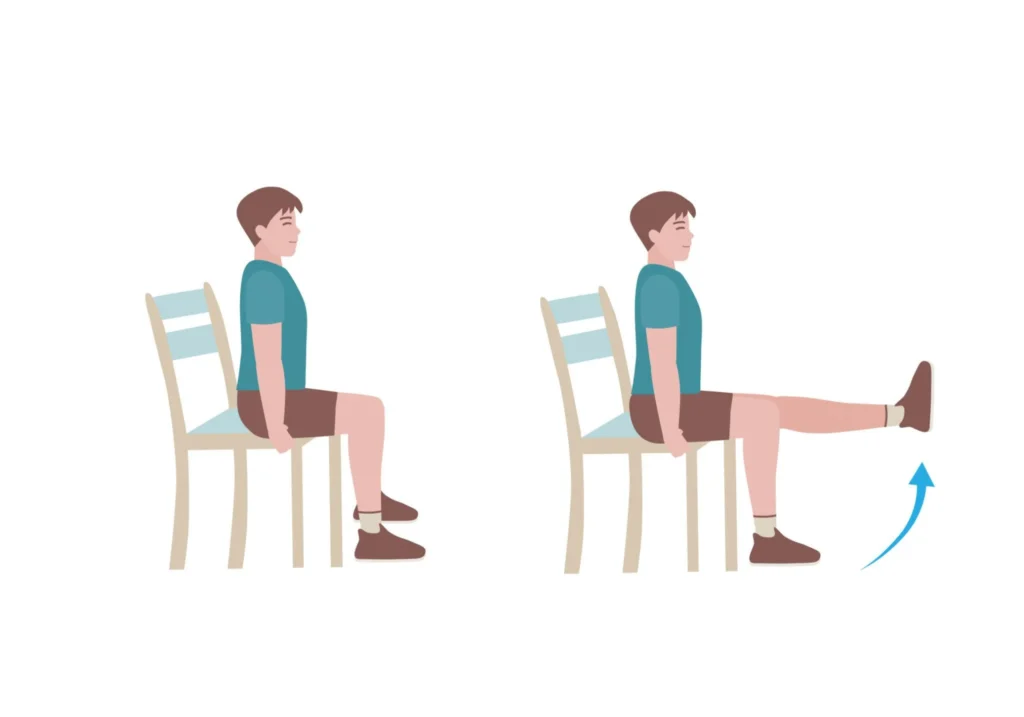
- Controlled knee extension with low resistance.
The starting position matters because the rectus femoris crosses both the hip and knee. An exercise that feels comfortable in one position may provoke symptoms in another.
3. Progress to Strengthening Exercises
As strength and symptom tolerance improve, a physiotherapist may introduce more challenging exercises, such as:
- Straight-leg raises, if tolerated.
- Seated knee extensions.
- Standing hip flexion against resistance.
- Controlled squats and step-ups.
- Progressive resistance training for the quadriceps and hip muscles.
These are examples, not exercises that everyone should perform. Selection depends on the diagnosis, pain response, strength deficits and functional goals.
Progress the difficulty gradually. If symptoms become significantly worse or remain aggravated after exercise, the load may need to be adjusted.
4. Rebuild Running and Sports Performance
People returning to sport may need a later rehabilitation phase that prepares the rectus femoris for faster and more forceful movements.
Depending on the sport and injury, this may involve progressive jogging, acceleration, changes of direction, jumping and kicking drills.
Return to sport should depend on restored strength, functional movement, tolerance of sport-specific tasks and the response to training. A fixed recovery timeline cannot be applied to every case.
A systematic review of proximal rectus femoris injuries found variation in injury patterns and reported management strategies. This supports individualized assessment, but its findings should not be interpreted as proof of one best protocol for chronic tendinopathy. (Bogwasi et al., 2022)
Should You Stretch the Rectus Femoris?
Stretching is not always the first priority when the tendon or nearby tissues are painful.
The rectus femoris is stretched by extending the hip while bending the knee. This position can place tension on the muscle and its proximal attachment.
If the movement reproduces sharp or familiar pain at the front of the hip, aggressive stretching may aggravate symptoms. A physiotherapist can determine whether gentle mobility work is appropriate and when it should be introduced.
Avoid forcing a stretch or repeatedly testing a painful position. Appropriate load management and progressive strengthening may be more important than trying to increase flexibility.
Rectus Femoris Tendinopathy: Myth vs Fact
Myth: All front hip pain is caused by tendinopathy.
Fact: Hip joint conditions, iliopsoas-related pain, muscle strains and other problems can cause similar symptoms. Assessment helps identify the likely source.
Myth: Complete rest is always necessary.
Fact: For an uncomplicated tendon problem, modifying painful activities while maintaining suitable movement may be more useful than stopping all activity. Significant injuries require individual assessment.
Myth: Stretching harder will speed up recovery.
Fact: Aggressive stretching can aggravate symptoms. Stretching should be adjusted to the person’s presentation and tolerance.
Myth: Everyone recovers in the same amount of time.
Fact: Recovery depends on the diagnosis, injury severity, duration of symptoms and response to rehabilitation.
How Long Does Recovery Take?
Recovery varies according to the diagnosis, injury severity, symptom duration, activity demands and response to rehabilitation.
A mild, non-traumatic tendon problem may improve with activity modification and progressive strengthening. Persistent symptoms may require a longer rehabilitation period. A significant tendon tear or avulsion is a different injury and may need specialist treatment.
Instead of relying on a fixed number of days, monitor improvements in pain, strength, movement and tolerance for daily or sporting activities.
If symptoms are not improving despite appropriate adjustments, reassessment can help identify an alternative diagnosis or a need to change the treatment plan.
When Should You Seek Medical Attention?
Arrange a clinical assessment if front hip pain persists, repeatedly returns or interferes with walking and daily activities.
Seek urgent medical assessment if you experience:
- Sudden severe pain after sprinting, kicking or jumping.
- A popping sensation followed by substantial weakness.
- Significant swelling or bruising around the upper thigh.
- Difficulty bearing weight or walking.
- Severe pain following a fall or other trauma.
- Fever, redness or unusual warmth around the painful area.
- Deep groin pain that worsens with weight-bearing.
These symptoms may indicate a significant muscle or tendon injury, bone stress injury or another condition that should be assessed before beginning a strengthening program.
A Lesser-Known Fact About the Rectus Femoris
The rectus femoris is the only quadriceps muscle that crosses both the hip and knee joints. This allows it to contribute to hip flexion as well as knee extension.
Consequently, the position of both joints influences the demands placed on the muscle. Rehabilitation that focuses only on knee extension may not fully prepare someone for activities involving powerful hip flexion, such as sprinting or kicking.
This is why physiotherapy should progress from controlled loading towards the specific movements required for daily life or sport.
Final Thoughts
Rectus femoris tendinopathy is one possible cause of pain at the front of the hip, particularly when symptoms are associated with repeated loading, sprinting or kicking.
However, similar pain can result from a muscle strain, tendon tear, iliopsoas-related problem or hip joint condition.
Physiotherapy can help by identifying the likely source of symptoms, modifying aggravating activities and progressively rebuilding strength and movement tolerance. The treatment plan should match the diagnosis and the person’s functional goals.
Frequently Asked Questions
1. What does rectus femoris tendinopathy feel like?
It may cause pain at the front of the hip or upper thigh, particularly during running, kicking, lifting the knee or straightening the knee against resistance. These symptoms can also occur with other conditions.
2. Can rectus femoris tendinopathy cause groin pain?
Yes. Problems involving the proximal rectus femoris tendon may cause pain near the front of the hip or upper thigh, sometimes close to the groin. Other possible causes should be considered during assessment.
3. Can physiotherapy help rectus femoris tendinopathy?
Physiotherapy may help through activity modification, progressive strengthening and a gradual return to demanding movements. Treatment should be tailored to the diagnosis and individual symptoms.
4. Should I stretch with rectus femoris tendinopathy?
Not necessarily. Stretching that reproduces pain at the front of the hip may aggravate symptoms. A physiotherapist can advise whether gentle stretching is appropriate.
5. How long does rectus femoris tendinopathy take to recover?
Recovery varies with the diagnosis, severity, duration of symptoms and activity demands. Persistent symptoms or a significant tendon injury may require a longer, individually planned rehabilitation period.
6. When should I see a doctor for front hip pain?
Seek prompt assessment for persistent pain. Sudden severe pain, significant bruising, marked weakness or difficulty bearing weight warrants urgent medical evaluation.
Final Thoughts
Rectus femoris tendinopathy is one possible cause of pain at the front of the hip, particularly during running, sprinting and kicking. However, similar symptoms can arise from muscle injuries, hip joint problems or other hip flexor conditions.
A physiotherapist can help identify the likely source of symptoms, adjust aggravating activities and plan progressive strengthening. Seek medical assessment when pain is severe, persistent or accompanied by significant weakness or difficulty walking.
Medical Disclaimer
This article is intended for general educational purposes only and does not replace professional medical advice, diagnosis or treatment. Front hip pain can have several causes, and exercises suitable for one condition may not be appropriate for another. Consult a qualified healthcare professional for an individual assessment. Seek urgent medical care for sudden severe pain, significant bruising, marked weakness or difficulty bearing weight.


