


If you’re searching for brachial plexus injury treatment without surgery, the right approach can help your nerves recover.
But the wrong one can delay healing.
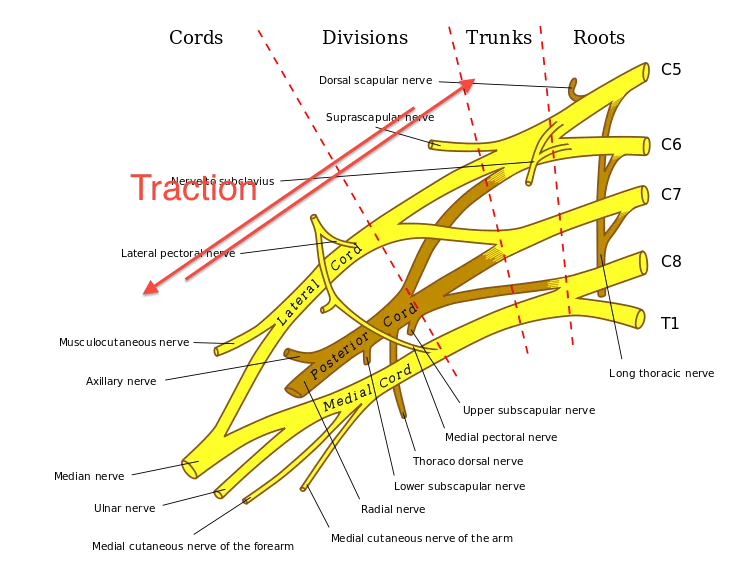
In simple terms, this is a nerve injury affecting the connection between your neck and arm.
These nerves come from the cervical spine and control:
- Movement of shoulder, elbow, wrist, and hand
- Sensation across the upper limb
When this network is damaged, the arm does not respond the way it should.
In clinic, patients rarely say “nerve injury.” They say:
- “My arm feels heavy”
- “It doesn’t listen to me”
- “I can’t trust my grip”
That tells you everything.
Quick Answer
Brachial plexus injury affects the nerves controlling your shoulder, arm, and hand. Recovery depends on injury severity, early treatment, and consistent physiotherapy. Mild injuries often recover well, while severe cases may need surgery. The most important factor is structured rehabilitation and staying consistent with it.
Key Takeaways
- Early physiotherapy improves recovery outcomes significantly
- Nerve healing is slow, so patience and consistency are essential
- Rehabilitation matters more than intensity of exercises
- Surgery is required only in severe cases or delayed recovery
- Small improvements over time indicate real progress
- Daily functional use of the arm is as important as exercises
- Avoid overtraining and follow a structured rehab plan
Why This Injury Feels So Different From Others
Unlike muscle injuries, nerve injuries are slow and unpredictable.
Nerve regeneration happens at about 1 mm per day. (Ray et al., 2019)
That means recovery is not measured in weeks.
It is measured in months and sometimes years.
Common Causes I See in Practice
1. Road Traffic Accidents
Most common in young adults, especially two-wheeler accidents. (Midha, 2019)
2. Birth-Related Injury (Erb’s Palsy)
Seen in newborns after difficult delivery.
3. Falls and Sports Injuries
Usually due to sudden traction on the neck and shoulder.
4. Less Common Causes
- Tumors
- Radiation injury
- Infections
Types of Brachial Plexus Injury
Neuropraxia
- Temporary block
- Good recovery
Axonotmesis
- Nerve damaged but structure intact
- Slower recovery
Neurotmesis
- Complete tear
- Needs surgical intervention (Seddon, 1943)
Symptoms Patients Actually Experience
This is where clinical reality matters.
Patients commonly report:
- Weakness or inability to lift the arm
- Loss of grip strength
- Burning or electric pain
- Numbness
- Shoulder instability
Over time, you may see muscle wasting. (Falla et al., 2018)
How This Injury Affects Your Daily Life
This is where patients struggle the most.
Not in the diagnosis. Not in the reports.
In daily life.
Simple things become difficult:
- Holding a cup without dropping it
- Buttoning a shirt
- Lifting a bag
- Using a phone for long
- Sleeping comfortably
Many patients also avoid using the affected arm completely.
That leads to more stiffness and slower recovery.
The goal of rehab is not just movement.
It is getting you back to these everyday activities.
Diagnosis: What Really Helps
1. Clinical Examination
Still the most important step.
2. EMG and Nerve Conduction Studies
Used to track nerve recovery over time.
3. MRI
Helps identify structural damage.
Important point. Diagnosis is not one-time. It evolves.
Treatment: Best exercises for brachial plexus injury
Let’s keep this practical.
1. Physiotherapy (The Core Treatment)
This is not optional. It is the main treatment.
In real practice, rehab focuses on:
- Maintaining joint mobility
- Preventing stiffness
- Activating weak muscles
- Retraining movement patterns
Rehabilitation also uses neuroplasticity.
The brain learns to adapt even when nerves are not fully recovered. (Smania et al., 2012)
2. Pain Management
Nerve pain behaves differently.
Patients describe:
- Burning sensation
- Electric shock feeling
- Night pain
Management includes:
- Medication
- TENS therapy
- Desensitization techniques
3. Surgery (When Needed)
Indicated when:
- No recovery after 3 to 6 months
- Complete nerve rupture
Common procedures:
- Nerve graft
- Nerve transfer
Early intervention improves outcomes. (Midha, 2019)
Physiotherapy Rehabilitation: Step-by-Step Approach
Phase 1: Protect and Maintain
Goal is simple. Do not lose movement.
- Passive range of motion
- Joint protection
- Pain control
Phase 2: Muscle Activation
Now we try to wake up the muscles.
- Assisted movements
- Electrical stimulation
- Isometric exercises
Phase 3: Functional Recovery
This is where real progress happens.
- Grip strengthening
- Reaching and lifting tasks
- Daily activity training
Important insight. Exercises must match real-life movements.
What to Do at Home
This is where real recovery happens.
What you do daily matters more than what you do once in clinic.
Simple things that help:
- Move your arm gently multiple times a day
- Avoid keeping the arm in one position too long
- Practice small functional tasks like holding objects
- Use a mirror to guide movement
Keep it simple. Do not overdo it.
Consistency beats intensity every time.
A Simple 10-Minute Daily Routine
If you feel confused about exercises, start here:
- 2 minutes gentle shoulder movements
- 2 minutes assisted arm lifting
- 2 minutes grip practice (soft ball or towel)
- 2 minutes posture correction (sit upright, shoulders relaxed)
- 2 minutes slow breathing
No strain. No force.
Just controlled movement.
Lesser Known Facts About Brachial Plexus Injury
- Recovery can continue beyond 1 year
- Muscles can be preserved with early stimulation
- Mental health affects recovery outcomes
- Over-exercising can irritate nerves and slow progress
Latest Research Insights
Recent work is not just adding information.
It is changing how we actually treat patients in clinic.
The focus has shifted from “wait and watch” to early decision-making and structured rehabilitation.
1. Early Surgery Improves Functional Outcomes
What has changed is not just whether to operate, but when.
Earlier thinking allowed longer observation.
Now, most evidence supports intervening within 3 to 6 months in cases with poor recovery signs.
Waiting longer can reduce the chances of meaningful muscle recovery because muscles lose their ability to respond over time.
In practice, this means:
- Faster referrals to nerve specialists
- Closer monitoring using EMG
- Earlier surgical planning when recovery is not progressing (Midha, 2019)
A key clinical takeaway:
If you see no active muscle contraction by 3 months in severe injuries, it is not a “wait more” situation.
It is a “reassess and act” situation.
2. Rehabilitation Still Remains the Key Factor
Even with perfect surgery, outcomes depend heavily on rehabilitation.
Recent clinical trends show:
- Patients with structured physiotherapy regain better functional use
- Those without guided rehab often end up with stiffness, compensations, and poor coordination
Rehabilitation is no longer just about movement. It now focuses on:
- Motor control
- Task-specific training
- Preventing maladaptive patterns (Smania et al., 2012)
In real terms:
Two patients with the same surgery can have completely different outcomes based on rehab quality.
3. Neuroplasticity Plays a Major Role
This is one of the biggest shifts in understanding.
Recovery is not only about the nerve growing back.
It is also about the brain adapting.
When nerve signals are disrupted, the brain reorganizes.
Physiotherapy uses this by:
- Repeating meaningful movements
- Using visual and sensory feedback
- Encouraging functional tasks rather than isolated exercises (Falla et al., 2018)
What this means clinically:
- Even partial nerve recovery can lead to useful function
- Training the brain can compensate for incomplete nerve healing
4. Emerging Areas Changing Future Treatment
These are not fully mainstream yet, but they are shaping the future.
Stem Cell and Regenerative Research
There is growing interest in improving nerve regeneration using biological therapies.
Early studies suggest:
- Potential to enhance nerve repair
- Possible improvement in recovery speed
Still, these are not standard treatments yet. (Grinsell and Keating, 2014)
Advanced Nerve Transfers
Surgeons are now using smarter nerve transfer techniques.
Instead of trying to repair damaged nerves directly, they:
- Redirect healthy nerves
- Restore critical functions like elbow flexion and shoulder stability
This has improved outcomes in severe injuries. (Midha, 2019)
Better Functional Outcome Tracking
Older methods focused only on strength.
Now, assessment includes:
- Functional independence
- Quality of movement
- Ability to perform daily tasks
This shift is important because:
Recovery is not about muscle power alone.
It is about how well the arm works in real life.
Prognosis: What You Should Expect
| Injury Type | Expected Outcome |
|---|---|
| Mild | Full recovery likely |
| Moderate | Good recovery with rehab |
| Severe | Functional recovery |
The goal is independence, not perfection.
Recovery Timeline For Brachial Plexus Injury
Recovery is slow. But it is not random.
Here is what most patients experience:
0 to 3 months
- Pain and weakness dominate
- Focus is on protection and mobility
3 to 6 months
- Small muscle activation may start
- You begin to notice slight control
6 to 12 months
- Strength improves gradually
- Functional use starts returning
1 year and beyond
- Fine motor control improves
- Daily tasks become easier
Progress is not linear.
Some weeks feel stagnant. That is normal.
Signs You Are Actually Improving
Progress is not always obvious.
Look for small changes:
- Slight muscle twitching
- Better control during assisted movement
- Reduced pain intensity
- Improved posture
- Ability to hold objects longer
These small signs matter more than big jumps.
Biggest Mistakes I See in Patients
- Delaying physiotherapy
- Doing random online exercises
- Ignoring shoulder pain
- Expecting quick recovery
Consistency matters more than intensity.
Common Mistakes That Slow Recovery
These are things I see very often:
- Waiting for recovery before starting physiotherapy
- Comparing your progress with others
- Doing random exercises from the internet
- Ignoring pain signals
- Overtraining on “good days”
Recovery improves when you avoid these.
Daily Advice From a Physiotherapist
- Keep your shoulder supported but not stiff
- Avoid prolonged slouched posture
- Follow a structured rehab plan
- Track small improvements
Emotional Side of Recovery
This part is real, even if not always discussed.
Patients often feel:
- Frustrated
- Anxious about recovery
- Less confident in using the arm
This is normal.
Recovery is not just physical.
Staying consistent despite slow progress is part of the process.
When to Seek Immediate Help
Not every symptom should be ignored or “waited out.”
There are situations where you should act early.
Watch for these signs:
- Sudden loss of movement in the arm
- Severe, constant burning pain that does not settle
- No improvement at all after 3 to 4 months
- Increasing stiffness in shoulder or elbow
- Visible muscle wasting getting worse
- Loss of hand function or grip completely
These are not things to delay.
Early reassessment can change the treatment plan.
Sometimes it means adjusting physiotherapy.
Sometimes it means considering surgical opinion.
The key is simple.
If something feels like it is getting worse instead of better, it needs attention.
A Practical Tip
If you are unsure, track this weekly:
- Can you move a little better than last week
- Is pain reducing or increasing
- Are you using the arm more in daily tasks
If the answer is “no change” or “worse,” do not wait too long.
When Recovery Is Not Going as Expected
Sometimes progress slows down.
That does not always mean failure.
But you should reassess if:
- No improvement after 3 to 4 months
- Increasing stiffness
- Worsening pain
- No muscle activation at all
This is the time to revisit your plan, not stop it.
Quick Checklist for Patients
Keep this simple checklist in mind:
- Start physiotherapy early
- Follow a structured plan
- Do daily home exercises
- Track small improvements
- Avoid overtraining
- Stay patient
If you follow this, you are already on the right path.
Conclusion
Recovery from a brachial plexus injury is rarely quick, and it is never linear.
Some days feel like progress, others feel like nothing is changing.
That is part of the process.
What actually makes the difference is not one treatment or one exercise.
It is the combination of early action, the right guidance, and staying consistent even when progress feels slow.
In most cases, the goal is not perfect recovery.
The goal is getting back control, confidence, and independence in daily life.
That can be achieved with the right approach.
If you take away a few key things, let it be these:
- Start physiotherapy early
- Follow a structured plan instead of random exercises
- Focus on small, steady improvements
- Be patient with the timeline
Brachial plexus injury treatment without surgery can work, but only when guided correctly and started at the right time.
The body does recover. The nervous system adapts.
But it needs time and the right support.
Stay consistent. That matters more than anything else.
Frequently Asked Questions
Can brachial plexus injury heal on its own?
Mild injuries can recover naturally, but physiotherapy is essential to regain proper movement and strength.
How long does recovery take?
Recovery can take a few months to up to 2 years depending on the severity and consistency of rehabilitation.
Is surgery always required?
No, surgery is only needed in severe cases or when there is no recovery within 3 to 6 months.
What is the most important part of treatment?
Consistent physiotherapy and functional rehabilitation play the biggest role in recovery.
Can I regain full function of my arm?
Many patients regain functional independence, especially with early and structured rehabilitation.
Is nerve pain permanent?
No, nerve pain usually reduces over time with proper treatment and rehabilitation.
When should I start physiotherapy?
As early as possible. Delayed rehab can slow down recovery and reduce outcomes.
Stay tuned with us for more health related topics.
Follow us on LinkedIn and Instagram for more.
More Read


Medical Disclaimer!
This article has been reviewed and written under the guidance of our Head Physiotherapist, Dr. Kruti Raj (PT, MUHS,CPT,CMPT). The information shared is intended for educational purposes only and should not be considered a substitute for personalized medical advice, diagnosis, or treatment.
Please consult us or any other qualified healthcare professional before beginning any exercise program, especially if you are experiencing pain, recovering from injury, or managing a medical condition.


