


Medical care abroad during pregnancy is something many travelers hope they’ll never need.
Travelling during pregnancy can be an exciting opportunity to explore new destinations, visit loved ones, or enjoy a relaxing babymoon.
While many pregnancies progress without complications, it is impossible to predict when unexpected medical care may become necessary.
Knowing how to find reliable healthcare in another country before you travel can make a significant difference if you need medical advice or emergency treatment during your trip.
Quick Answer
Finding medical care abroad during pregnancy starts before your journey begins. Research nearby hospitals and maternity services, carry your prenatal medical records, purchase pregnancy-safe travel insurance, save emergency contact numbers, and know how to contact local emergency services. Careful planning allows you to access timely medical care if unexpected pregnancy concerns arise while travelling.
Whether you develop a fever, experience severe morning sickness, notice reduced fetal movements, or require urgent assessment for pregnancy-related symptoms,
having a clear plan can help you access medical care quickly and reduce unnecessary stress.
Preparing in advance also allows you to focus on enjoying your journey with greater confidence.
As physiotherapists, we often encourage expecting mothers to think beyond packing clothes and travel documents.
Preparing for possible healthcare needs is equally important.
Understanding where to find hospitals, carrying your medical records, keeping emergency contact information readily available, and choosing destinations with reliable healthcare services;
are practical steps that support safer pregnancy travel.
In this guide,
you’ll learn how to prepare for medical needs before travelling, where to find hospitals abroad, what documents to carry, how travel insurance can help, and what to do if you need emergency medical care while away from home.
Key Takeaways
- Research hospitals, maternity centers, pharmacies, and emergency services before your trip.
- Carry prenatal records, ultrasound reports, medication lists, allergy information, and travel insurance documents.
- Save emergency phone numbers, including your insurer, healthcare provider, embassy, and local emergency services.
- Choose destinations with reliable healthcare access, especially during later stages of pregnancy.
- Prepare a written pregnancy medical summary to assist healthcare professionals if emergency care is required.
- Seek medical attention immediately if you experience bleeding, severe pain, contractions, fever, or reduced fetal movement.
- Planning ahead reduces stress and improves access to appropriate care while travelling.
Why Planning Medical Care Abroad Matters During Pregnancy
Even if you are experiencing a healthy pregnancy, unexpected health concerns can arise while travelling.
Examples include:
- Persistent vomiting.
- Dehydration.
- Vaginal bleeding.
- Severe abdominal pain.
- Fever.
- Reduced fetal movements.
- Signs of preterm labor.
- Urinary tract infections.
Knowing where to seek medical attention before these situations occur can reduce delays in receiving appropriate care.
Planning ahead also helps reduce anxiety, particularly when travelling to unfamiliar destinations.
According to the World Health Organization,
timely access to appropriate maternal healthcare plays an important role in supporting the health of both mother and baby throughout pregnancy.
Should You Research Medical Facilities Before You Travel?
Yes.
One of the most important parts of pregnancy travel planning is identifying nearby healthcare facilities before you arrive at your destination.
Consider researching:
- Hospitals with emergency departments.
- Maternity hospitals.
- Obstetric services.
- Clinics that provide prenatal care.
- Pharmacies.
- Ambulance services.
Save the names, addresses, phone numbers, and directions to these facilities on both your phone and a printed copy.
If your accommodation has a concierge or reception desk, ask whether they can recommend nearby hospitals experienced in caring for international visitors.
Choose Destinations With Reliable Healthcare
Not all travel destinations offer the same level of medical care.
When choosing where to travel during pregnancy, consider:
- Availability of hospitals.
- Access to maternity specialists.
- Emergency transport services.
- Distance to the nearest medical center.
- Availability of English-speaking healthcare professionals if needed.
Urban destinations generally offer more comprehensive healthcare services than remote islands, mountain villages, or isolated rural areas.
If your pregnancy is considered high risk, easy access to medical care becomes even more important.
What Medical Documents Should You Carry?
Keeping your medical information organized can help healthcare professionals understand your pregnancy more quickly if treatment becomes necessary.
Consider carrying:
- Prenatal medical records.
- Recent ultrasound reports.
- Blood group information.
- Current medication list.
- Allergy information.
- Vaccination records if relevant.
- Your expected due date.
- Healthcare provider contact details.
- Travel insurance policy information.
- Emergency contact numbers.
Store digital copies securely on your phone or cloud storage as a backup.
Prepare a Pregnancy Medical Summary
If you are travelling internationally, preparing a simple pregnancy summary can be extremely useful.
This document may include:
- Your age.
- Weeks of pregnancy.
- Expected due date.
- Blood group.
- Current medications.
- Allergies.
- Existing medical conditions.
- Previous pregnancy complications.
- Contact information for your obstetrician or healthcare provider.
A clear summary allows healthcare professionals abroad to understand your medical history more efficiently.
How Can Travel Insurance Help You Access Medical Care?
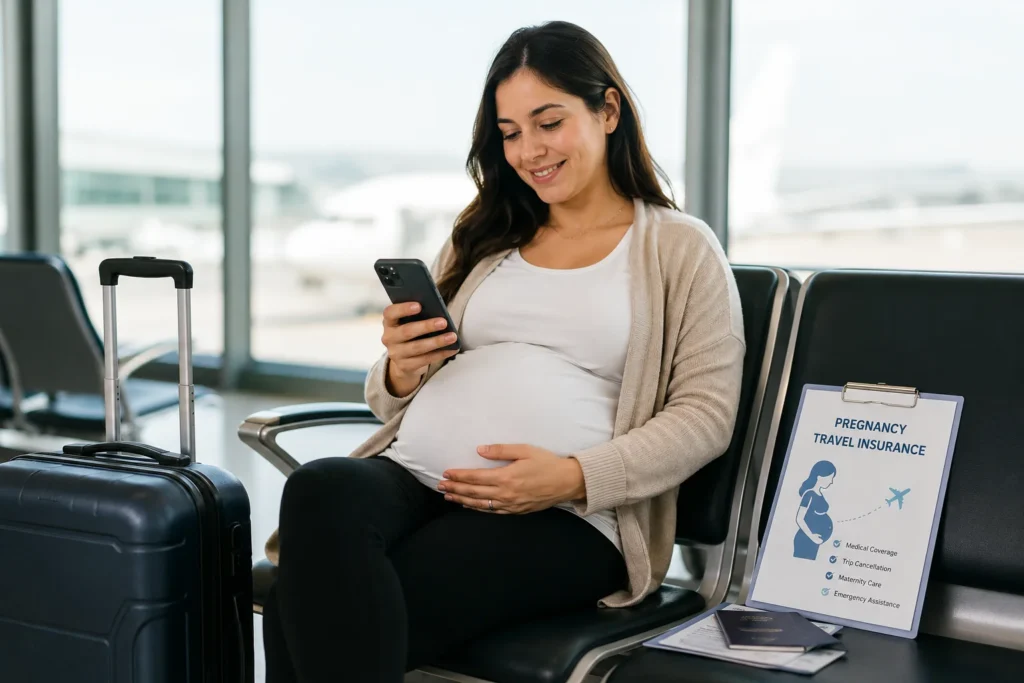
Travel insurance is about more than financial protection.
Many insurers provide practical assistance by helping travelers locate appropriate healthcare facilities.
Depending on your policy, services may include:
- Recommending nearby hospitals.
- Coordinating emergency medical care.
- Arranging medical evacuation if necessary.
- Providing interpreter support in some locations.
- Assisting with hospital admissions.
Before travelling, save your insurer’s emergency assistance number in your phone.
If possible, carry a printed copy of your insurance policy.
How to Find a Hospital Abroad
If you require medical care during your trip, several reliable sources can help you locate appropriate healthcare facilities.
Ask your hotel
Hotels often assist international travelers by recommending nearby hospitals or arranging transport.
Many larger hotels have experience helping guests access local medical services.
Contact your travel insurance provider
Your insurer may direct you to approved hospitals or healthcare facilities covered under your policy.
This can simplify the claims process later.
Contact your embassy or consulate
Embassies often maintain lists of local hospitals, clinics, and English-speaking healthcare providers.
Although they do not provide medical treatment, they can often guide you towards appropriate healthcare services.
Use official healthcare directories
Many countries provide official hospital directories through government health websites.
Researching these resources before departure can save valuable time during an emergency.
What If You Need Emergency Medical Care?
Medical emergencies can occur unexpectedly.
If you experience serious pregnancy symptoms:
- Call the local emergency services immediately.
- Contact your travel insurance provider as soon as possible.
- Inform your travel companion or family member.
- Take your medical documents with you if possible.
- Follow the advice provided by healthcare professionals.
Do not delay seeking emergency medical care because of language concerns or uncertainty about local healthcare systems.
Prompt assessment is always the safest approach.
A Physiotherapist’s Perspective: Prevention Starts Before Your Journey
As physiotherapists, we often remind pregnant travelers that the best emergency plan is one that you prepare before leaving home.
Simple preparations such as:
- Researching nearby hospitals.
- Carrying your medical records.
- Wearing supportive footwear.
- Staying hydrated.
- Planning realistic daily activities.
- Taking regular movement breaks.
can help reduce unnecessary physical stress during your trip.
While preparation cannot prevent every medical situation, it allows you to respond more confidently if unexpected problems arise.
Overcoming Language Barriers During Medical Emergencies
One of the biggest concerns when seeking healthcare abroad is communicating with medical professionals in a different language.
Preparing before your trip can make this process much easier.
Helpful strategies include:
- Downloading a reliable translation app that works offline.
- Saving important pregnancy-related phrases on your phone.
- Carrying a written pregnancy medical summary in English and, if possible, in the local language.
- Asking your hotel or travel insurance provider whether interpreter services are available.
- Keeping your healthcare provider’s contact details readily accessible.
Clear communication helps healthcare professionals understand your symptoms and medical history more accurately.
Save Important Emergency Numbers Before You Travel
Having emergency contact information available before you need it can save valuable time.
Create a list that includes:
- Local emergency services.
- Nearby hospitals.
- Your travel insurance emergency assistance number.
- Your obstetrician or healthcare provider.
- A close family member or trusted friend.
- Your country’s embassy or consulate.
Store these numbers both digitally and on a printed card that you can easily carry with you.
Recognize Pregnancy Symptoms That Need Immediate Medical Attention
While many minor discomforts can be managed with rest and hydration, some symptoms require urgent assessment regardless of where you are travelling.
Seek immediate medical care if you experience:
- Vaginal bleeding.
- Leakage of amniotic fluid.
- Regular or painful contractions.
- Severe abdominal pain.
- Chest pain.
- Difficulty breathing.
- Persistent severe headache.
- Blurred vision or other vision changes.
- Sudden swelling of the face or hands.
- Reduced fetal movement later in pregnancy.
- Persistent fever.
Do not wait until you return home if these symptoms occur.
According to the World Health Organization,
early recognition of warning signs and timely medical assessment are essential for protecting maternal and fetal health.
What to Do After Receiving Medical Care Abroad
If you receive treatment during your trip, keep copies of all medical documents.
These may include:
- Medical reports.
- Hospital discharge summaries.
- Prescriptions.
- Laboratory test results.
- Imaging reports.
- Medical receipts.
- Insurance claim documents.
When you return home, arrange a follow-up appointment with your healthcare provider.
Sharing these records helps ensure continuity of your pregnancy care.
Recovering Comfortably After Medical Treatment
Depending on the reason for your medical visit, your healthcare provider may recommend limiting physical activity for a short period.
As you recover:
- Drink plenty of water unless advised otherwise.
- Follow prescribed medications carefully.
- Avoid strenuous sightseeing.
- Wear comfortable clothing and supportive footwear.
- Take frequent rest breaks.
- Resume activities gradually if medically appropriate.
Your recovery should always take priority over your travel itinerary.
Common Mistakes to Avoid
Many pregnancy-related travel emergencies become more stressful because of avoidable planning mistakes.
These include:
- Travelling without adequate travel insurance.
- Not researching hospitals before departure.
- Leaving medical records at home.
- Ignoring early warning signs.
- Waiting too long before seeking medical advice.
- Choosing remote destinations without nearby healthcare facilities.
- Assuming every hospital accepts international insurance.
- Forgetting to carry emergency contact information.
Preparing for these situations before your trip can save valuable time if you require medical assistance.
A Physiotherapist’s Perspective: Early Action Often Prevents Bigger Problems
As physiotherapists, we regularly encourage pregnant women to listen carefully to their body’s signals.
Small symptoms can sometimes become more significant if ignored.
While travelling:
- Rest whenever fatigue becomes noticeable.
- Drink water regularly.
- Avoid walking long distances without breaks.
- Reduce physical activity if you begin feeling unwell.
- Seek medical assessment early rather than waiting for symptoms to worsen.
Prompt action often supports quicker recovery and may prevent more serious complications.
Remember that asking for medical help while travelling is a responsible decision, not an overreaction.
A Simple Medical Preparedness Checklist
Before leaving home, make sure you have completed the following:
- Researched nearby hospitals and maternity services.
- Purchased suitable pregnancy travel insurance.
- Packed your medical records.
- Saved emergency phone numbers.
- Stored digital copies of important documents.
- Packed all prescribed medications.
- Prepared a pregnancy medical summary.
- Shared your itinerary with a family member.
- Identified your embassy or consulate if travelling internationally.
Completing this checklist can help you feel more prepared and confident throughout your journey.
Myth vs Fact
| Myth | Fact |
|---|---|
| I can search for a hospital only if I become sick. | Knowing where nearby hospitals and maternity services are located before travelling can save valuable time during an emergency. |
| Travel insurance only pays medical bills. | Many insurers also provide emergency assistance, hospital referrals, medical evacuation support, and help coordinating care. |
| Minor pregnancy symptoms can always wait until I return home. | Symptoms such as bleeding, severe pain, fever, contractions, or reduced fetal movement should be assessed promptly, regardless of your location. |
| Language barriers make it impossible to receive good medical care abroad. | Translation apps, written medical summaries, interpreter services, and hotel assistance can help improve communication with healthcare professionals. |
Choosing Accommodation Near Medical Facilities
When booking accommodation, consider more than price and location.
If you are travelling during pregnancy, it is helpful to choose accommodation that offers:
- Easy access to hospitals or clinics.
- Reliable transportation options.
- A 24-hour reception or concierge service.
- Good mobile network coverage.
- Nearby pharmacies and grocery stores.
These practical considerations can make it easier to access assistance if you need medical care unexpectedly.
Final Thoughts
Preparing for possible healthcare needs before travelling gives you confidence as well as peace of mind. By researching hospitals, carrying important medical records, purchasing appropriate travel insurance, and recognizing pregnancy warning signs early, you can respond quickly if unexpected health concerns arise. A well-prepared travel plan allows you to focus on enjoying your journey while knowing that help is available if you need it.
Conclusion
Finding medical care abroad during pregnancy becomes much easier when you prepare before your trip.
Researching nearby hospitals, carrying your prenatal medical records, purchasing appropriate travel insurance, saving emergency contact numbers, and understanding where to seek help can;
reduce unnecessary stress if unexpected health concerns arise.
Even if you never need medical attention, having a clear plan provides reassurance throughout your journey.
From a physiotherapist’s perspective, prevention and early action remain the foundations of safe pregnancy travel.
Staying hydrated, pacing your activities, recognising warning signs promptly, and seeking medical advice without delay can help protect both your health and your baby’s wellbeing.
By combining careful planning with informed decision-making, you can travel with greater confidence while knowing that appropriate medical support is available if you need it.
Frequently Asked Questions
Below are answers to common questions about finding medical care abroad while travelling during pregnancy.
1. Should I research hospitals before travelling during pregnancy?
Yes. Identifying nearby hospitals, maternity units, and emergency services before your trip can help you receive medical care more quickly if needed.
2. What medical documents should I carry while travelling?
Carry prenatal records, ultrasound reports, medication lists, allergy details, blood group information, travel insurance documents, and emergency contact information.
3. Can travel insurance help me find medical care abroad?
Yes. Many travel insurance providers offer hospital referrals, emergency assistance, medical evacuation support, and help coordinating treatment.
4. What should I do if I have a medical emergency while travelling?
Call local emergency services immediately, contact your travel insurance provider, take your medical records with you, and follow the advice of healthcare professionals.
5. How can I overcome language barriers during a medical emergency?
Use translation apps, carry a written pregnancy medical summary, ask your hotel for assistance, and check whether interpreter services are available through your insurer or healthcare facility.
6. When should I seek urgent medical care during pregnancy abroad?
Seek immediate medical attention if you experience vaginal bleeding, severe abdominal pain, leakage of amniotic fluid, contractions, chest pain, breathing difficulties, persistent fever, or reduced fetal movement.
Stay tuned with us for more health related topics.
Follow us on LinkedIn and Instagram for more.
More Read


Medical Disclaimer!
This article has been reviewed and written under the guidance of our Head Physiotherapist, Dr. Kruti Raj (PT, MUHS,CPT,CMPT). The information shared is intended for educational purposes only and should not be considered a substitute for personalized medical advice, diagnosis, or treatment.
Please consult us or any other qualified healthcare professional before beginning any exercise program, especially if you are experiencing pain, recovering from injury, or managing a medical condition.


