


For many expecting mothers, flying during pregnancy comes with plenty of questions. One of which is: Can airport security scanners harm my baby?
It is understandable why this question causes anxiety.
Words such as “scanner,” “screening,” and “radiation” can sound alarming, especially when you are doing everything possible to protect your growing baby.
Friends, family members, and social media posts may also share conflicting advice, making it difficult to know what to believe.
Quick Answer
No. Airport security scanners, including walk-through metal detectors and millimeter-wave body scanners, are considered safe during pregnancy and are not known to harm your baby. If you have concerns, you can request a manual pat-down instead.
The reassuring news is that modern airport security systems are designed with passenger safety in mind.
However, understanding how these scanners work and the different types you may encounter can help you feel more confident when travelling.
As physiotherapists, we often remind pregnant travelers that reducing unnecessary stress is just as important as preparing physically for a journey.
Worrying about airport procedures without understanding the facts can increase anxiety before your trip even begins.
Having accurate, evidence-based information allows you to make informed decisions and travel with greater peace of mind.
In this article,
we’ll explain how airport security scanners work, whether they expose you or your baby to harmful radiation, what current scientific evidence says, and what alternatives are available if you have concerns.
Key Takeaways
- Modern airport security scanners are not known to harm a healthy pregnancy.
- Most airports use walk-through metal detectors or millimeter-wave scanners instead of X-ray body scanners.
- Millimeter-wave scanners use non-ionizing radiofrequency waves, not medical X-rays.
- You can request a manual pat-down if you prefer not to use a body scanner.
- Pregnancy support belts and medical devices may require additional screening but are generally not a problem.
- Standing in long security queues may be more physically demanding than passing through the scanner itself.
- If you have a high-risk pregnancy or concerns, discuss your travel plans with your healthcare provider before flying.
Why Do Pregnant Women Worry About Airport Security Scanners?
Pregnancy naturally makes many women more cautious about everyday activities.
Questions such as:
- Is it safe to fly?
- Can airport scanners affect my baby?
- Should I avoid X-rays?
- Can radiation increase pregnancy risks?
are all completely understandable.
Part of the confusion comes from the fact that not all security systems work in the same way.
Many people assume that every airport scanner uses X-rays, but this is not the case.
Modern airports use different screening technologies depending on the country, airport, and security procedures.
Understanding the difference between these systems is one of the best ways to separate facts from common myths.
Why Airports Use Security Scanners
Airport security screening is designed to protect passengers, airline crew, and airport staff by identifying prohibited items before boarding.
Security equipment is intended to detect objects rather than evaluate a person’s health.
The screening process usually includes:
- Identity verification.
- Cabin baggage screening.
- Walk-through screening.
- Additional screening when required.
Pregnancy itself does not automatically mean you require different screening procedures.
However, if you have questions or specific medical concerns, you can always speak with airport security staff before entering the screening area.
What Types of Airport Security Scanners Might You Encounter?
The equipment used varies between airports, but most travelers encounter one or more of the following systems.
Walk-Through Metal Detectors
These are the familiar doorway-shaped detectors that passengers walk through.
They use low-frequency electromagnetic fields to detect metallic objects carried on the body.
Importantly, they do not use ionizing radiation.
For healthy pregnant women, there is no evidence that passing through a standard walk-through metal detector harms the developing baby.
Millimeter-Wave Body Scanners
Many international airports now use advanced body scanners instead of older screening systems.
These scanners use non-ionising millimetre-wave technology to create a generic security image that helps identify concealed objects.
Unlike medical X-rays, millimeter-wave scanners do not expose passengers to ionizing radiation.
The energy produced is extremely low and is reflected from the body’s surface rather than passing through the body.
According to the (ScienceDirect), non-ionizing radiation differs fundamentally from ionizing radiation because it does not carry enough energy to damage DNA in the way that ionizing radiation can.
Hand-Held Metal Detector Wands
Sometimes airport security staff perform additional screening using a handheld detector.
These devices also operate using electromagnetic fields rather than ionizing radiation.
If extra screening is required, the security officer may briefly move the detector around your body without physical contact.
For pregnant travelers, these devices are generally considered safe when used appropriately.
Do Airport Security Scanners Use Radiation?
This is probably the most common question pregnant travelers ask.
The answer depends on what type of radiation you mean.
Many people hear the word “radiation” and immediately think of medical X-rays.
However, radiation exists in different forms.
Ionising radiation
Ionizing radiation carries enough energy to remove electrons from atoms.
Examples include:
- Medical X-rays.
- CT scans.
- Gamma rays.
High doses of ionizing radiation may pose risks during pregnancy, particularly if exposure is unnecessary.
Non-ionising radiation
Non-ionizing radiation has much lower energy.
Examples include:
- Visible light.
- Radio waves.
- Wi-Fi signals.
- Bluetooth.
- Mobile phone signals.
- Millimeter-wave scanners.
- Metal detectors.
These forms of radiation do not have enough energy to damage DNA in the same way as ionising radiation.
This distinction is important because modern airport body scanners generally use non-ionising technology.
Can Airport Security Scanners Reach Your Baby?
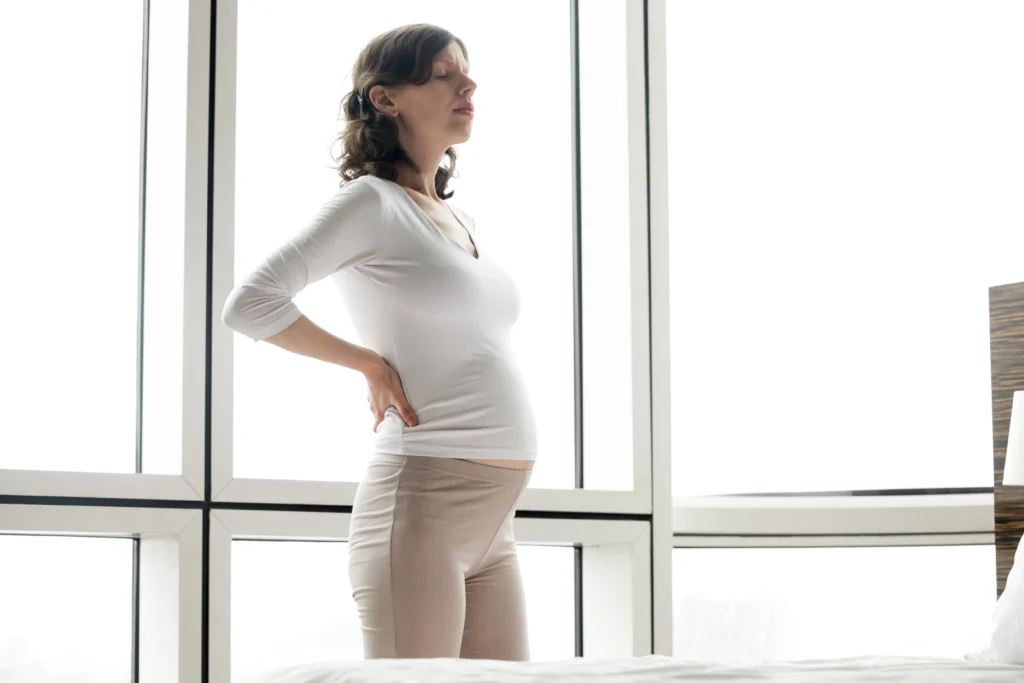
This is another common concern.
With modern millimeter-wave scanners, the answer is no.
The signals generated by these scanners are reflected from the outer surface of your skin to identify concealed objects.
They do not penetrate deeply into the body and therefore do not directly expose your developing baby.
Similarly, walk-through metal detectors create electromagnetic fields designed to detect metal rather than image internal body structures.
Current scientific understanding does not indicate that these systems expose the fetus to harmful levels of energy.
What Does Scientific Research Say?
Airport security technology has been studied extensively because millions of passengers pass through security checkpoints every day.
Current evidence has not demonstrated harmful pregnancy effects associated with standard airport metal detectors or modern millimeter-wave body scanners.
The U.S. Food and Drug Administration explains that millimeter-wave scanners use non-ionizing radiofrequency energy and are designed to meet established safety standards for public use.
Similarly, scientific reviews evaluating exposure to low-level non-ionising electromagnetic fields have not identified evidence that:
airport security screening causes harm to healthy pregnancies when standard screening procedures are followed.
Should You Be More Concerned About Flying Than the Scanner?
Interestingly, many pregnant travelers spend considerable time worrying about airport scanners
while overlooking other parts of the journey that have a greater impact on comfort.
For example:
- Sitting for several hours.
- Poor posture.
- Dehydration.
- Swollen feet.
- Reduced movement.
- Back pain.
From a physiotherapy perspective, these factors are far more likely to affect how you feel during your trip than simply walking through an airport security scanner.
Understanding where genuine risks lie helps you focus your energy on practical steps that improve both comfort and overall wellbeing.
A Physiotherapist’s Perspective: Anxiety Can Increase Physical Discomfort
Many pregnant women arrive at the airport already feeling tense.
Concerns about security procedures, boarding, delays, and travelling safely may cause unnecessary muscle tension even before the journey begins.
As physiotherapists, we often see how anxiety affects posture.
When people become anxious, they naturally:
- Raise their shoulders.
- Tighten their neck muscles.
- Hold their breath.
- Stiffen their lower back.
- Stand without moving for prolonged periods.
These changes can increase muscle fatigue before the flight has even started.
Understanding that modern airport security screening is designed with passenger safety in mind may help reduce some of this unnecessary stress,
allowing you to begin your journey feeling calmer and more comfortable.
Can You Request a Manual Security Check Instead?
Yes.
If you are uncomfortable using an airport body scanner or have specific medical concerns, you can usually request an alternative screening method.
The exact procedure varies between airports and countries, but alternatives may include:
- A physical pat-down by a trained security officer.
- Additional hand-held metal detector screening.
- Visual inspection of personal items.
- Other screening methods permitted by local aviation security regulations.
If you would prefer an alternative screening, inform the security officer before entering the scanner.
Airport staff are trained to explain the available options and help you complete the screening process.
Keep in mind that choosing a manual screening may take a little longer, so arriving at the airport earlier than usual is a good idea.
What If You Wear a Pregnancy Support Belt?
Many women wear maternity support belts to reduce back or pelvic discomfort during pregnancy.
These belts are generally not harmful during airport security screening, but they may attract additional attention depending on their design.
Support belts that contain metal fasteners or rigid components may trigger a security alarm.
If this happens, the security officer may ask you:
- Whether you are wearing a medical support garment.
- To undergo additional screening.
- To complete a manual pat-down if required.
There is usually no need to remove your support belt unless specifically requested by security staff.
Do Implanted Medical Devices Change the Screening Process?
Some pregnant women may also have implanted medical devices, such as certain orthopedic implants or cardiac devices.
If this applies to you:
- Inform the security officer before screening.
- Carry any relevant medical identification card if available.
- Follow the instructions provided by airport security staff.
The screening process can usually be adapted when necessary.
Practical Tips to Make Airport Security Easier During Pregnancy
Preparing before you reach the security checkpoint can help reduce stress and keep the process moving smoothly.
Wear comfortable clothing
Choose clothing that allows easy movement and avoids unnecessary discomfort during standing, walking, or waiting in queues.
Avoid excessive jewellery or clothing with multiple metal accessories if possible, as these may require additional screening.
Keep your documents easily accessible
Store your:
- Passport.
- Boarding pass.
- Medical certificate if required.
- Identification.
- Travel documents.
in an easily accessible folder so you are not searching through your luggage at the security checkpoint.
Stay hydrated
Airport terminals can involve long periods of walking and standing.
Drink water before your flight after passing through security and carry an empty refillable bottle if airport regulations allow.
Good hydration supports overall comfort throughout your journey.
Wear supportive footwear
Comfortable walking shoes help reduce fatigue while moving through large airport terminals.
Supportive footwear can also improve stability and reduce strain on your back, hips, and feet during longer walks between terminals and departure gates.
A Physiotherapist’s Perspective: The Security Queue Can Be More Challenging Than the Scanner
When pregnant women talk about airport security, they often focus on the scanner itself.
From a physiotherapy perspective, another part of the process may actually be more physically demanding.
Standing in long queues without moving can place extra strain on:
- Your lower back.
- Pelvic joints.
- Calf muscles.
- Feet and ankles.
If waiting times are long:
- Shift your weight gently from one foot to the other.
- Perform small ankle movements.
- Avoid locking your knees.
- Maintain relaxed shoulders.
- Walk a few steps whenever the queue moves.
These small movements encourage circulation and help reduce muscle fatigue before you even board the aircraft.
Common Myths About Airport Security Scanners During Pregnancy
There is a great deal of misinformation about airport screening.
Let’s separate some common myths from current evidence.
Myth: Airport scanners expose the baby to dangerous radiation.
Fact: Modern millimetre-wave body scanners use non-ionising radiofrequency waves rather than ionising radiation.
Myth: Every airport scanner uses X-rays.
Fact: Most airports now use walk-through metal detectors or millimetre-wave scanners, which operate differently from medical X-ray equipment.
Myth: Pregnant women should always refuse airport scanners.
Fact: Current evidence does not show that standard airport security scanners harm healthy pregnancies.
However, travellers who remain concerned can usually request an alternative screening method.
Myth: Walking through several airport scanners during one trip increases pregnancy risks.
Fact: There is no evidence that passing through standard airport security screening multiple times during travel causes harm to the developing baby.
When Should You Discuss Airport Security With Your Healthcare Provider?
Although airport scanners themselves are not generally considered harmful during pregnancy, you should discuss travel plans with your healthcare provider if you:
- Have a high-risk pregnancy.
- Have recently experienced vaginal bleeding.
- Have signs of preterm labor.
- Have been advised to avoid travel.
- Have concerns about an implanted medical device.
- Feel uncertain about your individual situation.
Your healthcare provider can offer advice based on your pregnancy rather than relying on general recommendations.
Putting Airport Security Into Perspective
It is completely natural to want to protect your baby from every possible risk.
However, it also helps to focus on the aspects of travel that have the greatest influence on your comfort and wellbeing.
For most healthy pregnancies, practical measures such as:
- Staying hydrated.
- Choosing a comfortable seat.
- Walking regularly during the flight.
- Wearing supportive footwear.
- Maintaining good posture.
- Recognizing warning signs that require medical attention.
are likely to have a much greater impact on your travel experience than simply walking through an airport security scanner.
Understanding the evidence allows you to replace unnecessary worry with informed confidence.
Final Thoughts
Airport security is an important part of safe air travel, and current evidence shows that modern screening systems are not known to harm healthy pregnancies. Understanding how these scanners work can replace unnecessary fear with confidence. Focus on practical steps such as staying hydrated, wearing supportive footwear, moving regularly, and discussing any specific concerns with your healthcare provider before travelling.
Conclusion
For most women with uncomplicated pregnancies, airport security scanners are not considered harmful to the developing baby.
Modern walk-through metal detectors and millimeter-wave body scanners use technologies that differ significantly from medical X-rays,
and current scientific evidence has not shown that routine airport screening poses a risk when standard procedures are followed.
If you still feel uncomfortable using a body scanner, you can usually request an alternative screening method.
Airport security staff are trained to explain your options and help you complete the process safely and respectfully.
From a physiotherapist’s perspective, preparing for the airport as a whole is just as important as understanding the scanner itself.
Staying calm, wearing supportive footwear, avoiding prolonged standing without movement, and looking after your posture;
can help make your journey more comfortable from the moment you enter the terminal.
By understanding how airport security systems work and relying on evidence rather than myths,
you can travel with greater confidence and focus on enjoying your journey while protecting your own wellbeing and that of your baby.
Frequently Asked Questions
Find answers to common questions about airport security scanners and pregnancy.
1. Are airport security scanners safe during pregnancy?
Yes. Modern walk-through metal detectors and millimeter-wave body scanners are generally considered safe for healthy pregnancies when used as part of routine airport security screening.
2. Do airport body scanners use X-rays?
Most modern airport body scanners use millimeter-wave technology rather than X-rays. These scanners use non-ionizing radiofrequency waves.
3. Can I request a manual screening instead of using the scanner?
Yes. Most airports allow passengers to request an alternative screening method, such as a manual pat-down, if they prefer.
4. Will my pregnancy support belt cause problems during screening?
Usually not. However, belts containing metal parts may trigger additional security screening.
5. Should women with high-risk pregnancies avoid airport scanners?
Airport scanners themselves are not generally the concern. Women with high-risk pregnancies should discuss their travel plans with their healthcare provider before flying.
6. What is more likely to cause discomfort during air travel than the scanner?
Prolonged standing, sitting for long periods, dehydration, poor posture, and lack of movement are much more likely to contribute to discomfort during pregnancy than airport security screening.
Stay tuned with us for more health related topics.
Follow us on LinkedIn and Instagram for more.
More Read


Medical Disclaimer!
This article has been reviewed and written under the guidance of our Head Physiotherapist, Dr. Kruti Raj (PT, MUHS,CPT,CMPT). The information shared is intended for educational purposes only and should not be considered a substitute for personalized medical advice, diagnosis, or treatment.
Please consult us or any other qualified healthcare professional before beginning any exercise program, especially if you are experiencing pain, recovering from injury, or managing a medical condition.


