High-risk pregnancy in the third trimester requires close monitoring because both mother and baby may need additional tests and specialized care before delivery.
Pregnancy is an exciting journey, but for some women, additional monitoring and specialized care may be necessary during the final months before birth.
If you have been told that your pregnancy is considered high risk, it is natural to feel worried or overwhelmed.
Common questions include:
- What makes a pregnancy high risk?
- Why are extra appointments necessary?
- What tests will I need during the third trimester?
- How often will my baby be monitored?
- Does high-risk pregnancy always mean complications?
Quick Answer
Monitoring high-risk pregnancies during the third trimester involves more frequent prenatal visits, ultrasounds, fetal surveillance tests, blood pressure monitoring, blood tests, and assessment of fetal growth and well-being. The exact monitoring plan depends on the mother’s health condition, pregnancy complications, and the baby’s needs.
The good news is that advances in modern prenatal care have significantly improved outcomes for mothers and babies experiencing high-risk pregnancies.
Third-trimester monitoring allows healthcare providers to identify problems early, closely monitor fetal well-being, and determine the safest timing and mode of delivery.
As a women’s health physiotherapist, I frequently reassure expectant mothers that additional monitoring does not automatically mean something is wrong.
Instead, it provides valuable information that helps healthcare teams optimize care and improve outcomes.
Understanding how high-risk pregnancies are monitored can help reduce anxiety and empower women to actively participate in their prenatal care.
Key Takeaways
- High-risk pregnancies require individualized monitoring plans.
- Third-trimester surveillance helps detect complications early.
- Ultrasound, Doppler studies, NSTs, and Biophysical Profiles are commonly used monitoring tools.
- Women with diabetes, preeclampsia, multiple pregnancies, and fetal growth restriction often need closer follow-up.
- Some women may require hospital admission or specialist care.
- Monitoring helps determine the safest timing and mode of delivery.
- Regular prenatal care significantly improves outcomes for both mother and baby.
What Is a High-Risk Pregnancy?
A pregnancy is considered high risk when the mother, baby, or both have an increased likelihood of developing complications.
High-risk pregnancies often require:
- More frequent prenatal visits.
- Additional testing.
- Specialized obstetric care.
- Consultation with maternal-fetal medicine specialists.
Importantly, many women with high-risk pregnancies go on to have healthy pregnancies and healthy babies with appropriate monitoring and treatment.
According to the American College of Obstetricians and Gynecologists (ACOG), antenatal surveillance is recommended in pregnancies associated with increased risks of stillbirth or adverse perinatal outcomes (ACOG Committee Opinion No. 828, 2021).
Common Reasons a Pregnancy May Be Classified as High Risk
A pregnancy may be considered high risk because of maternal, fetal, or pregnancy-related factors.
Maternal Factors
Examples include:
- Chronic hypertension.
- Diabetes.
- Heart disease.
- Kidney disease.
- Autoimmune disorders.
- Thyroid disease.
- Obesity.
- Advanced maternal age.
Pregnancy-Related Factors
Examples include:
- Gestational diabetes.
- Preeclampsia.
- Placenta previa.
- Intrahepatic cholestasis of pregnancy.
- Preterm labor.
- Multiple pregnancy.
Fetal Factors
Examples include:
- Fetal growth restriction.
- Congenital anomalies.
- Abnormal genetic testing.
- Reduced fetal movements.
- Abnormal Doppler studies.
Why Is Third Trimester Monitoring Important?
Many pregnancy complications develop or worsen during the third trimester.
Monitoring helps healthcare providers:
- Assess fetal growth.
- Evaluate placental function.
- Monitor maternal health.
- Detect complications early.
- Determine optimal timing of delivery.
- Reduce maternal and neonatal risks.
Appropriate antenatal surveillance can reduce the likelihood of adverse outcomes by identifying fetal compromise before serious complications occur.
How Often Will Prenatal Appointments Occur?
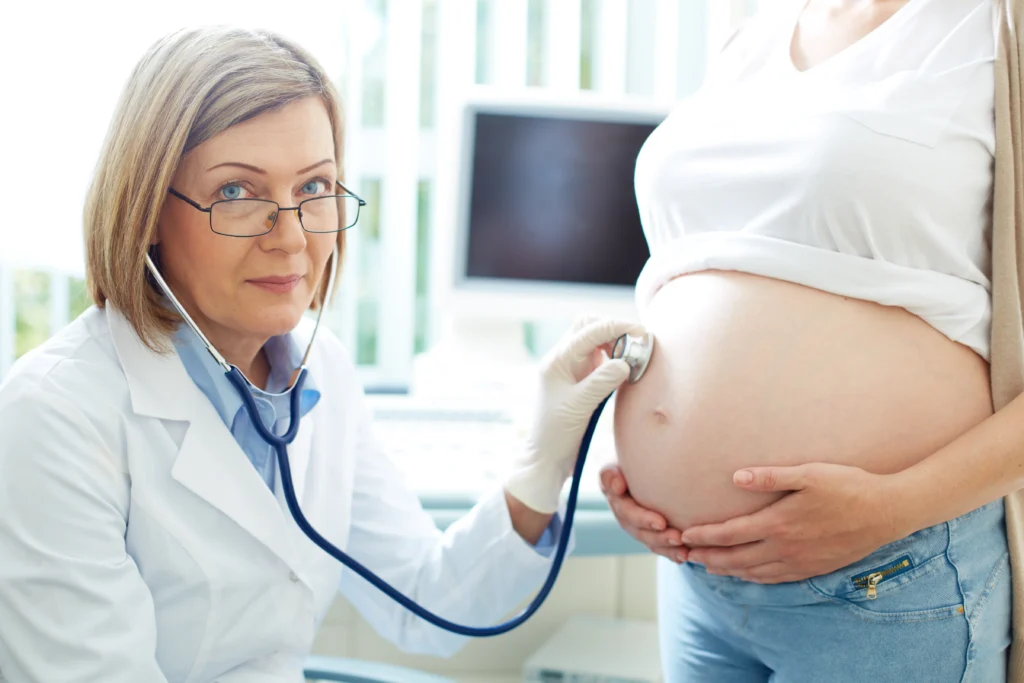
Women with high-risk pregnancies often attend appointments more frequently than women with uncomplicated pregnancies.
Depending on the condition, visits may occur:
- Every two to four weeks initially.
- Weekly during late pregnancy.
- Twice weekly in selected high-risk situations.
Some women may require hospital admission for closer observation.
Appointment frequency depends on:
- Maternal condition.
- Gestational age.
- Fetal status.
- Severity of complications.
Monitoring Method 1: Blood Pressure Assessment
Blood pressure monitoring is one of the most important components of third-trimester care.
Elevated blood pressure may indicate:
- Gestational hypertension.
- Preeclampsia.
- Worsening chronic hypertension.
Healthcare providers routinely measure blood pressure during antenatal visits.
Some women may also be advised to:
- Monitor blood pressure at home.
- Record readings daily.
- Report abnormal values promptly.
Women with hypertensive disorders often require closer maternal and fetal surveillance.
Monitoring Method 2: Maternal Symptom Assessment
Healthcare providers regularly ask about symptoms that may indicate complications.
Important symptoms include:
- Headache.
- Visual disturbances.
- Reduced fetal movements.
- Vaginal bleeding.
- Contractions.
- Abdominal pain.
- Swelling.
- Shortness of breath.
Prompt reporting of symptoms allows early intervention and may prevent serious maternal or fetal complications.
Monitoring Method 3: Fetal Movement Assessment
Monitoring fetal movements is an important aspect of fetal surveillance.
Women are encouraged to become familiar with their baby’s normal movement patterns.
Reduced fetal movements may indicate fetal compromise and require urgent medical assessment.
Healthcare providers may recommend:
- Daily awareness of fetal movements.
- Kick counting in selected pregnancies.
The Royal College of Obstetricians and Gynaecologists advises that reduced fetal movements should always be reported promptly because they may be associated with fetal growth restriction, placental insufficiency, and stillbirth.
Monitoring Method 4: Ultrasound Assessment
Ultrasound plays a central role in monitoring high-risk pregnancies.
Third-trimester ultrasounds may assess:
- Fetal growth.
- Fetal position.
- Amniotic fluid volume.
- Placental location.
- Fetal anatomy.
- Fetal movements.
Serial ultrasounds are frequently performed in high-risk pregnancies to identify changes over time.
Fetal Growth Ultrasound
Growth scans evaluate:
- Estimated fetal weight.
- Growth trajectory.
- Abdominal circumference.
- Head measurements.
- Femur length.
Growth assessment is particularly important in pregnancies complicated by:
- Hypertension.
- Diabetes.
- Placental disease.
- Multiple pregnancy.
Poor growth may suggest fetal growth restriction and may necessitate closer surveillance or earlier delivery.
Monitoring Method 5: Doppler Ultrasound Studies
Doppler ultrasound evaluates blood flow between the placenta and fetus.
Common Doppler studies include:
Umbilical Artery Doppler
Assesses placental resistance and blood flow.
Middle Cerebral Artery Doppler
Assesses fetal adaptation to reduced oxygen supply.
Uterine Artery Doppler
Evaluates maternal blood flow to the placenta.
A major Cochrane review found that Doppler ultrasound in high-risk pregnancies reduces perinatal deaths and improves pregnancy outcomes by facilitating earlier detection of placental insufficiency. (Alfirevic et al., 2010)
Monitoring Method 6: Amniotic Fluid Assessment
Ultrasound also evaluates amniotic fluid volume.
Abnormal fluid levels may indicate:
- Placental insufficiency.
- Maternal diabetes.
- Fetal abnormalities.
- Ruptured membranes.
Common measurements include:
- Amniotic Fluid Index (AFI).
- Single deepest pocket.
Both excessive and reduced amniotic fluid may require additional monitoring or intervention.
Monitoring Method 7: Non-Stress Test (NST)
A Non-Stress Test evaluates fetal heart rate patterns and fetal movements.
During the test:
- Sensors are placed on the mother’s abdomen.
- Fetal heart rate is recorded.
- Fetal movements are monitored.
A reactive NST generally provides reassurance regarding fetal well-being.
NSTs are commonly used in pregnancies complicated by:
- Diabetes.
- Hypertension.
- Reduced fetal movements.
- Fetal growth restriction.
Monitoring Method 8: Biophysical Profile (BPP)
A Biophysical Profile combines ultrasound assessment with fetal heart rate monitoring.
The BPP evaluates:
- Fetal breathing movements.
- Gross body movements.
- Fetal tone.
- Amniotic fluid volume.
- Fetal heart rate reactivity.
Low scores may indicate fetal compromise and may prompt further intervention.
According to (Lalor et al. 2008) the BPP remains an important component of antenatal fetal surveillance in selected high-risk pregnancies.
Blood Tests During the Third Trimester
Women with high-risk pregnancies may undergo additional blood testing.
Tests may include:
- Complete blood count.
- Liver function tests.
- Kidney function tests.
- Blood glucose monitoring.
- Coagulation studies.
- Bile acid testing.
The specific tests depend on the underlying condition and clinical concerns.
A Physiotherapist’s Perspective: Extra Monitoring Means Extra Protection
As a women’s health physiotherapist, I often meet women who feel anxious about the increased number of appointments and tests associated with high-risk pregnancy.
It can be helpful to remember that additional monitoring is intended to provide reassurance and identify concerns early.
Advances in prenatal surveillance have dramatically improved outcomes for many high-risk pregnancies, allowing healthcare teams to intervene promptly when needed.
Regular attendance at appointments and open communication with your healthcare providers remain essential components of a healthy pregnancy journey.
Condition-Specific Monitoring in High-Risk Pregnancies
The type and frequency of monitoring during the third trimester largely depend on the specific condition affecting the pregnancy.
Healthcare providers individualize surveillance plans to optimize maternal and fetal outcomes.
Monitoring Women With Gestational Diabetes
Women diagnosed with gestational diabetes often require closer surveillance during the third trimester.
Monitoring may include:
- Frequent blood glucose monitoring.
- Growth ultrasounds every few weeks.
- Amniotic fluid assessment.
- Non-Stress Tests (NSTs).
- Biophysical Profiles (BPPs).
Healthcare providers also review:
- Blood sugar logs.
- Dietary management.
- Medication requirements.
Poorly controlled blood sugar may increase the risk of:
- Excessive fetal growth (macrosomia).
- Polyhydramnios.
- Stillbirth.
- Birth complications.
According to the American Diabetes Association, careful glycemic control and fetal surveillance significantly improve maternal and neonatal outcomes in pregnancies complicated by diabetes. (American Diabetes Association Standards of Care in Diabetes, 2024)
Monitoring Women With Preeclampsia
Preeclampsia requires particularly close monitoring because the condition can progress rapidly.
Women with preeclampsia may require:
- Frequent blood pressure monitoring.
- Blood tests assessing liver and kidney function.
- Platelet count monitoring.
- Proteinuria assessment.
- Frequent fetal surveillance.
Fetal monitoring may include:
- Growth scans.
- Umbilical artery Doppler studies.
- Non-Stress Tests.
- Biophysical Profiles.
Women with severe disease may require hospitalization.
The American College of Obstetricians and Gynecologists recommends serial maternal and fetal assessment to guide the timing of delivery in pregnancies complicated by preeclampsia. (ACOG Practice Bulletin No. 222, 2020)
Monitoring Multiple Pregnancies
Twin and higher-order multiple pregnancies generally require increased surveillance.
Monitoring often includes:
- More frequent prenatal visits.
- Serial growth ultrasounds.
- Amniotic fluid assessment.
- Cervical length assessment.
- Fetal well-being testing.
Twin pregnancies carry increased risks of:
- Preterm birth.
- Fetal growth restriction.
- Hypertensive disorders.
- Twin-to-twin transfusion syndrome (in monochorionic twins).
Because complications may develop rapidly, close follow-up is essential.
Monitoring Fetal Growth Restriction (FGR)
Fetal Growth Restriction occurs when the baby is smaller than expected due to impaired growth.
Monitoring often includes:
- Serial growth ultrasounds.
- Umbilical artery Doppler studies.
- Middle cerebral artery Doppler assessment.
- Non-Stress Tests.
- Biophysical Profiles.
The frequency of surveillance depends on:
- Severity of growth restriction.
- Doppler findings.
- Gestational age.
Abnormal Doppler findings may indicate worsening placental insufficiency and influence decisions regarding delivery timing.
The Society for Maternal-Fetal Medicine recommends umbilical artery Doppler assessment as an important component of surveillance in pregnancies complicated by fetal growth restriction (SMFM Consult Series #52, 2020).
Monitoring Intrahepatic Cholestasis of Pregnancy
Women diagnosed with intrahepatic cholestasis of pregnancy (ICP) often require:
- Regular assessment of symptoms.
- Liver function tests.
- Serum bile acid measurements.
- Fetal surveillance.
Although fetal monitoring cannot entirely prevent adverse outcomes associated with cholestasis, surveillance assists clinicians in planning delivery.
Many women with ICP require planned delivery before their due date depending on bile acid levels and clinical severity.
Hospital Admission and Inpatient Monitoring
Some women with high-risk pregnancies require hospital admission during the third trimester.
Reasons for admission may include:
- Severe preeclampsia.
- Preterm labor.
- Significant vaginal bleeding.
- Severe fetal growth restriction.
- Reduced fetal movements with concerning findings.
- Poorly controlled diabetes.
- Severe cholestasis.
Hospital monitoring may involve:
- Continuous fetal monitoring.
- Frequent maternal observations.
- Repeat blood tests.
- Daily fetal surveillance.
- Medication administration.
The goal is to identify deterioration early and intervene promptly if necessary.
Maternal-Fetal Medicine Specialists
Women with complex pregnancies are often referred to a Maternal-Fetal Medicine (MFM) specialist.
Maternal-Fetal Medicine specialists are obstetricians with additional training in high-risk pregnancy management.
They commonly manage pregnancies complicated by:
- Severe maternal medical conditions.
- Complex fetal abnormalities.
- Multiple pregnancy.
- Recurrent pregnancy complications.
- Placental disorders.
Specialist involvement can help optimize both maternal and fetal outcomes.
Determining the Timing of Delivery
One of the most important aspects of third-trimester monitoring is deciding when delivery should occur.
Healthcare providers carefully balance:
- Risks of prematurity.
- Risks of continuing the pregnancy.
Delivery timing depends on:
- Maternal condition.
- Fetal condition.
- Gestational age.
- Results of fetal surveillance.
Some women deliver spontaneously at term.
Others may require:
- Planned induction of labor.
- Scheduled cesarean birth.
- Early delivery because of maternal or fetal concerns.
Warning Signs Requiring Immediate Medical Attention
Women with high-risk pregnancies should seek urgent medical care if they experience:
- Reduced fetal movements.
- Vaginal bleeding.
- Severe abdominal pain.
- Regular painful contractions.
- Severe headache.
- Visual disturbances.
- Sudden swelling of the face or hands.
- Leakage of fluid.
- Shortness of breath.
Prompt evaluation can be lifesaving for both mother and baby.
Emotional Well-Being During a High-Risk Pregnancy
High-risk pregnancies may create significant emotional stress.
Women commonly experience:
- Anxiety.
- Fear.
- Uncertainty.
- Sleep disturbances.
Strategies that may help include:
- Attending prenatal education classes.
- Discussing concerns openly with healthcare providers.
- Seeking support from family and friends.
- Practicing relaxation techniques.
- Consulting mental health professionals when needed.
Emotional support is an important component of comprehensive prenatal care.
A Physiotherapist’s Perspective: Focusing on What You Can Control
As a women’s health physiotherapist, I encourage women experiencing high-risk pregnancies to focus on the aspects of care they can control.
These include:
- Attending all appointments.
- Monitoring symptoms carefully.
- Following medical recommendations.
- Maintaining healthy lifestyle habits.
- Seeking support when needed.
Although high-risk pregnancy can feel overwhelming, modern surveillance methods allow healthcare providers to detect many complications early and intervene appropriately.
Questions You May Want to Ask Your Doctor
Consider asking:
- How often will I need monitoring?
- What tests will my baby require?
- What symptoms should prompt urgent review?
- Will I need early delivery?
- Should I monitor my blood pressure or blood sugar at home?
- Do I need consultation with a maternal-fetal medicine specialist?
Preparing questions before appointments can improve understanding and reduce anxiety.
Final Thoughts
A high-risk pregnancy does not automatically mean that complications will occur. Modern prenatal monitoring allows healthcare providers to detect many problems early and provide timely treatment. Staying engaged in your prenatal care and maintaining open communication with your healthcare team can help support a safe and positive pregnancy journey.
Conclusion
Monitoring high-risk pregnancies during the third trimester is an essential aspect of modern obstetric care.
Through frequent assessments, advanced fetal surveillance, and individualized management plans, healthcare providers can identify complications early and optimize outcomes for both mother and baby.
Although additional monitoring may sometimes feel stressful, these assessments provide valuable information that helps guide safe and timely interventions.
Frequently Asked Questions (FAQs)
1. What makes a pregnancy high risk?
A pregnancy may be considered high risk because of maternal medical conditions, pregnancy complications, fetal concerns, or multiple pregnancy.
2. How often will I need appointments during a high-risk pregnancy?
Appointment frequency depends on your condition. Some women require weekly or even twice-weekly monitoring during the third trimester.
3. What tests are commonly performed in high-risk pregnancies?
Common tests include ultrasound scans, Doppler studies, Non-Stress Tests, Biophysical Profiles, blood tests, and blood pressure monitoring.
4. Will I need to deliver early if I have a high-risk pregnancy?
Not always. However, some women may require early delivery if maternal or fetal complications develop.
5. Can high-risk pregnancies result in healthy babies?
Yes. Many women with high-risk pregnancies go on to have healthy babies with appropriate monitoring and medical care.
6. When should I seek urgent medical attention?
Seek immediate medical care if you experience reduced fetal movements, vaginal bleeding, severe headache, visual disturbances, severe abdominal pain, or leakage of fluid.
Stay tuned with us for more health related topics.
Follow us on LinkedIn and Instagram for more.
More Read



Medical Disclaimer!
This article has been reviewed and written under the guidance of our Head Physiotherapist, Dr. Kruti Raj (PT, MUHS,CPT,CMPT). The information shared is intended for educational purposes only and should not be considered a substitute for personalized medical advice, diagnosis, or treatment.
Please consult us or any other qualified healthcare professional before beginning any exercise program, especially if you are experiencing pain, recovering from injury, or managing a medical condition.