


A non stress test during pregnancy is a fetal monitoring test that checks your baby’s heart rate patterns and response to movement.
Pregnancy involves many check-ups and tests designed to ensure that both mother and baby remain healthy throughout the journey.
While routine ultrasounds are familiar to most expectant parents, some tests are recommended only when additional monitoring is needed.
One such assessment is the Non-Stress Test (NST).
Quick Answer
A Non-Stress Test (NST) is a simple, painless, and non-invasive prenatal test that monitors your baby’s heart rate and movements. The test helps healthcare providers determine whether your baby is receiving adequate oxygen and whether additional monitoring or testing is required.
If your healthcare provider has scheduled an NST, you may naturally have questions.
“Why do I need this test?”
“Is my baby in danger?”
“What exactly does an NST measure?”
As a women’s health physiotherapist,
I frequently meet expectant mothers who feel anxious when extra monitoring is recommended.
Fortunately, in many situations, an NST is performed simply to confirm that the baby is doing well inside the womb.
Understanding how the test works and what the results mean can make the experience far less stressful.
Key Takeaways
- A Non-Stress Test (NST) monitors your baby’s heart rate and movement patterns during pregnancy.
- NSTs are commonly recommended in high-risk pregnancies or when additional fetal monitoring is required.
- A reactive NST is generally considered reassuring and indicates normal fetal well-being.
- A non-reactive NST does not always mean there is a problem and may simply require additional testing.
- NSTs are painless, non-invasive, and considered extremely safe during pregnancy.
- Additional tests such as Biophysical Profile (BPP) or Doppler ultrasound may be recommended if results are non-reassuring.
- NST findings may influence pregnancy monitoring and decisions regarding delivery timing.
What Is a Non-Stress Test (NST)?
A Non-Stress Test is a commonly used antenatal fetal surveillance test.
The test measures:
- Your baby’s heart rate.
- Changes in heart rate during fetal movement.
- Uterine activity, if present.
The term “non-stress” means that no physical stress is placed on the baby during the test.
Unlike some other fetal assessments, the NST simply observes the baby’s natural heart rate responses while resting and moving inside the womb.
According to the Cleveland Clinic, a healthy fetus usually demonstrates temporary increases in heart rate during movement, which is considered reassuring. (Cleveland Clinic)
Why Is an NST Performed During Pregnancy?
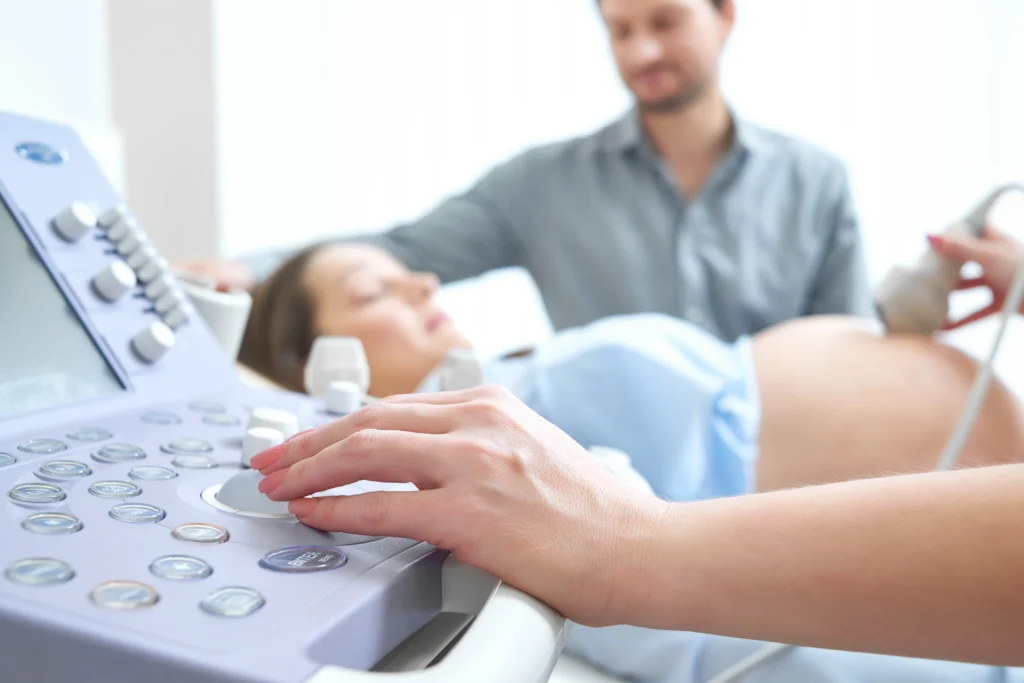
An NST is not routinely performed in every pregnancy.
Healthcare providers generally recommend the test when additional fetal surveillance is required.
Common reasons include:
Reduced Fetal Movements
A noticeable decrease in fetal movements is one of the most common reasons for NST testing.
High-Risk Pregnancy
Women with certain medical conditions may require closer fetal monitoring.
Examples include:
- Gestational diabetes.
- Chronic hypertension.
- Preeclampsia.
- Kidney disease.
- Autoimmune disorders.
Post-Term Pregnancy
Pregnancies continuing beyond 40 weeks often require additional fetal surveillance.
Suspected Fetal Growth Restriction
Babies who appear smaller than expected may need ongoing monitoring.
Multiple Pregnancy
Twin and higher-order pregnancies often require additional surveillance.
Previous Pregnancy Complications
Women with a history of:
- Stillbirth.
- Placental insufficiency.
- Severe preeclampsia.
- Fetal growth restriction.
may undergo serial NST monitoring during future pregnancies.
How Does an NST Work?
The NST evaluates whether your baby’s heart rate increases appropriately during movement.
A healthy fetus typically shows temporary accelerations in heart rate when moving.
These heart rate accelerations suggest that the baby is receiving adequate oxygen and that the nervous system is functioning normally.
Healthcare providers interpret the heart rate pattern to determine whether the result is reassuring.
Research supports NST as an important component of antenatal fetal surveillance in selected pregnancies. (Frederik et al. 2008)
When Is an NST Usually Performed?
NSTs are most commonly performed during the third trimester.
In general, testing begins after approximately 28 weeks of pregnancy, although the exact timing depends on the clinical situation.
Examples include:
| Clinical Situation | Typical Timing |
|---|---|
| Reduced fetal movements | Any time when indicated |
| High-risk pregnancy | Individualised |
| Post-term pregnancy | After 40 weeks |
| Fetal growth restriction | Individualised |
| Maternal medical conditions | Individualised |
Your healthcare provider will determine the most appropriate timing for your pregnancy.
What Happens During an NST?
The test is simple, painless, and non-invasive.
During the procedure:
- You will sit in a reclined chair or lie comfortably on an examination bed.
- Two sensors will be placed on your abdomen using elastic belts.
- One sensor records your baby’s heart rate.
- The second sensor records uterine contractions or activity.
You may be asked to press a button whenever you feel your baby move.
Most NSTs take approximately 20 to 40 minutes.
According to the Cleveland Clinic, the test does not cause discomfort and allows healthcare providers to evaluate fetal well-being without affecting the baby. (Cleveland Clinic)
Understanding NST Results
Many parents become anxious when they hear terms such as reactive or non-reactive.
Understanding these terms can be reassuring.
Reactive NST
A reactive NST is generally considered reassuring.
It means that the baby’s heart rate increased appropriately during movement.
Most NST results are reactive.
Non-Reactive NST
A non-reactive NST means that the expected heart rate accelerations were not observed during the testing period.
Importantly, a non-reactive NST does not automatically indicate a problem.
Many factors can contribute to a non-reactive result, including:
- Fetal sleep cycles.
- Certain medications.
- Early gestational age.
- Reduced fetal activity.
Additional testing may be recommended if the NST is non-reactive.
What Happens After a Non-Reactive NST?
If the NST is non-reactive, your healthcare provider may recommend:
- Extending the NST.
- Vibroacoustic stimulation to wake the baby.
- A Biophysical Profile (BPP).
- Doppler ultrasound studies.
- Additional fetal surveillance.
Healthcare providers always interpret NST results within the broader clinical picture.
According to ACOG, antenatal fetal surveillance results should be interpreted alongside maternal symptoms, gestational age, and other clinical findings. (ACOG Practice)
Is an NST Safe During Pregnancy?
Safety is understandably an important concern.
An NST is considered extremely safe because it simply monitors the baby’s heart rate and movements.
The test is non-invasive and does not expose the mother or baby to radiation.
NST monitoring has been widely used for decades as part of routine antenatal fetal surveillance.
A Physiotherapist’s Perspective: Managing Test Anxiety
Many expectant mothers tell me that waiting for NST results can be stressful.
Some practical strategies that may help include:
- Practising diaphragmatic breathing before the appointment.
- Arriving early to avoid feeling rushed.
- Remaining physically active if medically permitted.
- Bringing a support person if allowed.
- Discussing concerns openly with your healthcare provider.
Remember that most NSTs provide reassurance and confirm that the baby is doing well.
Non-Stress Test vs Biophysical Profile (BPP)
Many expectant parents wonder whether an NST and a Biophysical Profile (BPP) are the same.
Although both tests assess fetal well-being, they are different.
| Non-Stress Test (NST) | Biophysical Profile (BPP) |
|---|---|
| Monitors fetal heart rate patterns | Combines NST with ultrasound assessment |
| Usually takes 20 to 40 minutes | Usually takes 30 to 60 minutes |
| Does not include ultrasound assessment | Includes assessment of fetal movements, tone, breathing, and amniotic fluid |
| Provides information about heart rate reactivity | Provides a more comprehensive assessment of fetal well-being |
In some pregnancies, healthcare providers may recommend both tests to obtain a more complete picture of fetal health.
What Is a Contraction Stress Test and How Is It Different?
A Contraction Stress Test (CST) is another method of antenatal fetal surveillance.
Unlike an NST, which observes the baby’s heart rate during normal conditions, a CST evaluates how the fetal heart responds to uterine contractions.
Because NSTs are non-invasive and easier to perform, they are used more commonly in modern obstetric practice.
In many healthcare settings, BPP and Doppler studies have largely replaced routine CST use.
How Often Are NSTs Repeated?
The frequency of NST monitoring depends on the reason for testing.
Women with uncomplicated pregnancies usually do not require repeated NSTs.
However, women with high-risk pregnancies may undergo testing weekly or even twice weekly.
Examples include:
| Clinical Situation | Possible Monitoring Frequency |
|---|---|
| Post-term pregnancy | Weekly or twice weekly |
| Diabetes in pregnancy | Weekly or twice weekly |
| Hypertension or preeclampsia | Individualised |
| Fetal growth restriction | Individualised |
| Multiple pregnancy | Individualised |
Your healthcare provider will decide the most appropriate surveillance schedule based on your pregnancy.
What Are the Limitations of an NST?
Although NSTs provide valuable information, they are not perfect.
The test cannot guarantee:
- A complication-free pregnancy.
- Perfect newborn health.
- Exact timing of labour.
- Future developmental outcomes.
- Identification of every pregnancy complication.
False-positive results may occur.
For example, a baby may be sleeping during the test, resulting in a non-reactive NST despite being healthy.
Because of these limitations, healthcare providers interpret NST findings alongside:
- Maternal symptoms.
- Gestational age.
- Ultrasound findings.
- Doppler studies.
- Other fetal surveillance tests.
Can an NST Influence Delivery Decisions?
Yes.
NST findings frequently influence ongoing pregnancy management.
Persistently non-reassuring NST findings may lead healthcare providers to recommend:
- Additional fetal surveillance.
- Hospital admission.
- Further ultrasound assessment.
- Earlier delivery when clinically appropriate.
Research supports antenatal fetal surveillance as an important strategy for identifying fetuses at increased risk and guiding timely intervention. (Otto et al. 2024)
Can You Prepare for an NST?
Most women do not require special preparation.
However, the following tips may make the experience easier:
- Wear comfortable clothing.
- Arrive a few minutes early.
- Eat normally unless advised otherwise.
- Empty your bladder before the test if recommended.
- Bring water and a light snack if allowed.
Some healthcare providers suggest eating a light meal before the appointment because fetal activity may increase afterward.
A Physiotherapist’s Perspective: Looking Beyond the Monitor
Repeated fetal monitoring can sometimes feel emotionally exhausting.
As a women’s health physiotherapist, I often remind expectant mothers that emotional health deserves attention too.
Simple strategies may help:
- Continue medically approved physical activity.
- Prioritise adequate sleep.
- Practise relaxation and breathing exercises.
- Seek support from family and friends.
- Discuss persistent anxiety with your healthcare provider.
Remember that additional monitoring is usually recommended because healthcare providers want to ensure the safest possible outcome for both mother and baby.
Questions You May Want to Ask Your Doctor
Consider asking:
- Was my NST reactive?
- Will I need another NST?
- Are additional tests required?
- Could the findings affect my birth plan?
- Should I monitor fetal movements more closely?
- What symptoms should prompt urgent medical review?
Writing questions down before appointments can help you feel more informed and confident.
Final Thoughts
A Non-Stress Test provides valuable information about your baby’s well-being during pregnancy. Although additional monitoring can sometimes feel stressful, NSTs often provide reassurance and help healthcare providers identify concerns early, supporting the safest possible outcome for both mother and baby.
Conclusion
A Non-Stress Test is one of the most widely used methods of assessing fetal well-being during pregnancy.
By monitoring your baby’s heart rate and movements, the test helps healthcare providers identify babies who may require closer surveillance or intervention.
Although additional testing can sometimes feel stressful, most NSTs provide reassurance and support safe pregnancy care.
As a women’s health physiotherapist,
I encourage expectant mothers to remain informed, attend all antenatal appointments, and communicate openly with their healthcare team throughout pregnancy.
Frequently Asked Questions (FAQs)
1. What is a Non-Stress Test (NST) during pregnancy?
A Non-Stress Test is a prenatal test that monitors your baby’s heart rate and movements to assess fetal well-being.
2. Why would my doctor recommend an NST?
NSTs are commonly recommended in high-risk pregnancies, reduced fetal movements, post-term pregnancies, maternal medical conditions, or suspected fetal growth restriction.
3. How long does a Non-Stress Test take?
Most NSTs take approximately 20 to 40 minutes, although the test may be extended if the baby is sleeping or not very active.
4. Is a Non-Stress Test safe during pregnancy?
Yes. NSTs are considered extremely safe because they simply monitor fetal heart rate and movement without exposing the mother or baby to radiation.
5. What does a non-reactive NST mean?
A non-reactive NST means that the expected heart rate accelerations were not observed during the test. Additional monitoring or testing may be recommended.
6. Can an NST affect my delivery plan?
Yes. Persistently non-reassuring NST results may influence decisions regarding additional monitoring, hospital admission, or timing of delivery.
Stay tuned with us for more health related topics.
Follow us on LinkedIn and Instagram for more.
More Read


Medical Disclaimer!
This article has been reviewed and written under the guidance of our Head Physiotherapist, Dr. Kruti Raj (PT, MUHS,CPT,CMPT). The information shared is intended for educational purposes only and should not be considered a substitute for personalized medical advice, diagnosis, or treatment.
Please consult us or any other qualified healthcare professional before beginning any exercise program, especially if you are experiencing pain, recovering from injury, or managing a medical condition.


