EXETER, ENGLAND: Taking children to a local park or playground at least once a week may support their mental health as they grow. New research from the University of Exeter has found a link between regular park visits and better social-emotional development in children.
The study examined 4,219 children and found that those who visited parks more frequently tended to show better emotional and social development. The findings highlight how outdoor play, physical activity and social interaction may support healthy childhood development.
How Weekly Park Visits May Support Children’s Mental Health
Parks and playgrounds offer more than space for children to run and play. They also provide opportunities to build friendships, develop confidence, explore new activities and learn how to manage emotions.
A new study from the University of Exeter suggests that taking children to parks and playgrounds at least once a week could be a simple way to support their emotional wellbeing.
The researchers examined data from the Children of the 90s Study, also known as the Avon Longitudinal Study of Parents and Children (ALSPAC). This long-term research project follows children over several years to understand how early-life experiences relate to health and development.
The study included 4,219 children between the ages of four and 11. Researchers used information about park visits and parental questionnaires collected at five different stages of childhood to examine changes in social-emotional development.
The findings showed that children who visited parks at least once a week had better social-emotional development than those who visited less frequently.
Researchers also reported that children who visited parks at least once a week from birth to age 11 scored an average of 16.5% better on mental health assessments than children who visited less than once a week over the same period.
This percentage represents a difference in assessment scores. It does not mean that weekly park visits reduce the risk of mental illness by 16.5%.
The researchers also considered factors such as family adversity and socioeconomic circumstances when analyzing the results.
The findings suggest that regular access to parks and playgrounds may provide valuable opportunities for children to develop emotional and social skills.
What Is Social-Emotional Development in Children?
Social-emotional development refers to the skills children use to understand and manage their feelings, build relationships and interact with others.
These abilities develop throughout childhood and influence how children respond to everyday experiences.
Important aspects of social-emotional development include:
- Emotional regulation: Understanding feelings and learning how to manage them.
- Social skills: Communicating with others, sharing and cooperating.
- Relationship building: Developing friendships and maintaining positive connections.
- Behavior management: Learning to respond appropriately in different situations.
- Problem-solving: Managing challenges and adapting to changing circumstances.
These skills provide an important foundation for mental health during childhood and later life.
Regular park visits can provide opportunities to practice many of these abilities through active play, group activities and everyday social experiences.
How Outdoor Play Supports Children’s Development
The University of Exeter research highlights several possible reasons why regular park visits are associated with better social-emotional development.
These include physical activity, cognitive opportunities, social interaction, parent-child bonding and different forms of play.
1. Physical Activity Supports Mental and Physical Health
Parks give children space to run, jump, climb, walk and participate in other physical activities.
Regular movement supports physical fitness and helps children develop coordination, balance and motor skills.
Physical activity is also associated with better mental wellbeing. It can provide opportunities for children to release energy, improve physical confidence and participate in enjoyable activities.
Children do not need organized sports or expensive equipment to stay active.
Simple activities such as running, cycling, playing catch or using age-appropriate playground equipment can encourage movement.
Outdoor play also gives children a break from sedentary activities and encourages them to explore their surroundings.
2. Imaginative Play Encourages Creativity and Independence
Parks provide open spaces where children can create games, explore different activities and use their imagination.
They may invent stories, organize group games, explore natural surroundings or create simple challenges with friends.
These activities give children opportunities to make decisions and solve problems.
Adventurous and imaginative play can also help children develop confidence and independence. Trying new activities allows them to understand their abilities and become more comfortable with unfamiliar situations.
Mark Ferguson, the lead researcher from the University of Exeter, highlighted how adventurous and imaginative play can help children build confidence and independence.
3. Social Interaction Helps Children Build Friendships
Parks and playgrounds bring children together in shared environments.
They provide opportunities to meet other children, communicate and participate in group activities.
During play, children may learn to:
- Share toys and playground equipment.
- Take turns during games.
- Cooperate with other children.
- Express their thoughts and feelings.
- Understand different opinions.
- Manage disagreements.
These experiences help children practice communication and cooperation.
Regular opportunities for social interaction may also help children become more comfortable in group settings and develop a sense of belonging.
4. Parent-Child Interaction Creates Opportunities for Bonding
Park visits can provide valuable opportunities for parents and children to spend time together.
Parents can participate in games, explore the surroundings with their children or simply talk while walking through the park.
These shared experiences encourage communication and provide opportunities for parents to understand their children’s interests and feelings.
Children can also benefit from having caregivers participate in their activities and support their exploration.
A regular family park visit can become a simple routine that gives parents and children time together away from everyday distractions.
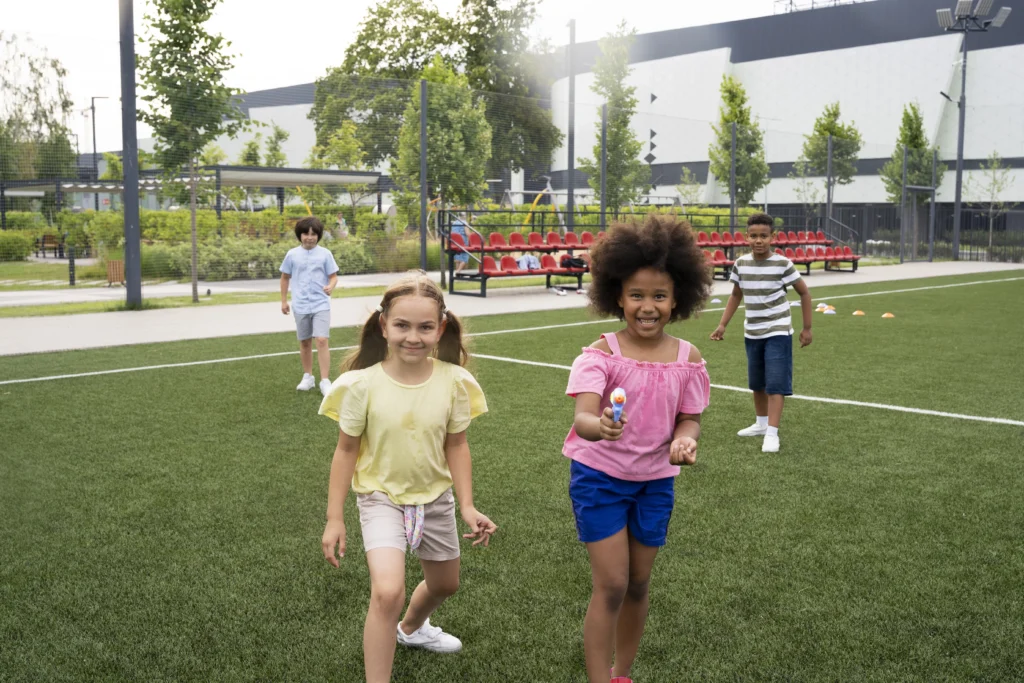
Why Safe and Accessible Parks Matter for Children’s Wellbeing
One of the most important messages from the University of Exeter research is that families need access to good-quality parks.
Having a park nearby does not automatically mean that every family can use it regularly.
Parks need to be safe, accessible, clean and welcoming to children from different backgrounds.
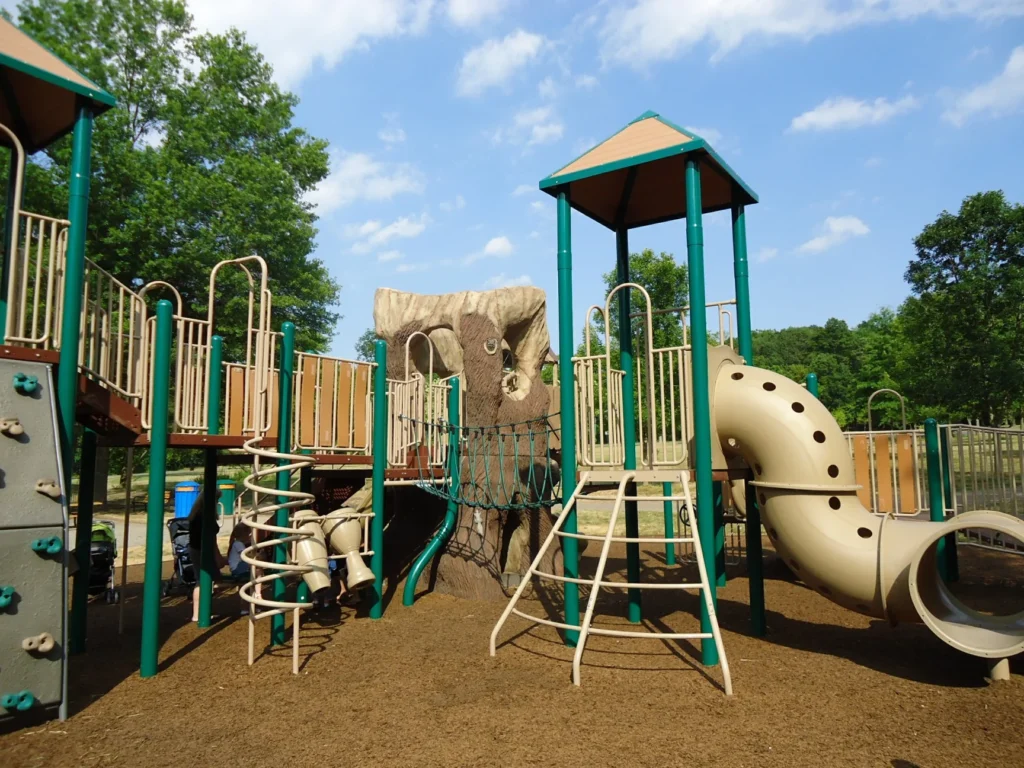
Poorly maintained playground equipment, unsafe surroundings, limited facilities and a lack of accessible paths can prevent families from using public spaces.
The research also identified differences in park visits according to family background.
Children from more advantaged families appeared to visit parks more frequently when they were younger. As children grew older, this pattern changed, with some children from less advantaged families visiting parks more often.
This finding highlights the importance of affordable recreational spaces.
Parks are often free or low-cost places where families can spend time together without paying for organized activities.
The research suggests that good-quality parks could help reduce inequalities in children’s development. However, families need safe and convenient access to these facilities to benefit from them.
Why Communities Need More Child-Friendly Public Spaces
The benefits of parks extend beyond individual children and families. They can also support stronger community relationships.
Paul Noblet, interim head of external affairs and research at the children’s mental health charity YoungMinds, highlighted the importance of parks and playgrounds in addressing isolation and loneliness among young people.
He also raised concerns about the disappearance of community spaces where children and young people can meet, build friendships and develop relationships.
Free, safe and accessible public spaces allow children to interact with others outside school and home.
These environments can help children build confidence, develop friendships and feel connected to their communities.
Maintaining existing parks and creating more welcoming recreational spaces could therefore support children’s social development and emotional wellbeing.
The findings were also covered by The Independent in its November 11, 2026 report on the free weekly activity that may support children’s mental health.
How Often Should Parents Take Children to the Park?
The University of Exeter researchers suggest encouraging children to visit parks and playgrounds at least once a week.
This offers families a simple starting point for making outdoor activity part of their regular routine.
However, the study did not establish a required visit duration or prove that one weekly visit guarantees better mental health.
Parents can make park visits enjoyable by including different activities.
Encourage active play: Children can run, jump, climb and explore age-appropriate playground equipment.
Allow imaginative activities: Encourage children to create games, explore natural surroundings and use their creativity.
Support social interaction: Playing with siblings, friends or other children provides opportunities to practice communication and cooperation.
Spend time together: Parents can join activities, talk with children and encourage safe exploration.
Create a regular routine: Choosing one day each week for a family park visit can make outdoor activity easier to maintain.
Children should use age-appropriate equipment and receive suitable supervision. Parents should also consider weather conditions, playground maintenance and local safety.
Families who cannot access a nearby park can look for other safe outdoor spaces, such as community gardens, school playgrounds open to the public or suitable recreational areas.
What Are the Limitations of the Research?
Although the findings offer useful insights into childhood development, several limitations should be considered.
The study was observational.
Researchers examined existing information about children’s park visits and social-emotional development. They did not randomly assign children to visit parks or remain indoors.
Therefore, the findings show an association. They do not prove that park visits alone caused better mental health outcomes.
The information included parental reports.
Parents completed questionnaires about children’s park visits and development at five stages of childhood.
These reports helped researchers follow changes over time, but they may not capture every detail of children’s activities or behavior.
The study involved a specific UK population.
The research used data from the Children of the 90s study, a long-term UK research project.
The findings may not apply equally to children in every country, community or family environment. The researchers highlighted the need for further studies involving more diverse populations.
Other factors can influence child development.
Family relationships, education, living conditions, social support and socioeconomic circumstances can all affect children’s wellbeing.
Although the researchers considered several potential influences, other factors may also contribute to the observed relationship.
The results should therefore be viewed as evidence supporting the potential value of regular park visits, rather than proof that this activity prevents or treats mental health conditions.
A Simple Weekly Habit That Can Support Healthy Childhood Development
The University of Exeter research highlights the importance of accessible outdoor spaces in children’s lives.
Regular park visits provide opportunities for physical activity, imaginative play, social interaction and parent-child bonding.
The study found that children who visited parks more frequently tended to have better social-emotional development. These skills help children build relationships, manage emotions and respond to everyday challenges.
Although park visits cannot replace professional support when a child experiences mental health difficulties, they can form a useful part of a healthy childhood routine.
Making parks safe, accessible and welcoming to all families could help more children benefit from the physical, emotional and social opportunities that outdoor play provides.