


CHARLOTTESVILLE, VIRGINIA, USA: Scientists at the University of Virginia have identified a gene called CASS4 that may help the brain defend itself against changes linked to Alzheimer’s disease. The gene appears to support the activity of specialized immune cells that respond to harmful protein deposits.
A study in mice found that losing CASS4 weakened the ability of these cells to surround and contain amyloid-beta plaques. The discovery offers a new direction for research into Alzheimer’s disease and possible future treatments.
How the CASS4 Gene Supports the Brain’s Immune Defense
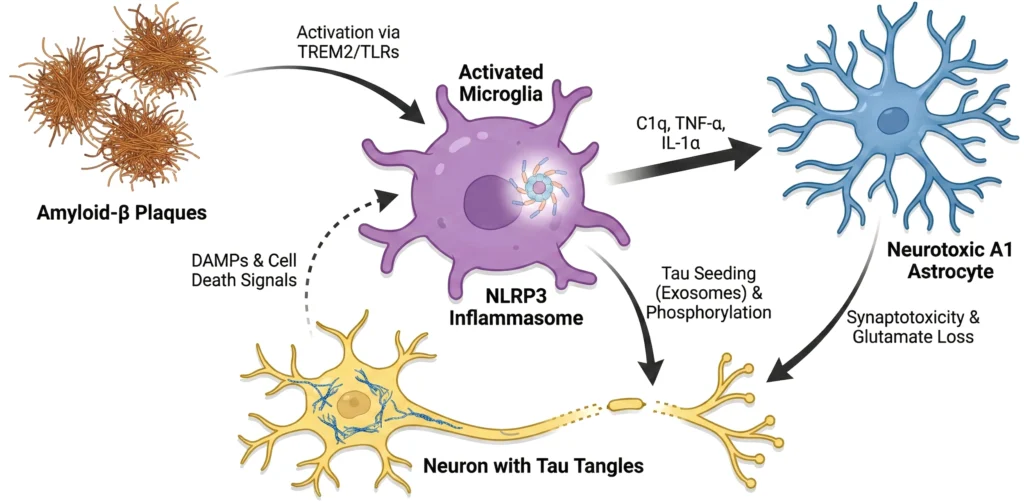
Alzheimer’s disease is a progressive brain disorder that affects memory, thinking and behavior. It is associated with the buildup of two abnormal proteins: amyloid-beta and tau.
Amyloid-beta proteins can collect outside brain cells and form sticky deposits called amyloid plaques. Tau proteins can form abnormal tangles inside nerve cells. These changes are associated with damage to brain tissue and the gradual loss of normal brain function.
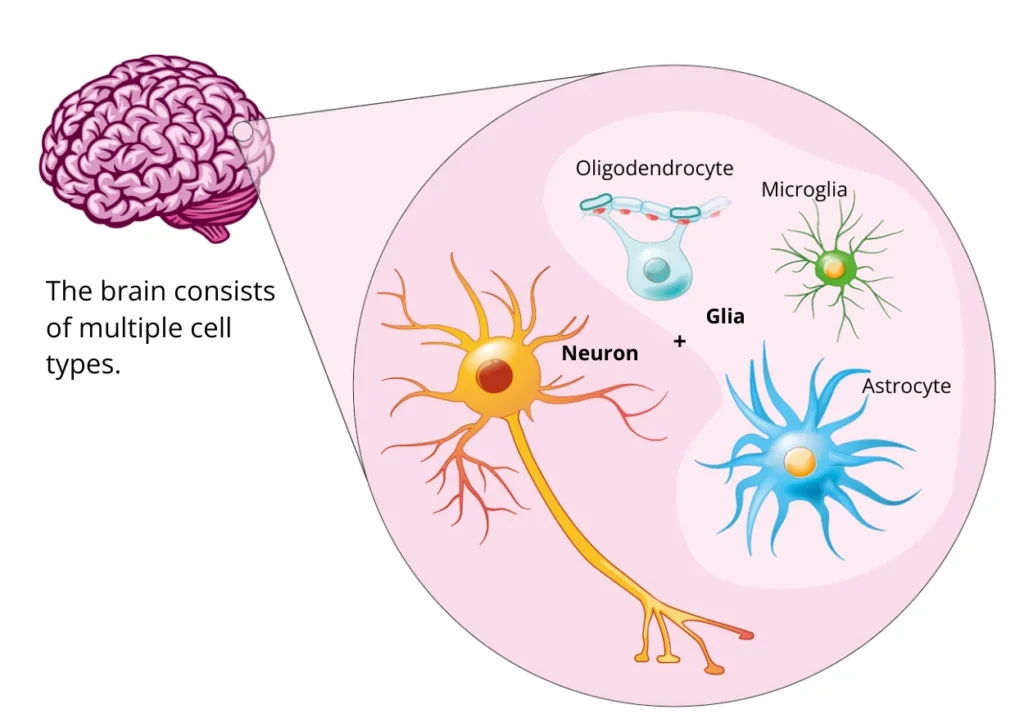
Scientists have increasingly recognized that the brain’s immune system also plays an important role in this process. Researchers are particularly interested in microglia, the specialized immune cells that help protect brain tissue.
The new research suggests that CASS4 helps these cells respond effectively to amyloid buildup. It also provides evidence that problems with this gene could weaken the brain’s natural ability to contain harmful protein deposits.
What Is the CASS4 Gene?
CASS4 stands for Crk-associated substrate family member 4. It is a gene that provides instructions for making a protein involved in coordinating important cellular activities.
The CASS4 protein belongs to a group of adaptor or scaffold proteins. These proteins help other molecules interact and coordinate their functions inside cells.
One important area involving CASS4 is focal adhesion signaling. Focal adhesions are structures that help cells attach to their surroundings, change shape and move.
These activities are essential for immune cells that need to travel towards areas of injury or harmful protein buildup.
Previous genome-wide association studies have identified the CASS4 gene region as being associated with an increased risk of Alzheimer’s disease. However, scientists have had limited knowledge about how this genetic association influences the disease.
The new research provides a clearer explanation by identifying an important role for CASS4 inf microglial function.
What Are Microglia and How Do They Protect the Brain?
Microglia are specialized immune cells found throughout the central nervous system. They act as the brain’s first line of immune defense.
Their responsibilities include:
- Monitoring brain tissue for signs of damage or infection.
- Removing damaged cells and cellular waste.
- Responding to harmful substances and abnormal protein deposits.
- Moving towards areas of injury.
- Helping protect neurons from surrounding damage.
Microglia also respond to amyloid-beta plaques associated with Alzheimer’s disease.
When they detect these deposits, they move towards them and form protective barriers around the plaques. They use their mobile cellular extensions to surround and compact the amyloid material.
This process reduces the exposed surface area of amyloid deposits and helps limit their harmful effects on nearby nerve cells.
However, microglia must be able to move effectively and maintain close contact with the plaques to perform these protective functions.
The University of Virginia study suggests that CASS4 helps coordinate these activities.
What Did Researchers Discover About CASS4 and Alzheimer’s Disease?
Researchers led by John R. Lukens at the University of Virginia investigated what happens when CASS4 does not function properly.
The team studied genetically modified mice carrying characteristics of Alzheimer’s-related amyloid buildup. They compared mice with normal CASS4 activity against mice in which the gene had been removed.
The researchers also developed a model in which CASS4 was specifically removed from microglia. This helped them investigate whether the effects were directly connected to the activity of these immune cells.
The findings revealed several important changes.
1. Loss of CASS4 Increased Amyloid Plaque Buildup
Mice without CASS4 showed greater amyloid-beta accumulation in two important brain regions: the hippocampus and the cerebral cortex.
The hippocampus plays an important role in learning and memory. The cerebral cortex supports several higher brain functions, including thinking, perception and information processing.
Researchers observed an increase in total amyloid plaque volume, plaque numbers and large plaques.
These findings suggest that CASS4 helps regulate the brain’s response to amyloid buildup. Without its normal activity, the protective mechanisms that limit plaque accumulation become less effective.
2. Microglia Became Less Effective at Surrounding Plaques
One of the most important findings involved the ability of microglia to move towards amyloid-beta deposits.
Normally, these immune cells gather around plaques and form protective barriers. Their cellular extensions help surround the deposits and keep the harmful material contained.
However, microglia without CASS4 showed reduced movement towards amyloid plaques. They also had difficulty maintaining close contact with the deposits.
As a result, the plaques were less effectively compacted.
Researchers found more diffuse amyloid-beta material in mice without CASS4. They also observed changes in plaque structure, including reduced plaque intensity and sphericity.
These findings suggest that CASS4 helps microglia organize and contain amyloid deposits rather than simply detect their presence.
3. The Number of Microglia Did Not Significantly Change
An important part of the study was understanding whether the loss of CASS4 reduced the number of immune cells available to protect the brain.
Surprisingly, researchers did not find significant changes in overall microglial numbers in the hippocampus and cerebral cortex.
They also found no major differences in several microglial activation markers or in the cells’ ability to take up amyloid-beta.
This finding is important because it suggests that the problem was not simply a shortage of immune cells or a complete loss of their ability to absorb harmful material.
Instead, the main difficulty involved how effectively microglia moved towards amyloid plaques and organized themselves around them.
In other words, the cells were still present, but their ability to perform certain protective activities was weakened.
4. Brain Nerve Cells Showed Greater Signs of Damage
Researchers also examined how the loss of CASS4 affected the health of nearby neurons.
They observed increased neuritic dystrophy in mice without the gene.
Neuritic dystrophy refers to abnormal changes and damage in the extensions of nerve cells, including axons and dendrites. These structures help neurons communicate with other cells.
The team used markers such as amyloid precursor protein and ATG9 to examine signs of damage in neuronal projections.
The results showed increased signs of neuronal damage in the hippocampus and cerebral cortex.
These findings suggest that when microglia cannot effectively contain amyloid plaques, nearby nerve cells may experience greater exposure to harmful protein deposits.
However, the study does not establish that CASS4 loss directly kills neurons. It demonstrates an association between disrupted CASS4 activity, increased amyloid pathology and greater signs of neuronal damage in the mouse model.
5. Mice Showed Problems With Cognitive Flexibility
The research team also investigated whether the loss of CASS4 affected cognitive abilities.
They used the Morris water maze, a test commonly used to examine learning and memory in laboratory mice.
The test involved teaching mice to locate a hidden platform in a pool of water. Researchers later changed the platform’s location to determine whether the animals could adjust to the new position.
Initially, mice without CASS4 learned the original platform location and performed similarly to control mice during the memory test.
However, after researchers moved the platform, the CASS4-deficient mice struggled to adjust their behavior.
They spent more time searching around the original platform location and less time near the new location.
This indicated impaired cognitive flexibility, which refers to the ability to change thinking or behavior when circumstances change.
The findings are particularly relevant because difficulties with cognitive flexibility can also occur in people with Alzheimer’s disease.
However, the experiment does not establish that people with changes in CASS4 will develop the same cognitive problems.
How Does CASS4 Help Microglia Move Towards Amyloid Plaques?
The researchers also investigated the biological processes that allow microglia to move and respond to harmful deposits.
Their findings highlighted the importance of focal adhesion signaling.
Focal adhesion structures connect a cell to its surrounding environment. They also help coordinate the internal changes required for a cell to move.
These structures work with the actin cytoskeleton, a network of protein filaments that helps cells maintain their shape and change their position.
The research found that removing CASS4 disrupted several signaling processes associated with these activities.
Disrupted Focal Adhesion Signaling
Researchers examined the proteins involved in focal adhesion signaling using specialized protein analysis.
They found significant changes in the phosphorylation of proteins involved in these pathways.
Phosphorylation is a process in which a phosphate group is added to a protein. It can change how that protein works and how it interacts with other molecules.
These changes suggest that CASS4 helps coordinate the signaling systems microglia need to move and respond to their surroundings.
Reduced Cellular Movement and Injury Response
The researchers also examined how CASS4 affected cellular responses to injury.
Laboratory experiments using bone-marrow-derived macrophages showed reduced wound-healing responses when CASS4 was absent. These cells are related to microglia but are not the same as the brain’s resident immune cells.
In a separate experiment, researchers used laser injury to observe microglial behaviour inside living brain tissue.
Normal microglia moved their cellular extensions towards the injured area. However, microglia without CASS4 showed a weaker response and were less effective at gathering around the injury.
Together, these experiments support the role of CASS4 in regulating focal adhesion signaling and cellular movement.
They also help explain why microglia without normal CASS4 activity struggle to surround amyloid plaques.
Why Is This Discovery Important for Alzheimer’s Research?
One of the most interesting aspects of this study is that it changes how researchers understand the role of CASS4 in Alzheimer’s disease.
Scientists had previously suspected that the gene might influence the disease through its direct effects on neurons.
However, the findings suggest that CASS4 primarily acts through the brain’s immune system, particularly microglia.
The study also helps explain why genetic factors linked to Alzheimer’s disease deserve further investigation.
A gene associated with increased disease risk may influence several biological processes rather than directly damaging nerve cells.
The research therefore highlights microglial movement, focal adhesion signaling and amyloid plaque containment as important areas for future investigation.
The findings were also highlighted in a News-Medical report published on November 10, 2026, which discussed the potential importance of CASS4 in developing new approaches to Alzheimer’s disease.
The original research, led by Adeline E. Walsh and supervised by John R. Lukens, was published in the Journal of Experimental Medicine on October 27, 2026.
The study is titled Alzheimer’s genetic risk factor CASS4 controls microglial focal adhesion biology and amyloidosis.
Could Targeting CASS4 Lead to New Alzheimer’s Treatments?
The discovery creates a potential research direction for developing treatments that target the brain’s immune system.
Current Alzheimer’s research includes several approaches, such as targeting amyloid-beta, reducing tau-related damage and investigating the role of inflammation in disease progression.
The CASS4 findings highlight another possible approach: improving the ability of microglia to respond to harmful protein deposits.
Researchers believe that strategies designed to support CASS4 activity or improve related focal adhesion pathways may help microglia contain amyloid plaques more effectively.
Such approaches could eventually contribute to treatments aimed at slowing disease progression and protecting vulnerable nerve cells.
However, these possibilities still require extensive research.
The study did not test a drug or gene therapy designed to increase CASS4 activity. It also did not demonstrate that restoring this gene could reverse Alzheimer’s disease.
Instead, the researchers established an important connection between CASS4 function, microglial behavior and amyloid-related brain damage.
The team is also exploring the possible role of CASS4 in other neurodegenerative disorders. This may help scientists understand whether similar immune system mechanisms contribute to other conditions involving progressive damage to the nervous system.
Could CASS4 Become an Early Biomarker for Alzheimer’s Disease?
The findings also raise the possibility that abnormal CASS4 activity could help identify biological changes associated with Alzheimer’s disease.
A biomarker is a measurable biological feature that provides information about a disease, its development or a person’s response to treatment.
Researchers suggest that defective CASS4 activity could potentially serve as an early biomarker for Alzheimer’s disease.
However, this possibility has not yet been clinically established.
Further studies must determine whether CASS4-related changes can be reliably detected in people and whether they can help identify individuals at increased risk before significant symptoms develop.
Researchers will also need to establish whether these changes can distinguish Alzheimer’s disease from other neurological conditions.
If validated, CASS4 could potentially become another research target for improving early disease detection.
What Are the Limitations of the CASS4 Study?
Although the findings provide important insights, several limitations must be considered.
First, the main experiments involved genetically modified 5xFAD mice. These animals are commonly used to study amyloid-related changes associated with Alzheimer’s disease.
However, mouse models cannot reproduce every aspect of human Alzheimer’s disease.
Second, the researchers removed CASS4 to understand what happens when the gene does not function normally. This does not automatically prove that increasing its activity will produce the opposite effect.
Third, the study did not establish whether CASS4-targeting strategies are safe or effective in humans.
Further research will be necessary to understand how naturally occurring changes in CASS4 affect the human brain.
Scientists must also determine whether restoring or modifying its activity can improve microglial function without causing unwanted effects.
Human studies, drug development and clinical trials will be needed before CASS4-based approaches could become part of Alzheimer’s treatment or prevention.
What This Discovery Means for the Future of Alzheimer’s Research
The CASS4 discovery provides a better understanding of how the brain’s immune system responds to Alzheimer’s-related protein buildup.
It shows that microglia need more than the ability to recognize harmful deposits. They must also move towards these deposits, maintain close contact with them and help keep them contained.
CASS4 appears to play an important role in coordinating these protective activities through focal adhesion signaling.
Although the findings do not represent an immediate treatment or cure, they identify a potential biological target that deserves further investigation.
Future research may reveal whether improving CASS4-related activity can strengthen the brain’s natural defense mechanisms and help protect nerve cells against Alzheimer’s-related damage.


