A teenager complains of knee pain after walking, struggles to climb stairs or starts limping without an obvious injury. These symptoms could indicate slipped capital femoral epiphysis (SCFE)
Parents may naturally assume that the problem is related to sports, muscle strain or a knee condition.
Quick Answer: What Is Slipped Capital Femoral Epiphysis?
Slipped capital femoral epiphysis (SCFE) is a hip condition in which the developing femoral head shifts out of its normal alignment through the growth plate. It commonly affects teenagers and can cause hip, groin, thigh or referred knee pain.
Warning signs parents should recognize:
- Unexplained knee, thigh or groin pain.
- Limping without an obvious injury.
- Reduced hip movement, especially inward rotation.
- Walking with the affected leg turned outwards.
- Difficulty participating in sports or climbing stairs.
Important: Suspected SCFE requires urgent orthopedic assessment. Stop weight-bearing and do not attempt exercises or forceful hip movements before medical evaluation.
However, sometimes the actual source of pain is the hip.
One important condition to recognize is slipped capital femoral epiphysis (SCFE), also called slipped upper femoral epiphysis (SUFE).
It affects the growth plate near the upper end of the thigh bone and commonly develops during adolescence.
What makes Slipped Capital Femoral Epiphysis particularly important is that a teenager may experience pain around the knee even when the knee itself is healthy.
The condition requires urgent orthopedic assessment because further slipping can damage the hip joint.
Key Takeaways for Parents
SCFE can cause referred pain around the knee even when the knee itself is healthy.
A teenager who limps without an obvious injury should have the hip examined.
Reduced inward rotation and an outward-turning leg position can indicate a hip problem.
Stop weight-bearing and seek urgent orthopedic assessment if SCFE is suspected.
Postoperative rehabilitation can help restore walking, strength, balance and functional movement when permitted.
Early recognition and appropriate orthopedic treatment are essential for protecting long-term hip function.
What Is Slipped Capital Femoral Epiphysis?
Slipped capital femoral epiphysis is a hip condition in which the femoral head shifts out of its normal alignment with the femoral neck through the growth plate.
The femoral head is the rounded upper end of the thigh bone (femur). It fits into the socket of the pelvis to form the hip joint.
During childhood and adolescence, a growth plate made of cartilage separates the developing femoral head from the rest of the bone.
In SCFE, this growth plate fails under mechanical stress, allowing the femoral head and neck to become displaced relative to one another.
Although the condition is commonly described as the femoral head slipping, the head generally remains within the hip socket while the femoral neck and shaft move forwards and outwards relative to it.
SCFE most commonly affects children during adolescence, often between 10 and 16 years of age. It is more frequently diagnosed in boys and is associated with higher body weight.
It usually affects one hip, although the opposite hip can also develop the condition.
SCFE is not simply a sports injury or a result of an ordinary childhood fall. It involves the developing growth plate and requires specialist treatment. (Webb et al., 2025)
Why Does SCFE Develop in Teenagers?
The exact cause of SCFE is not completely understood.
However, several factors can contribute to increased stress or reduced strength around the developing growth plate.
1. Growth During Adolescence
During puberty, the body undergoes rapid changes in bone growth and development.
The growth plate near the femoral head is particularly vulnerable to mechanical forces during this period.
In some adolescents, the growth plate may become unable to withstand the forces passing through the hip joint.
2. Higher Body Weight
Higher body weight increases the mechanical load transmitted through the hip.
This is an important risk factor for SCFE, although the condition can also occur in adolescents who are not overweight.
SCFE should never be approached by blaming a teenager or family for their body weight.
The priority is recognizing symptoms and arranging appropriate treatment.
3. Hormonal and Endocrine Conditions
Certain endocrine conditions can affect normal bone development and growth plate strength.
Examples include:
- Hypothyroidism.
- Growth hormone disorders.
- Other hormonal or metabolic abnormalities.
SCFE occurring at an unusually young age or in a teenager with lower body weight may prompt doctors to investigate an underlying endocrine or metabolic condition.
4. Family History and Other Factors
A family history of SCFE may increase the likelihood of developing the condition.
The opposite hip can also become affected, so doctors may monitor both sides even when symptoms are present in only one hip. (Johns et al., 2023)
Why Can a Hip Condition Cause Knee Pain?
This is one of the most important aspects of SCFE for parents to understand.
The hip and knee are separate joints, but pain originating in the hip can sometimes be felt around the knee. This is called referred pain.
The nerves supplying the hip and nearby areas share sensory pathways, so the brain may interpret discomfort originating in the hip as pain around the thigh or knee.
As a result, a teenager may complain mainly about knee pain even though the underlying problem is at the upper end of the femur.
This can delay recognition if the assessment focuses only on the knee.
A teenager with unexplained knee pain and a limp should therefore have the hip examined as well.
Early Signs and Symptoms of SCFE
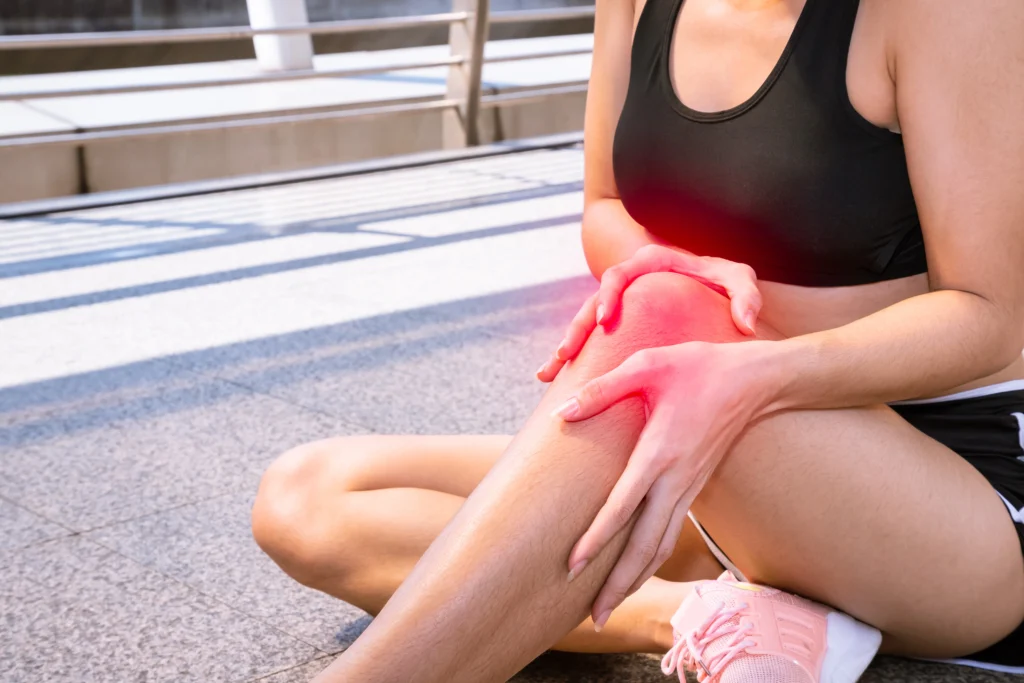
Symptoms can develop gradually over several weeks or appear suddenly when the slip becomes more severe.
Recognizing the following changes is important.
1. Knee Pain Without an Obvious Knee Injury
Some teenagers initially complain of pain around the knee rather than the hip.
The discomfort may become more noticeable during:
- Walking for longer periods.
- Climbing stairs.
- Running or jumping.
- Squatting.
- Participating in sports.
If the knee examination does not explain the symptoms, the hip should also be assessed.
2. Hip, Groin or Thigh Pain
Other children experience discomfort directly around the hip or groin.
The pain may spread towards the front or inner thigh.
Some teenagers describe it as a dull ache, while others experience sharper discomfort during movement.
3. Limping While Walking
A noticeable limp is another important warning sign.
The teenager may:
- Walk unevenly.
- Take shorter steps on the affected side.
- Shift body weight towards the unaffected leg.
- Avoid putting full weight through the affected hip.
- Develop an outward-turning foot position.
A limp that appears without a clear injury should not be dismissed as ordinary sports-related soreness.
4. Reduced Hip Movement
SCFE can restrict normal hip movement, particularly internal rotation.
Internal rotation means turning the thigh inwards.
Parents may notice that the teenager struggles with movements involving bending, turning or bringing the hip through its normal range.
A clinician may also identify a characteristic movement in which the affected leg turns outwards when the hip is bent. This is known as the Drehmann sign.
This finding can raise suspicion of Slipped Capital Femoral Epiphysis, although diagnosis requires appropriate imaging.
5. Difficulty Participating in Sports
A teenager who previously enjoyed sports may gradually reduce participation because of pain and difficulty moving.
Running, jumping, squatting and prolonged walking may become uncomfortable.
Some children may initially continue participating despite symptoms, which can allow the condition to progress.
Do not encourage a teenager with suspected SCFE to continue playing sports or exercising. (AAOS)
Stable vs Unstable Slipped Capital Femoral Epiphysis
Doctors classify SCFE according to the teenager’s ability to bear weight.
This classification is important because it helps guide treatment and provides information about the severity of the presentation.
| Type | What it means |
|---|---|
| Stable SCFE | The teenager can bear weight, with or without crutches. |
| Unstable SCFE | The teenager cannot bear weight, even with crutches. |
An unstable slip is generally more severe and carries a higher risk of complications, particularly damage to the blood supply of the femoral head.
However, a stable slip is also an orthopedic emergency. Being able to walk does not mean the condition is safe to ignore.
Doctors may also describe SCFE according to how symptoms develop:
- Acute SCFE: Symptoms begin suddenly.
- Chronic SCFE: Pain and movement difficulties develop gradually over several weeks.
- Acute-on-chronic SCFE: A teenager with previous symptoms experiences a sudden worsening.
These descriptions help clinicians understand how the condition has progressed.
How Is SCFE Diagnosed?
SCFE requires medical and orthopedic assessment. The diagnosis is usually established through clinical examination and imaging.
Physical Examination
The doctor may assess:
- Walking pattern and ability to bear weight.
- Position of the affected leg.
- Hip range of motion.
- Internal and external rotation.
- Pain during movement.
- Differences between both hips.
The examination is performed carefully because unnecessary movement of an affected hip should be avoided.
X-rays
Pelvic and hip X-rays are commonly used to confirm SCFE.
Imaging generally includes an anteroposterior (AP) pelvis view and an appropriate lateral view of the hips.
The lateral view depends on the suspected stability of the slip.
A frog-leg lateral view may be used for stable cases, while a cross-table lateral view is generally preferred when an unstable slip is suspected.
This avoids unnecessary positioning of an unstable hip.
MRI
MRI may be recommended when early X-rays are inconclusive but clinical suspicion remains high.
It can help identify early growth plate abnormalities that may not be clearly visible on standard radiographs.
A normal initial X-ray does not always exclude early SCFE when symptoms and examination findings remain concerning. (Royal Children’s Hospital Melbourne)
Why Is Immediate Treatment Important?
SCFE is not a condition that should be managed by simply resting at home or trying exercises.
Once suspected, the teenager should stop weight-bearing and receive urgent hospital assessment.
The immediate priorities are to prevent further slipping and protect the hip joint.
1. Stop Weight-Bearing
The teenager should not continue walking, running or playing sports.
Avoid putting weight through the affected leg while arranging urgent medical care. Follow emergency clinicians’ instructions regarding safe movement and transport.
Do not attempt to straighten, rotate or manipulate the hip.
2. Surgical Stabilization
Most confirmed SCFE cases require surgery to prevent further displacement.
The commonly used procedure involves placing a screw across the growth plate to stabilize the femoral head.
The exact surgical approach depends on the severity, stability and characteristics of the slip.
3. Monitoring the Opposite Hip
SCFE may develop in the other hip as well.
The orthopedic team may monitor the opposite side and consider preventive treatment in selected cases, depending on the teenager’s age, risk factors and clinical findings.
Surgical decisions about the unaffected hip are individualized rather than automatic.
How Does Physiotherapy Help After SCFE Surgery?
Physiotherapy plays an important role in rehabilitation after surgical stabilization.
However, physiotherapy is not the initial treatment for suspected or untreated SCFE.
A teenager with suspected SCFE must first receive urgent orthopedic assessment and appropriate surgical management.
After surgery, rehabilitation is planned according to the surgeon’s instructions, fixation stability, symptoms and healing progress.
1. Protecting the Hip During Early Recovery
The initial rehabilitation phase focuses on protecting the operated hip.
The physiotherapist follows the prescribed weight-bearing restrictions and teaches the teenager how to move safely.
Crutches or other walking aids may be required.
The teenager and family should understand how much weight can be placed through the operated leg and when restrictions may change.
2. Restoring Safe Walking
Once weight-bearing is permitted, physiotherapy can help the teenager gradually regain a comfortable walking pattern.
Treatment may include:
- Correct use of crutches.
- Gradual weight transfer.
- Walking practice.
- Improving movement confidence.
- Reducing compensatory movement patterns.
Progression should follow the orthopaedic team’s instructions rather than a fixed timetable.
3. Improving Hip and Lower-Limb Strength
Following surgery and reduced activity, some teenagers may experience weakness around the hip and lower limb.
When permitted, physiotherapy may introduce progressive exercises targeting:
- Hip muscles.
- Quadriceps.
- Hamstrings.
- Trunk stability.
- Pelvic control.
The exercise program must avoid excessive loading or movements that are not permitted during recovery.
4. Improving Balance and Movement Control
Changes in walking and reduced activity can affect balance and coordination.
As recovery progresses, the physiotherapist may introduce appropriate balance exercises, controlled weight-shifting and functional movement activities.
These activities should be introduced only when the hip is ready for increased loading.
5. Supporting a Safe Return to Sports
Returning to sports requires more than simply having less pain.
The orthopedic team must confirm that the hip is sufficiently healed and that the teenager can progress safely.
Physiotherapy may then help rebuild strength, movement control, endurance and sport-specific skills.
The return-to-sport process should be gradual and based on clinical progress rather than a predetermined date.
The 2025 American Family Physician review describes a stepwise rehabilitation approach involving protection, pain-free walking, neuromuscular control, strengthening and performance progression.
It also highlights that return to sport commonly takes several months, with individual clearance remaining essential. (Webb et al., 2025)
What Are the Possible Complications of SCFE?
Early recognition and appropriate treatment are important because SCFE can lead to complications affecting long-term hip function.
Possible complications include:
Avascular Necrosis
Reduced blood supply can damage the femoral head and cause bone tissue to deteriorate.
Avascular Necrosis is a particularly serious complication associated with unstable slips.
Chondrolysis
Chondrolysis involves damage and loss of the joint cartilage, which can result in pain, stiffness and reduced hip movement.
Femoroacetabular Impingement
Changes in the shape of the femoral head and neck can cause abnormal contact within the hip joint during movement.
Femoroacetabular Impingement may lead to persistent discomfort and restricted hip mobility.
Growth Disturbance
Damage to the growth plate can affect the normal development of the upper femur.
Early Osteoarthritis
Changes in hip structure and joint mechanics may increase the risk of joint degeneration later in life.
The likelihood of complications varies according to the stability and severity of the slip, timing of treatment and other clinical factors.
Myth vs Fact: Understanding SCFE
MYTH: Knee pain always means the problem is in the knee.
FACT: Hip conditions such as SCFE can cause referred pain around the thigh or knee.
MYTH: If a teenager can still walk, SCFE is not serious.
FACT: A teenager who can bear weight may still have stable SCFE, which requires urgent orthopedic treatment.
MYTH: SCFE is simply a sports-related muscle injury.
FACT: SCFE involves displacement through the developing growth plate and requires specialist management.
MYTH: Stretching and strengthening can correct an untreated slip.
FACT: Exercises cannot stabilize SCFE. Urgent orthopedic assessment and usually surgical stabilization are needed.
MYTH: Physiotherapy is unnecessary after SCFE surgery.
FACT: Individualized postoperative physiotherapy can help restore walking, strength, balance and functional mobility when permitted by the orthopedic team.
How Long Does Recovery From SCFE Take?
Recovery varies depending on the severity of the slip, surgical procedure, healing progress and presence of complications.
Some teenagers begin protected walking with crutches relatively early after surgery, while others need longer restrictions.
Returning to school and everyday activities may happen before returning to running or competitive sports.
Sports participation requires additional assessment of:
- Pain and hip movement.
- Walking quality.
- Lower-limb strength.
- Balance and movement control.
- Functional tolerance.
- Orthopedic and imaging findings.
Regular follow-up is important because complications may not become apparent immediately after surgery.
The orthopedic team may recommend repeat X-rays over the following months to monitor the growth plate and hip joint.
When Should Parents Seek Medical Attention?
Any teenager with unexplained hip, groin, thigh or knee pain accompanied by limping should receive prompt medical assessment.
SCFE should be considered particularly when symptoms occur during adolescence and hip movement is restricted.
Urgent medical assessment required
Seek emergency medical attention if your teenager:
- Suddenly develops severe hip, thigh or knee pain with limping.
- Cannot stand or bear weight on the affected leg.
- Develops sudden difficulty walking.
- Holds one leg turned outwards and cannot move it normally.
- Experiences sudden worsening of previously mild symptoms.
Do not wait for the pain to become severe. A teenager who can still walk may also have a stable SCFE that requires urgent treatment.
Final Thoughts
A teenager’s knee pain may sometimes be a warning sign of a hip condition rather than a problem within the knee itself. Slipped capital femoral epiphysis is an important example because early symptoms can be subtle and may initially appear as an unexplained limp or difficulty walking.
Parents should take persistent hip, thigh or knee pain accompanied by limping seriously. Suspected SCFE needs urgent orthopedic assessment, even if the teenager can still walk.
After appropriate surgical stabilization, individualized physiotherapy can support recovery by improving walking, strength, balance and functional movement as the hip heals.
Recognizing the warning signs early can make an important difference. Do not ignore an unexplained limp or assume that every episode of knee pain originates in the knee.
Conclusion
Slipped capital femoral epiphysis is an important cause of hip and referred knee pain in teenagers.
Because symptoms may initially appear around the knee, the underlying hip condition can sometimes be overlooked.
A recurring limp, unexplained knee pain, reduced hip rotation or difficulty participating in sports should prompt medical assessment.
Unlike many common childhood movement problems, suspected SCFE requires urgent orthopedic attention rather than an initial trial of physiotherapy or home exercises.
With timely diagnosis, appropriate surgical stabilization and carefully guided rehabilitation, teenagers can work towards regaining mobility and returning to everyday activities safely.
Frequently Asked Questions About SCFE
1. What is slipped capital femoral epiphysis?
Slipped capital femoral epiphysis (SCFE) is a hip condition in which the femoral head shifts out of its normal alignment through the growth plate. It commonly affects teenagers and requires urgent orthopedic assessment.
2. Can SCFE cause knee pain in teenagers?
Yes. SCFE can cause referred pain around the knee even when the knee itself is healthy. A teenager with unexplained knee pain and limping should also have the hip examined.
3. At what age does SCFE usually occur?
SCFE most commonly occurs during adolescence, often between 10 and 16 years of age. It can also occur outside this age range.
4. What are the early signs of SCFE?
Early signs may include hip, groin, thigh or knee pain, limping, reduced hip movement and walking with the affected leg turned outwards.
5. What is the difference between stable and unstable SCFE?
In stable SCFE, the teenager can bear weight, with or without crutches. In unstable SCFE, the teenager cannot bear weight, even with crutches. Both require urgent orthopedic assessment.
6. Does SCFE require surgery?
Most confirmed SCFE cases require surgical stabilization, commonly using a screw across the growth plate to prevent further displacement. The procedure depends on the individual slip.
7. Can physiotherapy help after SCFE surgery?
Yes. Once rehabilitation is permitted, physiotherapy can help improve walking, hip and lower-limb strength, balance, movement control and functional mobility.
8. Can a teenager with suspected SCFE continue playing sports?
No. A teenager with suspected SCFE should stop sports and weight-bearing activities and receive urgent medical assessment. Continuing activity may allow further displacement.
9. When should parents seek emergency care for possible SCFE?
Seek urgent medical attention for unexplained limping with hip, thigh or knee pain. Sudden severe pain, inability to bear weight or sudden difficulty walking requires emergency assessment.
Stay tuned with us for more health related topics.
Follow us on LinkedIn and Instagram for more.
More Read


Medical Disclaimer
The information provided in this article is intended for general educational purposes only. It should not be considered a substitute for professional medical advice, diagnosis or treatment.
Slipped capital femoral epiphysis is an urgent orthopedic condition that requires prompt medical assessment and specialist management. Suspected SCFE should not be treated with home exercises, stretching or routine physiotherapy before medical evaluation.
If a teenager develops unexplained limping, hip, thigh or knee pain, seek prompt medical assessment. Stop weight-bearing if SCFE is suspected. Sudden severe pain or inability to walk requires emergency medical attention.