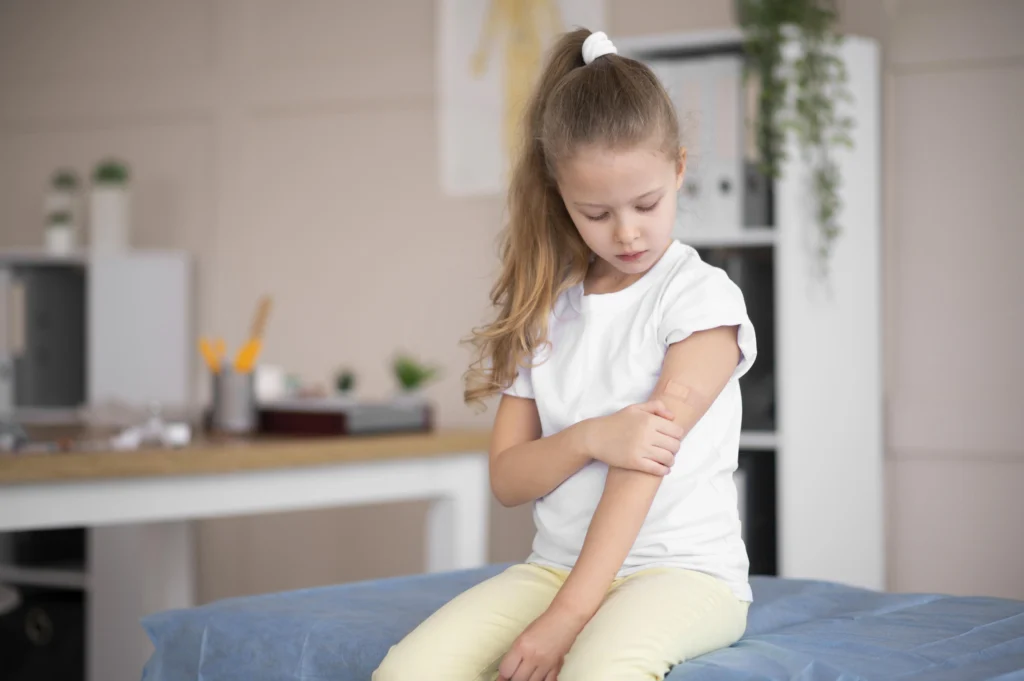
Juvenile idiopathic arthritis (JIA) is a group of inflammatory conditions that affect children’s joints.
Quick Answer: Early Symptoms of Juvenile Idiopathic Arthritis
Juvenile idiopathic arthritis (JIA) is a group of inflammatory conditions that affect children’s joints. Early symptoms may be subtle and can appear before a child complains of significant pain.
Common early signs include morning stiffness, unexplained limping, joint swelling, reduced movement, unusual tiredness and avoiding physical activities.
When should parents seek medical advice?
Arrange an assessment if your child has recurring joint swelling, morning stiffness, unexplained limping or changes in everyday movement. A hot, swollen joint with fever, severe pain or inability to bear weight needs urgent medical assessment.
It does not always begin with obvious pain.
Sometimes, the first clues are a stiff walk in the morning, an unexplained limp, a swollen knee or a child who gradually stops joining in physical activities.
These changes can be easy to overlook, especially when a child seems more comfortable later in the day.
Recognizing the pattern matters because early medical assessment and appropriate treatment can help protect joint function and a child’s ability to participate in everyday life.
Key Takeaways for Parents
- Morning stiffness: Difficulty moving after waking or resting can be an early sign of joint inflammation.
- Unexplained limping: A recurring limp without a clear injury deserves medical assessment.
- Subtle swelling: Some children develop visible joint swelling without reporting significant pain.
- Activity changes: Avoiding running, jumping, climbing or familiar play activities may indicate movement difficulties.
- Hand function: Difficulty gripping, writing, buttoning clothes or making a fist can occur when smaller joints are affected.
- Eye screening: Uveitis can develop without obvious symptoms, making recommended eye examinations important after diagnosis.
- Physiotherapy: Individualized rehabilitation can help maintain joint mobility, strength, balance and everyday function.
What Is Juvenile Idiopathic Arthritis?
Juvenile idiopathic arthritis is an umbrella term for several types of arthritis that begin before a child’s 16th birthday.
It involves persistent inflammation in one or more joints, and the exact cause is not fully understood.
The inflammation affects the synovium, the tissue lining the joints.
This can lead to swelling, warmth, stiffness and restricted movement.
Some children also experience symptoms beyond the joints, depending on their JIA subtype.
JIA is not simply growing pains, ordinary muscle soreness or a sports injury.
It is a medical condition that needs assessment by an appropriately qualified healthcare professional.
8 Early Symptoms Parents Can Easily Miss
Younger children may not have the words to describe stiffness or discomfort. Instead, parents may notice changes in how they walk, play, dress or use their hands.
1. Morning Stiffness
Morning stiffness is an important symptom to recognize.
A child may take longer to get out of bed, walk awkwardly after waking or struggle to bend a knee or make a fist.
Stiffness may also appear after a nap or sitting still for a long time. It often improves as the child starts moving.
This pattern is different from typical growing pains, which usually occur in the evening or at night and have generally settled by morning.
2. An Unexplained Limp
A child may begin limping, particularly after waking or after sitting for a while. They may take shorter steps, put less weight through one leg or avoid running.
The limp can become less noticeable as the day progresses.
This improvement does not necessarily mean the underlying problem has resolved.
A recurring limp without a clear injury, especially when accompanied by joint swelling or stiffness, needs medical assessment.
3. Subtle Joint Swelling
A knee, ankle, wrist or finger may look slightly larger than the corresponding joint on the other side.
Swelling may be easier to notice when comparing both sides rather than looking at the affected joint alone. The area may also feel warm or appear less defined.
Importantly, some children do not complain of much pain despite visible joint inflammation. NIAMS
4. Avoiding Activities They Previously Enjoyed
A child who previously enjoyed running, jumping, climbing or playing sports may start avoiding these activities.
Parents might notice that the child prefers sitting, asks to be carried more often or takes frequent breaks during play.
This change may reflect stiffness, discomfort, fatigue or difficulty moving an affected joint. It should not automatically be dismissed as laziness or loss of interest.
5. Difficulty Using the Hands
When JIA affects the fingers or wrists, everyday tasks can become harder.
Possible signs include difficulty:
- Holding a pencil or crayon.
- Opening containers or turning handles.
- Buttoning clothes.
- Making a complete fist.
- Holding toys or using cutlery.
A child may take longer to complete familiar tasks or start avoiding activities that require a firm grip.
6. Reduced Joint Movement
Inflammation can make it difficult to fully bend or straighten an affected joint.
A child may struggle to straighten a knee, bend an elbow, rotate a wrist or squat comfortably.
They may also change their posture to avoid moving the joint through its full range.
These compensations can affect walking, balance and everyday movement.
7. Unusual Tiredness
Some children with JIA experience fatigue alongside joint symptoms.
They may become tired more quickly during play, need additional breaks or seem less energetic than usual.
Fatigue alone does not indicate arthritis.
However, persistent tiredness combined with swelling, stiffness or changes in movement deserves medical attention.
8. Fever or a Skin Rash
Some children with systemic JIA develop episodes of fever and a transient salmon-pink rash.
Other features may include enlarged lymph nodes, reduced appetite and marked tiredness.
These symptoms are not present in every type of JIA and can occur in other childhood illnesses.
A child with recurrent unexplained fever or a rash should be medically assessed rather than assumed to have JIA.
Can JIA Look Different in Younger Children?
Yes.
Younger children may not describe pain clearly or recognize that their movement has changed.
Instead, parents may notice that a toddler:
- Is reluctant to walk after waking.
- Wants to be carried more frequently.
- Avoids climbing or getting up from the floor.
- Moves one arm less during play.
- Becomes upset when a particular joint is moved.
- Takes longer to complete familiar activities.
These behaviors are not specific to JIA.
However, when they persist or occur alongside joint swelling and stiffness, they should be discussed with a pediatrician.
Which Joints Can Be Affected?
JIA can affect different joints depending on the child’s condition.
| Joint | Possible functional changes |
|---|---|
| Knees | Limping, difficulty climbing stairs and reduced ability to squat |
| Ankles | Changes in walking, running and balance |
| Wrists | Difficulty gripping, writing or supporting body weight through the hands |
| Fingers | Stiffness, swelling and difficulty making a fist |
| Elbows | Difficulty bending or straightening the arm |
| Hips | Restricted movement and difficulty walking or sitting comfortably |
One joint or several joints may be involved. The pattern is not the same for every child.
Types of Juvenile Idiopathic Arthritis
JIA is divided into categories based on the pattern of joint involvement and associated clinical features.
| Type | Main characteristics |
|---|---|
| Oligoarticular JIA | Affects four or fewer joints during the first six months |
| Polyarticular JIA | Affects five or more joints during the first six months |
| Systemic JIA | May involve arthritis, recurring fever and other systemic symptoms |
| Enthesitis-related arthritis | Involves inflammation at tendon or ligament attachment sites and may affect the spine or sacroiliac joints |
| Psoriatic arthritis | Associated with arthritis and features such as psoriasis or characteristic nail changes |
| Undifferentiated arthritis | Does not fit one category or meets features of more than one category |
These categories help specialists classify the condition and plan management.
Parents cannot determine the JIA subtype from symptoms alone. (Petty et al., 2004)
Why Can Eye Inflammation Be Easy to Miss?
JIA can sometimes be associated with uveitis, inflammation inside the eye.
A particularly important feature is that chronic anterior uveitis may develop without noticeable redness, pain or changes that a child can describe.
When symptoms do occur, they may include eye redness, pain, light sensitivity or blurred vision.
However, the absence of these symptoms does not rule it out.
Children diagnosed with JIA may therefore need regular eye examinations, even when their vision appears normal.
The screening schedule depends on factors such as JIA subtype, age at onset and relevant risk factors. (Angeles-Han et al., 2019)
How Is Juvenile Idiopathic Arthritis Diagnosed?
There is no single blood test that confirms JIA.
Diagnosis is based on the child’s history, examination, evidence of arthritis and investigations that help exclude other conditions.
A pediatrician or pediatric rheumatologist may assess:
- When the symptoms began and how they have changed.
- Whether morning stiffness or swelling is present.
- Which joints are affected.
- Whether movement is restricted.
- Whether fever, rash or fatigue occurs.
- Whether walking, play or hand function has changed.
Depending on the findings, investigations may include:
| Investigation | Purpose |
|---|---|
| ESR and CRP | Assess markers of inflammation |
| Complete blood count | Help investigate inflammation and alternative conditions |
| ANA | Help assess risk of associated uveitis in children with JIA |
| Rheumatoid factor and anti-CCP | Support classification in selected cases |
| Ultrasound or MRI | Help identify joint inflammation and other abnormalities |
Normal inflammatory markers do not always exclude JIA, and a positive ANA result does not confirm the diagnosis.
JIA classification generally requires arthritis beginning before age 16, persisting for at least six weeks and not explained by another condition.
Parents should not wait six weeks before seeking medical advice. Early symptoms should be assessed when they appear.
Myth vs Fact: Juvenile Idiopathic Arthritis
MYTH: Children with JIA always complain of severe joint pain.
FACT: Some children experience noticeable stiffness, swelling or reduced movement without reporting significant pain.
MYTH: A child who walks normally later in the day cannot have JIA.
FACT: Morning stiffness and limping may become less noticeable after movement, but recurring symptoms still need assessment.
MYTH: Normal blood test results rule out JIA.
FACT: No single blood test confirms or excludes JIA. Diagnosis depends on clinical assessment and supporting investigations.
MYTH: Children with JIA always have painful or red eyes if uveitis develops.
FACT: Chronic anterior uveitis can develop without obvious symptoms, which is why regular eye screening is important.
MYTH: Physiotherapy can replace medication for JIA.
FACT: Physiotherapy supports movement, strength and physical function, while medical treatment addresses the underlying inflammation.
What Can Happen If JIA Is Not Properly Managed?
Persistent inflammation can interfere with a child’s movement and development.
Depending on the severity and duration of the disease, possible complications include:
- Reduced joint range of motion.
- Muscle weakness around affected joints.
- Joint contractures.
- Changes in walking and posture.
- Difficulty participating in school, play and sports.
- Joint damage and growth-related complications.
- Eye complications associated with uveitis.
Early recognition and effective medical treatment aim to control inflammation and reduce the risk of these problems.
How Does Pediatric Physiotherapy Help Children With JIA?
Physiotherapy is part of multidisciplinary JIA care. Its role is to maintain or improve physical function while medical treatment addresses the underlying inflammation.
A pediatric physiotherapist considers the child’s age, affected joints, disease activity, strength, movement and daily goals before planning treatment.
1. Joint Mobility and Range of Motion
Appropriate movement exercises help maintain joint mobility and address restrictions.
The physiotherapist selects movements according to the affected joints and the child’s symptoms.
Movements should be comfortable and should not be forced through significant pain or active inflammation.
2. Strengthening and Muscle Function
Reduced activity and joint problems can contribute to weakness.
Individualized strengthening may target muscles around the affected joints, helping children with everyday activities such as standing up, walking, climbing stairs and playing.
3. Balance, Walking and Coordination
When lower-limb joints are affected, a child may change their walking pattern or avoid putting weight through one leg.
Physiotherapy may include:
- Gait and walking practice.
- Controlled weight shifting.
- Balance activities.
- Functional strengthening.
- Gradual progression towards age-appropriate movement tasks.
4. Returning to Play and Everyday Activities
Treatment should focus on meaningful activities, not just isolated exercises.
Depending on the child’s needs, therapy may address getting up from the floor, climbing stairs, walking longer distances, participating in playground activities and returning to sports.
Occupational therapy can also help with handwriting, dressing, grip, feeding and other hand-related daily tasks.
5. Adapting Exercise During a Flare
A flare may involve increased swelling, pain, stiffness or fatigue.
During these periods, the physiotherapist may modify the intensity, duration or type of exercise in coordination with the medical team.
The aim is to avoid aggravating symptoms while maintaining appropriate movement and function.
The American College of Rheumatology conditionally recommends physical and occupational therapy for people with JIA.
Potential goals include improving joint range, strength, endurance and functional participation.
The guideline also notes that the evidence supporting these recommendations is of low or very low certainty, so treatment needs individual clinical judgement.
What Happens During a Physiotherapy Assessment?
A physiotherapy assessment helps identify how JIA is affecting the child’s movement and everyday activities. It does not replace a medical diagnosis or rheumatology review.
The physiotherapist may assess:
- Joint movement: How comfortably the child bends and straightens affected joints.
- Muscle strength: Whether weakness is affecting standing, walking or play.
- Posture and gait: Whether the child is compensating or placing uneven weight through the limbs.
- Balance and coordination: How safely the child moves, changes direction and manages everyday tasks.
- Functional abilities: Whether stairs, floor transfers, dressing or play have become difficult.
- Pain and fatigue: Which activities increase symptoms and how the child recovers.
The findings help establish individual goals and decide which activities are appropriate. Treatment is reviewed as the child’s symptoms and disease activity change.
When Should Parents Seek Medical Assessment?
Arrange a medical assessment if a child has:
- Persistent or recurring joint swelling.
- Morning stiffness or difficulty moving after rest.
- Repeated unexplained limping.
- Reduced movement in a joint.
- Ongoing fatigue alongside joint symptoms.
- Changes in walking, play or hand function without a clear explanation.
Seek urgent medical attention
A hot, swollen joint accompanied by fever, severe pain or inability to bear weight needs urgent medical assessment. A child who appears seriously unwell also needs prompt medical care.
How Can Parents Support a Child With JIA?
Parents can help by observing symptoms and supporting the child’s agreed treatment plan.
- Keep a simple record of morning stiffness, swelling, pain and fatigue.
- Note which activities have become difficult.
- Encourage appropriate movement without forcing painful exercises.
- Allow rest breaks when needed.
- Follow the prescribed medication and rehabilitation plan.
- Attend recommended rheumatology and eye-screening appointments.
- Discuss temporary adjustments with teachers when school activities become difficult.
Children should be encouraged to participate in everyday activities as much as their symptoms and medical advice allow.
Final Thoughts
Juvenile idiopathic arthritis can develop gradually, and its earliest signs are not always obvious. Morning stiffness, unexplained limping, subtle joint swelling and changes in a child’s usual activities deserve attention.
Parents do not need to identify the condition themselves. Their most important role is to notice persistent changes in movement and seek appropriate medical assessment.
With timely rheumatology care and individualized pediatric physiotherapy, children can work towards maintaining joint mobility, strength, independence and participation in everyday activities.
Early recognition is not about worrying over every childhood ache. It is about recognizing unusual patterns and making sure persistent symptoms are properly assessed.
Conclusion
Juvenile idiopathic arthritis does not always begin with obvious pain.
Morning stiffness, an unexplained limp, subtle joint swelling, fatigue and changes in everyday movement may be the first signs parents notice.
These symptoms do not automatically mean a child has JIA, but persistent or recurring changes deserve medical assessment.
Early diagnosis and appropriate treatment can help control inflammation and protect joint function.
Pediatric physiotherapy supports this care by addressing mobility, strength, balance, walking and participation in daily activities.
With coordinated medical and rehabilitation support, children can work towards maintaining an active and fulfilling childhood.
Frequently Asked Questions
1. What are the early signs of juvenile idiopathic arthritis?
Early signs may include morning stiffness, unexplained limping, joint swelling, reduced movement, unusual fatigue and avoiding physical activities. Some children may experience these changes without reporting significant pain.
2. Can a child have juvenile arthritis without joint pain?
Yes. Some children may have noticeable joint swelling, stiffness or restricted movement without complaining of severe pain. Changes in walking, play and everyday activities can provide important clues.
3. Why is morning stiffness common in children with JIA?
Inflammation in the joint lining can cause stiffness after periods of rest. Children may find it difficult to move comfortably after waking, although symptoms may improve as they become active.
4. Can juvenile idiopathic arthritis affect a child’s walking?
Yes. When the knees, ankles or hips are affected, children may limp, take shorter steps, avoid running or experience difficulty climbing stairs.
5. Can blood tests confirm juvenile idiopathic arthritis?
No single blood test confirms JIA. Doctors use the child’s medical history, physical examination and relevant investigations. Normal inflammatory markers do not always exclude the condition.
6. Can juvenile arthritis affect a child’s eyes?
Yes. Some children with JIA develop uveitis, an inflammation inside the eye. It may occur without noticeable symptoms, so regular eye examinations are important after diagnosis.
7. Can physiotherapy help children with juvenile idiopathic arthritis?
Yes. Individualized physiotherapy can help maintain joint mobility, improve muscle strength, support balance and walking, and encourage participation in daily activities. It works alongside medical treatment.
8. Should children with JIA exercise during a flare?
Exercise may need to be modified during a flare, particularly when joints become more swollen, painful or restricted. The child’s physiotherapist and medical team can recommend suitable movement and activity levels.
9. When should parents seek medical attention for possible JIA?
Parents should arrange an assessment for persistent joint swelling, morning stiffness, recurring unexplained limping or reduced joint movement. A hot, swollen joint with fever, severe pain or inability to bear weight requires urgent medical attention.
Stay tuned with us for more health related topics.
Follow us on LinkedIn and Instagram for more.
More Read



Medical Disclaimer
This article is intended for general educational and informational purposes only. It does not replace professional medical advice, diagnosis or treatment.
Juvenile idiopathic arthritis can present differently in individual children. Only a qualified healthcare professional can assess symptoms, establish a diagnosis and recommend an appropriate treatment plan.
If your child experiences persistent joint swelling, morning stiffness, unexplained limping or reduced movement, seek medical advice. A hot, swollen joint accompanied by fever, severe pain or inability to bear weight requires urgent medical attention.