


Femoroacetabular impingement (FAI), also called hip impingement, occurs when the shape of the hip joint causes abnormal contact between the femoral head or neck and the rim of the hip socket during certain movements.
A pinching sensation deep in the front of your hip during squats can make workouts, lunges, and even sitting uncomfortable.
One possible explanation is femoroacetabular impingement (FAI), a condition in which the shape of the hip bones contributes to symptoms during certain movements.
Quick Answer: Why Does Your Hip Pinch When You Squat?
A pinching sensation at the front of the hip during deep squats can occur with femoroacetabular impingement (FAI), a condition in which hip bone shape contributes to symptoms during certain movements. However, hip flexor irritation, labral problems, and other conditions can cause similar discomfort.
What can help? Depending on the cause, physiotherapy may include modifying squat depth, progressive hip strengthening, movement-control training, and gradually rebuilding exercise tolerance. Persistent or worsening hip pain should be assessed by a healthcare professional.
The discomfort is often felt in the groin and may become more noticeable as you bend your hip deeply.
However, not every hip pinch indicates Femoroacetabular Impingement.
Hip flexor irritation, a labral injury, and other joint conditions can produce similar symptoms.
Understanding what triggers the pain, how your hip moves, and how symptoms affect daily activities can help guide appropriate treatment.
Physiotherapy can play an important role in modifying aggravating movements, improving strength, and helping you return to exercise.
Key Takeaways
- FAI syndrome can cause hip or groin pain during deep hip flexion and rotation.
- Hip pinching during squats does not automatically mean you have FAI.
- Cam and pincer describe different hip bone shapes that may contribute to symptoms.
- Clinical assessment and appropriate imaging help determine whether bone morphology is related to the symptoms.
- Physiotherapy may include squat modification, hip strengthening, movement-control training, and gradual return to exercise.
- Surgery is not necessary for everyone with FAI; treatment depends on symptoms, function, and response to non-surgical care.
- Sudden severe hip pain or inability to bear weight after an injury requires urgent medical assessment.
What Is Femoroacetabular Impingement (FAI)?
The hip is a ball-and-socket joint.
The femoral head, located at the top of the thigh bone, fits into the acetabulum, the socket in the pelvis.
This arrangement allows the hip to move in multiple directions while supporting body weight.
Femoroacetabular impingement syndrome occurs when the shape of the ball, socket, or both contributes to painful contact during hip movement.
Symptoms often occur during deep hip flexion or rotation, such as when lowering into a squat or bringing the knee towards the chest.
A key distinction is that Femoroacetabular Impingement Syndrome is not diagnosed from bone shape alone.
A person needs compatible symptoms, relevant clinical examination findings, and imaging evidence.
Some people have bone shapes associated with FAI but never develop hip pain. (Griffin et al., 2016)
Why Does Your Hip Pinch When You Squat?
Squatting requires the hip to bend while the pelvis, trunk, and thigh coordinate to control the movement.
As you lower into a deeper squat, hip flexion increases.
Depending on your anatomy and movement pattern, this position may reproduce symptoms associated with FAI.
1. Deep Hip Flexion
As you lower into a deep squat, your thigh moves closer to your torso.
In someone with symptomatic FAI, this position may bring parts of the femur and socket into contact in a way that irritates sensitive structures.
You may feel a sharp pinch deep in the groin or at the front of the hip.
It might become more noticeable near the bottom of the squat and ease when you stand up or reduce the depth.
This pattern can be consistent with FAI, but it is not diagnostic by itself.
Hip flexor problems and other joint conditions can also cause pain during deep flexion.
2. Hip Rotation During Squats
Squats involve more than bending the hips.
The amount of hip rotation, stance width, and direction of the knees and feet can influence how the movement feels.
Some people notice symptoms when their thighs move inward or rotate during a deep squat.
Others find that a slightly wider stance, a small change in foot position, or a shallower squat feels more comfortable.
There is no single ideal squat stance for everyone.
A physiotherapist can assess which position allows you to move comfortably while maintaining good control.
3. Limited Comfortable Hip Mobility
You may notice that one hip feels tighter than the other or that you cannot squat as deeply without discomfort.
Restricted hip rotation can occur in people with FAI, although it may also result from other conditions.
Trying to force additional depth through stretching or pushing into the pinch may aggravate symptoms.
A better approach is to work within a comfortable range while a clinician assesses the reason for the restriction.
4. Increased Training Load
Hip symptoms may become noticeable after increasing squat weight, training frequency, running volume, or the number of deep-flexion exercises in a workout.
This does not necessarily mean that squatting has damaged the joint.
It may indicate that the current training load exceeds what your hip can comfortably tolerate.
Temporarily reducing weight, depth, repetitions, or frequency can help you identify a manageable starting point while maintaining appropriate activity.
What Causes FAI?
FAI is associated with variations in hip bone shape.
These features may develop during skeletal growth and are sometimes identified in people who participate in sports involving repeated high loading.
Three patterns are commonly described.
Cam Morphology
Cam morphology involves an extra prominence or reduced roundness around the junction between the femoral head and neck.
During certain hip movements, this shape may contribute to contact with the socket rim.
It is often discussed in physically active people, but its presence does not automatically mean that a person has symptomatic FAI.
Pincer Morphology
Pincer morphology involves increased coverage of the femoral head by the acetabulum or another socket-related feature that contributes to contact during movement.
These findings can influence how the hip moves, but they must be interpreted carefully because similar features can occur in people without hip pain.
Combined Morphology
Some people have a combination of cam and pincer features.
Whether these features cause symptoms depends on how they interact with movement, the person’s activity demands, and other clinical factors.
Research has found FAI-related bone shapes in people without hip symptoms.
This reinforces why an X-ray or scan should not be used alone to diagnose FAI syndrome. (Frank et al., 2015)
Other Reasons Your Hip May Pinch During Squats
FAI is not the only explanation for discomfort at the front of the hip. Several conditions can produce similar symptoms and may require different management.
| Possible cause | Common features |
|---|---|
| Hip flexor irritation | Pain at the front of the hip, sometimes aggravated by lifting the knee or resisted hip flexion |
| Hip labral tear | Deep groin pain, painful catching, or discomfort during certain hip movements |
| Hip osteoarthritis | Pain, stiffness, and progressively reduced hip movement |
| Adductor-related pain | Discomfort around the inner thigh or groin, sometimes aggravated by wide-stance movements |
| Lower-back-related pain | Hip or thigh symptoms that may vary with spinal movement or accompany back discomfort |
These conditions can overlap. For example, a labral injury may occur alongside FAI-related bone morphology.
The location of pain and the movements that reproduce it can help guide assessment, but they cannot reliably identify the cause without considering other findings.
How Is FAI Diagnosed?
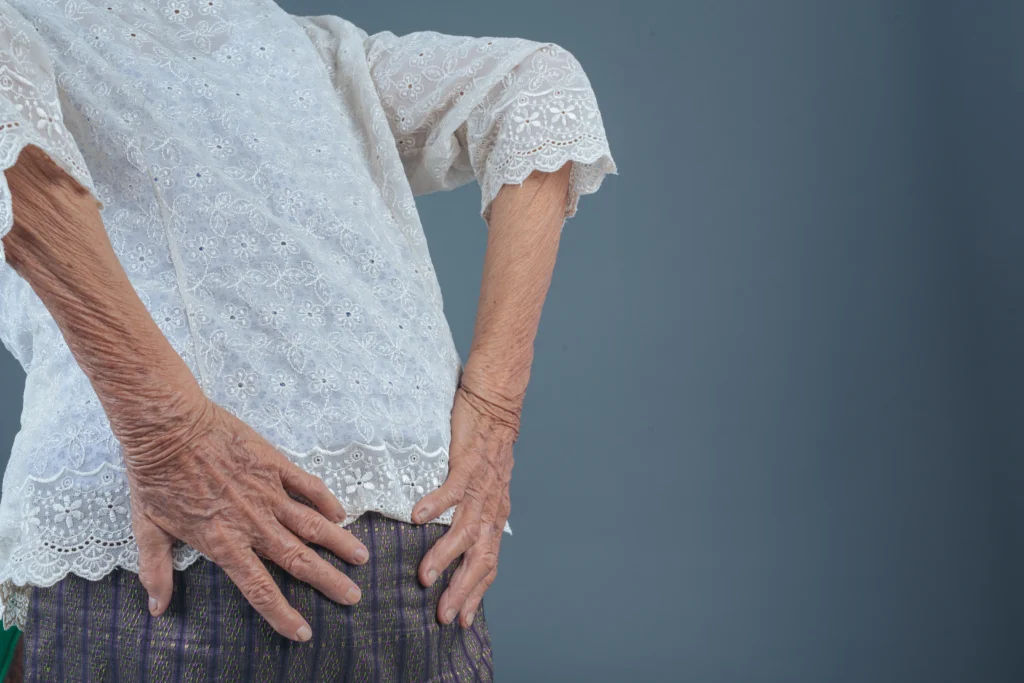
Diagnosis involves considering symptoms, physical examination findings, and imaging together.
Clinical Assessment
A physiotherapist or doctor may ask when the pain started, whether it occurs during specific exercises, and how it affects walking, sitting, sport, or daily activities.
The examination may include:
- Hip flexion and rotation.
- Hip and trunk muscle strength.
- Squat and single-leg movement patterns.
- Walking, balance, and functional control.
- Clinical tests designed to reproduce familiar symptoms.
- Assessment of the lower back and surrounding muscles.
A test that reproduces a hip pinch is not sufficient to diagnose FAI on its own.
Similar symptoms can occur in other hip conditions.
Imaging Tests
X-rays are commonly used to assess bone shape, joint structure, and signs of osteoarthritis.
MRI may be considered when a clinician needs to investigate the labrum or other soft tissues, or when additional joint pathology is suspected.
Imaging findings must be interpreted alongside the clinical history and examination.
A person with an FAI-related bone shape but no relevant symptoms does not automatically have FAI syndrome.
How Physiotherapy Can Help FAI
Physiotherapy aims to reduce symptom-provoking loads, improve strength and movement control, and help the person return to meaningful activities.
Treatment should be individualised rather than based on a fixed list of exercises.
1. Modify Squat Depth and Technique
If deep squats reproduce a sharp pinch, temporarily reduce the depth to a range that feels comfortable.
A box squat or sit-to-stand exercise can help you practice controlled movement without repeatedly reaching the painful position.
A physiotherapist may also assess stance width, foot position, trunk movement, and knee control.
Small adjustments can make squatting more comfortable for some people, although the best setup varies between individuals.
The goal is not to permanently avoid deep squats.
It is to identify a tolerable starting point and determine whether range and load can be progressed safely.
2. Strengthen the Hip and Gluteal Muscles
The gluteal muscles and other muscles around the hip help control the pelvis and thigh during squatting, walking, and single-leg activities.
Depending on your assessment, exercises may include bridges, supported hip strengthening, sit-to-stand practice, or resistance exercises performed through a comfortable range.
Strengthening does not change the underlying shape of the bones, but it may improve physical capacity and help you manage activity more comfortably.
3. Improve Trunk and Pelvic Control
The trunk and pelvis contribute to how the hip moves during exercise.
A physiotherapist may include trunk strengthening, balance training, and controlled single-leg movements where appropriate.
The focus is on developing movement control for the tasks that matter to you, whether that is climbing stairs, lifting weights, running, or playing sport.
4. Gradually Rebuild Activity
Once symptoms are more manageable, the rehabilitation plan can gradually increase exercise resistance, repetitions, range, or speed.
Changing one variable at a time makes it easier to monitor the hip’s response.
If a progression causes a sustained increase in pain or worsens function, the load may need to be reduced.
Research supports physiotherapy as a reasonable initial option for many people with symptomatic FAI, particularly program that emphasize active strengthening and supervised exercise.
However, the evidence does not establish one universal protocol for every person. (Hoit et al., 2020)
5. Individualised Rehabilitation and Return to Sport
For people who want to return to running, gym training, or competitive sport, physiotherapy can include progressive loading, sport-specific movement drills, and gradual exposure to demanding positions.
Rehabilitation should account for symptoms, strength, functional control, and the person’s goals.
The presence of FAI-related bone morphology does not mean every activity must be avoided, but repeatedly forcing painful movements is unlikely to be a useful strategy.
The International Society of Hip Preservation’s physiotherapy consensus statement discusses assessment, non-surgical management, postoperative rehabilitation, and return-to-sport considerations for people with FAI syndrome. (Takla et al., 2021)
FAI: Myth vs Fact
MYTH: Every hip pinch during a squat means FAI.
FACT: Hip flexor irritation, labral problems, and other conditions can produce similar symptoms. Assessment is needed to identify the likely cause.
MYTH: FAI always requires surgery.
FACT: Physiotherapy and activity modification are common initial approaches. Surgery may be considered when symptoms remain limiting despite appropriate non-surgical treatment.
MYTH: Bone changes on an X-ray prove that FAI is causing pain.
FACT: FAI-related bone shapes can occur in people without symptoms. Diagnosis requires compatible symptoms, clinical findings, and relevant imaging.
MYTH: You must stretch through the pinch to improve hip mobility.
FACT: Forcing a painful movement may aggravate symptoms. A physiotherapist can help identify a comfortable range and develop a suitable progression.
Which Exercises Should You Modify During a Flare-Up?
There is no universal exercise list that everyone with FAI must avoid.
The important consideration is whether a movement repeatedly reproduces symptoms and how your hip responds afterwards.
Depending on your symptoms, you may temporarily need to modify:
- Deep squats that cause a sharp groin pinch.
- Deep lunges that reproduce pain.
- Exercises combining deep hip flexion with rotation.
- Heavy lower-body training that causes symptoms to worsen.
- Forced hip stretches that reproduce painful restriction.
You may still be able to perform comfortable walking, upper-body training, shallow squats, or other modified activities.
The appropriate options depend on your symptoms and assessment.
Avoid forcing the hip into a painful position to improve flexibility.
If pain persists despite adjusting your training, seek professional guidance rather than repeatedly experimenting with painful movements.
Does FAI Always Require Surgery?
No. Treatment depends on symptom severity, functional limitations, associated joint conditions, and the response to non-surgical care.
Physiotherapy and activity modification are common initial options.
If symptoms remain limiting despite an appropriate rehabilitation programme, an orthopaedic specialist may discuss hip arthroscopy, a procedure that can address selected structural features and associated joint problems.
Randomised trials comparing hip arthroscopy with physiotherapy-led conservative care have found improvements with both approaches, with surgery producing better average outcomes on some measures.
The results do not mean that everyone with FAI needs surgery, and surgery is not guaranteed to eliminate pain or restore every activity.
A decision about surgery should consider the person’s goals, clinical findings, expected benefits, risks, and willingness to complete rehabilitation. (Palmer et al., 2019)
A separate trial, the UK FASHIoN study, also compared arthroscopy with personalized hip therapy.
Its findings support shared decision-making that considers the potential benefits and limitations of both approaches. (Griffin et al., 2018)
When Should You Seek Medical Advice?
Arrange an assessment if hip pinching persists, repeatedly returns during exercise, limits your range of movement, or affects walking and daily activities.
Seek urgent medical care if you experience:
- Sudden, severe hip pain.
- Inability to bear weight after an injury.
- A hot or swollen hip accompanied by fever or feeling generally unwell.
- A sudden major change in your ability to move the hip.
A sudden change should not automatically be attributed to FAI.
Other hip conditions may require urgent investigation.
Final Thoughts
A hip pinch during squats can have several causes, and FAI is only one possibility. Persistent pain or restricted movement deserves assessment rather than self-diagnosis.
With an individualised physiotherapy plan, many people can modify aggravating movements, improve strength, and work towards their activity goals. The right approach depends on the cause of symptoms and how the hip responds to treatment.
Conclusion
A pinching sensation during squats can be associated with femoroacetabular impingement, particularly when deep hip flexion or rotation reproduces pain.
However, hip flexor irritation, labral problems, and other conditions can cause similar symptoms, so the sensation alone cannot establish the diagnosis.
Physiotherapy can help many people manage symptomatic FAI through activity modification, progressive strengthening, movement-control training, and a gradual return to exercise.
If symptoms persist or limit your activities, a clinical assessment can help identify the cause and guide appropriate treatment.
You do not need to force your way through a painful squat to make progress.
Understanding what triggers the pinch and adjusting your training intelligently can help you work towards stronger, more comfortable movement.
Frequently Asked Questions
1. Why does my hip pinch when I squat?
A hip pinch during squats can occur with FAI, hip flexor irritation, labral problems, or other hip conditions. The cause depends on the location of pain, the movements that trigger it, and the clinical assessment.
2. Can physiotherapy help femoroacetabular impingement?
Yes. Physiotherapy may help improve strength, movement control, and exercise tolerance. Treatment may include activity modification, progressive strengthening, and practising comfortable movement patterns.
3. Should I stop squatting if I have FAI?
Not necessarily. You may need to reduce squat depth, load, or repetitions if the movement causes pain. A physiotherapist can help identify a comfortable range and guide gradual progression.
4. Does FAI always require surgery?
No. Many people begin with physiotherapy and activity modification. Surgery may be considered when symptoms continue to limit function despite appropriate non-surgical treatment.
5. Can FAI be present without hip pain?
Yes. Bone shapes associated with FAI can be found in people without symptoms. FAI syndrome requires compatible symptoms, clinical findings, and relevant imaging evidence.
Stay tuned with us for more health related topics.
Follow us on LinkedIn and Instagram for more.
More Read


Medical Disclaimer
This article is intended for general educational purposes only and does not replace professional medical advice, diagnosis, or treatment. Hip pinching during squats can have multiple causes, and symptoms alone cannot confirm femoroacetabular impingement. Consult a qualified healthcare professional for an individual assessment and treatment advice. Seek urgent medical care for sudden severe hip pain, inability to bear weight after an injury, or a hot, swollen hip accompanied by fever or feeling unwell.


