


If your period pain has become worse after stopping birth control, it is understandable to wonder whether stopping contraception caused the change.
Quick Answer
Period pain can feel worse after stopping birth control because hormonal contraception may have been reducing menstrual bleeding and cramps. Once you stop, your natural menstrual pattern can return. However, severe or progressively worsening pain should not automatically be blamed on stopping birth control because conditions such as endometriosis, adenomyosis or other pelvic problems can also cause painful periods.
For some women, the explanation is that hormonal contraception had been reducing their menstrual bleeding and cramps.
Once it is stopped, the natural menstrual cycle returns and symptoms that were previously controlled can become noticeable again.
However, severe or progressively worsening period pain should not automatically be blamed on stopping birth control.
Conditions such as endometriosis, adenomyosis, fibroids and other causes of secondary dysmenorrhea can also cause significant menstrual pain.
Understanding the difference between a return of previously controlled symptoms and a new underlying problem is important.
Key Takeaways
- Hormonal birth control can reduce menstrual cramps and bleeding for some women.
- Stopping contraception may allow previously controlled period pain to return.
- Stopping birth control does not automatically cause a new pain condition.
- Severe or progressively worsening pain should not simply be blamed on hormonal adjustment.
- Endometriosis, adenomyosis and other conditions can cause significant menstrual pain.
- Exercise may help some women with primary dysmenorrhea when performed according to symptoms and tolerance.
- Physiotherapy can address pelvic-floor and musculoskeletal contributors to pain but does not regulate reproductive hormones.
Why Is My Period Pain Worse After Stopping Birth Control?
Hormonal contraception can alter the menstrual cycle and reduce menstrual pain in some women.
When it is stopped, those effects are no longer present.
Your natural cycle may return, including the bleeding pattern and menstrual cramping you experienced before starting contraception.
This can make your periods feel much more painful than they did while you were using birth control.
It does not necessarily mean that stopping contraception created a new condition.
Sometimes, it simply means that the contraceptive had been controlling a symptom that already existed.
Can Birth Control Actually Reduce Period Pain?
Yes.
Combined oral contraceptives are used in the management of primary dysmenorrhea, which is painful menstruation without an identifiable pelvic disease.
A 2023 Cochrane review found that combined oral contraceptive pills are effective for treating dysmenorrhea, although the available studies have limitations and different formulations may produce different results.
Continuous use may also reduce the duration of painful days compared with some cyclic regimens (Schroll et al., 2023).
This helps explain why period pain can become more noticeable after stopping the pill.
The important point is that the contraception may have been reducing the pain, rather than stopping contraception somehow creating the pain.
Does Stopping Birth Control Increase Prostaglandins?
It is too simplistic to say that stopping birth control suddenly causes a harmful increase in prostaglandins.
Prostaglandins are involved in the uterine contractions and inflammatory processes associated with menstrual cramps.
Hormonal contraception changes the menstrual cycle and can reduce some of the processes associated with menstruation.
When natural cycles resume, the biological processes associated with menstruation also return.
So, rather than thinking of stopping birth control as creating an abnormal hormonal problem, it is more accurate to think about the return of your natural menstrual physiology.
Why Does the Pain Feel Stronger Than Before?
There are several possible explanations.
Your Previous Pain Was Being Controlled
If you had painful periods before starting birth control, hormonal contraception may have reduced those symptoms.
Once you stop, the previous pattern can return.
Because you may have experienced several months or years with less pain, the difference can feel dramatic.
Your Periods May Become Heavier
Some hormonal contraceptives make menstrual bleeding lighter.
If your natural bleeding pattern returns after stopping, your periods may become heavier or longer than they were while using contraception.
For some women, heavier menstrual bleeding also comes with more noticeable cramping.
However, unusually heavy bleeding combined with severe pain should not simply be attributed to stopping contraception.
Your Natural Cycle May Be Different From What You Remember
Your menstrual cycle may have changed since you first started contraception.
Age, stress, changes in body weight, exercise habits, PCOS and other health factors can influence menstrual symptoms.
Therefore, your current natural cycle may not necessarily be identical to the cycle you had before starting birth control.
Could Stopping Birth Control Reveal Endometriosis?
Stopping birth control does not cause endometriosis.
However, hormonal contraception can reduce endometriosis-associated pain in some women.
If contraception had been helping control symptoms, stopping it can make those symptoms noticeable again.
Endometriosis can cause painful periods, pelvic pain, pain during sex and other symptoms that may occur outside menstruation.
A systematic review found that combined hormonal contraceptives can reduce endometriosis-related dysmenorrhea, pelvic pain and dyspareunia, although the quality of evidence varies (Grandi et al., 2019).
This means that if severe pain returns after stopping contraception, it is worth considering whether the contraception had been controlling an underlying condition.
That does not mean that worsening pain automatically means you have endometriosis.
Could It Be Adenomyosis?
Adenomyosis is another possible cause of painful periods.
It is a condition involving endometrial-type tissue within the muscular wall of the uterus and can be associated with dysmenorrhea, heavy menstrual bleeding and pelvic pain.
If your periods become substantially more painful or heavier after stopping hormonal contraception, adenomyosis may be one of several conditions a healthcare professional considers.
Recent reviews describe dysmenorrhea, chronic pelvic pain and heavy menstrual bleeding as important symptoms associated with adenomyosis (Habiba et al., 2024).
However, symptoms alone cannot establish the diagnosis.
A medical assessment may be needed, particularly when symptoms are severe or progressively worsening.
Is It Normal to Have Worse Cramps After Stopping Birth Control?
Some return of menstrual cramping can happen, particularly if your contraception had previously reduced your symptoms.
But there is an important difference between your usual period pain returning and pain becoming progressively severe.
Pain deserves further assessment if it:
- Gets worse from one cycle to the next
- Prevents you from working, exercising or sleeping
- Starts several days before your period and remains severe afterward
- Occurs outside your period
- Causes repeated vomiting or faintness
- Occurs during or after sex
- Is associated with bowel or bladder symptoms
- Occurs with unusually heavy bleeding
These symptoms do not automatically indicate a particular condition, but they should not simply be dismissed as your body “adjusting” to being off birth control.
Can Exercise Help Period Pain After Stopping Birth Control?
For women with primary dysmenorrhea, regular physical activity can be useful as part of symptom management.
Exercise does not restart hormones or reverse the effects of stopping contraception.
Instead, it may influence pain processing, physical conditioning, muscle function and general wellbeing.
A 2024 systematic review and network meta-analysis of 29 randomized controlled trials found that different forms of exercise, including aerobic exercise, strengthening, yoga and relaxation-based approaches, were associated with reductions in menstrual pain. (Tsai et al., 2024).
You do not need to force yourself through severe pain.
If movement feels comfortable, walking, gentle aerobic exercise, mobility work, yoga or appropriately prescribed strengthening may be reasonable options.
If exercise consistently aggravates significant pelvic pain, however, the cause of the pain should be investigated.
Can Heat Help Period Pain?
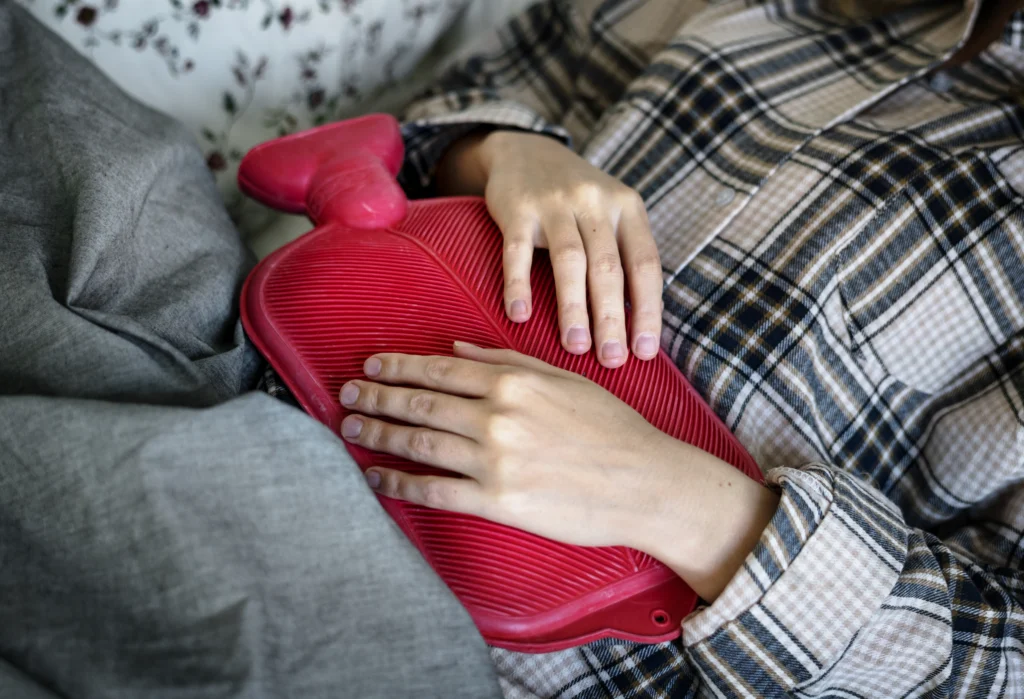
Heat can be a useful self-management strategy for menstrual cramps.
A heating pad or warm compress over the lower abdomen or lower back may help some women feel more comfortable during menstruation.
Heat is a symptom-management strategy rather than a treatment for conditions such as endometriosis or adenomyosis.
If your pain is severe, persistent or progressively worsening, temporary relief should not replace appropriate medical assessment.
Where Does Physiotherapy Fit In?
Physiotherapy can have a role in menstrual-pain management, but it is important to be clear about its boundaries.
A physiotherapist cannot regulate reproductive hormones or reverse the effects of stopping birth control.
The physiotherapy role is primarily focused on physical factors that may contribute to pain, movement limitations or persistent pelvic symptoms.
Depending on the assessment, this may include:
- Pelvic-floor muscle overactivity
- Difficulty relaxing the pelvic floor
- Abdominal or pelvic muscle tension
- Lumbopelvic movement restrictions
- Movement-related pain
- Reduced physical activity because of pain
- Breathing and pressure-management patterns
- Gradual return to exercise
Physiotherapy should therefore be viewed as part of symptom management rather than a treatment for the hormonal cause of menstrual pain.
Can Physiotherapy Actually Reduce Period Pain?
There is evidence that physiotherapy-based interventions can help some women with primary dysmenorrhea.
A 2024 systematic review and meta-analysis examining manual and electrotherapy approaches found evidence of pain reduction, although the researchers also highlighted variation between interventions and limitations in the available studies. (González-Mena et al., 2024).
This does not mean every woman with period pain needs physiotherapy.
Treatment should depend on the individual’s symptoms, examination findings, goals and medical history.
Exercise-based approaches may be particularly useful when menstrual pain is accompanied by movement limitations or reduced physical activity.
Do You Need Kegel Exercises?
No.
Stopping birth control does not automatically weaken your pelvic-floor muscles.
Therefore, there is no reason to start Kegel exercises simply because your period pain has become worse.
In fact, some women with chronic pelvic pain have pelvic-floor muscles that are overactive or difficult to relax rather than weak.
For these women, repeatedly strengthening the pelvic floor may not address the main problem.
A pelvic-health physiotherapist can assess whether the muscles appear weak, overactive, poorly coordinated or otherwise contributing to symptoms.
Evidence from a systematic review suggests pelvic-floor physical therapy may benefit women with pelvic-floor hypertonicity and associated pelvic pain conditions, although the evidence base remains limited (van Reijn-Baggen et al., 2022).
Can Physiotherapy Treat Endometriosis or Adenomyosis?
No.
Physiotherapy cannot remove endometriosis lesions or treat the underlying disease process of adenomyosis.
However, it can sometimes be useful alongside medical management when these conditions are associated with persistent pelvic or musculoskeletal symptoms.
For example, someone living with chronic pelvic pain may develop protective muscle tension, movement sensitivity, reduced activity or pelvic-floor overactivity.
Those physical consequences can be addressed separately while the underlying gynecological condition is managed by the appropriate healthcare team.
For chronic pelvic pain more broadly, a 2024 systematic review and meta-analysis found that multimodal physical therapy was associated with lower pain intensity compared with inert or non-conservative treatments (Starzec-Proserpio et al., 2025).
Should You Stop Exercising If Your Period Pain Gets Worse?
Not necessarily.
If movement feels comfortable, there is generally no reason to stop normal physical activity simply because you have stopped birth control.
During particularly painful days, however, you may need to reduce exercise intensity or choose activities that feel more comfortable.
For example, a gentle walk may feel better than a high-intensity workout during a painful period.
The goal is not to push through severe pain.
If period pain repeatedly prevents you from exercising, working, sleeping or participating in normal activities, the underlying cause should be investigated rather than simply changing your exercise routine every month.
What If the Pain Gets Worse Every Month?
Progressively worsening menstrual pain deserves medical attention.
Primary dysmenorrhea often follows a recognizable menstrual pattern, whereas secondary dysmenorrhea can be associated with an underlying pelvic condition.
Endometriosis and adenomyosis are two examples, but they are not the only possible causes.
Your healthcare professional may consider your age, menstrual history, symptom pattern, bleeding, pain outside menstruation, sexual symptoms and other relevant factors when deciding whether further investigation is needed.
Myth vs Fact
Myth: Stopping birth control directly causes severe period pain.
Fact: Hormonal contraception may have been reducing your menstrual symptoms. Stopping it can allow your previous pattern of cramps to return, but severe pain may also have another cause.
Myth: Worse cramps after stopping birth control always mean endometriosis.
Fact: Endometriosis is one possible cause, but several other factors can contribute to painful periods.
Myth: Period pain means you need Kegel exercises.
Fact: Period pain does not automatically mean the pelvic floor is weak. Some women with pelvic pain have overactive pelvic-floor muscles and may need relaxation and coordination work instead.
Myth: You should stop exercising whenever your period hurts.
Fact: Comfortable physical activity may help some women with menstrual pain. Exercise intensity should be adjusted according to symptoms rather than following a universal restriction.
Lesser-Known Fact: Birth Control May Have Been Treating Your Period Pain Too
One of the less obvious reasons period pain can feel dramatically worse after stopping birth control is that you may not have realized your contraception was helping your periods.
You may have started birth control primarily to prevent pregnancy but later benefited from lighter bleeding and fewer cramps.
After stopping it, those symptoms can return.
This can make it seem as though stopping birth control caused the pain when the contraceptive may actually have been suppressing or reducing symptoms that were already part of your natural menstrual cycle.
This distinction matters because persistent or severe pain should not simply be accepted as the price of coming off contraception.
When Should You See a Healthcare Professional?
Speak with a healthcare professional if your period pain:
- Is significantly worse than before
- Becomes progressively worse from cycle to cycle
- Prevents normal work, exercise or sleep
- Causes repeated vomiting, fainting or severe weakness
- Occurs outside your menstrual period
- Causes pain during sex
- Is associated with bowel or bladder symptoms
- Occurs with unusually heavy bleeding
- Does not improve with your usual pain-management strategies
Seek urgent medical care for severe or sudden pelvic pain, particularly when pregnancy is possible or when significant bleeding, fainting or other concerning symptoms occur.
Final Thoughts
Period pain can become more noticeable after stopping birth control because contraception may have been reducing menstrual cramps and bleeding.
However, severe or progressively worsening pain should not simply be accepted as a normal part of coming off contraception. Medical assessment can help identify possible underlying causes, while physiotherapy may support pelvic-floor, movement and musculoskeletal symptoms when appropriate.
Conclusion
Worse period pain after stopping birth control does not necessarily mean that stopping contraception has harmed your body.
For many women, hormonal contraception had been reducing menstrual bleeding and pain.
When it is stopped, the natural menstrual pattern can become noticeable again.
However, severe, persistent or progressively worsening pain deserves more than the assumption that your hormones are simply “adjusting.”
Endometriosis, adenomyosis and other causes of secondary dysmenorrhea can produce significant menstrual pain and may require medical assessment.
From a physiotherapy perspective, the focus should be on function, movement and physical contributors to pain, not on trying to regulate reproductive hormones.
Pelvic-floor assessment, therapeutic exercise, relaxation strategies and individualized movement rehabilitation may be useful for selected women.
The goal is not simply to help you tolerate painful periods.
It is to understand the pattern of your pain and make sure the appropriate medical and physical management is available.
Frequently Asked Questions
1. Why is my period pain worse after stopping birth control?
Hormonal birth control may have been reducing your menstrual cramps and bleeding. After stopping it, your natural menstrual pattern can return, making previously controlled pain more noticeable.
2. Can stopping birth control cause severe period cramps?
Period cramps can become more noticeable after stopping hormonal contraception, particularly if it had previously reduced your symptoms. Severe or progressively worsening pain should be medically assessed.
3. Can stopping birth control reveal endometriosis?
Stopping birth control does not cause endometriosis, but contraception may have been controlling endometriosis-related pain. Symptoms can therefore become more noticeable after stopping.
4. Can exercise help period pain after stopping birth control?
Regular physical activity may help some women with primary dysmenorrhea. Walking, aerobic exercise, yoga, mobility work or appropriately prescribed strengthening can be considered according to symptoms and tolerance.
5. Do I need Kegel exercises for period pain?
Not automatically. Period pain does not mean that the pelvic floor is weak. Some women with pelvic pain have overactive pelvic-floor muscles and may benefit from relaxation and coordination approaches instead.
6. Can physiotherapy help with period pain?
Physiotherapy may help selected women with primary dysmenorrhea, pelvic-floor dysfunction, movement-related pain and other musculoskeletal contributors. It does not regulate reproductive hormones or treat conditions such as endometriosis itself.
7. When should I see a doctor for worse period pain?
Seek medical advice if pain is severe, progressively worsening, affects work or sleep, occurs outside your period, happens during sex, is associated with bowel or bladder symptoms, or occurs with unusually heavy bleeding.
Stay tuned with us for more health related topics.
Follow us on LinkedIn and Instagram for more.
More Read


Medical Disclaimer
This article is intended for general educational purposes only and should not be considered a substitute for individualized medical advice, diagnosis or treatment. Period pain can have different causes, and severe or worsening symptoms may require medical assessment. If your pain is persistent, significantly affects your daily activities, occurs with heavy bleeding or other concerning symptoms, consult a qualified healthcare professional. Physiotherapy should complement appropriate medical assessment when an underlying gynecological condition is suspected.


