


If you have urinary leakage, difficulty starting or stopping urine, post-urination dribbling, pelvic pain, constipation, pain with ejaculation, erectile difficulties, or a persistent feeling of tightness around the pelvis, the problem may not be coming from the bladder, prostate, or penis alone.
Sometimes, the overlooked contributor is the male pelvic floor.
As a physiotherapist, one of the most important things I want men to understand is that pelvic floor dysfunction does not always mean a weak pelvic floor.
In fact, some men have the opposite problem: their pelvic floor muscles are too tight, overactive, poorly coordinated, or unable to relax when they should.
Male pelvic floor dysfunction occurs when the pelvic floor muscles are weak, overly tight, overactive, or poorly coordinated. It may contribute to urinary leakage or urgency, difficulty emptying the bladder, constipation, pelvic pain and some sexual problems.
Treatment depends on the underlying problem. A pelvic health physiotherapist may recommend pelvic floor strengthening, relaxation exercises, breathing retraining, biofeedback, manual therapy or movement rehabilitation.
Important: Don’t assume every pelvic floor problem requires Kegel exercises. If the muscles are already overactive, excessive strengthening may aggravate symptoms.
That distinction matters because repeatedly performing Kegel exercises when your pelvic floor is already overactive can potentially make pain, urinary urgency, or difficulty relaxing worse.
The male pelvic floor is involved in bladder control, bowel function, erection, ejaculation, orgasm, breathing mechanics, pressure management and pelvic stability.
Research describes it as an integrated neuromuscular system rather than simply a group of muscles that “stops urine.”
The good news is that many pelvic floor problems can be managed conservatively.
Depending on the underlying pattern, treatment may involve pelvic floor strengthening, relaxation training, breathing retraining, manual therapy, bladder and bowel strategies, biofeedback, hip and trunk rehabilitation, lifestyle modification, or medical treatment for an underlying condition.
Here is how I would approach the problem with a patient in my physiotherapy clinic.
It isn’t always a weak pelvic floor. Some men have an overly tight or overactive pelvic floor that needs relaxation rather than strengthening.
Symptoms can appear in several areas. Urinary problems, constipation, pelvic pain and sexual difficulties can all be associated with pelvic floor dysfunction.
Don’t automatically start Kegels. The right exercise depends on whether your muscles are weak, tight or poorly coordinated.
Physiotherapy is individualized. Treatment may include strengthening, relaxation training, breathing exercises, biofeedback, manual therapy and movement rehabilitation.
Cyclists should never ignore numbness. Persistent perineal or genital numbness can indicate excessive pressure and deserves attention to bike fit and saddle setup.
Persistent erectile dysfunction deserves evaluation. Pelvic floor dysfunction can contribute, but vascular, metabolic, neurological and hormonal causes should also be considered.
What exactly is male pelvic floor dysfunction?
The pelvic floor is a hammock-like muscular and connective-tissue system at the bottom of the pelvis.
In men, these muscles help support the pelvic organs and contribute to urinary and bowel continence.
They also participate in sexual function, including erection and ejaculation.
Pelvic floor dysfunction occurs when this system does not coordinate properly.
That can mean:
- The muscles are weak.
- The muscles are excessively tight.
- The muscles remain partially contracted at rest.
- The muscles contract when they should relax.
- The muscles cannot contract effectively when pressure rises.
- Breathing and abdominal pressure are poorly coordinated with pelvic floor activity.
- Pelvic, hip, abdominal or spinal muscles are contributing to the problem.
- Pain has altered the way the nervous system controls the pelvic floor.
This is why two men can have completely different symptoms despite both being diagnosed with “pelvic floor dysfunction.”
One may need strengthening.
Another may need relaxation.
A third may need both, but at different stages of rehabilitation.
The 2021 review on pelvic-floor function emphasizes that diagnosis should identify which component of the system is actually dysfunctional before treatment begins. (Wiley)
Male pelvic floor dysfunction symptoms you should not ignore
Symptoms can involve much more than urination.
Urinary symptoms
You may experience:
- Urinary urgency
- Frequent urination
- Difficulty starting urine
- Weak or interrupted urinary stream
- Feeling that the bladder has not completely emptied
- Leakage when coughing, sneezing or exercising
- Post-micturition dribble
- Difficulty controlling urine
- Needing to strain to urinate
Men who have undergone prostate surgery can be particularly affected by urinary incontinence.
A systematic review of 39 studies found pelvic floor muscle training to be a central physiotherapy intervention for male urinary incontinence, although treatment protocols varied considerably between studies. (Urology Research And Practice)
Pelvic pain
Pelvic floor dysfunction can sometimes produce pain in areas that men do not immediately associate with muscles.
Pain may occur around the:
- Perineum
- Penis
- Scrotum or testicles
- Lower abdomen
- Groin
- Rectum
- Tailbone
- Lower back
- Inner thighs
One lesser-known finding is that pelvic floor trigger points can reproduce pain away from the exact location of the muscle being examined.
In an EAU-cited cohort of 72 men with chronic pelvic pain, tenderness was particularly common in the puborectalis muscle and abdominal wall. (EAU Guideline)
This is one reason I do not recommend assuming that every pelvic symptom originates from the prostate.
Sexual symptoms
Pelvic floor dysfunction can also overlap with:
- Erectile difficulties
- Difficulty maintaining an erection
- Reduced control over ejaculation
- Ejaculatory pain
- Pain after ejaculation
- Changes in orgasm
- Pelvic muscle fatigue during sexual activity
The relationship is complex.
Pelvic floor dysfunction is not the only cause of erectile dysfunction, and erectile dysfunction should not automatically be treated as a pelvic muscle problem.
However, pelvic floor muscles contribute to male sexual function, and research supports an association between pelvic floor dysfunction and several sexual problems.
A randomized controlled trial involving 55 men with erectile dysfunction investigated pelvic floor exercises as part of treatment, providing early clinical evidence that pelvic floor rehabilitation may help selected men with erectile dysfunction. (BJGP)
Bowel symptoms
Some men develop:
- Constipation
- Difficulty emptying the bowel
- Excessive straining
- A sensation of incomplete evacuation
- Pelvic or rectal pressure
- Pain around the anus
This can happen when the pelvic floor fails to relax appropriately during defecation.
This is an important point: a muscle can be strong but badly coordinated.
You can therefore have a “strong” pelvic floor and still have a functional bowel problem.
What causes male pelvic floor dysfunction?
There is rarely one universal cause.
Prostate surgery and prostate conditions
Prostatectomy can affect continence mechanisms and pelvic floor control.
This is why pelvic floor muscle training is commonly incorporated into rehabilitation before and after prostate cancer surgery.
But prostate surgery is certainly not the only cause.
Chronic pelvic pain
Persistent pelvic pain can create a vicious cycle:
pain → protective muscle contraction → reduced relaxation → increased sensitivity → more pain
Over time, the nervous system may become increasingly protective.
The EAU guidelines specifically recommend addressing pelvic floor overactivity and myofascial trigger points in appropriately selected men with chronic pelvic pain. (Uroweb)
Learning to relax the pelvic floor can help interrupt the pain-spasm-pain cycle.
Prolonged sitting
Long periods of sitting can increase pressure through the pelvic region and may contribute to symptoms in susceptible individuals.
This does not mean that sitting automatically causes pelvic floor dysfunction.
The bigger issue is often hours of uninterrupted static posture combined with poor movement variability.
If you work at a desk, I would rather see you regularly change position, walk briefly and move your hips than obsess over maintaining one “perfect” sitting posture all day.
Cycling
Cycling deserves special attention because the saddle can place direct pressure on the perineum.
Research has linked prolonged or intensive cycling with perineal numbness and, in some studies, erectile and urinary symptoms.
A systematic review and meta-analysis found that, after adjustment for age and comorbidities, cyclists had higher odds of erectile dysfunction than non-cyclists, although the evidence remains heterogeneous. (Oxford Academic)
Importantly, this does not mean you need to stop cycling.
Bike fit, saddle design, riding position, training volume and pressure management matter.
A systematic review of strategies to reduce perineal pressure found evidence supporting no-nose saddles and recumbent bicycles for reducing perineal pressure, while periodically standing on the pedals may also reduce sustained pressure. (SpringerLink)
A practical warning sign is numbness.
Do not treat genital or perineal numbness during cycling as something you simply have to tolerate.
Heavy lifting and breath-holding
Repeatedly lifting heavy loads while holding your breath increases intra-abdominal pressure.
That is not inherently dangerous.
Your pelvic floor is designed to respond to pressure.
Problems may arise when breathing, abdominal pressure and pelvic floor contraction become poorly coordinated.
Some men with pelvic floor symptoms unconsciously brace their abdomen and pelvic floor throughout the day.
The muscle then never gets a genuine opportunity to relax.
Stress and the nervous system
This is frequently misunderstood.
Saying that stress can influence pelvic floor dysfunction does not mean the symptoms are imaginary.
The pelvic floor is influenced by the nervous system.
Pain, anxiety, fear of symptoms and repeated guarding can alter muscle activity and pain sensitivity.
The EAU’s current chronic pelvic pain framework therefore uses a biopsychosocial model rather than treating pelvic pain as a purely muscular problem.
Weak pelvic floor vs tight pelvic floor: why the difference matters
This is probably the most important physiotherapy concept in this article.
Signs that may suggest weakness
Weakness may be more likely when you have:
- Urine leakage with coughing
- Leakage during exercise
- Post-prostatectomy incontinence
- Difficulty maintaining pelvic muscle contraction
- Reduced pelvic floor endurance
- Some forms of erectile dysfunction
- Poor control during increased abdominal pressure
In these situations, appropriately prescribed pelvic floor muscle training may be useful.
Signs that may suggest overactivity
An overactive pelvic floor may be more likely when you have:
- Pelvic pain
- Pain after ejaculation
- Pain while sitting
- Difficulty initiating urine
- Urinary urgency
- Constipation with difficulty relaxing
- Pain around the perineum
- A feeling of pelvic tightness
- Symptoms that increase during stress
- Pain that worsens after repeated pelvic contractions
This is where blindly doing hundreds of Kegels can be counterproductive.
A systematic review of pelvic floor physical therapy for hypertonicity found encouraging results across several pelvic pain populations,
but also emphasized that the existing research contains methodological limitations and that higher-quality trials are needed. (PMC)
How is male pelvic floor dysfunction diagnosed?
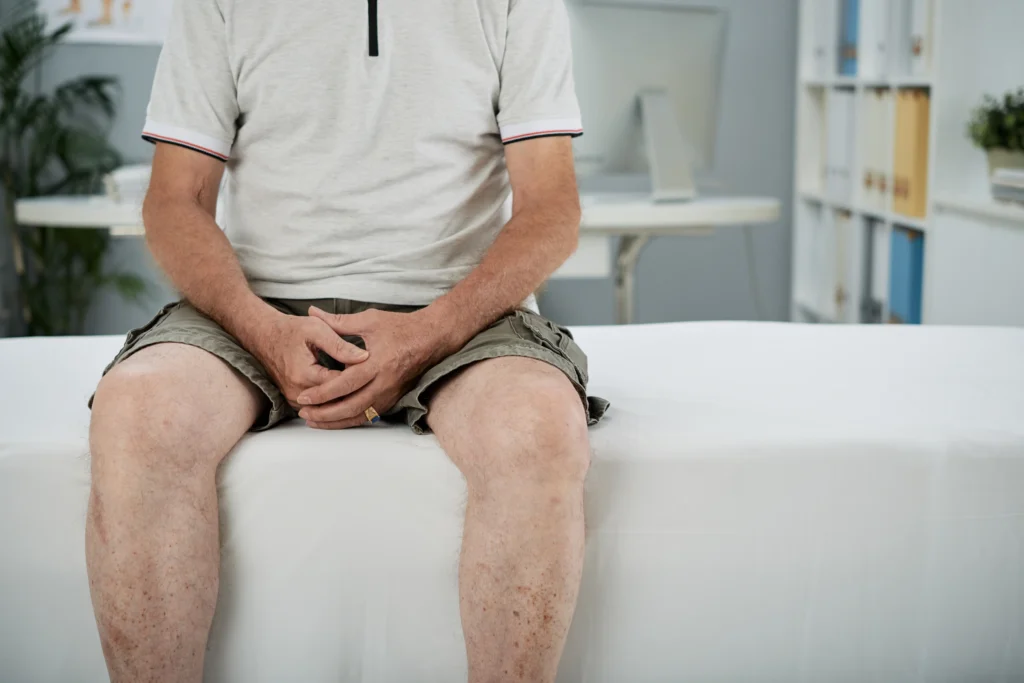
A good assessment starts with questions rather than immediately prescribing exercises.
I would want to understand:
- What symptoms are present?
- When did they begin?
- Did they follow surgery, injury, infection or another medical event?
- What makes symptoms better?
- What makes them worse?
- How are urination and bowel movements functioning?
- Are there sexual symptoms?
- How much time is spent sitting?
- Do you cycle?
- Are you lifting weights?
- Do you habitually hold your breath?
- Is there pelvic pain?
- Are there psychological or sleep-related factors affecting symptom severity?
A trained clinician may then examine the abdomen, hips, lumbar region, breathing pattern and pelvic floor.
For men, a rectal examination can be used to assess pelvic floor muscle function when clinically appropriate and with informed consent.
The EAU guideline considers rectal examination a useful method for assessing male pelvic floor function.
This examination is not something you should feel embarrassed about.
It is simply another clinical assessment technique.
What happens during a pelvic floor physiotherapy assessment?
A specialist pelvic health physiotherapist may assess:
- Resting pelvic floor tone
- Ability to contract
- Ability to relax
- Coordination
- Endurance
- Muscle tenderness
- Trigger points
- Breathing mechanics
- Abdominal wall tension
- Hip mobility
- Hip and trunk strength
- Posture and movement patterns
- Urinary and bowel habits
In selected cases, biofeedback or ultrasound may be used to help understand muscle activity.
The goal is not simply to answer, “Are your pelvic muscles weak?”
The more useful question is:
Can your pelvic floor contract when necessary, relax when necessary, and coordinate with the rest of your body?
Male pelvic floor dysfunction treatment: what actually helps?
Treatment should be individualized.
Pelvic floor muscle strengthening
If weakness is confirmed, pelvic floor muscle training can improve functional control.
But technique matters more than simply performing a large number of repetitions.
Research examining 108 studies of pelvic floor muscle training programs in men found substantial variation in exercise volume, muscle targets and training methods.
Some studies prescribed as few as 18 contractions per day while others prescribed up to 240, highlighting why generic online exercise prescriptions can be misleading. (PubMed)
A physiotherapist can teach you:
- Which muscles to activate.
- How strongly to contract.
- How long to hold.
- How to release completely.
- When to use a contraction functionally.
- How to coordinate the pelvic floor with breathing.
Pelvic floor relaxation
If your muscles are overactive, strengthening is not the starting point.
Treatment may include:
- Diaphragmatic breathing
- Pelvic floor “drop” exercises
- Gentle mobility
- Hip stretching
- Relaxation strategies
- Manual therapy
- Myofascial techniques
- Gradual exposure to previously painful movements
The EAU recommends specialized physiotherapy approaches for pelvic floor overactivity and myofascial dysfunction in appropriate chronic pelvic pain patients.
Manual therapy
A trained pelvic health physiotherapist may use external or internal techniques to address myofascial tenderness and restricted tissues.
The 2025 AUA guideline for male chronic pelvic pain states that individualized manual physical therapy, including internal and external myofascial techniques,
may be offered to men with pelvic floor or abdominopelvic muscle myalgia. (American Urology Association)
This should be performed only by an appropriately trained professional.
Biofeedback
Biofeedback can help patients understand what their pelvic floor is actually doing.
For example, a man may believe he is relaxing his pelvic floor while unknowingly maintaining substantial muscle activity.
Visual or sensory feedback can make that invisible process easier to understand.
The EAU guideline specifically supports biofeedback as an adjunct to muscle exercises in selected patients with an overactive pelvic floor and chronic anal pain.
Breathing retraining
One lesser-known physiotherapy strategy is to examine breathing.
Your diaphragm and pelvic floor work together during changes in abdominal pressure.
If you constantly brace your abdomen, hold your breath or breathe shallowly, your pelvic floor may develop an abnormal resting strategy.
Learning to breathe without excessive pelvic bracing can therefore become part of rehabilitation.
Hip and trunk rehabilitation
The pelvic floor does not operate in isolation.
The hips, abdominal muscles, diaphragm, lumbar spine and pelvic floor interact during walking, lifting, coughing and exercise.
For some patients, improving hip mobility, trunk control and general movement capacity can reduce the physical demands placed on the pelvic region.
Can pelvic floor exercises improve erectile dysfunction?
Potentially, in selected men.
The pelvic floor contributes to erection mechanics and sexual function,
but erectile dysfunction can also result from vascular disease, diabetes, medication, hormonal problems, neurological disorders, psychological factors and other medical conditions.
Therefore, pelvic floor exercises should not replace medical evaluation.
A randomized trial published in BJU International investigated pelvic floor exercises in men with erectile dysfunction, supporting the possibility that appropriately prescribed pelvic floor rehabilitation can improve erectile function in some patients. (NCBI)
The important phrase is appropriately prescribed.
More contractions are not necessarily better.
A man with pelvic floor weakness may need strengthening.
A man with painful hypertonicity may first need relaxation.
That is why copying another person’s Kegel routine is not a reliable treatment strategy.
What about chronic prostatitis and pelvic pain?
Many men with chronic pelvic pain are told they have “prostatitis” and assume there must be an ongoing infection.
But chronic pelvic pain syndromes are more complicated.
The EAU describes chronic pelvic pain using a broader framework that includes urinary, sexual, bowel, pelvic floor, psychological and pain-related factors.
Pelvic floor physiotherapy can form part of multimodal treatment.
A randomized trial cited in the EAU guidelines compared conventional treatment with biofeedback and pelvic floor relaxation therapy in men with prostate pain.
Improvements occurred in both groups, but benefits of the biofeedback and relaxation approach persisted after treatment ended.
This is a valuable clinical lesson: sometimes the goal is not simply to “strengthen the pelvic floor,” but to teach the nervous system and muscles how to regulate themselves.
Things I would ask men to stop doing
Stop performing Kegels all day
Pelvic floor muscles need rest.
Constantly squeezing them can reinforce an overactive pattern.
Stop ignoring perineal numbness while cycling
Numbness is a warning signal, not a badge of cycling toughness.
Adjust the bike, saddle, riding position and training pattern rather than repeatedly compressing the same tissues.
Stop straining unnecessarily during bowel movements
Repeated straining can increase pelvic pressure and reinforce poor pelvic floor coordination.
If constipation is persistent, discuss it with a healthcare professional rather than treating the pelvic floor alone.
Stop holding your breath for every heavy movement
Learn appropriate breathing and bracing rather than remaining rigid throughout the entire exercise.
Stop assuming pelvic pain means prostate infection
Persistent pelvic pain deserves proper assessment rather than repeated self-medication.
Lesser-known habits that may help
One of my favorite pelvic floor recommendations is surprisingly simple:
Change positions frequently.
Do not spend five hours sitting, then expect 10 minutes of stretching to completely reverse the day.
Try short movement breaks.
Walk.
Move the hips.
Change your sitting position.
Take relaxed breaths.
If you cycle, periodically unload the perineum and pay attention to saddle fit.
Evidence suggests that equipment and riding position can meaningfully influence perineal pressure.
Another useful habit is to stop treating every pelvic symptom as an isolated pelvic problem.
Your sleep, stress, bowel habits, physical activity, hip mobility, abdominal bracing and pain sensitivity may all influence the presentation.
When should you see a doctor?
Pelvic floor physiotherapy is useful, but it is not a substitute for medical evaluation when red flags are present.
Seek medical assessment for:
- Blood in urine or semen
- Fever with pelvic or urinary symptoms
- Severe or sudden testicular pain
- New urinary retention
- Unexplained weight loss
- Progressive neurological symptoms
- New bowel or bladder loss of control
- Severe unexplained pelvic pain
- Persistent erectile dysfunction
- Symptoms following significant trauma
Erectile dysfunction itself can sometimes be an early marker of vascular disease, so persistent symptoms deserve appropriate medical evaluation rather than being automatically attributed to pelvic floor weakness.
Can male pelvic floor dysfunction be prevented?
Not every case can be prevented, but you can reduce several modifiable risks.
Maintain regular physical activity.
Avoid prolonged uninterrupted sitting.
Manage constipation.
Use appropriate lifting and breathing mechanics.
Do not routinely overtrain the pelvic floor.
If you cycle extensively, optimize your bike fit and reduce prolonged perineal pressure.
After prostate surgery, begin rehabilitation according to your surgical team’s instructions.
And perhaps most importantly, learn the difference between contraction and relaxation.
A healthy pelvic floor needs both.
The physiotherapist’s bottom line
Male pelvic floor dysfunction is much more complicated than simply having a “weak pelvic floor.”
Some men need stronger muscles.
Others need quieter muscles.
Many need better coordination.
And some require a combination of pelvic rehabilitation, medical management, lifestyle changes and treatment of contributing conditions.
The latest EAU chronic pelvic pain guidance emphasizes individualized, multimodal care rather than relying on one intervention for every patient.
If your symptoms include pelvic pain, urinary problems, bowel difficulties or sexual dysfunction, don’t be embarrassed to seek help.
A properly trained pelvic health physiotherapist can assess the muscles, breathing, movement and coordination and determine whether strengthening, relaxation or another approach is appropriate.
The most important lesson I would leave you with is this:
Your pelvic floor is not supposed to be switched permanently “on.”
It needs to contract when you need control and relax when you need release.
That balance, rather than endless Kegels, is often the foundation of good pelvic health.
Medical note: This article is educational and does not replace an individualized assessment by a doctor, urologist or pelvic health physiotherapist. Pelvic pain, urinary symptoms and sexual dysfunction can have several causes and should be evaluated appropriately.
Frequently Asked Questions
What are the symptoms of male pelvic floor dysfunction?
Symptoms may include urinary leakage, urgency, difficulty emptying the bladder, post-urination dribbling, constipation, pelvic pain, pain with ejaculation and sexual dysfunction.
Can men have a tight pelvic floor?
Yes. A pelvic floor can become overactive or hypertonic. This may cause pelvic pain, urinary urgency, difficulty relaxing during bowel movements and sexual discomfort.
Can pelvic floor dysfunction cause erectile dysfunction?
Pelvic floor dysfunction may contribute to erectile difficulties in some men, but erectile dysfunction can have many other causes. Persistent erectile problems should receive appropriate medical assessment.
Should every man with pelvic floor problems do Kegel exercises?
No. Men with pelvic floor weakness may benefit from strengthening, while men with an overactive pelvic floor may need relaxation and coordination training instead.
Can physiotherapy help male pelvic floor dysfunction?
Pelvic health physiotherapy can include individualized strengthening, relaxation training, breathing exercises, biofeedback, movement rehabilitation and manual therapy depending on the person’s assessment.
Can cycling affect the male pelvic floor?
Prolonged cycling can increase pressure on the perineum in some men. Bike fit, saddle design, riding position and periodic pressure relief may help reduce this exposure.
Can pelvic floor dysfunction cause urinary problems?
Yes. Dysfunction may contribute to leakage, urgency, difficulty starting urination, incomplete emptying or post-micturition dribbling.
How is male pelvic floor dysfunction diagnosed?
Assessment may include a symptom history, abdominal and hip examination, breathing assessment and pelvic floor muscle assessment. A trained clinician may perform an internal rectal assessment when appropriate and with consent.
Can stress make pelvic floor symptoms worse?
Stress can influence muscle guarding, pain sensitivity and nervous-system regulation. This does not mean symptoms are psychological; rather, pelvic symptoms can be influenced by the interaction between muscles and the nervous system.
When should a man see a doctor for pelvic floor symptoms?
Seek medical evaluation for blood in urine or semen, fever, severe testicular pain, urinary retention, progressive neurological symptoms, unexplained weight loss or persistent erectile dysfunction.
Stay tuned with us for more health related topics.
Follow us on LinkedIn and Instagram for more.
More Read


Medical Disclaimer!
This article has been reviewed and written under the guidance of our Head Physiotherapist, Dr. Kruti Raj (PT, MUHS,CPT,CMPT). The information shared is intended for educational purposes only and should not be considered a substitute for personalized medical advice, diagnosis, or treatment.
Please consult us or any other qualified healthcare professional before beginning any exercise program, especially if you are experiencing pain, recovering from injury, or managing a medical condition.


