


Have you noticed that the arch of one foot is becoming flatter, or that pain develops along the inside of your ankle after walking?
One possible cause is posterior tibial tendon dysfunction (PTTD), a condition that can affect the tendon’s ability to support the foot’s arch.
Quick Answer: Can Posterior Tibial Tendon Dysfunction Cause Flat Feet?
Yes. Posterior tibial tendon dysfunction (PTTD) can contribute to an acquired flat foot because the tendon helps support the arch on the inside of the foot. When it becomes painful, weakened or damaged, the arch may gradually flatten.
However, not every flat foot is caused by PTTD, and the condition can cause pain before visible arch changes develop. Early assessment, appropriate physiotherapy, activity modification and supportive footwear or orthoses may help manage symptoms and improve function.
When the tendon becomes painful, weak, or damaged, it may struggle to control the foot during walking.
Over time, some people develop an acquired flatfoot deformity.
Early assessment and appropriate physiotherapy can help manage symptoms and maintain function.
Key Takeaways
- PTTD affects a tendon that helps support the inner foot arch.
- It can contribute to acquired flatfoot, but flat feet have several possible causes.
- Inner ankle pain, swelling, weakness during push-off and difficulty performing a heel raise can be warning signs.
- Weight-bearing X-rays may help assess foot alignment, while ultrasound or MRI may be used to examine tendon damage when indicated.
- Physiotherapy can focus on suitable strengthening, mobility, balance and functional activities.
- Arch-supporting orthoses may help some people, but treatment should be tailored to symptoms and the stage of the condition.
- Seek professional assessment if pain persists, the arch changes progressively or walking becomes difficult.
What Is Posterior Tibial Tendon Dysfunction?
The posterior tibial tendon connects a muscle in the deep back of the lower leg to several bones on the inner and underside of the foot.
It helps turn the foot inward, supports the medial arch, and contributes to control during walking.
When the tendon becomes irritated, elongated, or torn, it may not provide adequate support.
Other structures, including the spring ligament and joints of the foot, can also become involved.
The term progressive collapsing foot deformity (PCFD) is increasingly used for the broader condition in which the arch collapses and foot alignment changes.
PTTD describes dysfunction of the tendon, while PCFD recognises that several tendons, ligaments, and joints may contribute to the deformity.
Can Posterior Tibial Tendon Dysfunction Cause Flat Feet?
Yes.
PTTD is an important cause of acquired flatfoot in adults, but it does not affect everyone in the same way.
Initially, the tendon may be painful or weak even when the arch still looks normal.
As the condition progresses, the inner arch may lower, the heel may tilt outward, and the front of the foot may turn outward relative to the heel.
However, not everyone with flat feet has PTTD.
Some people naturally have low arches without pain or functional problems.
Acquired flatfoot can also arise from other tendon, ligament, joint, or structural conditions.
A newly flattening foot, particularly when accompanied by pain or weakness on one side, deserves assessment.
What Are the Early Symptoms?
Symptoms depend on the severity of the tendon problem and whether foot alignment has started to change.
Common signs include:
- Pain or tenderness along the inside of the ankle, often behind the inner ankle bone.
- Swelling along the posterior tibial tendon.
- Pain that increases after prolonged standing or walking.
- Weakness when turning the foot inward.
- Difficulty rising onto the toes of the affected foot.
- A gradually lowering arch or a heel that appears to tilt outward.
- Reduced walking tolerance or difficulty climbing stairs.
Some people also develop pain on the outer side of the hindfoot as changes in alignment place additional stress on surrounding structures.
Pain may become less noticeable in some later-stage cases, so reduced pain alone does not necessarily mean the condition has resolved.
Why Does the Posterior Tibial Tendon Become Dysfunctional?
Repetitive Loading
Long periods of standing, walking, or other weight-bearing activities may aggravate a tendon that is struggling to tolerate its workload.
Age-Related Tendon Changes
Tendon tissue can change with age, and PTTD is commonly seen in middle-aged and older adults.
However, younger adults can also develop tendon problems.
Previous Injury
An ankle or foot injury may affect the tendon or the structures that support the arch.
Persistent symptoms after an injury should not automatically be attributed to a routine sprain.
Other Health and Biomechanical Factors
Body weight, foot alignment, inflammatory conditions, and other health factors may influence the demands placed on the tendon.
These are potential contributors, not proof that a person will develop PTTD.
How Does PTTD Progress?
PTTD can range from tendon pain without visible deformity to a more pronounced flatfoot with changes in joint alignment.
- Early stage: Pain, tenderness, or swelling may occur along the tendon, while the arch remains relatively unchanged.
- Flexible flatfoot: The arch lowers and the heel may tilt outward, but the foot can still move towards a more normal position.
- Rigid or advanced deformity: The foot becomes less flexible, and joint changes may contribute to pain and difficulty walking.
This progression is not identical for everyone.
Some people remain in earlier stages, while others develop more significant deformity.
The stage and flexibility of the foot help guide treatment.
How Can You Tell If Your Flat Foot Is Caused by PTTD?
A clinician assesses the foot’s shape alongside tendon tenderness, strength, movement, and walking ability.
Single-Leg Heel Raise
A clinician may ask you to rise onto the toes of one foot.
Difficulty completing the movement, particularly when accompanied by inner ankle pain or weakness, may indicate posterior tibial tendon dysfunction.
Do not repeatedly attempt this test if it causes substantial pain or you cannot balance safely.
The “Too Many Toes” Sign
When viewed from behind, more toes may be visible on the outer side of the affected foot because the front of the foot has turned outward relative to the heel.
This can support a clinical assessment but is not specific to PTTD and cannot confirm the diagnosis alone.
Foot Flexibility
A clinician may assess whether the arch and heel position change during movement or whether the deformity has become rigid.
This distinction matters because flexible and rigid deformities may require different treatment approaches. (Ross et al., 2017)
How Is PTTD Diagnosed?
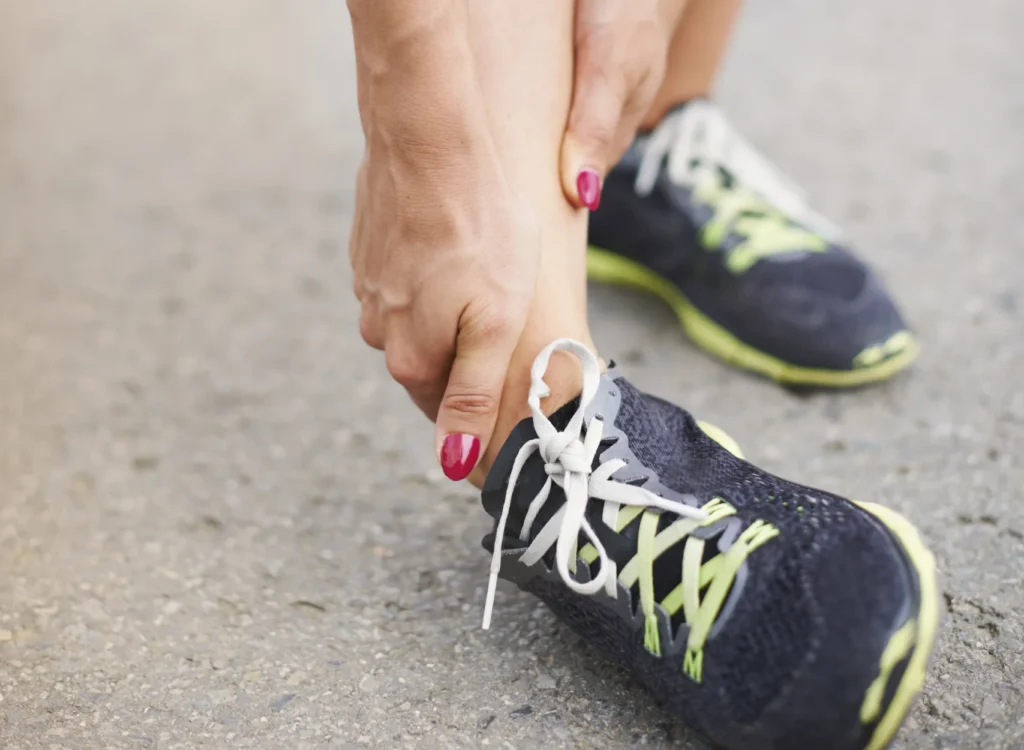
Assessment usually begins with a discussion of symptoms, their duration, previous injuries, and changes in foot shape.
The physical examination may include:
- Checking tenderness and swelling along the tendon.
- Testing foot and ankle strength.
- Assessing the arch and heel alignment while standing.
- Evaluating walking, balance, and heel-raise ability.
- Checking ankle mobility and the flexibility of the deformity.
Are X-Rays or MRI Necessary?
Imaging depends on the examination findings and whether it will help guide treatment.
- Weight-bearing X-rays show foot alignment and structural changes while standing.
- Ultrasound can assess tendon appearance and surrounding soft tissues.
- MRI may help identify tendon tears or associated soft-tissue damage when indicated.
No single imaging test is necessary for every patient.
The clinician selects investigations according to the suspected problem. (Rehman et al., 2024)
Can Physiotherapy Help Posterior Tibial Tendon Dysfunction?
Physiotherapy can help many people with early-stage PTTD manage pain, improve strength, and maintain walking function.
Treatment should be tailored to the severity of symptoms, tendon capacity, foot alignment, and any associated joint or ligament problems.
Activity Modification
Temporarily reduce activities that substantially aggravate symptoms, such as prolonged walking, repeated hills, or high-impact exercise.
Comfortable movement may still be possible, depending on the severity of the condition.
Progressive Strengthening
A physiotherapist may prescribe exercises for the posterior tibialis and other muscles that support the foot and ankle.
Resistance should increase gradually according to symptoms and functional progress.
Balance and Functional Training
Balance exercises and controlled movements can help improve stability during standing and walking.
The programme may progress towards more demanding tasks as strength and control improve.
Footwear and Orthoses
Supportive footwear and an appropriately selected foot orthosis may improve comfort and help manage loading.
The level of support depends on the person’s symptoms, foot flexibility, and functional needs.
Orthoses do not guarantee that a structurally changed arch will return to its original shape.
A systematic review found that orthoses, particularly personalized arch support combined with exercise, may help reduce pain in early-stage PTTD.
However, the studies were limited, so results should not be treated as a guarantee for every patient. (Gómez-Jurado et al., 2021)
Which Exercises May Help?
Exercise selection depends on the severity of the tendon problem.
These examples may be appropriate for some people with early-stage symptoms, but they should not replace an individual assessment.
Seated Foot Inversion
Sit with your foot supported and gently turn the sole inward without twisting the knee.
Start with comfortable, controlled movement and avoid forcing the ankle.
Calf Stretch
Stand facing a wall with the affected leg behind you.
Keep the heel on the floor and gently lean forward until you feel a stretch in the calf.
Stop if the position aggravates your foot or ankle.
Supported Heel Raises
Hold a stable surface and gradually rise onto the balls of both feet if comfortable.
Lower slowly and maintain control.
If the exercise causes significant pain or difficulty, ask a physiotherapist about an alternative.
Individualised Strengthening
A physiotherapist may introduce resistance-band exercises, balance work, and other progressive movements based on the examination findings.
The programme should be adjusted if symptoms worsen.
Research suggests that strengthening may help reduce pain and disability, but high-quality evidence remains limited and does not establish one ideal exercise program for everyone. (Ross et al., 2018)
Can Flat Feet Caused by PTTD Be Reversed?
The answer depends on the stage and flexibility of the deformity.
In early disease, symptoms may improve with activity modification, strengthening, footwear, and orthoses.
These approaches may help control symptoms and improve function.
If the tendon and supporting ligaments have become significantly elongated or damaged, the arch may not return to its original shape through exercise alone.
A rigid deformity or substantial joint involvement may require specialist treatment.
The goal of physiotherapy is to improve comfort, movement, and functional capacity, not to promise that every acquired flatfoot can be reversed.
Posterior Tibial Tendon Dysfunction: Myth vs Fact
MYTH: Every flat foot means PTTD.
FACT: Flat feet may be lifelong or develop for several reasons. Pain, tendon findings and foot function help clinicians determine the likely cause.
MYTH: PTTD always causes a visibly collapsed arch.
FACT: Symptoms can begin before obvious changes in foot shape develop.
MYTH: Exercises can always rebuild a collapsed arch.
FACT: Exercises may improve strength, load tolerance and function, but they cannot guarantee restoration of the arch’s original shape.
MYTH: Everyone with PTTD needs surgery.
FACT: Many people are initially managed with activity modification, physiotherapy and supportive devices. Surgery may be considered when symptoms, deformity or tendon damage warrant it.
When Should You See a Doctor?
Arrange an assessment if you notice a progressively flattening arch, persistent pain or swelling along the inner ankle, or increasing difficulty walking or rising onto the toes.
Seek urgent medical assessment after a significant injury if you cannot bear weight, develop severe pain or substantial swelling, or notice sudden weakness.
A hot, red, swollen foot or ankle accompanied by fever also needs urgent evaluation.
Early assessment is particularly important when the shape of one foot is changing, because treatment options differ between flexible and rigid deformities.
Final Thoughts: Protect Your Foot Health
Posterior tibial tendon dysfunction can cause pain along the inner ankle and contribute to a gradually flattening foot arch. Recognising symptoms early can help you seek an appropriate assessment before walking and everyday activities become more difficult.
Physiotherapy, carefully progressed exercises, activity modification and suitable footwear or orthoses may help manage symptoms and maintain function. The right approach depends on the condition’s severity, and exercises should not be forced through significant pain.
Remember: A flat foot does not automatically mean tendon dysfunction. If you notice persistent inner ankle pain, a changing arch or difficulty walking, consult a qualified healthcare professional for an individualised assessment.
Conclusion
Posterior tibial tendon dysfunction can contribute to adult-acquired flatfoot when the tendon can no longer adequately support the foot’s arch.
Inner ankle pain, swelling, weakness during heel raises, and a progressively flattening arch are signs that deserve assessment.
Physiotherapy may help manage early-stage symptoms through progressive strengthening, activity modification, balance training, and suitable footwear or orthoses.
Because flatfoot can have several causes and advanced deformities may require specialist care, treatment should be based on the individual’s symptoms, examination findings, and foot structure.
Frequently Asked Questions
1. Can posterior tibial tendon dysfunction cause flat feet?
Yes. Dysfunction of the posterior tibial tendon can contribute to progressive flattening of the arch, particularly in adults. However, flat feet can have other causes, so an assessment is important.
2. What are the early signs of PTTD?
Early symptoms may include pain or tenderness along the inside of the ankle, swelling, discomfort during walking and reduced strength when pushing off the foot. Visible arch changes may develop later.
3. Can physiotherapy help posterior tibial tendon dysfunction?
Physiotherapy may help improve strength, balance, walking tolerance and daily function. A physiotherapist can tailor exercises and activity changes to the person’s symptoms and functional ability.
4. Can exercises restore a collapsed foot arch?
Not always. Exercises may improve muscular support and function, but established structural changes may not fully reverse. Treatment goals depend on the severity and flexibility of the deformity.
5. Do orthotics help with PTTD?
Arch-supporting insoles or braces may reduce symptoms and improve support for some people, particularly in earlier stages. The most suitable option depends on foot alignment, comfort and the severity of the condition.
6. When should I seek medical assessment?
Arrange an assessment for persistent inner ankle pain, progressive flattening of the arch or increasing difficulty walking. Sudden severe pain, inability to bear weight, or a hot, red, swollen foot with fever warrants urgent medical evaluation.
Stay tuned with us for more health related topics.
Follow us on LinkedIn and Instagram for more.
More Read


Medical Disclaimer
This article is intended for general educational purposes only and does not replace professional medical advice, diagnosis or treatment. Foot and ankle pain can have several causes, and not every flat foot is related to posterior tibial tendon dysfunction. Consult a qualified healthcare professional for an appropriate assessment and personalised treatment plan. Do not delay seeking medical care because of information in this article.


