
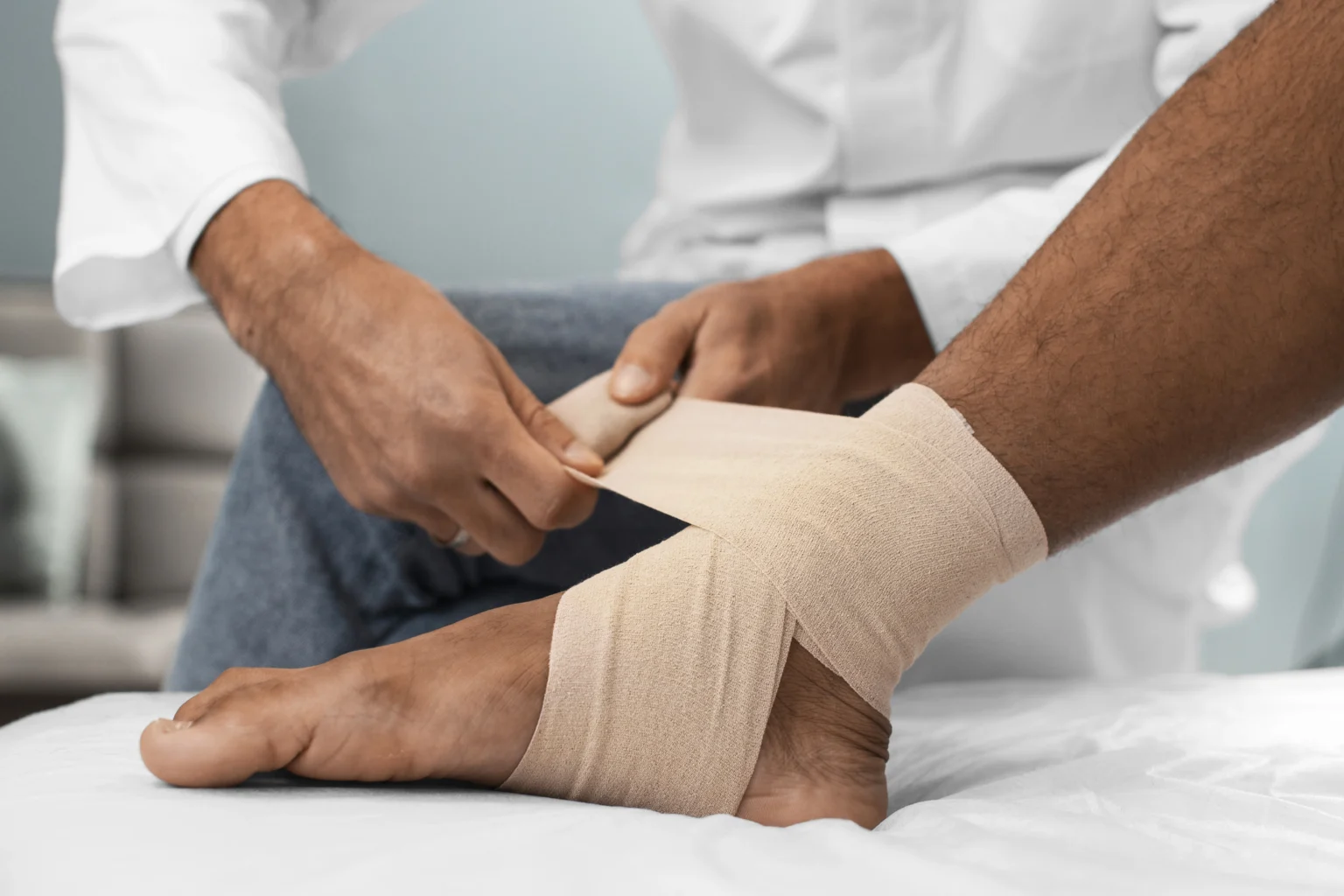

Pain along the inner ankle, swelling behind the ankle bone or a newly flattening foot arch may indicate a problem with the tibialis posterior tendon.
In some cases, the tendon develops a partial or complete tear, reducing its ability to support the foot during walking.
Quick Answer: What Are the Signs of a Tibialis Posterior Tendon Tear?
A tibialis posterior tendon tear can cause pain and swelling along the inner ankle, weakness when turning the foot inward, difficulty rising onto the toes and progressive flattening of the foot arch.
The injury may develop gradually or follow a sudden incident. Persistent pain, a newly changing arch or difficulty bearing weight warrants professional assessment. Physiotherapy may help selected patients, but a suspected significant tear should be assessed before strengthening exercises begin.
Because these symptoms can resemble an ankle sprain or ordinary tendon pain, a tear may be overlooked.
Recognizing the warning signs is important because treatment depends on the extent of tendon damage, changes in foot alignment and the person’s ability to walk and perform everyday activities.
Key Takeaways
- The tibialis posterior tendon helps support the foot arch and stabilise the foot during walking.
- A tear may develop gradually or follow an injury.
- Inner ankle pain, swelling, weakness and a newly flattened arch are important warning signs.
- Difficulty performing a single-leg heel raise may indicate tendon dysfunction but does not confirm a tear on its own.
- MRI can help assess tendon damage, while weight-bearing X-rays evaluate foot alignment.
- Physiotherapy may include load management, appropriate foot support, progressive strengthening and gait rehabilitation.
- A suspected significant tear or progressive foot deformity requires medical assessment before exercise-based treatment.
What Is a Tibialis Posterior Tendon Tear?
The tibialis posterior is a deep muscle in the lower leg.
Its tendon passes behind the inner ankle bone and attaches to several bones in the foot.
It helps turn the foot inward, supports the arch and contributes to stability during walking and push-off.
A tibialis posterior tendon tear occurs when tendon fibres become disrupted.
A partial tear affects some fibres, while a complete tear involves a more substantial loss of tendon continuity.
A tear may follow a sudden injury or develop in a tendon that has undergone gradual degeneration.
The condition is related to posterior tibial tendon dysfunction, which can range from pain and weakness to progressive collapsing foot deformity (Kohls-Gatzoulis et al., 2004)
What Causes a Tibialis Posterior Tendon Tear?
Gradual tendon degeneration
Some tears develop over time as the tendon becomes less able to tolerate repeated loading.
Symptoms may begin as discomfort during walking and gradually progress to weakness or changes in foot shape.
Sudden ankle injury
A twisting injury, awkward landing or sudden high-impact load can damage the tendon.
An injury involving inner ankle pain and swelling deserves attention, particularly if standing on the affected foot becomes difficult.
Repetitive loading
Prolonged walking, running and repeated weight-bearing activities may aggravate an already vulnerable tendon.
However, physical activity alone does not necessarily cause a tear, and some tears occur without a clearly identifiable incident.
Contributing factors
Age-related tissue changes, excess body weight, inflammatory conditions and altered foot mechanics may contribute to tendon problems.
These are potential risk factors, not proof that a tear will occur.
What Are the Symptoms of a Tibialis Posterior Tendon Tear?
Symptoms vary depending on whether the tear developed suddenly or gradually and how much tendon function remains.
1. Pain along the inner ankle
Pain often occurs behind or below the inner ankle bone, known as the medial malleolus.
It may extend towards the arch and worsen during walking, stair climbing or prolonged standing.
2. Swelling and tenderness
Swelling or tenderness may develop along the tendon behind the inner ankle.
Persistent swelling accompanied by weakness or a change in foot shape warrants assessment.
3. Difficulty rising onto the toes
A person with significant tendon dysfunction may struggle to perform a single-leg heel raise on the affected side.
This movement requires the calf muscles and supporting foot structures to work together.
Inability to perform a heel raise is an important clinical sign, but it does not confirm a tear on its own.
Pain, weakness and balance problems from other conditions can produce similar difficulties.
4. A newly flattened foot arch
The arch may gradually lower when the tendon can no longer support the foot effectively.
The heel may turn outward, while the front of the foot may point farther away from the body’s midline.
A new, asymmetric change in foot shape is more concerning than a longstanding, painless flat foot.
5. Weakness when turning the foot inward
The tibialis posterior helps turn the sole inward.
A significant tear may reduce strength during this movement, although the degree of weakness varies.
6. Changes in walking
Walking longer distances, pushing off the foot or standing for extended periods may become increasingly difficult.
Some people notice that their gait changes or that their usual footwear feels less supportive.
A clinical report on sports-related tendon rupture highlighted inner ankle pain and swelling following a twisting injury, asymmetric flatfoot and difficulty performing a single-leg heel raise as important warning signs. (Marcus et al., 1995)
Is a Tendon Tear Different From Tibialis Posterior Tendinopathy?
Yes. Although these conditions can overlap, they describe different aspects of tendon dysfunction.
| Feature | Tendinopathy | Tendon tear |
|---|---|---|
| Tendon structure | Pain and impaired tendon function, often associated with degenerative changes | Partial or complete disruption of tendon fibres |
| Onset | Often gradual | Gradual or sudden |
| Strength | May be painful or reduced | May be substantially reduced, depending on the tear |
| Foot arch | May remain normal in early stages | May flatten if tendon function is significantly impaired |
| Management | Often starts with conservative treatment | Depends on tear severity, function and foot alignment |
Symptoms alone cannot reliably distinguish these conditions. Tendinopathy and tearing may coexist, so a clinical assessment is important when pain persists or function declines.
How Is a Tibialis Posterior Tendon Tear Diagnosed?
Clinical examination
A doctor or physiotherapist may assess:
- The location of pain, swelling and tenderness.
- Foot posture and differences between both feet.
- Ankle movement and strength when turning the foot inward.
- Walking pattern and weight-bearing tolerance.
- The ability to perform a heel raise, if safe.
- Functional limitations during daily activities.
The assessment helps determine whether the problem is likely to involve the tendon and whether additional investigations are needed.
A heel-raise test should not be repeatedly forced when it causes significant pain or feels unsafe.
Which imaging test is most useful?
MRI can provide detailed information about tendon structure and help identify a partial or complete tear.
Ultrasound may also assess tendon abnormalities and is useful in selected cases.
Weight-bearing X-rays help evaluate foot alignment and associated bony changes, but they do not directly show tendon fibres in the same detail as MRI.
A systematic review found that MRI generally had better diagnostic accuracy for posterior tibial tendon tears than ultrasound and radiography, although the choice of investigation depends on clinical circumstances and availability (Rehman et al., 2024)
Can Physiotherapy Help a Tibialis Posterior Tendon Tear?

Physiotherapy can support recovery in selected cases, but the treatment plan must match the severity of the injury.
A suspected significant tear should be medically assessed before starting strengthening exercises.
1. Protect the tendon and modify activity
Reducing painful activities such as prolonged walking, running, jumping or repeated heel raises may help prevent excessive loading.
Depending on the injury, a clinician may recommend temporary immobilisation, a walking boot or a brace.
The need for support depends on the extent of damage and the person’s ability to bear weight.
2. Improve foot support
Appropriate footwear and arch-supporting orthoses may improve comfort and help control foot movement in selected cases.
The type of support should reflect foot alignment, symptoms and functional ability.
An orthosis may help manage symptoms, but it does not repair a torn tendon.
3. Restore movement and strength gradually
Once the injury has been assessed and loading is appropriate, rehabilitation may progress from comfortable ankle movement to controlled strengthening of the calf and foot muscles.
Exercise resistance, repetitions and difficulty should increase according to symptoms and clinical findings.
Exercises should not be forced through sharp pain or used as a substitute for investigating a suspected significant tear.
4. Improve balance and walking function
As weight-bearing becomes more comfortable, rehabilitation may include balance exercises, controlled standing tasks and gait training.
The aim is to improve movement control and walking tolerance without placing excessive stress on the healing tendon.
5. Plan a safe return to activity
Return-to-activity planning should consider pain, swelling, strength, walking tolerance and foot alignment.
Running, jumping or demanding sport-specific activities should be reintroduced only when the tendon can tolerate the required loads.
Evidence supports exercise as one component of conservative management for posterior tibial tendon dysfunction, but the research base remains limited and does not establish a single program suitable for every tear (Ross et al., 2018)
Which Exercises Should You Avoid With a Suspected Tear?
Until the injury has been assessed, avoid activities that significantly increase pain or place excessive demand on the affected foot. These may include:
- Repeated single-leg heel raises.
- Heavy resisted foot inversion.
- Running, jumping or hill training that reproduces symptoms.
- Aggressive stretching that causes pain.
- Balance exercises that feel unstable or unsafe.
This does not mean everyone with tendon pain needs complete rest.
The appropriate level of movement depends on the diagnosis and injury severity.
A physiotherapist or doctor can help determine which activities are safe.
Tibialis Posterior Tendon Tear: Myth vs Fact
MYTH: Inner ankle pain always means an ankle sprain.
FACT: Tendon injuries, including tibialis posterior tendon tears, can cause inner ankle pain and swelling. Persistent symptoms need an appropriate assessment.
MYTH: Every flat foot indicates a tendon tear.
FACT: Flat feet may be lifelong or develop for several reasons. A new change in arch shape, particularly with pain and weakness, deserves assessment.
MYTH: Strengthening exercises are always the first treatment.
FACT: A suspected significant tear may require medical assessment and protection before strengthening is considered.
MYTH: Every tibialis posterior tendon tear needs surgery.
FACT: Treatment depends on the extent of tendon damage, remaining function and foot alignment. Selected cases may be managed without surgery.
Can a Tibialis Posterior Tendon Tear Heal Without Surgery?
Some patients improve with non-operative treatment, which may include activity modification, appropriate support, orthoses and physiotherapy.
The suitability of this approach depends on the tear, remaining tendon function and whether foot deformity is developing.
A complete tear, substantial weakness or progressive deformity may require assessment by an orthopaedic foot and ankle specialist.
Treatment decisions should not be based on pain alone.
When Is Surgery Considered?
Surgery may be considered when tendon damage is substantial, foot alignment is progressively changing or an appropriate course of conservative treatment has not provided sufficient improvement.
Depending on the findings, procedures may involve tendon reconstruction or transfer and correction of associated foot deformity.
The choice depends on tendon condition, flexibility of the foot, joint involvement and overall function.
Not every tendon tear requires surgery.
A specialist can explain the potential benefits, limitations and recovery requirements after reviewing the clinical examination and imaging.
When Should You Seek Medical Attention?
Arrange a prompt assessment if you notice persistent inner ankle pain, swelling along the tendon, a newly flattened arch or increasing difficulty standing on the affected foot.
Seek urgent medical attention after a sudden injury if you cannot bear weight, experience severe pain or develop substantial swelling.
A new change in foot shape or sudden loss of strength should not be ignored, even if the pain is manageable.
Final Thoughts: Protect Your Foot Function
A tibialis posterior tendon tear can affect the inner ankle, foot arch and ability to walk comfortably. Persistent pain, weakness or a newly changing arch should not be dismissed as an ordinary ankle sprain.
The right treatment depends on the extent of tendon damage. Physiotherapy can support recovery in selected cases, but significant tears may require medical management or specialist treatment.
Remember: If you develop persistent inner ankle pain, increasing weakness or a new change in foot shape, seek professional assessment before attempting demanding strengthening exercises.
Conclusion
A tibialis posterior tendon tear can cause inner ankle pain, swelling, weakness and progressive flattening of the foot arch.
Because these symptoms can resemble an ankle sprain or ordinary tendon pain, recognising changes in strength and foot shape is important.
Physiotherapy may help selected patients restore movement, strength and walking function, but treatment must match the severity of the injury.
A suspected significant tear needs appropriate assessment before strengthening begins.
Persistent pain, a newly changing arch or difficulty rising onto the toes warrants professional evaluation.
Early diagnosis helps guide treatment and protect long-term foot function.
Frequently Asked Questions
1. What are the symptoms of a tibialis posterior tendon tear?
Symptoms may include pain and swelling along the inner ankle, weakness when turning the foot inward, difficulty rising onto the toes and a gradually flattening foot arch.
2. Can a tibialis posterior tendon tear cause flat feet?
Yes. Significant tendon dysfunction can contribute to progressive flattening of the arch. However, flat feet have several possible causes, and not every flat foot indicates a tendon tear.
3. How is a tibialis posterior tendon tear diagnosed?
Diagnosis involves clinical examination and, when indicated, imaging. MRI can help assess tendon damage, while ultrasound and weight-bearing X-rays provide complementary information.
4. Can physiotherapy help a tibialis posterior tendon tear?
Physiotherapy may help selected patients through activity modification, appropriate foot support, progressive strengthening and gait rehabilitation. Treatment depends on the severity of the tear and should follow appropriate assessment.
5. Can a tibialis posterior tendon tear heal without surgery?
Some cases can be managed without surgery using appropriate support, activity modification and rehabilitation. More substantial tears or progressive deformity may require specialist evaluation.
6. When should I see a doctor for inner ankle pain?
Seek assessment for persistent inner ankle pain, swelling, a newly changing foot arch or increasing weakness. Urgent assessment is warranted after an injury if you cannot bear weight or have severe pain or substantial swelling.
Stay tuned with us for more health related topics.
Follow us on LinkedIn and Instagram for more.
More Read


Medical Disclaimer
This article is intended for general educational purposes only and does not replace professional medical advice, diagnosis or treatment. Inner ankle pain, foot weakness and arch changes can have several causes, and symptoms alone cannot confirm a tibialis posterior tendon tear. Consult a qualified healthcare professional for an appropriate assessment and personalised treatment plan. Seek urgent medical attention for severe pain, inability to bear weight or substantial swelling after an injury. Do not delay medical care because of information in this article.


