


Introduction: How to Relieve Period Pain
For many women, the arrival of a menstrual period is accompanied by more than just bleeding.
It often brings lower abdominal cramps, backache, fatigue, bloating, and a general feeling of discomfort that can make even simple daily activities feel exhausting.
Yet, despite affecting millions of women worldwide, period pain is still one of the most misunderstood health concerns.
Many women are told that painful periods are “normal” and simply something they have to live with.
As a women’s health physiotherapist, I often hear statements like,
“I thought everyone had pain like this,” or “I’ve been taking painkillers every month since I was 15.”
These conversations are a reminder that while menstrual discomfort can be common, severe or persistent pain should never be accepted as an unavoidable part of life.
Quick Answer
Period pain (dysmenorrhea) is commonly caused by uterine contractions triggered by prostaglandins during menstruation. Mild cramps are common, but severe pain that affects daily activities is not something you should simply tolerate. Regular exercise, physiotherapy, heat therapy, healthy lifestyle habits, and appropriate medical care can significantly reduce symptoms and improve quality of life. If your pain is worsening, lasts beyond your period, or is accompanied by heavy bleeding or other concerning symptoms, consult a healthcare professional.
Pain is the body’s way of asking us to pay attention.
Sometimes period pain is simply the result of normal hormonal changes during the menstrual cycle.
In other cases, it may be a sign of an underlying condition such as endometriosis, adenomyosis, fibroids, or pelvic inflammatory disease.
Learning to recognize the difference is the first step toward getting the right treatment.
Research shows that dysmenorrhea, the medical term for painful menstruation, affects nearly 7 out of every 10 young women and is one of the leading causes of recurrent school and workplace absenteeism worldwide.
Beyond the physical discomfort, it can interfere with concentration, sleep, physical activity, emotional well-being, and overall quality of life (Armour et al. 2019).
From a physiotherapy perspective, period pain is never viewed as just a problem of the uterus.
It often affects the muscles, joints, nerves, breathing patterns, posture, and even the way the brain processes pain.
This means that effective management frequently involves much more than taking a painkiller.
Targeted exercises, movement therapy, breathing techniques, posture correction, stress management, and lifestyle modifications can all play an important role in helping women regain control over their lives.
In this guide,
we’ll explore why period pain happens, what symptoms are considered normal, when cramps may indicate a more serious condition,
and how evidence-based physiotherapy can complement medical care to provide lasting relief.
Key Takeaways
- Most period pain is caused by increased prostaglandin levels that trigger stronger uterine contractions.
- Regular exercise, stretching, and physiotherapy are evidence-based ways to reduce menstrual pain.
- Heat therapy, diaphragmatic breathing, and stress management can provide additional relief.
- Severe cramps, heavy bleeding, or pain outside your menstrual period should be evaluated by a doctor.
- Conditions such as endometriosis, adenomyosis, and fibroids may cause secondary dysmenorrhea.
- Managing period pain often requires a combination of healthy lifestyle habits and personalized treatment.
- You should never feel that disabling period pain is something you simply have to live with.
What Is Period Pain?
Period pain, medically known as dysmenorrhea, refers to the cramping pain experienced before or during menstruation.
The pain usually begins in the lower abdomen but may also spread to the lower back, pelvis, hips, groin, or thighs.
For some women, the discomfort feels like a dull ache that lasts a few hours.
For others, it comes in intense waves of cramping that make it difficult to walk, sit comfortably, sleep, or concentrate on daily tasks.
Although menstrual cramps are extremely common, the intensity of pain varies greatly from one woman to another.
Interestingly, the severity of pain does not always reflect the severity of the underlying condition.
Some women with advanced endometriosis may report only mild discomfort, while others with no obvious pelvic abnormality experience debilitating pain each month.
As physiotherapists, we look beyond the uterus.
We assess how pain influences the muscles surrounding the pelvis, lower back, hips, abdomen, and pelvic floor because these structures often contribute significantly to ongoing discomfort.
Understanding the Two Types of Period Pain
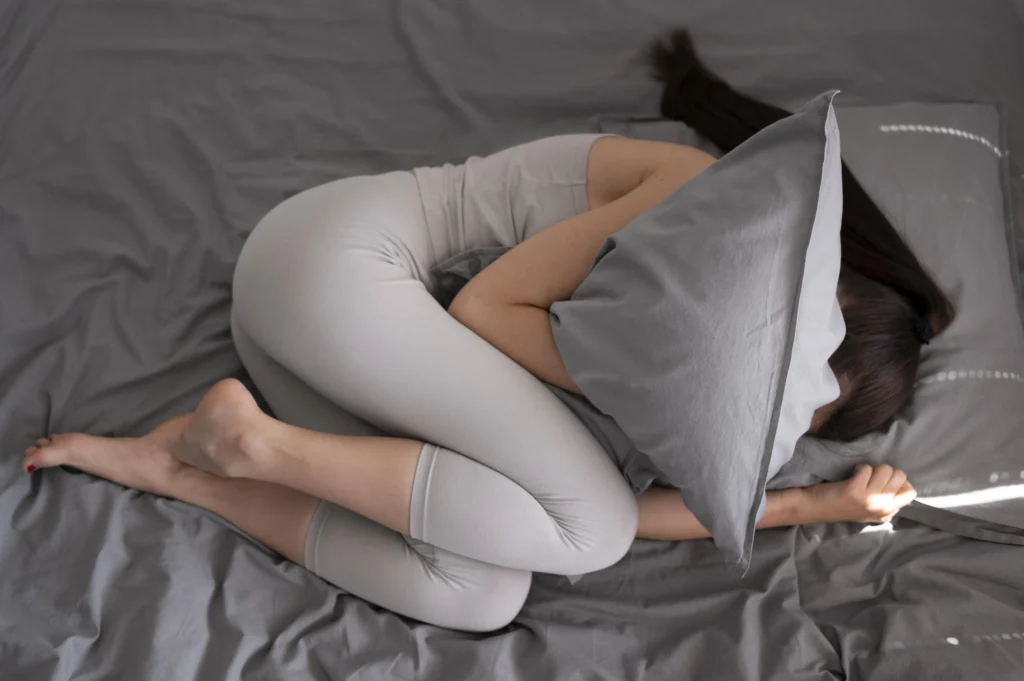
Not all menstrual pain has the same cause.
Identifying the type of dysmenorrhea helps determine the most appropriate treatment.
Primary Dysmenorrhea
Primary dysmenorrhea is the most common form of period pain.
It occurs without any underlying disease or structural abnormality in the reproductive organs.
It usually begins within the first few years after menstruation starts and is particularly common during adolescence and early adulthood.
The pain typically starts just before bleeding begins or within the first day of menstruation and gradually improves over the next 48 to 72 hours.
The main reason behind primary dysmenorrhea is the increased production of prostaglandins, naturally occurring chemicals that stimulate uterine contractions.
These contractions help expel the uterine lining but may temporarily reduce blood flow to the uterus, producing the familiar cramping sensation.
Fortunately, primary dysmenorrhea often responds well to conservative treatments, including exercise therapy, heat therapy, stretching, breathing exercises, and appropriate medical management when required.
Secondary Dysmenorrhea
Secondary dysmenorrhea occurs when menstrual pain is caused by an underlying medical condition rather than the normal menstrual process.
Unlike primary dysmenorrhea, this type of pain often develops later in life and may become progressively worse over time.
It may begin several days before menstruation, continue throughout the menstrual period, and sometimes persist even after bleeding has stopped.
Common causes include:
- Endometriosis
- Adenomyosis
- Uterine fibroids
- Pelvic inflammatory disease
- Ovarian cysts
- Cervical stenosis
- Certain intrauterine contraceptive devices (in some women)
If period pain suddenly becomes more severe after years of relatively painless cycles, it is important to seek medical evaluation rather than assuming it is simply part of ageing.
Why Does Period Pain Occur?
One of the most common questions I hear in the clinic is:
“Why does my uterus have to hurt just to get rid of blood?”
The answer lies in the remarkable way the uterus works.
Every month, the lining of the uterus thickens in preparation for a possible pregnancy.
If pregnancy does not occur, that lining needs to be shed.
To make this happen, the uterus contracts rhythmically, almost like a muscle squeezing repeatedly.
These contractions are controlled primarily by substances called prostaglandins.
Think of prostaglandins as chemical messengers.
Their job is to tell the uterine muscle when to contract.
The higher the prostaglandin levels, the stronger and more frequent the contractions become.
In some women, prostaglandin production is particularly high. As a result:
- the uterus contracts more forcefully,
- blood vessels supplying the uterine muscle become compressed,
- oxygen delivery temporarily decreases,
- nearby pain-sensitive nerves become activated.
This combination produces the cramping pain associated with menstruation.
Current scientific evidence continues to support prostaglandin overproduction as one of the primary mechanisms responsible for primary dysmenorrhea (Dawood et al. 2006).
Period Pain Is More Than a Uterine Problem
Many women are surprised when I explain that menstrual pain often involves much more than the reproductive organs.
Your Pelvic Floor Muscles React to Pain
Whenever we experience pain, muscles naturally tighten as a protective response.
The pelvic floor is no exception.
Repeated monthly cramping can cause these muscles to become overactive or difficult to relax. Over time, this may contribute to:
- pelvic heaviness,
- painful sitting,
- discomfort during intercourse,
- difficulty relaxing the abdomen,
- lingering pelvic pain even after menstruation ends.
This is one reason why pelvic floor physiotherapy has become an increasingly valuable part of women’s health care.
Your Lower Back May Hurt Even When Nothing Is Wrong With Your Spine
The uterus and lower back share several nerve pathways.
Because of this shared nerve supply, the brain may interpret pain originating from the uterus as pain coming from the lower back.
This phenomenon is known as referred pain.
Many women therefore experience aching across the lumbar region despite having completely healthy spinal structures.
Recognizing this relationship helps avoid unnecessary fear and guides more appropriate treatment strategies.
Pain Can Change the Way You Breathe
One of the most overlooked effects of menstrual pain is its influence on breathing.
During severe cramps, many women unconsciously begin taking shallow, rapid breaths.
Shallow breathing increases muscle tension, stimulates the body’s stress response, and may heighten pain sensitivity.
This creates a cycle in which pain causes tension, tension increases stress, and stress further amplifies pain.
Teaching diaphragmatic breathing and relaxation techniques is therefore a routine part of physiotherapy management for women with persistent menstrual pain.
A Lesser-Known Fact Worth Knowing
One misconception I frequently hear is that women should avoid exercise during their periods.
In reality, modern research suggests the opposite.
Regular physical activity, particularly stretching, aerobic exercise, resistance training, and multi-component exercise programs, has been shown to reduce menstrual pain, improve function, and shorten pain duration.
These benefits are thought to result from improved blood circulation, release of endorphins, reduced muscle tension, and better pain regulation within the nervous system (Zheng et al. 2024).
Common Causes of Period Pain
Understanding what causes period pain is important because not every painful period has the same explanation.
While many women experience cramps because of normal hormonal changes during menstruation, others may have an underlying medical condition that requires diagnosis and treatment.
As a physiotherapist, I always encourage women to pay attention to changes in their pain pattern.
Pain that has remained fairly consistent for years is often managed differently from pain that suddenly becomes severe or starts appearing later in life.
Let’s look at the most common causes.
1. Primary Dysmenorrhea
Primary dysmenorrhea is the most common cause of menstrual pain, especially in teenagers and young women.
It occurs when the uterus produces higher-than-normal levels of prostaglandins, hormone-like substances responsible for stimulating uterine contractions.
These contractions help shed the uterine lining, but excessive contractions temporarily reduce blood flow to the uterine muscle, resulting in cramping pain.
Women with primary dysmenorrhea generally:
- Experience pain within a few hours before or after menstruation begins.
- Notice that pain is worst during the first one or two days.
- Feel better once menstrual flow becomes lighter.
- Have no identifiable disease affecting the uterus or ovaries.
Although primary dysmenorrhea is common, it should never be dismissed if the pain significantly affects daily life, education, work, or emotional well-being.
2. Endometriosis
One of the most important causes of severe period pain is endometriosis.
This condition occurs when tissue similar to the lining of the uterus grows outside the uterus, commonly on the ovaries, fallopian tubes, bladder, bowel, or pelvic lining.
During each menstrual cycle, these tissues respond to hormonal changes just like the uterine lining, causing inflammation, irritation, and pain.
Women with endometriosis may experience:
- Severe menstrual cramps
- Pain during sexual intercourse
- Pain while passing urine or stool during menstruation
- Chronic pelvic pain
- Difficulty becoming pregnant
One lesser-known fact is that the severity of pain does not always match the severity of the disease.
Some women with minimal endometriosis experience disabling pain, while others with extensive disease may have relatively mild symptoms (Zondervan et al. 2020).
3. Adenomyosis
Adenomyosis develops when tissue similar to the uterine lining grows into the muscular wall of the uterus.
As the uterine muscle becomes thicker and more inflamed, contractions during menstruation become increasingly painful.
Women with adenomyosis often report:
- Heavy menstrual bleeding
- Increasing period pain with age
- Pelvic pressure
- A feeling of fullness in the lower abdomen
Unlike primary dysmenorrhea, adenomyosis is more frequently diagnosed in women over 35 years of age, although younger women can also develop the condition.
4. Uterine Fibroids
Fibroids are non-cancerous growths that develop within or around the uterus.
Many fibroids cause no symptoms at all. However, depending on their size and location, they may contribute to:
- Heavy periods
- Pelvic pressure
- Lower back pain
- Painful menstruation
- Frequent urination
Not every woman with fibroids experiences pain, but they should always be considered when menstrual symptoms change significantly.
5. Pelvic Inflammatory Disease (PID)
Pelvic inflammatory disease is an infection affecting the female reproductive organs.
Unlike primary dysmenorrhea, PID usually causes pelvic pain throughout the month rather than only during menstruation.
Other symptoms may include:
- Fever
- Vaginal discharge with an unpleasant smell
- Pain during intercourse
- Pain while urinating
- Irregular bleeding
Because untreated PID may affect fertility, prompt medical evaluation is essential.
6. Ovarian Cysts
Functional ovarian cysts are common and often disappear naturally.
However, larger cysts or complicated cysts can produce:
- One-sided pelvic pain
- Pain during periods
- Bloating
- Pelvic heaviness
- Sudden severe pain if the cyst ruptures
Persistent or severe symptoms should always be assessed by a healthcare professional.
Common Symptoms of Period Pain
Menstrual pain is not limited to abdominal cramps.
Many women experience symptoms throughout the body because hormonal changes influence multiple organ systems.
Common symptoms include:
Lower abdominal cramping
Usually the first symptom to appear, ranging from mild discomfort to severe spasmodic pain.
Lower back pain
Many women notice aching across the lower back because the uterus and lumbar spine share common nerve pathways.
Pain radiating into the thighs
Cramping may extend into the hips, groin, or inner thighs due to referred pain.
Nausea and vomiting
High prostaglandin levels can affect the digestive system, causing nausea or occasional vomiting.
Diarrhea
Prostaglandins stimulate smooth muscles throughout the body, including the intestines.
This explains why loose stools often occur during the first day of menstruation.
Fatigue
Hormonal fluctuations, poor sleep caused by pain, and heavy bleeding can all contribute to tiredness.
Headaches
Some women experience menstrual migraines or headaches linked to changing hormone levels.
Bloating
Fluid retention before and during menstruation often causes abdominal fullness and discomfort.
When Is Period Pain Not Normal?
One of the biggest misconceptions surrounding menstruation is that all period pain is normal.
Mild to moderate cramps that improve with rest, gentle movement, or over-the-counter medication are common.
However, severe pain that repeatedly interferes with daily life deserves medical attention.
As a physiotherapist, I often encourage women to ask themselves one simple question:
“Is this pain preventing me from living normally?”
If the answer is yes, it is worth seeking professional advice.
Pain should never force you to:
- Miss work regularly.
- Skip school or college.
- Avoid exercise every month.
- Stay in bed for entire days.
- Depend on multiple painkillers every cycle.
Research consistently shows that dysmenorrhea is one of the leading causes of recurrent absenteeism among adolescents and young women,
yet many delay seeking medical care because they believe their symptoms are “normal” (Armour et al. 2019).
Warning Signs You Should Never Ignore
Certain symptoms suggest that period pain may be caused by an underlying medical condition rather than primary dysmenorrhea.
Consult a doctor if you experience:
- Menstrual pain that suddenly becomes much worse than usual.
- Pain that continues after your period has ended.
- Heavy bleeding requiring pad or tampon changes every hour.
- Large blood clots with every menstrual cycle.
- Pain during sexual intercourse.
- Fever accompanying pelvic pain.
- Foul-smelling vaginal discharge.
- Difficulty becoming pregnant.
- Severe pain beginning for the first time after the age of 25.
- Persistent pelvic pain throughout the month.
Early evaluation can help identify conditions such as endometriosis, adenomyosis, fibroids, or pelvic inflammatory disease before they significantly affect quality of life.
How Doctors Diagnose Period Pain
If your symptoms suggest something more than primary dysmenorrhea, your healthcare provider will perform a detailed assessment.
This usually includes:
Medical History
You may be asked about:
- When your pain started
- The severity of your symptoms
- Your menstrual cycle
- Bleeding pattern
- Family history
- Previous pregnancies
- Current medications
- Sexual and reproductive history
Physical Examination
Depending on your age and symptoms, your doctor may perform an abdominal or pelvic examination to identify tenderness or other abnormalities.
Ultrasound Scan
Pelvic ultrasound is commonly used to detect:
- Fibroids
- Ovarian cysts
- Adenomyosis
- Structural abnormalities
It is a safe, non-invasive imaging test and is often the first investigation requested.
Additional Tests
If endometriosis is strongly suspected and imaging does not provide clear answers, further investigations may be recommended by a gynecologist.
Early diagnosis is important because prompt treatment can reduce pain, improve quality of life, and help preserve fertility where appropriate.
A Physiotherapist’s Perspective
By the time many women reach a physiotherapy clinic, they have often lived with painful periods for years.
Some have stopped exercising because they fear movement will make the pain worse.
Others have developed tight hip muscles, stiff lower backs, shallow breathing patterns, or overactive pelvic floor muscles after years of monthly guarding.
This is why assessment goes beyond identifying where it hurts.
We look at how your body moves, how your muscles respond to pain, and how those patterns may be contributing to ongoing symptoms.
The encouraging news is that when physiotherapy is combined with appropriate medical care, many women regain confidence in movement,
reduce pain intensity, and improve their overall quality of life without relying solely on medication.
Effective Relief for Period Pain: What Really Works To Reduce the Pain?
One of the most common questions women ask is, “What is the fastest way to relieve period pain?”
While there is no single solution that works for everyone, research consistently shows that combining healthy lifestyle habits, physiotherapy,
and appropriate medical treatment provides better long-term results than relying on painkillers alone.
As a physiotherapist, my goal is not only to reduce pain during one menstrual cycle;
but also to help women improve movement, reduce muscle tension, restore confidence in exercise, and prevent pain from interfering with everyday life.
Let’s look at the treatments that are supported by current evidence.
Physiotherapy for Period Pain
Many people are surprised to learn that physiotherapy plays an important role in managing primary dysmenorrhea.
Menstrual pain affects far more than the uterus.
It can lead to muscle guarding, pelvic floor tightness, restricted hip mobility, lower back stiffness, altered posture, and shallow breathing patterns.
A physiotherapy assessment looks at the body as a whole rather than focusing only on the reproductive organs.
Treatment may include:
- Pelvic and lumbar mobility exercises
- Soft tissue release techniques
- Stretching programs
- Core and hip strengthening
- Pelvic floor muscle assessment
- Breathing retraining
- Postural education
- Home exercise programmes
A recent systematic review and network meta-analysis involving more than 3,000 women concluded that;
exercise-based interventions significantly reduced menstrual pain intensity, with resistance exercise, stretching, aerobic exercise, and combined exercise programs showing the greatest benefits (Zheng et al. 2024).
Exercise Is Medicine for Period Pain
Years ago, women were often advised to avoid physical activity during menstruation.
We now know that this advice is outdated.
Regular exercise helps by:
- Improving pelvic blood circulation
- Releasing endorphins (the body’s natural pain-relieving chemicals)
- Reducing muscle stiffness
- Improving mood
- Supporting better sleep
- Reducing inflammation over time
The best part is that you do not need intense workouts.
Consistency is more important than intensity.
Good options include:
- Brisk walking
- Cycling
- Swimming
- Pilates
- Yoga
- Light resistance training
If your pain is severe on the first day of menstruation, choose gentle movement rather than complete bed rest.
Even a 15 to 20 minute walk may help reduce stiffness and improve circulation.
Gentle Stretches That May Help
Stretching helps relax muscles around the pelvis, hips, lower back, and abdomen.
Some commonly recommended stretches include:
Child’s Pose
Child’s Pose gently stretches the lower back while encouraging diaphragmatic breathing.
Cat-Cow Stretch
Cat-Cow Stretch is a simple spinal mobility exercise that helps reduce lower back stiffness and pelvic tension.
Hip Flexor Stretch
Tight hip flexors often contribute to pelvic discomfort, particularly in women who sit for long periods.
Supine Knee-to-Chest Stretch
This stretch gently mobilizes the lower back while relaxing surrounding muscles.
Perform each stretch slowly, without bouncing, and avoid forcing your body into painful positions.
Strengthening Matters Too
Many women focus only on stretching, but strengthening is equally important.
Weak core and hip muscles may reduce pelvic stability and increase strain on surrounding tissues.
Exercises commonly prescribed by physiotherapists include:
- Glute bridges
- Side-lying leg raises
- Clamshell exercises
- Bird-dog exercise
- Modified plank
- Dead bug exercise
These exercises are generally performed throughout the month rather than only during menstruation.
Don’t Forget Your Pelvic Floor
The pelvic floor muscles support the bladder, uterus, and bowel.
When menstrual pain occurs month after month, these muscles may become excessively tight instead of relaxing normally.
Signs that pelvic floor dysfunction may be contributing include:
- Pain during intercourse
- Difficulty using tampons
- Pain while sitting
- Pelvic heaviness
- Persistent pelvic pain after menstruation
Women’s health physiotherapists can assess pelvic floor muscle function and prescribe appropriate relaxation or strengthening exercises depending on individual needs.
Heat Therapy: A Simple Yet Effective Option
Applying heat to the lower abdomen is one of the oldest home remedies for menstrual cramps, and research suggests there is good reason why it continues to work.
Heat helps:
- Relax uterine and abdominal muscles
- Improve local blood circulation
- Reduce muscle spasms
- Provide short-term pain relief
You may use:
- A hot water bottle
- A reusable heat pack
- An electric heating pad (used safely according to instructions)
Apply heat for around 15-20 minutes at a time, ensuring it is warm rather than excessively hot to avoid burns.
Can TENS Therapy Help?
Transcutaneous Electrical Nerve Stimulation (TENS) is a non-invasive treatment frequently used by physiotherapists to manage musculoskeletal pain.
Small electrical impulses delivered through electrodes placed on the skin may help reduce pain by influencing the way pain signals are processed by the nervous system.
For some women with primary dysmenorrhea, TENS may:
- Reduce pain intensity
- Improve comfort during daily activities
- Decrease reliance on pain medication
TENS is not suitable for everyone, so it should be used under professional guidance if you are unsure.
Learn to Breathe Differently
Breathing may seem unrelated to menstrual cramps, but it has a surprisingly powerful effect on pain.
When pain increases, many women unconsciously hold their breath or breathe rapidly into the upper chest.
This increases muscle tension and activates the body’s stress response.
Practising diaphragmatic breathing can help:
- Relax abdominal muscles
- Reduce pelvic floor tension
- Improve oxygen delivery
- Lower stress levels
- Decrease pain sensitivity
Try this simple exercise:
- Lie comfortably on your back.
- Place one hand on your chest and the other on your abdomen.
- Breathe in slowly through your nose for four seconds, allowing your abdomen to rise.
- Exhale gently through your mouth for six seconds.
- Repeat for five to ten minutes.
Many women notice that this simple technique helps them feel calmer while reducing the intensity of cramping.
Nutrition Can Influence Period Pain
Diet alone cannot cure dysmenorrhea, but healthy eating habits may influence inflammation and overall well-being.
Try to include:
- Green leafy vegetables
- Whole grains
- Fresh fruits
- Nuts and seeds
- Fatty fish rich in omega-3 fatty acids
- Adequate water intake
At the same time, consider limiting:
- Excess salt
- Highly processed foods
- Sugary drinks
- Excessive caffeine if it worsens symptoms
- Alcohol
Maintaining stable blood sugar levels may also help reduce fatigue and mood fluctuations during menstruation.
Sleep Is an Often-Overlooked Treatment
Poor sleep and chronic pain have a two-way relationship.
Pain disrupts sleep, and inadequate sleep increases pain sensitivity.
Aim for:
- Seven to nine hours of quality sleep
- A consistent bedtime routine
- Reduced screen time before bed
- A comfortable sleeping position with pillow support if lower back pain is present
Improving sleep quality often helps women cope better with menstrual discomfort.
When Is Medication Necessary?
Although this article focuses on physiotherapy and self-management, medication has an important place in treatment.
Doctors commonly recommend non-steroidal anti-inflammatory drugs (NSAIDs) because they reduce prostaglandin production, addressing one of the main causes of primary dysmenorrhea.
However, pain medication should not become the only long-term strategy, particularly if symptoms are worsening or interfering with daily life.
If you find yourself needing painkillers every month with little relief, consult your healthcare provider to identify the underlying cause.
Myth vs Fact
| Myth | Fact |
|---|---|
| Painful periods are always normal. | Severe or worsening pain may indicate an underlying condition and deserves medical evaluation. |
| Exercise makes cramps worse. | Regular physical activity has been shown to reduce menstrual pain and improve overall well-being. |
| Painkillers are the only effective treatment. | Physiotherapy, heat therapy, exercise, stress management, and healthy lifestyle habits also play an important role. |
| Back pain during menstruation always means a spinal problem. | Menstrual cramps commonly cause referred pain to the lower back because of shared nerve pathways. |
A Physiotherapist’s Clinical Advice
One of the biggest mistakes I see is waiting until the pain becomes unbearable before taking action.
Instead, think about menstrual health throughout the entire month.
Regular exercise, good posture, stress management, healthy sleep, balanced nutrition, and consistent movement create a stronger foundation that often makes each menstrual cycle easier to manage.
The goal is not simply to survive your period, it is to remain active, confident, and able to participate fully in work, family life, and the activities you enjoy.
Research continues to support exercise as one of the most effective non-pharmacological treatments for primary dysmenorrhea,
with systematic reviews showing meaningful reductions in pain intensity and improvements in quality of life (Armour et al. 2019).
Conclusion
Period pain is one of the most common health concerns experienced by women, yet it is often underestimated or accepted as something that simply has to be endured.
While mild menstrual cramps can be a normal part of the menstrual cycle, pain that regularly disrupts your work, studies, sleep, exercise, or overall quality of life should never be ignored.
Your body is sending a message, and understanding that message is the first step toward finding effective relief.
As a women’s health physiotherapist, I have seen how a holistic approach can make a meaningful difference.
Managing period pain is not just about taking painkillers when symptoms appear.
Regular physical activity, targeted physiotherapy exercises, pelvic floor rehabilitation, heat therapy, breathing techniques, healthy nutrition, stress management, and good sleep habits can all work together to reduce pain intensity and improve your overall well-being.
Small, consistent lifestyle changes often have a greater long-term impact than relying solely on medication each month.
It is equally important to recognize when menstrual pain may be signaling an underlying condition.
Symptoms such as progressively worsening cramps, pain outside your menstrual period, heavy bleeding, pain during intercourse, or persistent pelvic discomfort deserve timely medical evaluation.
Early diagnosis of conditions like endometriosis, adenomyosis, uterine fibroids, or pelvic inflammatory disease can lead to more effective treatment and help prevent unnecessary complications.
Remember, every woman’s menstrual experience is unique, and there is no one-size-fits-all solution.
The most effective treatment plan is one that is tailored to your individual symptoms, lifestyle, and overall health.
Working with a healthcare provider and, when appropriate, a women’s health physiotherapist can help you identify the root cause of your pain and develop a personalized strategy for long-term relief.
Most importantly, know that you do not have to suffer in silence.
Painful periods should not prevent you from pursuing your education, advancing your career, exercising, travelling, or enjoying everyday life.
With the right knowledge, evidence-based care, and professional guidance, it is possible to manage period pain effectively and regain confidence in your body.
Your menstrual health is an important part of your overall health, and it deserves the same attention, care, and compassion as every other aspect of your well-being.
Final Thoughts
Living with period pain should never mean putting your education, career, relationships, or personal goals on hold. Understanding your symptoms, staying active, practising healthy lifestyle habits, and seeking professional care when needed can help you regain confidence and improve your quality of life. If your menstrual pain feels different, becomes more severe, or repeatedly interferes with everyday activities, don’t ignore it. Early diagnosis and evidence-based treatment can make a meaningful difference to both your reproductive health and your long-term well-being.
Frequently Asked Questions (FAQs)
1. Is severe period pain normal?
Mild menstrual cramps are common, but severe pain that affects your work, school, sleep, or daily activities is not considered normal. Persistent or worsening pain should be evaluated by a healthcare professional to rule out conditions such as endometriosis, adenomyosis, or uterine fibroids.
2. Can physiotherapy really help reduce period pain?
Yes. Women’s health physiotherapy can help relieve menstrual pain through targeted stretching, strengthening exercises, pelvic floor rehabilitation, posture correction, breathing techniques, and movement education. Research suggests that regular exercise and physiotherapy can significantly reduce pain intensity and improve quality of life.
3. What is the fastest way to relieve period cramps naturally?
Applying a heating pad, staying gently active, practicing deep breathing exercises, drinking enough water, and performing light stretches are some of the quickest natural ways to reduce menstrual cramps. However, the most effective approach often combines several strategies rather than relying on a single remedy.
4. When should I see a doctor for period pain?
Consult a doctor if your pain suddenly becomes severe, continues after your period ends, is associated with heavy bleeding, fever, painful intercourse, infertility, or does not improve with usual treatments. These symptoms may indicate an underlying medical condition requiring further evaluation.
5. Does exercise make period pain worse?
No. In most cases, regular physical activity actually helps reduce menstrual pain. Gentle exercises such as walking, yoga, stretching, swimming, and light strength training improve blood circulation, reduce muscle tension, and stimulate the release of natural pain-relieving endorphins.
6. Why do I experience lower back pain during my period?
The nerves supplying the uterus share pathways with the lower back and pelvis. This can cause referred pain, making menstrual cramps feel like back pain even when the spine itself is healthy. Tight pelvic and hip muscles may also contribute to discomfort.
7. Can stress make menstrual cramps worse?
Yes. Chronic stress can increase muscle tension and make the nervous system more sensitive to pain. Managing stress through relaxation techniques, regular exercise, adequate sleep, and mindfulness may help reduce the intensity of period pain.
8. Can period pain affect fertility?
Primary dysmenorrhea itself does not usually affect fertility. However, severe menstrual pain caused by conditions such as endometriosis or pelvic inflammatory disease may be associated with fertility problems. Early diagnosis and treatment are important if you have concerns about future pregnancy.
Stay tuned with us for more health related topics.
Follow us on LinkedIn and Instagram for more.


