


If heavy periods and pelvic pain are affecting your daily life, finding the right adenomyosis treatment can make a meaningful difference.
Have you ever experienced extremely heavy periods or severe menstrual cramps that seem worse than what others describe?
While many women assume these symptoms are a normal part of menstruation, they may sometimes indicate an underlying condition called adenomyosis.
Quick Answer
Adenomyosis is a condition in which the tissue that normally lines the uterus grows into the muscular wall of the uterus. It commonly causes heavy menstrual bleeding, severe period pain, pelvic pressure, and chronic pelvic pain. Treatment may include medications, hormonal therapy, physiotherapy, or surgery depending on symptom severity and future pregnancy plans.
Adenomyosis is a common yet often overlooked gynecological condition in which the tissue that normally lines the inside of the uterus begins to grow into the muscular wall of the uterus.
This causes the uterus to become enlarged and can lead to heavy menstrual bleeding, intense pelvic pain, prolonged periods, and discomfort during daily activities.
Although adenomyosis is not life-threatening, it can significantly affect a woman’s physical, emotional, and social well-being.
Many women live with symptoms for years before receiving the correct diagnosis because the condition shares similarities with endometriosis, fibroids, and other pelvic disorders.
With advances in imaging techniques and growing awareness, adenomyosis is now diagnosed more accurately than ever before.
Early diagnosis allows women to access treatments that can reduce symptoms, preserve fertility when possible, and improve their overall quality of life. (Chapron et al., 2020).
Key Takeaways
- Adenomyosis occurs when the uterine lining grows into the muscular wall of the uterus.
- The most common symptoms are heavy menstrual bleeding, severe period pain, and chronic pelvic pain.
- Modern ultrasound and MRI have significantly improved the diagnosis of adenomyosis.
- Treatment depends on age, symptom severity, and future pregnancy plans.
- Hormonal therapy, medications, and physiotherapy often help manage symptoms.
- Pelvic health physiotherapy can reduce muscle tension, improve mobility, and relieve chronic pelvic pain.
- Early diagnosis improves symptom control and quality of life.
What Is Adenomyosis?
Adenomyosis is a condition where endometrial glands and stroma, which normally line the inside of the uterus, grow into the myometrium, the thick muscular layer of the uterus.
Each month, this misplaced tissue responds to hormonal changes just like the normal uterine lining.
However, because it is trapped within the muscle, it cannot shed normally during menstruation.
Over time, this leads to inflammation, thickening of the uterine wall, enlargement of the uterus, and persistent pelvic pain.
Unlike endometriosis, where similar tissue grows outside the uterus, adenomyosis remains confined within the uterine muscle.
However, the two conditions can occur together in some women.
Adenomyosis most commonly affects women between 35 and 50 years of age, but it is increasingly being diagnosed in younger women due to improved imaging and greater clinical awareness. (Vannuccini et al., 2019).
Types of Adenomyosis
Doctors classify adenomyosis based on how the abnormal tissue spreads within the uterine muscle.
Diffuse Adenomyosis
This is the most common type.
The abnormal tissue is spread throughout the muscular wall of the uterus, causing the uterus to become uniformly enlarged.
Focal Adenomyosis
In focal adenomyosis, the abnormal tissue is limited to one specific area of the uterine muscle.
Adenomyoma
An adenomyoma is a localized mass formed by adenomyotic tissue within the uterus.
It may resemble a uterine fibroid on imaging, although the two conditions are different.
Understanding the type of adenomyosis helps healthcare providers choose the most appropriate treatment approach.
What Causes Adenomyosis?
The exact cause of adenomyosis is still not fully understood.
Researchers believe that several biological mechanisms may contribute to its development.
One theory suggests that the boundary between the endometrium and the uterine muscle becomes disrupted, allowing endometrial tissue to gradually invade the muscle layer.
Another theory proposes that repeated inflammation, childbirth, uterine surgeries such as:
cesarean section or dilation and curettage (D&C), and hormonal influences may damage the uterine wall, increasing the likelihood of adenomyosis.
Estrogen is believed to play an important role because adenomyosis tends to improve after menopause, when estrogen levels naturally decline. (García-Solares et al., 2018).
Risk Factors
Several factors may increase the likelihood of developing adenomyosis.
These include:
- Women between 35 and 50 years of age.
- Having one or more pregnancies.
- Previous cesarean section.
- Previous uterine surgery.
- Chronic uterine inflammation.
- Long-term exposure to estrogen.
- Coexisting endometriosis.
- Uterine fibroids.
Having one or more risk factors does not necessarily mean you will develop adenomyosis.
Many women with the condition have no obvious risk factors.
How Does Adenomyosis Develop?
The uterus is made up of two main layers:
- Endometrium: The inner lining that thickens and sheds during each menstrual cycle.
- Myometrium: The muscular outer layer responsible for uterine contractions.
In adenomyosis, cells from the endometrium gradually grow into the myometrium.
During each menstrual cycle, these cells continue to respond to hormones just like the normal uterine lining.
This repeated hormonal stimulation causes inflammation, swelling, and microscopic bleeding within the uterine muscle.
Over time, the muscle becomes thicker and less flexible, contributing to heavy menstrual bleeding, painful periods, pelvic pressure, and chronic pelvic pain.
This ongoing cycle of inflammation is one of the main reasons why symptoms often worsen over time if left untreated.
Symptoms of Adenomyosis
The symptoms of adenomyosis can vary from mild to severe.
Some women have no symptoms at all, while others experience symptoms that significantly affect their daily lives.
The most common symptom is heavy menstrual bleeding, which may require changing sanitary products frequently or passing large blood clots during menstruation.
Painful periods are another hallmark of adenomyosis.
Unlike typical menstrual cramps, the pain may become progressively worse over time and may not respond well to over-the-counter pain medications.
Many women also experience chronic pelvic pain or a constant feeling of pressure in the lower abdomen, even when they are not menstruating.
Other common symptoms include:
- Pain during sexual intercourse.
- Prolonged menstrual periods.
- Pelvic heaviness or fullness.
- Lower back pain.
- Iron-deficiency anemia caused by excessive menstrual bleeding.
- Fatigue related to heavy blood loss.
Some women notice that their symptoms gradually worsen over several years before seeking medical attention.
How Is Adenomyosis Diagnosed?
Diagnosing adenomyosis begins with a detailed discussion of your symptoms, menstrual history, and medical history.
During a pelvic examination, your healthcare provider may find that the uterus is enlarged, tender, or softer than expected.
Transvaginal ultrasound is usually the first imaging test because it is widely available and can identify many characteristic features of adenomyosis.
If the ultrasound findings are unclear or more detailed evaluation is required, magnetic resonance imaging (MRI) may be recommended.
MRI provides excellent visualization of the uterine muscle and can help distinguish adenomyosis from fibroids and other uterine conditions.
Unlike endometriosis, surgery is not usually required to diagnose adenomyosis.
Modern imaging techniques have greatly improved diagnostic accuracy and often eliminate the need for invasive procedures.
Possible Complications
If left untreated, adenomyosis can lead to several complications.
Heavy menstrual bleeding may result in iron-deficiency anemia, causing fatigue, dizziness, reduced exercise tolerance, and decreased concentration.
Persistent pelvic pain can interfere with work, household responsibilities, physical activity, and sleep.
Some women experience enlargement of the uterus, leading to pelvic pressure and discomfort during prolonged sitting or standing.
Although many women with adenomyosis conceive naturally, severe disease may affect fertility and has been associated with an increased risk of certain pregnancy complications.
Myth vs Fact
| Myth | Fact |
|---|---|
| Heavy periods are always a normal part of aging. | Heavy or prolonged menstrual bleeding can be a sign of adenomyosis or another gynecological condition. |
| Adenomyosis and fibroids are the same condition. | They are different conditions, although they may produce similar symptoms and can occur together. |
| Only women over 40 develop adenomyosis. | Although more common in women aged 35–50, adenomyosis is increasingly diagnosed in younger women. |
| Hysterectomy is the only treatment. | Many women successfully manage adenomyosis with medications, hormonal therapy, physiotherapy, and minimally invasive treatments. |
How Adenomyosis Affects Daily Life
Adenomyosis is more than a gynecological condition, it can affect nearly every aspect of daily life.
Heavy bleeding may limit travel, work, and participation in social activities due to the need for frequent bathroom breaks or changing sanitary products.
Chronic pain and fatigue can reduce productivity, interfere with exercise, and negatively affect emotional well-being.
Pain during sexual intercourse may also impact intimate relationships and quality of life.
Because these challenges often occur together, many women benefit from a comprehensive treatment plan that addresses both physical and emotional health.
Adenomyosis and Fertility
Many women with adenomyosis are able to become pregnant naturally.
However, adenomyosis may reduce fertility by altering the normal structure and function of the uterus, affecting embryo implantation, and increasing inflammation within the uterine environment.
Women undergoing fertility treatment may also experience lower implantation rates compared with women without adenomyosis.
If pregnancy is planned and conception does not occur after an appropriate period, consultation with a gynecologist or fertility specialist is recommended.
Adenomyosis During Pregnancy
Most women with adenomyosis have successful pregnancies.
However, research suggests that adenomyosis may slightly increase the risk of miscarriage, preterm birth, premature rupture of membranes, and cesarean delivery in some women.
Regular antenatal care allows healthcare providers to monitor the pregnancy closely and manage any complications if they arise.
Physiotherapy Perspective
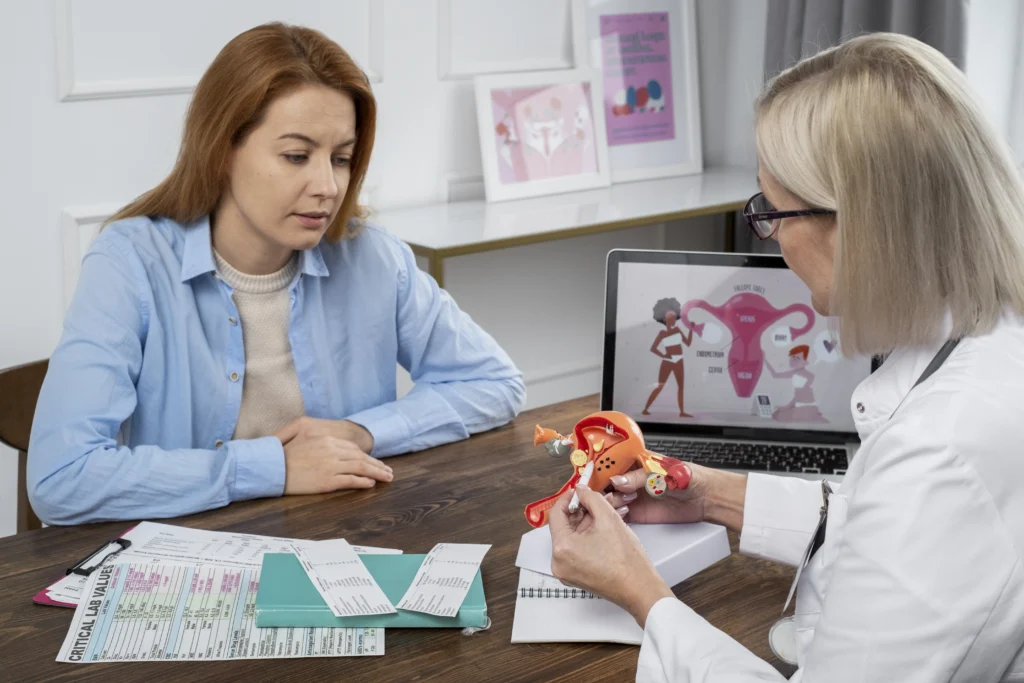
Physiotherapy plays an important role in managing the musculoskeletal symptoms associated with adenomyosis.
Persistent pelvic pain often causes the pelvic floor muscles, abdominal muscles, hips, and lower back to become tense and overactive.
Addressing these muscle changes may help reduce pain and improve movement.
A pelvic health physiotherapist may use manual therapy, pelvic floor muscle relaxation, breathing exercises, posture correction, movement retraining, stretching, and pain-management strategies tailored to the individual’s symptoms.
Physiotherapy does not treat the underlying uterine condition, but it can significantly improve function, reduce pain, enhance mobility, and improve quality of life when combined with medical treatment. (Dessouky et al. 2019)
Treatment for Adenomyosis
The treatment for adenomyosis depends on several factors, including your age, the severity of your symptoms, the size of the uterus, and whether you wish to have children in the future.
Many women can successfully manage their symptoms with medications and lifestyle modifications, while others may require hormonal therapy or surgery if symptoms are severe.
The primary goals of treatment are to reduce heavy menstrual bleeding, relieve pelvic pain, improve quality of life, and preserve fertility whenever possible.
Pain Relief Medications
Nonsteroidal anti-inflammatory drugs (NSAIDs), such as ibuprofen and naproxen, are commonly used to reduce menstrual pain and inflammation.
These medications are generally most effective when started one to two days before menstruation begins and continued during the first few days of the menstrual cycle, as advised by your healthcare provider.
Women with heavy menstrual bleeding should avoid self-medicating for prolonged periods and consult a healthcare professional for appropriate evaluation.
Hormonal Therapy
Hormonal treatments help reduce menstrual bleeding and relieve pain by suppressing the hormonal stimulation of the uterine lining.
Depending on your symptoms and reproductive goals, your doctor may recommend:
- Levonorgestrel-releasing intrauterine device (LNG-IUD)
- Combined oral contraceptive pills
- Progestin-only medications
- Gonadotropin-releasing hormone (GnRH) agonists
- Gonadotropin-releasing hormone (GnRH) antagonists
The most appropriate treatment varies from person to person and should be decided after discussing the benefits, possible side effects, and future pregnancy plans with your gynecologist. (Sharara et al. 2021)
Surgery
Surgery may be considered when medications and hormonal treatments fail to control symptoms or when adenomyosis significantly affects daily life.
Women who wish to preserve their uterus may be candidates for conservative procedures that remove localized adenomyosis while retaining healthy uterine tissue.
However, these procedures are not suitable for every patient.
For women who have completed their families and continue to experience severe symptoms despite other treatments, hysterectomy (surgical removal of the uterus) remains the definitive treatment for adenomyosis.
Your gynecologist will recommend the most appropriate surgical approach based on your age, symptom severity, reproductive goals, and overall health.
Lifestyle and Self-Care
Although lifestyle changes cannot cure adenomyosis, they can help reduce symptoms and improve overall well-being.
Regular low-impact physical activities, such as walking, swimming, yoga, or cycling, may improve blood circulation and reduce muscle stiffness.
Applying a heating pad or taking a warm bath during painful periods can help relax the pelvic muscles and temporarily relieve discomfort.
Eating a balanced diet rich in iron-containing foods, leafy green vegetables, lean proteins, fruits, and whole grains may help women experiencing heavy menstrual bleeding reduce the risk of iron-deficiency anemia.
Managing stress through mindfulness, meditation, deep breathing exercises, or adequate sleep may also improve coping with chronic pelvic pain.
Can Adenomyosis Be Prevented?
There is currently no proven way to prevent adenomyosis because its exact cause is not yet fully understood.
However, early recognition of symptoms and timely medical evaluation can lead to earlier diagnosis and treatment, reducing the impact of the condition on daily life.
Women experiencing persistent heavy menstrual bleeding or severe pelvic pain should not assume these symptoms are a normal part of menstruation.
When Should You See a Doctor?
You should consult a healthcare professional if:
- Your periods are unusually heavy or prolonged.
- Menstrual pain interferes with work, school, or daily activities.
- You develop chronic pelvic pain that persists beyond your menstrual period.
- You experience pain during sexual intercourse.
- You feel persistent pelvic pressure or notice abdominal enlargement.
- You develop symptoms of anemia, such as fatigue, dizziness, or shortness of breath.
- You have difficulty becoming pregnant.
Seeking medical attention early allows appropriate investigations and treatment before symptoms significantly affect your quality of life.
Final Thoughts
Adenomyosis is a common but often underrecognized condition that can have a major impact on a woman’s daily life. Persistent heavy periods and severe menstrual pain should never be ignored, as early diagnosis can lead to more effective treatment and better long-term outcomes.
With the right combination of medical care, healthy lifestyle habits, and pelvic health physiotherapy, many women are able to successfully manage their symptoms, improve their quality of life, and continue participating in the activities they enjoy.
Conclusion
Adenomyosis is a common but frequently underdiagnosed condition that can cause heavy menstrual bleeding, severe period pain, chronic pelvic pain, and reduced quality of life.
Although there is no universal cure, modern treatment options, including medications, hormonal therapy, physiotherapy, and surgery when necessary, can effectively control symptoms and help women lead active, healthy lives.
Early diagnosis, individualized treatment, and regular follow-up with a gynecologist are essential for achieving the best possible outcomes. If you experience persistent menstrual pain or unusually heavy periods, seeking medical advice can make a significant difference to your long-term reproductive and overall health. (Younes et al. 2017)
Frequently Asked Questions
Can adenomyosis go away on its own?
Adenomyosis usually does not disappear on its own during the reproductive years. Symptoms often improve naturally after menopause.
Can adenomyosis affect fertility?
Yes. Adenomyosis may reduce fertility in some women, although many women conceive naturally and have healthy pregnancies.
Can adenomyosis be seen on ultrasound?
Yes. Transvaginal ultrasound is commonly used to diagnose adenomyosis, while MRI may provide additional detail when required.
Is adenomyosis cancer?
No. Adenomyosis is a benign (non-cancerous) condition, but it can significantly affect quality of life if left untreated.
Does physiotherapy help adenomyosis?
Yes. Pelvic health physiotherapy can help reduce pelvic pain, improve muscle function, and enhance overall quality of life when combined with medical treatment.
Stay tuned with us for more health related topics.
Follow us on LinkedIn and Instagram for more.
More Read


Medical Disclaimer!
This article has been reviewed and written under the guidance of our Head Physiotherapist, Dr. Kruti Raj (PT, MUHS,CPT,CMPT). The information shared is intended for educational purposes only and should not be considered a substitute for personalized medical advice, diagnosis, or treatment.
Please consult us or any other qualified healthcare professional before beginning any exercise program, especially if you are experiencing pain, recovering from injury, or managing a medical condition.


