


Have you noticed one side of your pelvis dropping when you walk, climb stairs or stand on one leg?
Quick Answer: Hip Abductor Weakness
Hip abductor weakness can contribute to pelvic drop when walking because the gluteus medius and gluteus minimus help control the pelvis while one leg supports the body.
Common signs: A dropping pelvis, difficulty standing on one leg, reduced control on stairs or a change in walking pattern.
Physiotherapy: May include gait assessment, progressive hip strengthening, balance training and functional exercises.
Important: Pelvic drop is a clinical sign, not a diagnosis. Pain, joint problems and neurological conditions can also affect walking.
This movement can be associated with hip abductor weakness, particularly involving the gluteus medius and gluteus minimus muscles.
These muscles help control pelvic movement when your body weight shifts onto one leg.
If they are weak, painful or unable to work effectively, your walking pattern may change.
Physiotherapy can help identify the underlying cause and improve strength, balance and movement control.
Key Takeaways
- The gluteus medius and gluteus minimus help control pelvic movement during walking.
- Pelvic drop may be associated with hip abductor weakness, but it does not confirm weakness on its own.
- Pain, gluteal tendon problems, hip joint conditions and neurological issues can affect pelvic control.
- Physiotherapy assessment may include gait observation, strength testing, balance assessment and functional movement tests.
- Exercises may include side-lying hip abduction, standing hip abduction, resisted side-stepping and controlled step-downs.
- Exercise difficulty should progress according to strength, symptoms and movement control.
- Sudden weakness, severe pain or difficulty bearing weight requires prompt medical assessment.
What Are the Hip Abductor Muscles?
The hip abductors move the leg away from the body’s midline and help control the position of the pelvis during weight-bearing activities.
The main muscles involved include:
- Gluteus medius: A major hip abductor that helps stabilize the pelvis when standing on one leg.
- Gluteus minimus: Works with the gluteus medius to support hip stability and control movement.
- Tensor fasciae latae: Assists hip abduction and contributes to lower-limb control.
These muscles do more than move the leg sideways.
They help control the position of the pelvis and thigh during walking, running, stair climbing and other single-leg activities. (Flack et al., 2012)
Why Does Your Pelvis Drop When You Walk?
Walking involves repeated periods when one leg supports most of your body weight while the other moves forward.
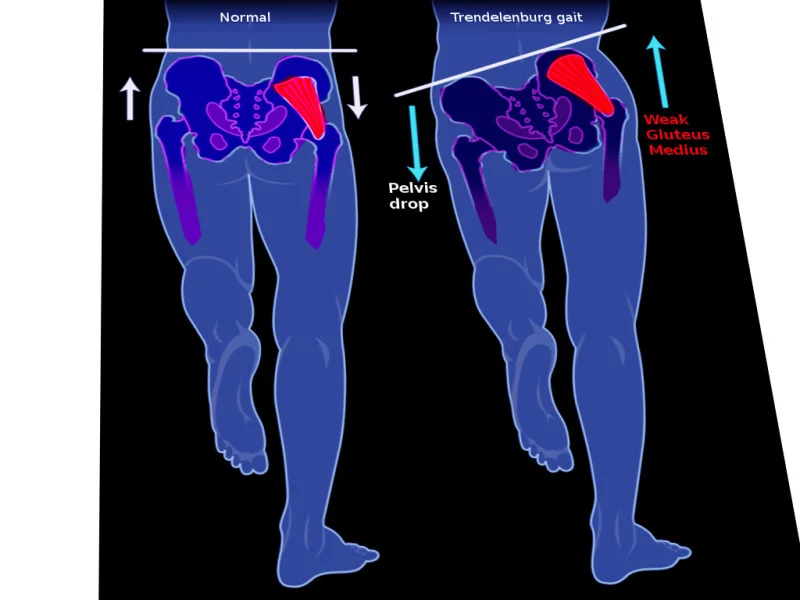
During this single-leg support phase, the hip abductors on the supporting side help control the pelvis.
For example, when you stand on your right leg, your right hip abductors help prevent the left side of your pelvis from dropping excessively. If this control is impaired, the unsupported side may descend.
This pattern is commonly associated with a Trendelenburg gait.
It may occur with hip abductor weakness, but pain, hip joint problems and conditions affecting the muscles or nerves can also contribute.
Some people compensate by leaning their upper body towards the supporting leg.
This shifts the body’s center of mass closer to the supporting hip and may reduce the demand on the hip abductors.
A visible pelvic drop is a useful clinical clue, not a diagnosis by itself. It does not automatically prove that the gluteus medius is weak or identify the precise cause. (Gandbhir and Lam, 2019)
Common Signs of Hip Abductor Weakness
Hip abductor weakness does not always cause pain. Some people primarily notice reduced balance or difficulty controlling their pelvis during movement.
Possible signs include:
- One side of the pelvis dropping during walking.
- Difficulty maintaining balance while standing on one leg.
- Wobbling when climbing stairs or stepping onto a raised surface.
- Leaning the trunk towards one side while walking.
- Reduced control during single-leg squats or step-downs.
- Discomfort around the outer hip during prolonged walking.
- A noticeable limp or change in walking pattern.
These symptoms can have several causes. For example, gluteal tendon pain may inhibit muscle effort, while neurological conditions may affect strength and coordination.
If your walking pattern changes suddenly, particularly alongside new weakness, severe pain or neurological symptoms, seek prompt medical assessment.
What Causes Hip Abductor Weakness?
1. Reduced Muscle Strength
Periods of inactivity, reduced physical activity or recovery from an injury can reduce muscle strength and endurance. The hip abductors may then struggle to meet the demands of walking, stair climbing or single-leg movements.
2. Gluteal Tendinopathy and Outer Hip Pain
Gluteal tendinopathy affects the tendons of the gluteus medius or gluteus minimus and can cause pain around the outer hip. Pain may limit the amount of force a person can comfortably produce.
In these cases, treatment needs to address both the tendon-related symptoms and the person’s functional capacity.
3. Hip Joint Conditions
Hip osteoarthritis, previous injuries and other joint conditions can make weight-bearing uncomfortable. A person may appear weak because pain limits muscle effort, even when the problem is not simply a loss of muscle strength.
4. Injury or Surgery
Hip abductor function can be affected by certain hip operations, fractures, muscle injuries or tendon tears. Rehabilitation must account for the specific injury and any restrictions set by the treating clinician.
5. Neurological Conditions
Conditions affecting the nerves supplying the hip muscles may reduce strength and coordination. Weakness accompanied by altered sensation, foot drop or other neurological changes needs a broader clinical assessment.
Hip abductor weakness is therefore a finding that requires explanation, rather than a diagnosis in itself.
How Do Physiotherapists Assess Pelvic Drop?
A physiotherapist evaluates walking alongside muscle strength, pain, balance, joint movement and relevant medical history. The aim is to understand why the pelvis is dropping and which factors are contributing.
Gait Assessment
The physiotherapist may observe walking from the front, behind and side. They look for pelvic movement, trunk leaning, limping, changes in step length and differences between the two sides.
Single-Leg Stance and Trendelenburg Test
You may be asked to stand on one leg while the physiotherapist observes whether the pelvis remains level. A drop on the unsupported side can suggest reduced hip abductor function on the supporting side.
However, this test cannot independently confirm muscle weakness or predict exactly how the pelvis will move during walking. The findings must be interpreted alongside other tests.
Hip Strength Testing
Manual resistance tests or handheld dynamometry may be used to assess hip abduction strength. The physiotherapist may also examine the hip extensors and other muscles that contribute to movement control.
Balance and Functional Testing
Step-downs, sit-to-stand movements and other functional tasks can reveal difficulties with balance, strength or weight-bearing control.
Assessment should use a combination of findings rather than relying on one test alone.
If a significant tendon tear, joint condition or neurological problem is suspected, further medical assessment or imaging may be appropriate.
Physiotherapy Exercises for Hip Abductor Weakness
Physiotherapy aims to improve hip strength, pelvic control and the ability to perform everyday activities. Exercises should be selected according to the person’s current ability, pain levels and underlying diagnosis.
Research on gluteus medius and minimus exercises shows that different movements place different demands on these muscles. However, higher muscle activity during an exercise does not automatically mean it is the best option for every patient. (Moore et al., 2020)
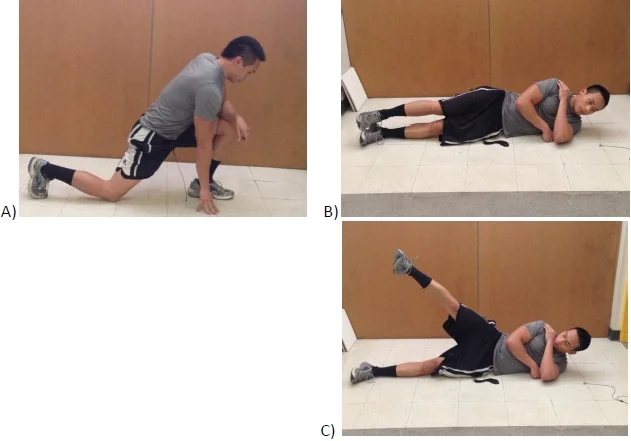
1. Side-Lying Hip Abduction
Lie on your side with the leg you want to strengthen uppermost. Keep the leg relatively straight and lift it slowly without rolling your pelvis backwards.
Lower it with control. Start with a comfortable range and manageable repetitions.
This exercise targets the hip abductors, but it may not be suitable for everyone, particularly if lying on the affected side or lifting the leg aggravates hip pain.
2. Standing Hip Abduction
Stand upright while holding a stable support. Move one leg gently out to the side without leaning your trunk or rotating your pelvis.
Return slowly to the starting position. A resistance band can be added when the movement becomes comfortable and controlled.
This exercise trains the hip abductors while practicing upright posture.
3. Resisted Side-Stepping
Place a resistance band around your thighs or ankles, depending on your ability and the level of challenge required.
Take small, controlled steps sideways while maintaining a steady pelvis and comfortable knee position. Begin with light resistance and increase the challenge only when you can maintain good control.
4. Step-Ups and Controlled Step-Downs
Once basic strength and balance improve, a physiotherapist may introduce stepping exercises.
Step onto a low platform while controlling your pelvis and trunk. Progress to slow step-downs when appropriate.
These exercises help practice the movement control needed for stair climbing and other daily activities.
5. Hip Hitch or Pelvic Control Exercises
A hip hitch involves standing on a stable step and using the hip muscles to raise and lower the opposite side of the pelvis in a controlled manner.
This exercise can place substantial demands on the hip abductors. It should be introduced at a suitable level because excessive pelvic movement or poor balance may make it difficult for beginners.
A systematic review of gluteus medius rehabilitation exercises supports using a graduated approach, selecting exercises according to their loading demands and the person’s functional capacity. (Ebert et al., 2017)
How Often Should You Exercise?
The appropriate exercise frequency depends on the cause of weakness, starting strength, recovery needs and response to training. A physiotherapist can help determine the number of repetitions, sets and weekly sessions.
Start with a level that allows controlled movement. Increase resistance or difficulty gradually rather than increasing every training variable at once.
If an exercise causes sharp pain, a significant increase in symptoms or a worsening limp, stop and seek advice about modifying the program.
People recovering from surgery, fractures or tendon injuries should follow their individual rehabilitation restrictions. Exercises suitable for uncomplicated weakness may not be appropriate during early recovery from a significant injury.
Consistency and gradual progression are more useful than performing large numbers of repetitions with poor technique.
How Long Does It Take to Improve?
There is no single recovery timeline for hip abductor weakness. Progress depends on the underlying cause, severity of weakness, general health and consistency with an appropriate rehabilitation program.
Weakness associated with inactivity may respond differently from weakness following surgery, a gluteal tendon tear or nerve injury.
Progress can be monitored through improvements in walking control, strength, single-leg balance, stair climbing and daily activities.
If the pelvic drop persists despite appropriate rehabilitation, the physiotherapist may need to reassess the diagnosis, exercise progression or other contributing factors.
Hip Abductor Weakness: Myth vs Fact
Myth: Pelvic drop always means weak gluteal muscles.
Fact: Muscle weakness is one possible explanation. Pain, balance difficulties, joint conditions and neurological problems may also contribute.
Myth: Everyone with pelvic drop needs the same exercises.
Fact: Exercise selection depends on the underlying cause, current strength, symptoms and functional goals.
Myth: More repetitions always mean faster improvement.
Fact: Controlled movement and gradual progression are more useful than performing excessive repetitions with poor technique.
Myth: Hip abductor weakness directly causes every case of knee or back pain.
Fact: Pain is multifactorial. Hip strength and movement should be assessed in the context of the individual’s symptoms rather than assuming a direct cause.
Can Hip Abductor Weakness Cause Knee or Back Pain?
Hip abductors help control the pelvis and thigh during weight-bearing movements. Reduced strength or impaired movement control may occur alongside altered lower-limb mechanics and pain in other areas.
However, it is not accurate to assume that hip abductor weakness directly causes every case of knee or back pain. These conditions are multifactorial, and the relationship between muscle strength, movement patterns and symptoms varies between individuals.
Physiotherapy assessment should focus on the person’s actual symptoms and functional limitations rather than trying to correct every visible movement difference.
When Should You Seek Medical Advice?
Arrange a clinical assessment if your pelvis repeatedly drops while walking, you develop a persistent limp or hip pain interferes with daily activities.
Seek urgent medical assessment if you experience:
- Sudden inability to bear weight.
- Severe hip pain after a fall or injury.
- Rapidly worsening weakness.
- New numbness or weakness affecting the leg.
- A sudden change in walking accompanied by facial weakness, speech difficulty or other possible stroke symptoms.
These symptoms should not be managed simply by increasing strengthening exercises.
A Lesser-Known Fact About Pelvic Drop
Pelvic drop is not always caused by weak hip abductors alone. Pain, balance difficulties, impaired coordination and problems affecting other muscles or nerves can influence pelvic movement.
The Trendelenburg sign is therefore a clinical clue, not a complete diagnosis. A thorough assessment helps determine whether the main issue is muscle strength, pain, joint function, neurological involvement or a combination of factors.
Final Thoughts
A dropping pelvis during walking can indicate difficulty controlling the hip and pelvis during single-leg support. Hip abductor weakness is one possible explanation, but pain, balance problems and other conditions may also affect movement.
A physiotherapist can assess the cause and develop a suitable program to improve strength, balance and walking control. Persistent symptoms or a sudden change in walking deserve professional assessment rather than simply adding more exercises.
Conclusion
Hip abductor weakness can contribute to pelvic drop during walking, particularly when the gluteus medius and gluteus minimus cannot adequately control the pelvis during single-leg support.
However, pelvic drop can also be associated with pain, impaired balance, hip joint conditions or neurological problems, so identifying the underlying cause is essential.
Physiotherapy can help improve hip strength, balance and movement control through an individualized program of progressive strengthening and functional exercises.
If the pelvic drop persists, causes pain or develops alongside a sudden change in walking, seek professional assessment to determine the cause and guide appropriate treatment.
Frequently Asked Questions
1. Why does my pelvis drop when I walk?
Pelvic drop can occur when the muscles controlling the pelvis cannot manage the demands of single-leg support. Hip abductor weakness is one possible cause, but pain, balance difficulties and other conditions may also contribute.
2. Which muscles help prevent pelvic drop?
The gluteus medius and gluteus minimus are major hip abductors that help control the pelvis during walking. The tensor fasciae latae also contributes to hip movement and stability.
3. Can physiotherapy help hip abductor weakness?
Physiotherapy may help improve strength, balance and movement control through an individualized program of progressive strengthening and functional exercises.
4. What exercises help hip abductor weakness?
Depending on the underlying problem, exercises may include side-lying hip abduction, standing hip abduction, resisted side-stepping and controlled step-ups or step-downs.
5. How long does it take to improve hip abductor weakness?
Recovery depends on the cause and severity of weakness, general health and response to rehabilitation. Weakness following inactivity may improve differently from weakness caused by tendon, joint or nerve problems.
6. When should I seek medical advice for pelvic drop?
Arrange an assessment for persistent pelvic drop, a limp or ongoing hip pain. Sudden weakness, severe pain, inability to bear weight or new neurological symptoms requires prompt medical evaluation.
Stay tuned with us for more health related topics.
Follow us on LinkedIn and Instagram for more.
Medical Disclaimer
This article is intended for general educational purposes only and does not replace professional medical advice, diagnosis or treatment. Pelvic drop can have several causes, and exercises suitable for one condition may not be appropriate for another. Consult a qualified healthcare professional for an individual assessment. Seek urgent medical care for sudden weakness, severe pain, inability to bear weight or new neurological symptoms.


