


Pain at the front of your hip can make climbing stairs, lifting your knee, running, or getting up from a chair uncomfortable.
One possible cause is hip flexor tendinopathy, a condition involving the tendons that help lift your thigh towards your body.
Quick Answer: Why Does the Front of Your Hip Hurt?
Hip flexor tendinopathy is one possible cause of pain at the front of the hip or deep in the groin. It may cause discomfort when lifting the knee, climbing stairs, running, or performing repeated hip-flexion movements.
Treatment often involves modifying aggravating activities and gradually rebuilding strength through an individualized physiotherapy program. Recovery depends on symptom severity, activity demands, and whether another hip condition is contributing.
Important: Front-of-hip pain does not automatically mean tendinopathy. A clinical assessment can help identify the cause and guide appropriate treatment.
The iliopsoas tendon is particularly relevant when pain is felt deep in the front of the hip or groin.
Symptoms can develop when training demands exceed the hip flexors’ current capacity, although other hip conditions can produce similar pain.
Physiotherapy can help restore strength, movement, and activity tolerance through appropriate load management and progressive rehabilitation.
The first step, however, is identifying whether the pain is actually coming from a hip flexor tendon.
Key Takeaways
- Hip flexor tendinopathy can cause pain at the front of the hip or deep in the groin.
- Symptoms may worsen when lifting the knee, climbing stairs, running, or performing resisted hip flexion.
- Hip joint conditions, muscle strains, and other problems can produce similar symptoms.
- Diagnosis may involve a clinical examination and, when indicated, imaging such as MRI or ultrasound.
- Physiotherapy may include activity modification, progressive strengthening, and functional retraining.
- Exercise selection and progression should match the individual’s symptoms and physical capacity.
- Persistent or worsening pain, a limp, or difficulty bearing weight warrants medical assessment.
What Is Hip Flexor Tendinopathy?
Hip flexor tendinopathy refers to a painful tendon condition affecting muscles that help bend the hip.
The iliopsoas muscle group, made up of the psoas major and iliacus, is a major hip flexor.
The rectus femoris, sartorius, and other muscles also contribute to this movement.
These muscles help lift the leg during walking, running, stair climbing, and kicking.
Their tendons transfer muscular force to the surrounding bones.
Tendinopathy describes a combination of tendon-related pain and changes in the tendon associated with loading.
It does not necessarily mean the tendon is acutely inflamed or torn.
Hip flexor tendon problems may occur alongside snapping hip, irritation of the iliopsoas bursa, or other hip conditions.
Correctly identifying the affected structure is therefore important before deciding on treatment. (Resende et al., 2022)
Where Does Hip Flexor Tendinopathy Hurt?
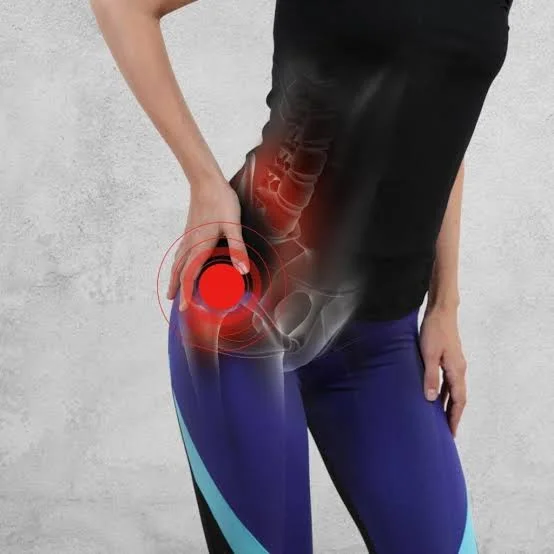
Pain is commonly felt around the front of the hip crease or deep in the groin.
Some people describe a dull ache, while others notice sharper discomfort when lifting the knee or performing resisted hip flexion.
You may notice symptoms when:
- Climbing stairs or walking uphill.
- Running, sprinting, or accelerating.
- Kicking a ball or performing high-knee drills.
- Getting into or out of a car.
- Standing up after prolonged sitting.
- Performing repeated leg raises or demanding abdominal exercises.
Some people experience clicking or snapping at the front of the hip.
This may be associated with the iliopsoas tendon moving over nearby structures, but clicking alone does not confirm tendinopathy.
The pattern of pain can help guide an assessment, but symptoms alone cannot establish the diagnosis.
What Causes Hip Flexor Tendinopathy?
A sudden increase in training load
Tendons need time to adapt to physical demands.
Increasing running distance, sprinting frequency, kicking practice, or gym intensity too quickly can exceed the tissues’ current capacity.
The issue is not necessarily one exercise or activity.
It is the relationship between the load placed on the tendon and its ability to tolerate that load.
Repetitive hip flexion
Activities involving repeated lifting of the thigh can place considerable demand on the hip flexors.
Runners, dancers, footballers, martial artists, and people performing intensive leg workouts may notice symptoms when training demands increase.
However, repetitive movement does not automatically cause tendinopathy.
Recovery, previous injuries, training history, and overall physical capacity also matter.
Returning to activity too quickly
After a break from exercise, illness, or an injury, your previous training routine may be too demanding.
Returning immediately to the same running speed, resistance, or workout volume can aggravate symptoms.
Other hip conditions
Hip joint problems, iliopsoas bursitis, and internal snapping hip can cause similar symptoms or coexist with tendon problems.
A history of hip surgery may also be relevant, particularly when pain develops around the front of the hip after a hip replacement.
Hip pain should therefore be assessed in context rather than automatically attributed to overuse.
What Are the Symptoms of Hip Flexor Tendinopathy?
Common symptoms include:
- Pain when lifting the knee: Discomfort may increase when raising the thigh against resistance.
- Pain during running: Sprinting, uphill running, or repeated acceleration may aggravate symptoms.
- Discomfort with daily activities: Getting into a car, climbing stairs, or rising from a low chair may become difficult.
- Tenderness around the front of the hip: A clinician may find local tenderness, although this is not diagnostic on its own.
- Reduced exercise tolerance: Activities that previously felt comfortable may become painful or difficult.
- Clicking or snapping: This may occur with an iliopsoas-related movement problem, but it can also have other causes.
Persistent weakness, a noticeable limp, or progressively worsening pain deserves medical assessment.
Sudden severe pain should not simply be treated as tendinopathy.
Is It Hip Flexor Tendinopathy or Another Hip Problem?
Several conditions can cause pain at the front of the hip.
Their symptoms overlap, so the following differences are only clues.
| Condition | Possible distinguishing features |
|---|---|
| Hip flexor tendinopathy | Pain associated with loading the hip flexors, such as lifting the knee against resistance |
| Hip flexor strain | Often follows a sudden sprint, kick, forceful contraction, or overstretch |
| Femoroacetabular impingement | Groin pain may worsen with deep hip flexion, pivoting, or certain positions |
| Hip labral injury | May involve groin pain, catching, clicking, or discomfort with twisting |
| Hip osteoarthritis | May cause stiffness, restricted movement, and pain during weight-bearing activity |
| Internal snapping hip | A snapping sensation at the front of the hip during particular movements |
| Bone stress injury | May cause progressively worsening pain with activity and requires prompt assessment |
Anterior hip pain can also arise from abdominal, pelvic, or other non-musculoskeletal conditions.
A clinician considers these possibilities when the history or associated symptoms suggest them. (Chamberlain et al., 2021)
How Is Hip Flexor Tendinopathy Diagnosed?
Physiotherapy assessment
A physiotherapist will ask when symptoms started, which movements aggravate them, whether your training has changed, and whether there was a sudden injury.
The examination may include:
- Hip range of motion.
- Hip flexor strength and pain during resisted movement.
- Walking, stair climbing, and other functional activities.
- Assessment of the hip joint and surrounding muscles.
- Screening for signs of other causes of groin or hip pain.
No single physical test should be interpreted in isolation.
A combination of the history and examination findings provides a more useful clinical picture.
A 2025 diagnostic study investigated several clinical tests for iliopsoas-related groin pain.
It found promising results for a specialized test and resisted hip flexion in a selected group of patients.
However, the study involved a small sample, including people with and without previous hip replacement, so its results should not be treated as definitive for everyone. (Vandeputte et al., 2025)
Are MRI or ultrasound scans necessary?
Not everyone with suspected hip flexor tendinopathy needs a scan.
Imaging may be considered when symptoms persist, the diagnosis is uncertain, a significant injury is suspected, or another hip condition needs investigation.
MRI or ultrasound can help assess relevant soft tissues, but findings must be interpreted alongside the person’s symptoms and clinical examination.
Imaging alone does not always identify the true source of pain.
How Is Hip Flexor Tendinopathy Treated?
Treatment generally aims to reduce excessive irritation while gradually rebuilding the hip flexors’ ability to tolerate everyday and sporting demands.
Modify aggravating activities
Temporarily reduce activities that consistently worsen symptoms, such as sprinting, steep uphill running, repeated high-knee drills, or heavy resisted hip flexion.
Complete rest is not always necessary.
Comfortable walking or other activities may remain appropriate, depending on symptom severity.
The goal is to find a manageable activity level rather than repeatedly provoking pain.
Use progressive strengthening
Physiotherapy may begin with low-load muscle activation and progress towards resisted hip flexion, functional strengthening, and sport-specific exercises.
The correct starting point depends on pain, strength, irritability, and daily activity requirements.
Increasing the load gradually allows the therapist to monitor how the hip responds.
Address relevant movement and training factors
A physiotherapist may review running demands, training volume, recovery, pelvic control, and the strength of surrounding muscles.
These factors are addressed when relevant to the assessment, rather than assuming that poor posture or muscle weakness is always the cause.
Consider additional medical treatment when needed
A doctor may recommend suitable pain relief or further investigations depending on the symptoms and medical history.
Injections or surgery are generally considered only in selected cases when conservative management has not provided sufficient improvement or an underlying structural problem requires attention. (Anderson et al., 2016)
What Physiotherapy Exercises May Help?
Exercises should be selected according to the assessment.
The following are examples of rehabilitation options, not a universal routine for every person with anterior hip pain.
1. Gentle hip flexor isometric
An isometric exercise involves contracting a muscle without substantial joint movement.
A physiotherapist may ask you to press your thigh gently against your hand while seated.
The effort should be manageable, and the position should not provoke sharp pain.
This exercise may be useful as an initial loading option for some people.
2. Progressive resisted hip flexion
When symptoms allow, light resistance can be introduced using a band, cable, or manual resistance.
The aim is to gradually rebuild strength without causing a substantial flare-up.
Resistance and repetitions should increase according to tolerance, not according to a fixed schedule.
3. Gluteal and trunk strengthening
Depending on the assessment, exercises such as bridges or selected trunk-control exercises may support overall hip function.
They can be useful when the rehabilitation program identifies relevant strength or control limitations.
These exercises do not directly repair a tendon and are not essential for everyone.
4. Functional retraining
As strength and symptoms improve, rehabilitation may progress to step-ups, controlled stair climbing, faster walking, running drills, or sport-specific movements.
The transition should be based on functional ability and symptom response rather than the number of days since the problem began.
Evidence specific to iliopsoas tendinopathy rehabilitation remains limited.
A review of conservative treatment for hip tendinopathies found that exercise therapy may help, but the best exercise type, dosage, and intensity were not firmly established. (Frizziero et al., 2016)
How Long Does Hip Flexor Tendinopathy Take to Recover?
There is no single recovery timeline. Mild symptoms may improve over several weeks, while persistent problems or reduced strength may require a longer rehabilitation period.
Recovery depends on the duration and severity of symptoms, whether another condition is contributing, and the physical demands of your usual activities.
Returning to comfortable walking is different from returning to sprinting, competitive sport, or repeated kicking.
Higher-demand activities require adequate strength and tolerance for the movements involved.
If symptoms are not improving despite sensible activity modification, arrange a reassessment rather than repeatedly pushing through pain.
Common Mistakes That Can Delay Recovery
Training through worsening pain
Repeatedly provoking significant symptoms can make it difficult to find a tolerable loading level.
Reduce the activity or seek professional advice if pain is escalating or remains substantially worse afterwards.
Stretching aggressively
Deep hip extension or forceful stretching may aggravate some forms of anterior hip pain.
Stretching is not automatically appropriate for every tendon problem and should not be forced into a painful range.
Increasing exercise intensity too quickly
Increasing resistance, repetitions, running speed, and training volume all at once can overload tissues that are not yet ready.
Change one or a small number of training variables at a time.
Assuming every case is tendinopathy
Hip joint problems, muscle injuries, bone stress injuries, and non-musculoskeletal conditions can produce similar symptoms.
Persistent pain deserves an appropriate assessment rather than repeated self-treatment based on assumptions.
Hip Flexor Tendinopathy: Myth vs Fact
MYTH: All front-of-hip pain is caused by hip flexor tendinopathy.
FACT: Hip joint problems, muscle strains, bone stress injuries, and other conditions can cause similar pain. Assessment helps identify the likely source.
MYTH: Complete rest is always the best treatment.
FACT: Some activities may need temporary modification, but tolerable movement and appropriately graded exercise may help maintain function and rebuild capacity.
MYTH: Stretching the hip flexors will always relieve the pain.
FACT: Stretching may aggravate some causes of anterior hip pain. Exercise and mobility work should be selected according to the assessment and symptom response.
MYTH: Pain improvement means the tendon is fully recovered.
FACT: Reduced pain is encouraging, but returning to demanding activities also requires appropriate strength, movement tolerance, and functional capacity.
When Should You Seek Medical Attention?
Arrange a medical or physiotherapy assessment if front-of-hip pain persists, repeatedly returns during exercise, affects walking, or limits everyday activities.
Seek urgent medical attention if you experience:
- Sudden severe hip or groin pain, particularly after an injury.
- Inability to bear weight on the affected leg.
- Fever with a hot, swollen, or severely painful hip.
- Rapidly worsening pain or significant weakness.
- Hip or groin pain accompanied by concerning abdominal or pelvic symptoms.
Runners and athletes with progressively worsening groin pain should be assessed promptly because bone stress injuries may become more serious if loading continues.
A Lesser-Known Fact About Hip Flexor Tendinopathy
A clicking hip does not automatically mean the iliopsoas tendon is damaged.
Internal snapping hip can occur when the tendon moves across nearby structures, and some people experience snapping without significant pain.
Conversely, iliopsoas-related pain can occur without an obvious snapping sensation.
This is one reason why a clinical assessment should consider symptoms, movement, strength, and other possible causes rather than relying on a single sign.
Final Thoughts
Pain at the front of the hip can affect walking, exercise, and everyday comfort. Hip flexor tendinopathy is one possible cause, but other hip joint, muscle, or bone conditions can produce similar symptoms.
Physiotherapy can help by identifying relevant movement limitations, modifying aggravating activities, and gradually rebuilding strength and functional capacity. Exercises should be chosen according to the underlying problem rather than following a one-size-fits-all routine.
Remember: Persistent or worsening pain deserves assessment. Understanding the cause is an important step towards a safer and more confident return to daily activities and sport.
Conclusion
Hip flexor tendinopathy is one possible cause of pain at the front of the hip, particularly when symptoms are associated with repeated or resisted hip flexion.
However, similar pain can arise from the hip joint, muscle injuries, bone stress injuries, and other conditions.
Physiotherapy can help by modifying aggravating activities, progressively rebuilding strength, and restoring the movements needed for daily life, running, or sport.
Exercise selection and progression should be individualized because evidence for specific iliopsoas tendinopathy protocols remains limited.
If front-of-hip pain persists, worsens, or interferes with walking, seek an assessment from a qualified healthcare professional.
Identifying the underlying cause is the first step towards a safe and effective recovery.
Frequently Asked Questions
1. What does hip flexor tendinopathy feel like?
It may cause pain at the front of the hip or deep in the groin, especially when lifting the knee, climbing stairs, running, or performing resisted hip flexion. These symptoms can overlap with other hip conditions.
2. Can hip flexor tendinopathy heal without surgery?
Many cases are managed without surgery through activity modification and an individualized rehabilitation program. The appropriate treatment depends on the underlying diagnosis, symptom severity, and response to conservative care.
3. What exercises help hip flexor tendinopathy?
Depending on the assessment, rehabilitation may include gentle isometric hip flexion, progressive resisted strengthening, and functional exercises. A physiotherapist can adjust the load and exercise selection to your symptoms and physical capacity.
4. How long does hip flexor tendinopathy take to recover?
Recovery varies with symptom duration, severity, activity demands, and the presence of other hip conditions. Some people improve over several weeks, while persistent symptoms may require a longer rehabilitation period.
5. Should I stretch if the front of my hip hurts?
Not necessarily. Forceful stretching can aggravate some causes of anterior hip pain. The most appropriate mobility and strengthening exercises depend on the underlying problem and your response to movement.
6. When should I see a doctor for front-of-hip pain?
Seek an assessment if pain persists, worsens, or interferes with walking and daily activities. Seek urgent medical care for sudden severe pain, inability to bear weight, or hip pain accompanied by fever and a hot or swollen joint.
Stay tuned with us for more health related topics.
Follow us on LinkedIn and Instagram for more.
More Read


Medical Disclaimer
This article is intended for general educational and informational purposes only. It does not replace an individual assessment, diagnosis, or treatment plan from a qualified healthcare professional. Front-of-hip pain can have several causes, and the exercises or treatment options discussed may not be suitable for everyone. Consult a doctor or physiotherapist for personalized guidance. Seek urgent medical attention for sudden severe pain, inability to bear weight, or hip pain accompanied by fever and a hot or swollen joint.


