


Hip pain when rotating your leg can make everyday movements uncomfortable, from turning while walking and getting out of a car to crossing your legs, putting on shoes, or exercising.
Quick Answer: Why Does My Hip Hurt When I Rotate My Leg?
Hip pain when rotating your leg may result from hip osteoarthritis, femoroacetabular impingement, a muscle strain, gluteal tendinopathy, or another joint problem. Pain in the groin may suggest a hip joint issue, while pain on the outer hip may involve nearby tendons or other tissues.
Physiotherapy may help improve strength, mobility, and movement control when appropriate for the underlying condition. The direction of rotation that hurts cannot confirm the cause on its own.
Important: Seek urgent medical assessment for sudden severe hip pain, pain after an injury, inability to bear weight, or a hot or swollen hip with fever. Do not force painful rotation or begin exercises if a serious injury is suspected.
You may feel a sharp pinch in the groin, a deep ache inside the hip, or discomfort around the outer side of the joint.
The cause depends on where you feel the hip pain, which direction you are rotating your leg, and whether the symptoms started suddenly or developed gradually.
Hip osteoarthritis, femoroacetabular impingement, muscle or tendon problems, and other joint conditions are among the possible explanations.
Physiotherapy can help many people improve hip movement, strength, and function.
However, painful rotation is not always a flexibility problem, and forcing the hip to move further may aggravate some conditions.
Understanding the likely cause is the first step towards choosing appropriate treatment.
Key Takeaways
- Hip pain during rotation can originate from the joint, muscles, tendons, or referred pain from the lower back.
- Groin pain may be associated with hip joint conditions, while outer-hip pain can involve the gluteal tendons.
- Pain during inward or outward rotation does not establish a diagnosis by itself.
- Physiotherapy may include activity modification, progressive strengthening, mobility work, and movement retraining.
- Forcing the hip to rotate further may aggravate some conditions.
- Sudden severe pain, inability to bear weight, or suspected fracture requires urgent medical assessment.
What Happens When You Rotate Your Hip?
Your hip is a ball-and-socket joint.
The rounded head of the thigh bone sits inside the socket of the pelvis, allowing the leg to move in several directions.
Hip rotation occurs when your thigh bone turns within the socket.
You use this movement when changing direction, getting into a car, turning in bed, or putting on socks and shoes.
There are two main types of hip rotation:
- Internal rotation: Your thigh turns inward, bringing your knee towards the midline of your body.
- External rotation: Your thigh turns outward, moving your knee away from the midline.
The hip joint, joint capsule, muscles, tendons, and surrounding tissues all contribute to comfortable movement.
Pain can develop when a structure is irritated, injured, stiff, or sensitive to a particular position.
For example, painful internal rotation may occur with hip osteoarthritis or certain non-arthritic hip joint conditions.
However, the direction that hurts cannot establish the diagnosis on its own.
The location of the pain, other symptoms, and examination findings must also be considered.
Common Causes of Hip Pain When Rotating Your Leg
1. Femoroacetabular Impingement
Femoroacetabular impingement (FAI) occurs when the shape of the hip bones contributes to abnormal contact during certain movements.
In people who have symptoms, this may cause pain during deep hip bending, twisting, squatting, or rotating the thigh.
Pain is often felt deep in the groin and may feel like a pinch.
Some people also notice stiffness or discomfort after sitting for a long time.
However, not everyone with bone shapes associated with FAI experiences pain.
A diagnosis of femoroacetabular impingement syndrome requires appropriate symptoms, clinical signs, and relevant imaging findings, rather than a scan result alone. (Griffin et al., 2016)
Physiotherapy may focus on modifying painful positions, improving hip strength and movement control, and gradually restoring activities that matter to you.
Repeatedly forcing the hip into a painful rotation is not a useful starting point.
2. Hip Osteoarthritis
Hip osteoarthritis involves changes to the cartilage and other tissues within the joint.
It can cause pain, stiffness, and reduced range of movement.
You may notice discomfort when turning the leg inward or outward, getting out of a low chair, putting on shoes, or walking for longer periods.
Pain is often felt in the groin or front of the hip, although symptoms can vary.
Reduced hip internal rotation can help clinicians assess the likelihood of osteoarthritis when considered alongside other findings.
It does not confirm the condition by itself. (Metcalfe et al., 2019)
Physiotherapy may include strengthening, appropriate mobility exercises, activity modification, and strategies for managing daily tasks.
The program should reflect your symptoms, movement limitations, and functional goals.
3. Hip Labral Problems
The labrum is a ring of cartilage around the rim of the hip socket.
It helps deepen the socket and contributes to joint stability.
A labral problem may cause deep groin pain, clicking, catching, or discomfort during twisting and bending.
Symptoms may become noticeable when changing direction, rotating the thigh, or moving from a seated position.
However, clicking does not automatically indicate a labral tear.
Research has also found that labral changes can appear on scans in people without hip pain, so imaging findings must be interpreted alongside symptoms and examination results. (Heerey et al., 2018)
Physiotherapy may help improve strength, movement control, and tolerance for daily activities.
Persistent catching, significant loss of function, or ongoing pain may require further medical assessment.
4. Hip Flexor or Other Muscle Strain
The muscles around the hip help move the leg and stabilize the joint.
A strain can occur after a sudden twist, sprint, kick, fall, or unfamiliar workout.
Depending on the affected muscle, pain may occur at the front of the hip, in the groin, around the buttock, or on the outer side.
Rotating the leg, lifting the knee, or contracting the affected muscle may reproduce the discomfort.
A mild strain may improve with temporary activity modification followed by a gradual return to movement and strengthening.
More severe injuries can cause substantial pain, bruising, weakness, or difficulty walking and should be assessed.
5. Gluteal Tendinopathy
Gluteal tendinopathy affects the tendons of the gluteus medius and gluteus minimums muscles.
These muscles help stabilize the pelvis during walking and single-leg activities.
Pain is usually felt on the outer side of the hip rather than deep in the groin.
It may become noticeable when walking, climbing stairs, standing on one leg, or lying on the affected side.
Rotating the leg may aggravate symptoms depending on the position of the hip and the load placed on the tendons.
Painful rotation alone, however, is not enough to identify this condition.
Physiotherapy typically involves managing aggravating loads and progressively strengthening the hip muscles.
A random stretching routine may not be appropriate, particularly if certain hip positions repeatedly provoke symptoms.
6. Hip Joint Inflammation or Synovitis
The hip joint is lined by a membrane called the synovium, which produces fluid that helps the joint move smoothly.
Irritation or inflammation of this lining can cause pain, stiffness, and discomfort during movement.
Symptoms of synovitis may develop after an injury or alongside another joint condition.
However, a painful hip should not automatically be assumed to have simple inflammation.
Sudden severe pain, a hot or swollen hip, fever, or difficulty bearing weight requires urgent medical assessment.
These symptoms may indicate a serious condition that should not be managed with stretching or exercise alone.
7. Referred Pain From the Lower Back
Not all pain around the hip originates in the hip joint.
Problems involving the lower back or nearby nerves can cause discomfort in the buttock, outer hip, or thigh.
Possible clues include back discomfort, tingling, numbness, burning sensations, or symptoms that change with spinal movement.
These features are not always present.
A physiotherapist may assess both the hip and lower back when the symptom pattern suggests that the pain could be referred from another area.
8. Bone Stress Injury or Hip Fracture
A hip fracture may follow a fall or other trauma.
A bone stress injury can develop when repeated loading exceeds the bone’s ability to recover, particularly after a sudden increase in running or training.
Pain may begin gradually in the groin or hip and worsen during walking, rotation, or other weight-bearing activities.
Early symptoms can resemble muscle or tendon problems.
Femoral-neck stress fractures are particularly important to identify early because a delayed diagnosis can allow the injury to progress. (Robertson and Wood, 2017)
Do not exercise through unexplained, worsening hip pain.
If you have severe pain after an injury, cannot bear weight, or develop sudden severe symptoms, seek urgent medical assessment before attempting rehabilitation.
Does It Matter Which Direction You Rotate Your Leg?
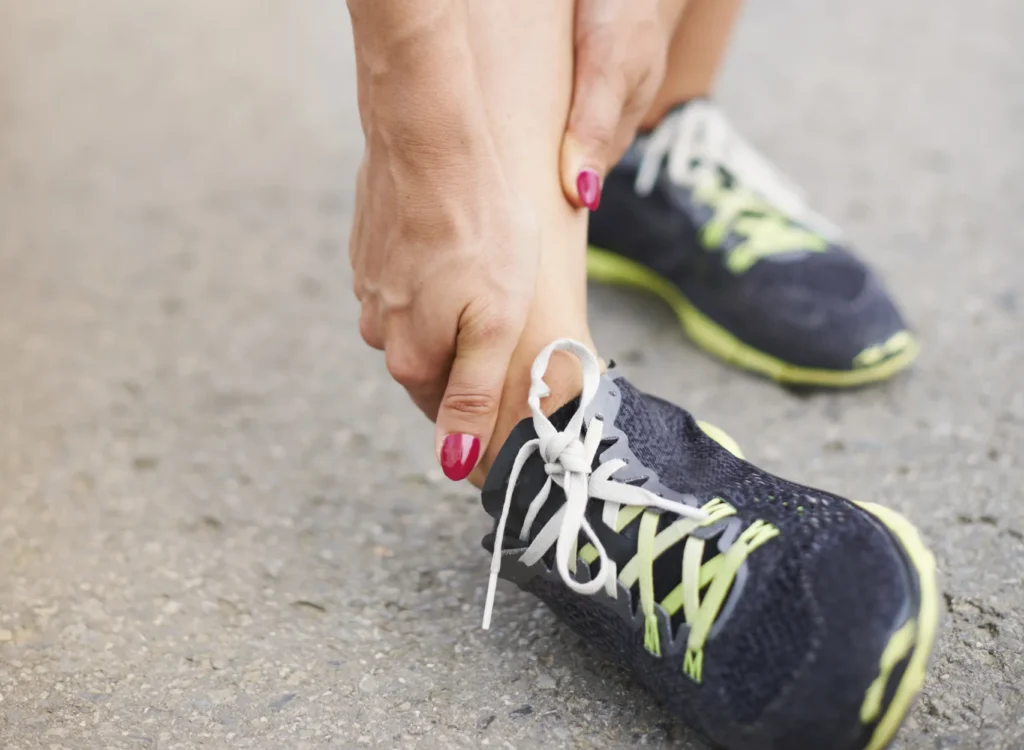
Yes.
The direction of rotation and the location of the pain can provide useful clues, although neither can establish a diagnosis by itself.
| What you notice | Possible explanation |
|---|---|
| Pain deep in the groin when turning the leg inward | Hip osteoarthritis, joint irritation, or femoroacetabular impingement |
| Pain when turning the leg outward | Muscle or joint irritation, depending on the movement and pain location |
| Pain on the outer side of the hip | Gluteal tendinopathy or another outer-hip problem |
| Pain with rotation after a sudden twist | Muscle strain or another injury |
| Hip or buttock pain with tingling or back discomfort | Possible referred pain from the lower back |
| Severe pain during rotation after a fall | Possible significant injury requiring urgent assessment |
Avoid repeatedly rotating your leg to test which direction hurts most.
If the movement produces sharp pain or your ability to walk is affected, stop provoking the symptom and arrange an appropriate assessment.
Why Does Hip Rotation Become Painful?
Several factors can contribute to discomfort during rotation.
- Reduced joint mobility: Osteoarthritis and other joint conditions may restrict movement and make particular positions uncomfortable.
- Irritated muscles or tendons: Injured or sensitive tissues may hurt when they contract, stretch, or are placed under load.
- Sensitivity to specific positions: Some hip conditions become painful when the thigh is deeply bent or rotated.
- Reduced strength or movement control: Difficulty controlling the hip may contribute to functional limitations, although weakness is not always the cause.
- A recent increase in activity: New exercises, longer walks, or more demanding sports can increase the load on tissues that are not accustomed to it.
The important point is that painful rotation does not automatically mean your hip is damaged or that you need to stretch more.
How Does a Physiotherapist Assess Painful Hip Rotation?
A physiotherapist will ask when the pain started, where it occurs, and which activities aggravate it.
They may also ask about previous injuries, changes in exercise, stiffness, clicking, and whether the symptoms affect walking or sleep.
The assessment may include:
Hip range of motion
The physiotherapist may examine how far your hip moves inward, outward, and in other directions.
They will note whether movement is restricted, painful, or different from the other side.
Muscle strength and movement control
Strength testing can help identify whether the muscles around the hip have difficulty producing or controlling movement.
Functional tasks may also be assessed when safe.
Walking and everyday activities
Your physiotherapist may observe your walking pattern and ask about activities such as climbing stairs, getting out of a chair, or putting on shoes.
Lower-back and nerve assessment
If your symptoms suggest referred pain, the assessment may include the lower back and relevant neurological signs.
Referral for further investigation
Imaging is not necessary for every episode of hip pain.
A doctor may recommend an X-ray or other investigation if a fracture, significant joint problem, or another condition requiring medical treatment is suspected.
The goal is to identify the likely cause, determine which activities are safe, and create an individualized rehabilitation plan.
Physiotherapy Treatment for Hip Pain When Rotating the Leg
Treatment depends on the underlying cause, symptom severity, and your ability to move comfortably.
Not everyone with painful hip rotation needs the same exercises.
1. Modify painful movements
Temporarily reduce activities that consistently provoke symptoms.
These may include deep squats, repeated twisting, pivoting during sport, or forcing the hip into its end range.
You do not necessarily need to stop all activity.
If walking and ordinary movements are comfortable and a serious injury has been ruled out, maintaining appropriate activity may help you avoid unnecessary inactivity.
2. Strengthen the muscles around the hip
When exercise is appropriate, a physiotherapist may prescribe progressive strengthening to improve the hip’s ability to manage daily demands.
Depending on your condition, this may include:
- Gluteal isometric exercises: Gentle muscle contractions with minimal joint movement.
- Bridges: Lifting the pelvis while lying on your back.
- Sit-to-stand practice: Improving strength for everyday transfers.
- Controlled hip movements: Building strength through a comfortable range of motion.
These are examples, not a universal exercise prescription.
Avoid starting them if a serious injury is suspected. Stop if an exercise causes sharp or worsening pain and seek professional advice if symptoms persist.
3. Improve hip mobility carefully
If restricted movement contributes to your symptoms, a physiotherapist may introduce gentle mobility exercises.
However, forcing internal or external rotation is not appropriate for every condition.
Deep stretching may aggravate some joint problems or sensitive tendons.
The aim is to improve useful movement within a tolerable range, not to achieve maximum flexibility at any cost.
4. Improve balance and movement control
When pain is manageable, rehabilitation may progress to controlled standing, step-ups, balance exercises, and tasks that resemble your daily activities.
The progression should reflect your symptoms, strength, and goals.
A person returning to running may need a different program from someone whose main difficulty is putting on shoes or walking comfortably.
5. Return gradually to normal activities
As your hip becomes more comfortable, you may gradually increase walking duration, exercise intensity, or the complexity of movements.
Progress should be based on your response during activity and afterwards.
A sudden increase in exercise volume can aggravate symptoms, even when an activity initially feels manageable.
What Can You Do at Home?
If the pain is mild, there has been no significant injury, and you can walk normally, these steps may help:
- Reduce movements that consistently aggravate the hip.
- Avoid forcing the leg into painful rotation.
- Change positions regularly if prolonged sitting increases discomfort.
- Use a wrapped cold pack for up to 20 minutes if it helps relieve symptoms.
- Return to comfortable activities gradually.
- Arrange an assessment if pain persists, recurs, or interferes with daily life.
Do not rely on home treatment if the pain is severe, worsening, or associated with difficulty bearing weight.
A hot or swollen hip with fever also requires urgent medical assessment.
Common Mistakes to Avoid
- Forcing the hip to stretch: More rotation is not always better, especially when the movement causes sharp pain.
- Assuming stiffness means tight muscles: Restricted movement can have several causes, including joint conditions.
- Continuing painful workouts: Repeatedly provoking symptoms may aggravate an irritated tissue or delay the identification of a more serious injury.
- Diagnosing yourself from one symptom: Pain during inward rotation, outward rotation, or squatting can occur in different conditions.
- Ignoring persistent symptoms: Ongoing pain, a limp, or difficulty with everyday activities deserves assessment.
Hip Rotation Pain: Myth vs Fact
Myth: Painful hip rotation always means arthritis.
Fact: Painful rotation can have several causes, including muscle or tendon problems, joint conditions, and referred pain. An assessment helps identify the likely source.
Myth: The more I stretch, the faster my hip will recover.
Fact: Stretching is not appropriate for every hip condition. Forcing a painful movement may aggravate symptoms, so mobility work should match the underlying problem.
Myth: Clicking means my hip labrum is torn.
Fact: Hip clicking can occur for different reasons. It does not automatically indicate a labral tear or prove that the joint is damaged.
Myth: I should keep rotating my leg through the pain.
Fact: Avoid repeatedly provoking sharp or worsening pain. Modify the movement and seek an assessment when symptoms persist or affect normal activities.
When Should You Seek Medical Attention?
Seek urgent medical help if:
- You have severe hip pain after a fall or injury.
- You cannot walk or put weight on the affected leg.
- You develop sudden, severe hip pain without a clear explanation.
- Your hip becomes hot or swollen, particularly with fever or feeling generally unwell.
- You experience new significant weakness or numbness, particularly after an injury.
Arrange a clinical appointment if:
- Pain persists or keeps returning.
- Hip rotation becomes progressively restricted.
- You develop a persistent limp.
- Pain interferes with sleep, walking, work, or exercise.
- Symptoms do not improve after around two weeks of appropriate self-care.
Early assessment can help identify the likely cause and determine whether physiotherapy, medical treatment, or further investigation is appropriate.
A Lesser-Known Fact About Hip Rotation Pain
Painful hip rotation does not automatically mean your hip is damaged or that the joint needs to be stretched.
Hip movement depends on several structures working together, and discomfort can occur for different reasons.
Some structural changes visible on imaging are also present in people who have no hip pain.
This is why an effective assessment considers your symptoms, movement, function, and relevant clinical findings together.
Treatment should address the problem that is affecting you rather than focusing only on how far your leg can rotate.
Final Thoughts
Hip pain when rotating your leg can have several causes, from muscle and tendon problems to conditions affecting the hip joint. The location of the pain, the movement that triggers it, and how symptoms began can help guide further assessment.
Physiotherapy may help restore strength, mobility, and confidence when the condition is suitable for rehabilitation. Exercises should be selected according to the underlying problem rather than performed simply to force the hip to rotate further.
Remember: Do not push through severe or unexplained hip pain. Seek medical assessment if symptoms follow an injury, worsen progressively, or prevent you from bearing weight.
Conclusion
Hip pain when rotating your leg can result from femoroacetabular impingement, osteoarthritis, muscle strain, labral problems, gluteal tendinopathy, or referred pain from the lower back.
In some cases, painful rotation can also signal an injury that needs prompt medical attention.
Physiotherapy may help improve strength, mobility, movement control, and everyday function when the underlying condition is suitable for rehabilitation.
The treatment plan should be tailored to your symptoms rather than based on stretching or strengthening alone.
If your pain is severe, follows an injury, worsens progressively, or prevents you from bearing weight, seek medical assessment before attempting exercises.
Understanding the cause is the first step towards safer and more effective recovery.
Frequently Asked Questions
1. Why does my hip hurt when I rotate my leg inward?
Pain during inward rotation can occur with hip osteoarthritis, femoroacetabular impingement, or other joint and soft-tissue problems. The direction of rotation alone cannot confirm the cause.
2. Why does my hip hurt when I rotate my leg outward?
Outward rotation may aggravate certain muscle, tendon, or joint problems. The location of the pain, how it started, and other symptoms help guide assessment.
3. Can tight hip muscles cause pain during rotation?
Muscle tightness or irritation may contribute to discomfort, but painful rotation can also involve the hip joint, tendons, or referred pain. Stiffness should not automatically be treated with aggressive stretching.
4. Can physiotherapy help hip pain when rotating the leg?
Physiotherapy may help through activity modification, progressive strengthening, appropriate mobility exercises, and movement retraining. Treatment depends on the cause and severity of the symptoms.
5. Should I stretch my hip if rotation is painful?
Not necessarily. Gentle mobility exercises may help some conditions, but forcing a painful rotation can aggravate others. Avoid movements that cause sharp or worsening pain and seek advice if symptoms persist.
6. When should I see a doctor for hip rotation pain?
Seek urgent medical assessment for sudden severe pain, pain after an injury, inability to bear weight, or a hot or swollen hip with fever. Persistent pain or progressively restricted movement also warrants a clinical appointment.
Stay tuned with us for more health related topics.
Follow us on LinkedIn and Instagram for more.
More Read


Medical Disclaimer
This article is for general educational purposes only and does not replace individual medical advice, diagnosis, or treatment. Hip pain during rotation can have several causes, and the information provided cannot determine which condition you have.
Consult a qualified healthcare professional for persistent or worsening symptoms. Seek urgent medical attention for sudden severe pain, inability to bear weight, or other warning signs described in this article. Do not start or continue exercises if a serious injury is suspected without appropriate medical assessment.


