


Hip pain that makes walking, climbing stairs, or getting up after sitting uncomfortable may sometimes be caused by inflammation inside the joint.
Known as hip synovitis, this condition occurs when the synovium, the membrane lining the hip joint, becomes inflamed.
Quick Answer: What Is Hip Synovitis?
Hip synovitis is inflammation of the synovial membrane, the tissue lining the hip joint. It can cause deep groin pain, stiffness, discomfort while walking, and reduced hip movement.
Possible causes include osteoarthritis, inflammatory arthritis, injury, and other joint conditions. A joint infection is a serious possibility that requires urgent medical assessment.
Can physiotherapy help? Once the underlying cause has been assessed and serious conditions have been excluded or treated, physiotherapy may help restore comfortable movement, improve strength, and support a gradual return to daily activities.
The inflammation can cause pain, stiffness, and sometimes excess fluid within the joint.
It may occur with osteoarthritis, inflammatory arthritis, an injury, or an infection.
Identifying the cause is essential because physiotherapy may support recovery in some cases, while other conditions require medical treatment before exercise is appropriate.
Key Takeaways
- Hip synovitis means inflammation of the tissue lining the hip joint.
- Common symptoms include groin pain, stiffness, painful movement, and difficulty walking.
- The underlying cause matters because arthritis, injury, and joint infection require different management.
- Imaging, blood tests, and sometimes joint-fluid testing may be needed to establish the diagnosis.
- Physiotherapy can help with mobility, strength, and functional recovery when clinically appropriate.
- Exercise intensity should be adjusted to symptoms and the diagnosis rather than pushed through sharp or worsening pain.
- Sudden severe hip pain, fever, or feeling seriously unwell requires urgent medical assessment.
What Is Synovitis of the Hip?
The hip is a ball-and-socket joint formed by the femoral head, the ball at the top of the thigh bone, and the acetabulum, the socket in the pelvis.
The joint capsule is lined with a thin membrane called the synovium.
The synovium produces synovial fluid, which lubricates the joint and helps nourish the cartilage covering the joint surfaces.
When the synovium becomes inflamed, it can contribute to pain, stiffness, and increased fluid production.
Synovitis is not a diagnosis by itself.
It describes inflammation that may develop because of another joint condition.
In osteoarthritis, for example, inflammation can involve several joint tissues rather than cartilage alone.
Research has linked synovial inflammation with pain, poorer function, and structural changes in some people with osteoarthritis. (Mathiessen and Conaghan, 2017)
What Causes Hip Synovitis?
1. Hip Osteoarthritis
Hip osteoarthritis involves changes to cartilage, bone, and other structures within the joint.
These changes can irritate the synovium and contribute to inflammation.
Symptoms may include groin pain, stiffness after sitting, discomfort during walking, and difficulty putting on shoes or climbing stairs.
Symptoms often develop gradually, although flare-ups can make the hip more painful than usual.
An assessment can help determine whether osteoarthritis is contributing to the inflammation.
2. Inflammatory Arthritis
Conditions such as rheumatoid arthritis and spondylarthritis can cause inflammation of the synovium.
The hip may become painful and stiff, sometimes alongside symptoms in other joints.
Prolonged morning stiffness, recurrent joint swelling, or a known inflammatory condition may provide additional clues.
Medical assessment is important because treatment may need to address the underlying inflammatory disease rather than relying on exercise alone.
3. Injury or Repetitive Loading
A fall, twisting injury, or direct impact can irritate structures inside the hip joint.
This may trigger inflammation and sometimes an effusion, which is excess fluid inside the joint capsule.
Repetitive high-impact activity or a sudden increase in training volume may also aggravate an existing hip problem.
However, new hip pain after exercise should not automatically be attributed to synovitis.
Significant trauma, severe pain, or difficulty bearing weight may indicate a fracture or another structural injury that needs investigation before rehabilitation begins.
4. Septic Arthritis
Septic arthritis occurs when microorganisms infect a joint.
It is particularly important to recognise because infection can rapidly damage cartilage and surrounding structures.
Symptoms may include severe or rapidly worsening hip pain, restricted movement, difficulty bearing weight, fever, chills, or feeling generally unwell.
Fever may be absent, so its absence does not reliably exclude infection.
Suspected septic arthritis requires urgent medical assessment.
Investigation may include blood tests and joint aspiration, in which fluid is collected for laboratory analysis.
Treatment commonly involves antibiotics and joint drainage when indicated.
Physiotherapy cannot treat an untreated joint infection and must not delay urgent medical care. (Ravn et al., 2023)
5. Gout and Other Crystal-Related Conditions
Gout occurs when urate crystals accumulate in a joint and trigger inflammation.
Other crystal-related conditions can also cause synovitis.
Although gout more commonly affects other joints, it can occasionally involve the hip.
Symptoms may include sudden pain, tenderness, and difficulty moving the joint.
When crystal arthritis is suspected, a clinician may recommend joint-fluid analysis.
Finding crystals does not automatically exclude a simultaneous infection.
6. Other Conditions Affecting the Hip Joint
Synovitis may accompany other problems inside the hip, including certain labral injuries and less common joint disorders.
A labral injury may cause groin pain, clicking, or catching during hip rotation or deep flexion.
These symptoms are not specific to synovitis, and imaging findings need to be interpreted alongside the clinical examination.
Persistent unexplained pain may require further investigation to identify the underlying joint condition.
What Are the Symptoms of Hip Synovitis?
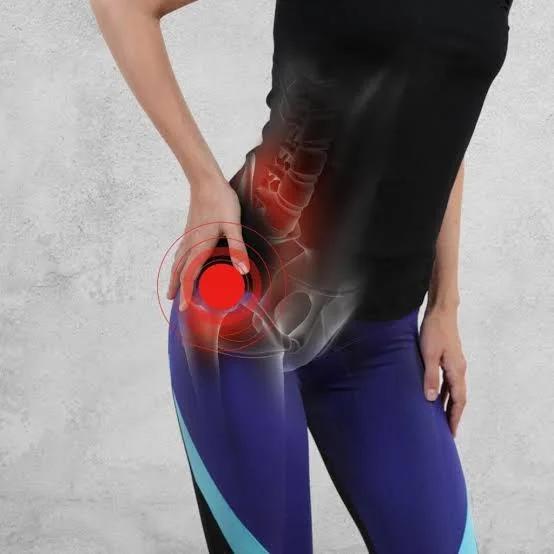
Symptoms depend on the cause and severity of inflammation.
Some people develop gradual discomfort, while others experience pain over a shorter period.
Deep Groin Pain
Pain at the front of the hip or deep in the groin is a common feature of hip joint problems.
It may worsen during walking, climbing stairs, standing from a chair, or bending the hip.
Groin pain is not specific to synovitis.
It can also occur with osteoarthritis, labral injuries, and femoroacetabular impingement.
Hip Stiffness
Inflammation can make hip movement uncomfortable, particularly after prolonged sitting or resting.
You may notice difficulty bending the hip, rotating the leg, or putting on socks and shoes.
Persistent or progressively worsening stiffness deserves assessment.
Pain During Walking
Walking increases the load passing through the hip joint.
If the joint is inflamed, this may aggravate pain and reduce walking tolerance.
Some people shorten their stride or develop a limp to avoid loading the painful hip.
A persistent or worsening limp should not simply be treated as a muscle weakness problem.
Reduced Range of Motion
Hip synovitis may make movements such as hip flexion and rotation painful or restricted.
For example, bringing the knee towards the chest or rotating the thigh may become uncomfortable.
A clinician can assess whether the restriction appears to originate from the joint or surrounding tissues.
Pain at Rest or During the Night
More active inflammation can cause discomfort even when the hip is not bearing weight.
Persistent night pain does not automatically indicate a serious condition, but unexplained or worsening pain at rest should be assessed, especially when accompanied by fever, unexplained weight loss, or feeling unwell.
Is Hip Synovitis the Same as a Hip Joint Effusion?
No. The terms describe different findings, although they can occur together.
- Synovitis means inflammation of the membrane lining the joint.
- Hip joint effusion means excess fluid has accumulated inside the joint capsule.
Inflammation can increase fluid production and lead to an effusion. However, fluid may accumulate for other reasons, and an effusion alone does not confirm synovitis.
Ultrasound or MRI may help identify fluid and inflammatory changes, but imaging does not always establish the underlying cause.
Clinical findings and, when indicated, laboratory investigations remain important.
MRI can provide detailed information about synovitis and joint fluid, although interpretation depends on the imaging technique and clinical context (Burke et al., 2019)
How Is Hip Synovitis Diagnosed?
Clinical Assessment
A clinician will ask when symptoms began, whether an injury occurred, which activities aggravate the pain, and whether fever or other symptoms are present.
The examination may include:
- Walking pattern and ability to bear weight.
- Hip range of motion and pain during movement.
- Muscle strength and functional control.
- Assessment of the lower back and surrounding tissues.
- Screening for symptoms that require urgent medical investigation.
Several hip conditions produce similar symptoms, so the assessment must consider alternative explanations rather than assuming inflammation is the only problem.
Imaging Tests
The choice of imaging depends on the suspected cause.
- X-rays may help identify osteoarthritis, fractures, and other bony abnormalities.
- Ultrasound can detect an effusion and may help guide joint aspiration.
- MRI can provide more detailed information about the synovium, bone marrow, cartilage, and other soft tissues when clinically indicated.
Imaging findings must be interpreted alongside symptoms and examination results.
The presence of inflammation on a scan does not automatically explain every symptom or determine the treatment needed.
Blood Tests and Joint Aspiration
When infection or systemic inflammatory disease is suspected, blood tests may help assess inflammation and identify relevant abnormalities.
Joint aspiration may be required if septic arthritis or crystal-related arthritis is suspected.
The collected fluid can be examined for white blood cells, crystals, and microorganisms.
No single test should be interpreted in isolation.
If joint infection is suspected, urgent clinical evaluation is essential even when some initial findings appear reassuring.
How Can Physiotherapy Help Hip Synovitis?
Physiotherapy may help improve movement, strength, and everyday function once the underlying cause has been assessed and urgent conditions have been excluded or treated.
The treatment plan should depend on the diagnosis, symptom severity, and ability to bear weight.
There is no single exercise program suitable for every case of hip synovitis.
1. Modify Activities During a Flare-Up
During a painful episode, temporarily reducing activities that aggravate symptoms may help prevent repeated irritation.
Depending on the cause, a physiotherapist may recommend modifying:
- Running and jumping.
- Deep squats or lunges that provoke groin pain.
- Long walks that cause a limp.
- Repeated hip movements that aggravate symptoms.
- Heavy lower-body training during an acute flare-up.
Activity modification does not necessarily mean complete rest.
The aim is to maintain appropriate movement without worsening the underlying condition.
If walking becomes difficult or pain is rapidly worsening, seek medical reassessment rather than attempting to exercise through the symptoms.
2. Restore Comfortable Hip Movement
When movement is considered safe, gentle range-of-motion exercises may help address stiffness.
A physiotherapist may introduce controlled hip movements within a comfortable range and gradually increase activity according to the person’s response.
Aggressive stretching should be avoided when it causes sharp pain or when the cause of inflammation has not been established.
3. Strengthen the Hip and Gluteal Muscles
Pain and reduced activity can affect the muscles that support the hip and pelvis.
When appropriate, progressive strengthening may help restore functional capacity.
Depending on the diagnosis and assessment, exercises might include:
- Gentle isometric hip contractions.
- Modified bridges, if comfortable.
- Controlled sit-to-stand movements.
- Supported standing hip exercises.
- Gradual balance and functional training.
These are examples rather than a universal prescription.
They may be unsuitable during acute infection, an undiagnosed injury, or a painful episode in which weight-bearing has not been cleared.
4. Improve Walking and Daily Function
Hip pain can change walking mechanics and make daily tasks more difficult.
Rehabilitation may address walking tolerance, stair climbing, balance, and movement control once the underlying condition is being managed.
A physiotherapist may also recommend temporary walking aids in coordination with the treating clinician if weight-bearing is painful.
Progression should be guided by symptoms and clinical findings rather than a fixed timetable.
5. Plan a Gradual Return to Exercise
Returning to sport or gym training should depend on the underlying diagnosis and response to treatment.
A gradual program may begin with comfortable daily movement before progressing to resistance exercises, longer walks, or sport-specific activities.
Pain, movement quality, and the response later that day or the following morning can help guide progression.
A systematic review of physiotherapist-led interventions found that rehabilitation may improve pain and function in some adults with hip-related pain.
However, the included studies varied in quality and treatment approach, and the evidence does not establish that exercise alone treats every cause of synovitis (Kemp et al., 2020)
Common Mistakes to Avoid
Assuming All Hip Pain Is Muscle-Related
Hip pain can originate from the joint, surrounding tissues, the lower back, or other structures.
Persistent pain and restricted movement deserve assessment rather than repeated self-treatment for presumed muscle tightness.
Stretching Through Sharp Pain
Aggressive stretching may aggravate symptoms when the joint is inflamed or the underlying cause is unknown.
Movement should be modified if it produces sharp pain, painful catching, or worsening symptoms.
Returning to High-Impact Exercise Too Soon
Resuming running, jumping, or heavy lower-body training before symptoms and the underlying condition are appropriately managed can prolong recovery or aggravate an injury.
Ignoring Warning Signs
Severe pain, fever, inability to bear weight, or feeling acutely unwell should not be managed with exercises alone.
These symptoms require urgent medical assessment.
Hip Synovitis: Myth vs Fact
MYTH: All hip synovitis is caused by overuse.
FACT: It can occur with osteoarthritis, inflammatory arthritis, injury, and other conditions. The cause needs to be assessed.
MYTH: Stretching more will always relieve hip stiffness.
FACT: Aggressive stretching may aggravate an irritable joint. Gentle, comfortable movement is often more appropriate until the cause is clear.
MYTH: Hip synovitis and hip joint effusion mean the same thing.
FACT: Synovitis is inflammation of the joint lining. An effusion is excess fluid within the joint. They can occur together, but they are not identical.
MYTH: You should continue exercising through hip pain to prevent stiffness.
FACT: Activity should be adjusted to symptoms and the underlying diagnosis. Severe or worsening pain should not be pushed through, and suspected infection requires urgent medical care.
How Long Does Hip Synovitis Take to Improve?
There is no single recovery timeline because synovitis can occur with different conditions.
Recovery depends on the underlying cause, severity and duration of symptoms, response to medical treatment, and ability to resume movement and daily activities.
Symptoms associated with a short-lived inflammatory episode may improve differently from those related to chronic arthritis or an ongoing joint problem.
If pain persists, worsens, or repeatedly returns, the diagnosis and management plan should be reviewed.
Improvement in pain alone does not always mean that the underlying condition has resolved.
When Should You Seek Medical Advice?
Arrange a medical assessment if hip pain and stiffness persist, restrict daily activities, or repeatedly return without a clear explanation.
Seek urgent medical care if you experience:
- Sudden, severe, or rapidly worsening hip pain.
- Fever or chills with new hip pain.
- Inability to bear weight or walk because of pain.
- Severe pain following a fall or injury.
- Hip pain accompanied by feeling acutely unwell.
Do not delay assessment because fever is absent. Joint infection and other urgent conditions can sometimes present without every typical symptom.
Final Thoughts: Managing Hip Synovitis
Hip synovitis can make everyday activities such as walking, climbing stairs, and getting up from a chair uncomfortable. However, the right management starts with identifying what is causing the inflammation rather than treating every case as a simple muscle problem.
Physiotherapy may support recovery through appropriate movement, progressive strengthening, and activity modification when these interventions are safe for the underlying condition. A tailored plan is more useful than forcing painful exercises or returning to high-impact activity too soon.
If hip pain is persistent, worsening, or affecting your ability to walk, arrange a clinical assessment. Seek urgent medical care for sudden severe pain, fever, feeling unwell, or an inability to bear weight.
Conclusion
Hip synovitis is inflammation of the membrane lining the hip joint.
It can cause groin pain, stiffness, reduced movement, and difficulty walking, but it may arise from several different conditions, including osteoarthritis, inflammatory arthritis, injury, and infection.
Diagnosis requires an assessment of symptoms and clinical findings, with imaging or laboratory tests when appropriate.
Physiotherapy may help restore comfortable movement, strength, and function when rehabilitation is safe and suited to the underlying cause.
The most important step is to identify why the joint is inflamed before deciding on treatment.
Severe pain, fever, or an inability to bear weight requires urgent medical assessment rather than an exercise-based approach.
Frequently Asked Questions About Hip Synovitis
1. What is the most common symptom of hip synovitis?
Hip synovitis may cause deep groin pain, stiffness, discomfort with hip movement, and difficulty walking. Symptoms vary depending on the underlying cause.
2. Can physiotherapy help hip synovitis?
Yes, in appropriate cases. After assessment and management of the underlying cause, a physiotherapist may use gentle mobility exercises, progressive strengthening, and activity modification to support recovery.
3. Is walking good for hip synovitis?
Short, comfortable walks may be suitable for some people, but walking should be reduced or modified if it increases pain or causes limping. Follow medical advice if the cause is uncertain or symptoms are significant.
4. How long does hip synovitis take to heal?
Recovery depends on the cause, severity, and treatment. Temporary inflammation may improve over days to weeks, while arthritis-related symptoms can persist or recur. There is no single recovery timeline for everyone.
5. Is hip synovitis serious?
It can be mild or associated with a more serious condition. Sudden severe pain, fever, feeling unwell, or inability to bear weight warrants urgent medical assessment because a joint infection or another serious problem may be present.
6. Is hip synovitis the same as a hip joint effusion?
No. Synovitis is inflammation of the synovial membrane, while an effusion is excess fluid inside the joint. Both can occur at the same time.
Stay tuned with us for more health related topics.
Follow us on LinkedIn and Instagram for more.
More Read


Medical Disclaimer
This content is intended for general educational purposes only and is not a substitute for professional medical advice, diagnosis, or treatment. Hip pain and synovitis can have different causes that require different management. Consult a qualified healthcare professional for an individual assessment before starting or changing an exercise program. Sudden severe hip pain, fever, feeling seriously unwell, or inability to bear weight requires urgent medical evaluation.


