
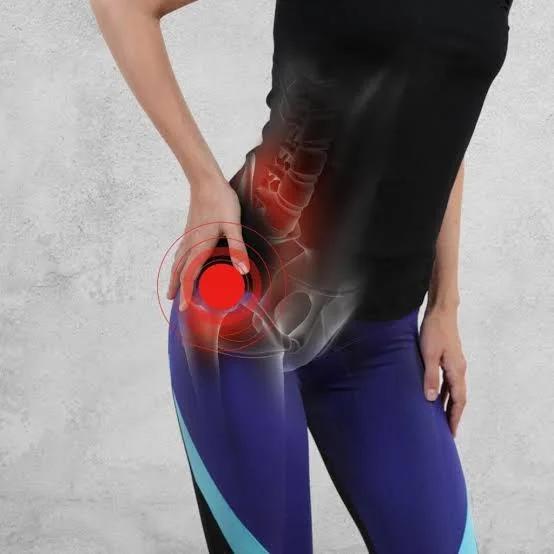

Finding fluid in the hip joint on an ultrasound or MRI report can be worrying.
A hip joint effusion means that more fluid than expected has accumulated inside the joint capsule.
It can occur with arthritis, inflammation, injury, or infection.
Quick Answer: What Does Fluid in the Hip Mean?
A hip joint effusion means that excess fluid has accumulated inside the hip joint capsule. It may occur because of osteoarthritis, inflammatory arthritis, an injury, crystal-related arthritis, or infection.
Common symptoms: Groin pain, stiffness, reduced hip movement, discomfort while walking, and sometimes limping.
Can physiotherapy help? It may improve movement, strength, and function when the underlying cause has been assessed and rehabilitation is appropriate. Sudden severe pain, fever, or an inability to bear weight requires urgent medical assessment.
Some people experience groin pain, stiffness, and difficulty walking, while others have only mild symptoms.
The important question is not simply how much fluid is present, but why it has accumulated and whether the underlying condition needs treatment.
Physiotherapy can support recovery in selected cases, but the cause must be assessed before rehabilitation begins.
Key Takeaways
- A hip joint effusion means excess fluid has collected inside the hip joint capsule.
- Possible causes include osteoarthritis, inflammatory arthritis, injury, crystal-related arthritis, and infection.
- Ultrasound and MRI can help identify fluid, but further investigation may be needed to establish the cause.
- A hip effusion does not automatically mean the condition is serious, but it should be interpreted alongside symptoms and clinical findings.
- Severe pain, fever, or inability to bear weight requires urgent medical assessment.
- Physiotherapy may help restore movement and strength after urgent causes have been excluded or treated.
- Exercise selection and progression should depend on the diagnosis, symptoms, and medical advice.
What Is a Hip Joint Effusion?
The hip is a ball-and-socket joint formed by the femoral head, the ball at the top of the thigh bone, and the acetabulum, the socket in the pelvis.
A capsule surrounds the joint, and its inner lining, called the synovium, produces synovial fluid.
This fluid lubricates the joint and helps nourish the articular cartilage.
A small amount is normal and allows the joint surfaces to move smoothly.
A hip joint effusion develops when excess fluid accumulates inside the joint capsule.
This can happen when the joint is irritated, inflamed, injured, or infected.
It is important to distinguish a joint effusion from bursitis, which involves inflammation of a fluid-filled sac outside the joint.
Both conditions can cause hip pain, but they affect different structures and may require different treatment.
Ultrasound can identify fluid around the hip joint and help guide procedures, while MRI may provide additional information about bone, cartilage, and soft-tissue abnormalities. (Probyn et al., 2023)
What Causes Fluid in the Hip Joint?
1. Hip Osteoarthritis
Hip osteoarthritis involves changes to the cartilage and other joint structures.
In some people, irritation of the synovium contributes to excess fluid.
Symptoms may include groin pain, stiffness after sitting, discomfort during walking, and difficulty climbing stairs or putting on shoes.
An effusion does not automatically mean that osteoarthritis is advanced.
Symptoms, examination findings, and imaging must be considered together.
2. Inflammatory Arthritis
Conditions such as rheumatoid arthritis can cause synovitis, or inflammation of the joint lining.
This can increase fluid production and lead to an effusion.
Other clues may include prolonged morning stiffness, symptoms affecting multiple joints, or a history of inflammatory disease.
Medical assessment helps determine whether the symptoms require further investigation or changes to treatment.
3. Injury or Overloading
A fall, twisting injury, direct impact, or other trauma can irritate structures inside the hip.
Depending on the injury, fluid accumulation may accompany inflammation or bleeding into the joint.
A sudden increase in exercise intensity can also aggravate an underlying hip problem.
However, new hip pain with an effusion should not automatically be attributed to muscle strain or overtraining.
Following significant trauma, a clinician may need to investigate a fracture or other structural injury before recommending exercises.
4. Septic Arthritis
Septic arthritis is an infection inside a joint. It is a medical emergency because infection can rapidly damage cartilage and surrounding structures.
Warning signs include severe or rapidly worsening hip pain, difficulty moving the joint, and an inability or reluctance to bear weight.
Fever, chills, and feeling unwell may also occur, but their absence does not reliably exclude infection.
Suspected septic arthritis requires urgent medical assessment.
Investigation may include joint aspiration, blood tests, and cultures, followed by prompt treatment when indicated.
Physiotherapy is not a substitute for treating an active joint infection. (Ravn et al., 2023)
5. Gout and Other Crystal-Related Arthritis
Gout occurs when monosodium urate crystals accumulate in a joint and trigger inflammation.
Other crystal-related conditions can also cause an inflammatory reaction.
Although gout more commonly affects other joints, it can occasionally involve the hip.
Symptoms may include sudden pain, marked tenderness, and difficulty moving the joint.
Joint-fluid analysis may be needed when crystal arthritis is suspected.
Finding crystals does not automatically rule out a simultaneous infection.
6. Labral or Cartilage Problems
The labrum is a ring of cartilage surrounding the hip socket.
It helps support joint stability and contributes to the joint’s seal.
A labral injury or another problem within the joint may be associated with irritation and fluid accumulation.
Some people also notice groin pain, clicking, or catching during hip movements.
An effusion alone does not prove that the labrum is damaged.
Further assessment is necessary when symptoms and examination findings suggest an underlying structural problem.
What Are the Symptoms of a Hip Joint Effusion?

Symptoms depend on the cause, the degree of inflammation, and the person’s overall joint health.
Common symptoms include:
- Groin pain: Discomfort at the front of the hip, sometimes spreading into the thigh.
- Hip stiffness: Difficulty bending the hip or rotating the leg comfortably.
- Reduced movement: Pain or restriction when bringing the knee towards the chest or moving the leg sideways.
- Pain during walking: Discomfort when standing, climbing stairs, or placing weight through the affected leg.
- Limping: Changes in walking caused by pain or difficulty loading the joint.
- Pain at rest: Discomfort while sitting or lying down, particularly when inflammation is significant.
A study involving adults aged 50 and older who had hip pain found associations between ultrasound-detected effusion and clinical features such as groin or medial thigh pain and reduced hip movement.
These findings can help guide assessment, but they do not establish the underlying diagnosis. (Bierma-Zeinstra et al., 2000)
The amount of fluid does not necessarily correspond directly to pain severity.
A small effusion may accompany an important underlying problem, while a larger collection does not identify the cause on its own.
Is Fluid in the Hip Joint Dangerous?
Not every hip joint effusion is an emergency.
Some occur with non-urgent conditions, while others need prompt investigation.
Seek urgent medical care if you develop:
- Sudden, severe, or rapidly worsening hip pain.
- Fever or chills with new hip pain.
- Inability to bear weight or walk because of hip pain.
- Severe pain after a fall or other injury.
- Hip pain accompanied by feeling acutely unwell, especially when infection is possible.
Do not wait for every symptom to appear before seeking care.
Septic arthritis can sometimes occur without a high fever.
If symptoms are milder but persist, arrange a medical assessment to establish the cause.
Recurring pain, reduced hip movement, and a persistent limp also warrant investigation.
Can Fluid in the Hip Indicate a Stress Fracture?
Yes, in certain circumstances, an effusion seen on MRI may be associated with a femoral neck stress injury.
This is particularly relevant to people who run long distances, participate in high-impact sports, or have recently increased their training load.
The femoral neck is the narrow region connecting the femoral head to the rest of the thigh bone.
A stress injury in this area can worsen if loading continues without appropriate diagnosis and management.
A study of military recruits with femoral neck stress injuries found that MRI evidence of hip joint effusion could help identify high-grade injuries.
However, the study population was specific, and effusion is not a standalone test for a stress fracture. (Barkley et al., 2023)
If you have persistent groin pain after increasing running or training, particularly pain with weight-bearing, seek prompt medical assessment before returning to exercise.
Do not attempt to treat suspected bone stress injury with strengthening exercises alone.
How Is a Hip Joint Effusion Diagnosed?
Clinical Assessment
A clinician will ask when the pain started, whether an injury occurred, which movements aggravate symptoms, and whether fever or other systemic symptoms are present.
The examination may assess walking, hip range of motion, tenderness, and the ability to bear weight.
The lower back and surrounding soft tissues may also need assessment because pain originating outside the joint can resemble hip joint pain.
Clinical findings help determine whether further testing is needed and how urgently it should be arranged.
Ultrasound, X-Ray, and MRI
Ultrasound can detect fluid around the hip joint and help guide a needle during aspiration.
It does not always identify the underlying cause of the fluid.
X-rays can help investigate fractures, osteoarthritis, and other bony abnormalities, although they do not directly show small effusions as well as ultrasound or MRI.
MRI provides more detailed information about cartilage, bone marrow, the labrum, and surrounding soft tissues.
It may be useful when symptoms persist or when the clinician suspects a stress injury or other structural problem.
The appropriate investigation depends on the symptoms and suspected cause, rather than the presence of fluid alone. (Mengiardi et al., 2007)
Joint Aspiration and Blood Tests
When infection, crystal arthritis, or another condition requiring fluid analysis is suspected, a clinician may recommend arthrocentesis, also known as joint aspiration.
A needle is used to collect fluid from the joint.
Laboratory testing may include cell counts, crystal analysis, Gram staining, and bacterial culture.
Blood tests may help assess inflammation or infection.
However, a normal result from an individual blood test does not necessarily exclude septic arthritis.
How Can Physiotherapy Help a Hip Joint Effusion?
Physiotherapy may be appropriate once the underlying cause has been assessed and urgent conditions, such as infection or significant injury, have been addressed.
Physiotherapy does not directly treat every cause of a hip effusion.
Its role is to support recovery, maintain appropriate movement, and rebuild strength and function when rehabilitation is medically suitable.
1. Managing Activity and Joint Loading
During a painful flare-up, a physiotherapist may recommend temporarily reducing activities that aggravate symptoms.
These might include running, jumping, deep squats, or prolonged walking.
The goal is to avoid repeatedly provoking the joint while maintaining comfortable movement where appropriate.
Complete rest is not always necessary, but the right activity level depends on the diagnosis and severity of symptoms.
If walking causes a significant limp or pain is worsening, the person should be reassessed rather than simply pushing through.
2. Restoring Comfortable Hip Movement
Once the underlying condition has been assessed and movement is considered safe, gentle range-of-motion exercises may help address stiffness.
A physiotherapist may introduce controlled hip movements within a comfortable range.
Exercises should not force the joint into painful positions or provoke sharp groin pain.
The early goal is comfortable movement, not aggressive stretching or increasing flexibility at any cost.
3. Rebuilding Hip and Gluteal Strength
Pain and reduced activity can affect the muscles around the hip.
When appropriate, strengthening may be introduced gradually.
Depending on the diagnosis and symptoms, exercises may include:
- Gentle isometric hip muscle contractions.
- Modified bridges, when comfortable.
- Controlled sit-to-stand movements.
- Supported standing hip exercises.
- Gradual balance and functional training.
These are examples, not a universal prescription.
They may be inappropriate during an acute, unexplained, or severe effusion.
A physiotherapist should adapt the program to the diagnosis and the person’s response.
4. Improving Walking and Everyday Function
Pain and stiffness can change the way a person walks or climbs stairs.
Rehabilitation may address these functional limitations after the underlying condition has been managed.
A physiotherapist may work on walking tolerance, movement control, and a gradual return to daily activities.
Where appropriate, they can also advise on temporary walking aids in coordination with the treating clinician.
Progress should be guided by symptoms, joint function, and the medical plan rather than a fixed timetable.
Research involving professional ballet dancers has found an association between hip effusion-synovitis, pain, and poorer sports or recreation function in female dancers.
This is a specific athletic population, so the findings should not be generalized to every person with an effusion. (Mayes et al., 2020)
Hip Joint Effusion: Myth vs Fact
Myth: Fluid in the hip always means serious damage.
Fact: An effusion can occur for several reasons. Its significance depends on the underlying cause, symptoms, and clinical findings.
Myth: Fluid in the hip is the same as bursitis.
Fact: A joint effusion occurs inside the joint capsule, whereas bursitis affects a fluid-filled sac outside the joint.
Myth: Physiotherapy can treat every hip effusion.
Fact: Physiotherapy may support recovery in selected cases, but infection, fractures, and other urgent conditions require medical management first.
Myth: You should exercise through severe hip pain.
Fact: Severe or worsening pain, fever, or inability to bear weight needs prompt medical assessment rather than an exercise-based approach.
How Long Does a Hip Joint Effusion Take to Resolve?
There is no single recovery time for a hip joint effusion.
The duration depends primarily on its cause, the extent of the underlying problem, and the response to treatment.
An effusion associated with a short-lived inflammatory episode may behave differently from one caused by persistent arthritis, a structural injury, or infection.
Recovery should not be judged only by whether pain has improved.
Persistent stiffness, limping, reduced walking tolerance, or recurring symptoms may indicate that further assessment is needed.
If symptoms worsen, fail to improve as expected, or return repeatedly, the diagnosis and management plan should be reviewed.
Final Thoughts: Understand the Cause
Fluid in the hip joint is a finding that needs to be interpreted in context. The cause may be inflammatory, degenerative, or related to an injury, and occasionally it can signal a serious infection.
With an appropriate diagnosis, physiotherapy may help restore comfortable movement and everyday function. Seek urgent medical care for severe hip pain, fever, or inability to bear weight, and do not try to manage unexplained symptoms with exercises alone.
Conclusion
A hip joint effusion means that excess fluid has accumulated inside the hip joint capsule.
It may occur with osteoarthritis, inflammatory arthritis, injury, crystal-related arthritis, or other joint conditions.
Infection is particularly important to recognize because it requires urgent treatment.
Ultrasound and other imaging can help identify an effusion, but the fluid alone does not reveal the full diagnosis.
Further examination, blood tests, or joint aspiration may be necessary.
Physiotherapy can support movement, strength, and functional recovery when the underlying cause has been assessed and rehabilitation is appropriate.
If hip pain is sudden or severe, you cannot bear weight, or you have fever or feel acutely unwell, seek urgent medical care rather than attempting to manage the symptoms with exercises.
Frequently Asked Questions About Hip Joint Effusion
1. What does fluid in the hip joint mean?
It means that more fluid than expected has accumulated inside the hip joint capsule. Possible causes include arthritis, inflammation, injury, crystal-related arthritis, and infection. Further assessment may be needed to identify the cause.
2. Is a hip joint effusion dangerous?
Not every effusion is dangerous, but some causes need urgent treatment. Severe or rapidly worsening pain, fever, or inability to bear weight warrants urgent medical assessment.
3. Can physiotherapy help fluid in the hip?
Physiotherapy may help restore movement, strength, and everyday function once the cause has been assessed and rehabilitation is appropriate. It does not replace treatment for infection or significant structural injury.
4. How is a hip joint effusion diagnosed?
Assessment may include a physical examination and imaging such as ultrasound, X-ray, or MRI. Joint aspiration and laboratory testing may be required when infection or crystal arthritis is suspected.
5. How long does fluid in the hip take to go away?
There is no fixed recovery time. It depends on the underlying condition and response to treatment. Persistent pain, stiffness, or limping should be reassessed.
6. Can running cause a hip joint effusion?
Hip pain and an effusion may occur alongside an injury or other condition in active people. Persistent groin pain after a sudden increase in running or training load needs assessment to rule out a bone stress injury.
7. Is fluid in the hip the same as bursitis?
No. A joint effusion is fluid inside the hip joint capsule. Bursitis affects a fluid-filled sac outside the joint, and the two conditions have different anatomical locations.
Stay tuned with us for more health related topics.
Follow us on LinkedIn and Instagram for more.
More Read


Medical Disclaimer
This article is intended for general educational purposes only and does not replace professional medical advice, diagnosis, or treatment. A hip joint effusion can have several causes, and the appropriate management depends on the underlying condition. Do not begin exercises that worsen your symptoms or delay medical assessment for severe or rapidly worsening hip pain, fever, or inability to bear weight. Consult a qualified healthcare professional for individual assessment.


