


Understanding Headaches in Children
Headaches are not just an adult problem. In clinical practice, I increasingly see children, sometimes as young as 6 or 7, complaining of head pain.
What’s more concerning is that many parents dismiss it as “just stress” or “screen time.”
But here’s the truth:
Headaches in children are extremely common and can significantly affect their learning, mood, sleep, and overall development.
Research shows that up to 62% of children and adolescents experience primary headaches, including migraines and tension-type headaches (PMC)
Another study found that 66–71% of school-aged children report headaches within a 3-month period (PMC)
This is not rare. This is a growing pediatric health concern.
Quick Answer
Headaches in children are very common and often caused by stress, poor posture, dehydration, or lack of sleep. Most are harmless, but frequent or severe headaches may indicate migraines or underlying issues. Physiotherapy, posture correction, hydration, and lifestyle changes play a key role in long-term relief.
Key Takeaways
- Up to 60% of children experience headaches at some point.
- Tension headaches and migraines are the most common types.
- Poor posture and screen time are major modern triggers.
- Physiotherapy can significantly reduce headache frequency.
- Red flag symptoms need immediate medical attention.
Types of Headaches in Children
Primary Headaches
These are not caused by another disease.
Migraine
- Moderate to severe pain
- Often with nausea, light sensitivity
- May last shorter in children than adults
Migraine prevalence in children is around 11% globally (PubMed)
Tension-Type Headache
- Dull, tight band-like pain
- Often linked to posture and stress
- Most common type in children
Cluster Headache (Rare)
- Severe, one-sided pain
- Rare in young children
Secondary Headaches
These are due to underlying causes such as:
- Fever or infections
- Sinus issues
- Dehydration
- Head injury
Common triggers include sleep deprivation, hunger, stress, and sinus congestion (PMC)
Why Are Headaches Increasing in Children?
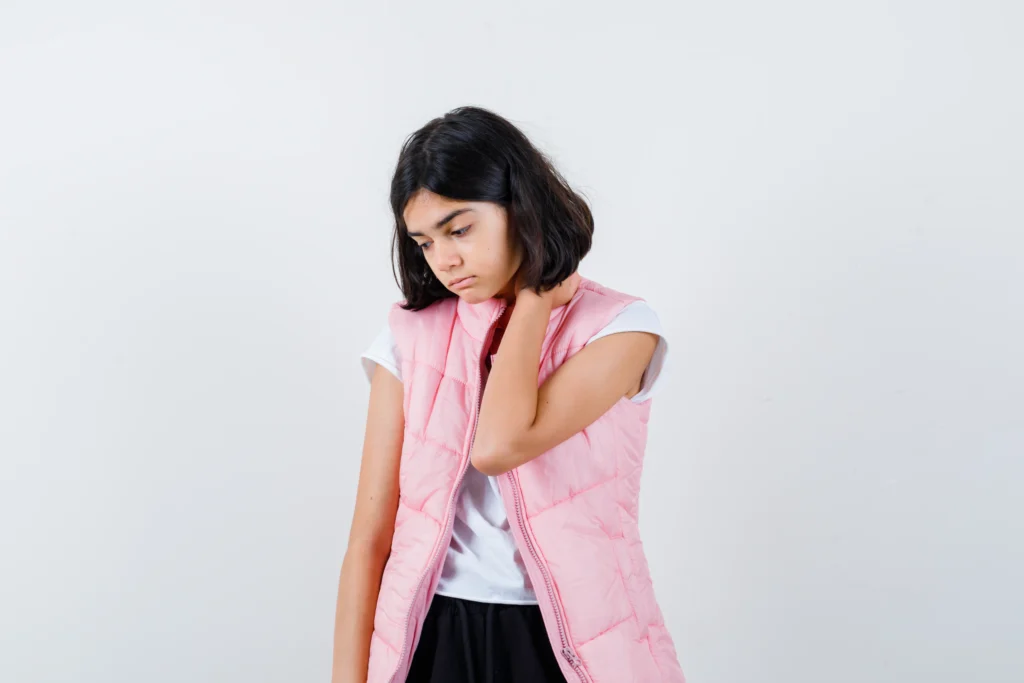
This is something I want every parent to understand deeply.
Children today are not the same as children 20 years ago.
1. Screen Overload
Long hours on phones, tablets, and laptops lead to:
- Forward head posture
- Eye strain
- Neck stiffness
This is one of the biggest modern contributors to pediatric headaches.
2. Poor Posture
Many children sit like this:
- Slouched back
- Head forward
- Rounded shoulders
This creates strain on cervical muscles, especially the upper trapezius and suboccipitals, leading to cervicogenic headaches.
3. Stress & Emotional Factors
Children today face:
- Academic pressure
- Social anxiety
- Bullying
Studies show psychosocial stress significantly increases headache frequency (PMC)
4. Sleep Problems
Irregular sleep patterns disrupt brain regulation and pain thresholds.
5. Dehydration & Poor Nutrition
Skipping meals and low water intake are very underrated causes.
6. Lack of Physical Activity
Low activity levels increase headache risk by up to 5.8 times in some cases (PMC)
Lesser-Known Facts Parents Should Know
- Children may not say “headache”, they may say “I feel tired” or become irritable
- Migraine in children can appear as stomach pain (abdominal migraine)
- Headaches often start as early as age 7
- Girls are more affected after puberty
Signs & Symptoms
Common Symptoms
- Forehead or temple pain
- Tight band sensation
- Neck pain
- Sensitivity to light
- Irritability
Behavioral Signs
- Avoiding school
- Crying without clear reason
- Reduced concentration
Red Flags
As a physiotherapist, I always tell parents:
Refer immediately if you notice:
- Sudden severe headache
- Headache with vomiting
- Vision problems
- Seizures
- Headache after injury
Physiotherapy Perspective: Why It Matters
This is where most people miss the real solution.
Many childhood headaches are musculoskeletal in origin, meaning they come from:
- Neck stiffness
- Muscle imbalance
- Postural dysfunction
Physiotherapy addresses the root cause, not just symptoms.
Assessment Approach
A physiotherapy evaluation includes:
- Posture analysis
- Neck mobility testing
- Muscle tightness (upper traps, levator scapulae)
- Screen-time habits
Physiotherapy Treatment Strategies
1. Posture Correction
Teaching children:
- Sit upright
- Screen at eye level
- Avoid slouching
2. Manual Therapy
- Soft tissue release
- Trigger point therapy
- Cervical mobilization
3. Exercise Therapy
This is the MOST important part.
Best Physiotherapy Exercises for Children with Headaches
1. Chin Tucks
How to do:
- Sit straight
- Pull chin backward (not downward)
- Hold 5 seconds
Reps: 10 repetitions
Benefit: Corrects forward head posture
2. Neck Stretch (Upper Trapezius)
How to do:
- Tilt head sideways
- Hold gently
Hold: 15-20 seconds
3. Shoulder Blade Squeeze
How to do:
- Pull shoulder blades together
- Hold 5 seconds
4. Eye Relaxation Rule (20-20-20)
Every 20 minutes:
- Look 20 feet away
- For 20 seconds
5. Breathing Exercises
Deep diaphragmatic breathing reduces stress-related headaches.
Children-Specific Home Exercises for Headache Relief
As a physiotherapist, I always recommend exercises that are playful, gentle, and easy to follow, because children are more likely to stick to them when they feel like activities, not therapy.
1. Turtle Neck Exercise (Chin Tucks for Kids )
Why it works:
Corrects forward head posture, one of the biggest causes of headaches in children.
How to do:
- Ask your child to pretend they are a turtle going back into its shell
- Pull the chin straight backward (not down)
- Keep eyes looking forward
Hold: 5 seconds
Repetitions: 10 times
Make it fun:
Say “Hide in your shell and come out!”
2. Balloon Breathing
Why it works:
Reduces stress-related headaches and calms the nervous system.
How to do:
- Ask your child to imagine blowing a big balloon
- Inhale through the nose
- Slowly blow out through the mouth
Repetitions: 10 breaths
Pro tip:
Place hands on the tummy so they can feel it rise and fall
3. Shoulder Shrug & Drop Game
Why it works:
Releases tight upper trapezius muscles (common headache trigger)
How to do:
- Lift shoulders up toward ears
- Hold for 3 seconds
- Drop them down suddenly
Reps: 10-12 times
Make it fun:
“Be a scared cat, now relax like a sleepy kitten”
4. Ear-to-Shoulder Stretch
Why it works:
Reduces neck stiffness linked to tension headaches
How to do:
- Tilt head toward one shoulder
- Use hand gently for support
- Keep opposite shoulder relaxed
Hold: 15 seconds each side
Reps: 3 times
5. Wall Posture Check (Superhero Pose)
Why it works:
Improves posture and reduces strain on neck and head
How to do:
- Stand against a wall
- Heels, back, shoulders, and head touching
- Chin slightly tucked
Hold: 20-30 seconds
Make it fun:
“Stand like a superhero ready to fly!”
6. Eye Relaxation Exercise (20-20-20 Rule)
Why it works:
Prevents screen-related headaches
How to do:
- Every 20 minutes
- Look at something far away (20 feet)
- For 20 seconds
7. Cat-Cow Stretch (Spine Relaxation)
Why it works:
Relaxes spine and reduces tension buildup
How to do:
- On hands and knees
- Arch back up (cat)
- Drop belly down (cow)
Reps: 10 slow movements
8. Head Rotation “Say No” Exercise
Why it works:
Improves neck mobility
How to do:
- Slowly turn head side to side
- Like saying “no”
Reps: 10 times
9. Head Nod “Say Yes” Exercise
Why it works:
Gentle activation of deep neck muscles
How to do:
- Slowly nod head up and down
- Like saying “yes”
Reps: 10 times
10. Relaxation Pose (Child’s Pose)
Why it works:
Relieves full-body tension and calms the mind
How to do:
- Sit back on heels
- Stretch arms forward
- Forehead on the floor
Hold: 20-30 seconds
Weekly Routine for Best Results
- Do exercises 5 days a week
- Total time: 10-15 minutes/day
- Combine with:
- Less screen time
- Proper hydration
- Good sleep
Important Safety Tips for Parents
- Never force a stretch
- Movements should be pain-free
- Stop if child feels dizzy or uncomfortable
Lifestyle Modifications
- Regular sleep schedule
- Hydration (1-1.5L daily depending on age)
- Balanced meals
- Reduced screen time
New & Emerging Treatments
Recent research highlights:
- Behavioral therapy for stress-related headaches
- Multidisciplinary care (physio + psychology)
- Avoiding medication overuse (a rising concern in children) (MDPI)
When Should You See a Physiotherapist?
- Frequent headaches (>2 times/week)
- Headache with neck pain
- Poor posture
- Screen-related pain
Clinical Insight
Most pediatric headaches I treat are not neurological, they are mechanical and lifestyle-driven.
Correcting posture alone reduces symptoms in many children within weeks.
Physio Prescription
- Daily chin tucks + stretches
- Screen breaks every 20 minutes
- Proper study posture
- 30 minutes of physical activity daily
Red Flags
Refer immediately if:
- Headache wakes child at night
- Progressive worsening
- Neurological symptoms present
Myth vs Reality
Myth: Children don’t get serious headaches
Reality: They do and often earlier than expected
Final Word
Headaches in children are real, common, and increasing.
But the good news is, most are preventable and reversible.
As a physiotherapist, I strongly believe early intervention, posture correction, and lifestyle changes can completely transform a child’s quality of life.
Frequently Asked Questions
1. Are headaches common in children?
Yes, up to 60% of children experience headaches at some point.
2. What is the most common cause of headaches in kids?
Tension headaches due to stress and poor posture are most common.
3. Can screen time cause headaches in children?
Yes, excessive screen use leads to eye strain and neck pain.
4. When should I worry about my child’s headache?
If it is severe, frequent, or associated with vomiting or vision changes.
5. Can dehydration cause headaches in kids?
Yes, it is one of the most common but overlooked causes.
6. Do children get migraines?
Yes, and they may present differently than in adults.
7. Can physiotherapy help child headaches?
Yes, especially if related to posture and neck tension.
8. How can I prevent headaches in my child?
Ensure proper sleep, hydration, posture, and limit screen time.
Stay tuned with us for more health related topics.
Follow us on LinkedIn and Instagram for more.
More Read


Medical Disclaimer!
This article has been reviewed and written under the guidance of our Head Physiotherapist, Dr. Kruti Raj (PT, MUHS,CPT,CMPT). The information shared is intended for educational purposes only and should not be considered a substitute for personalized medical advice, diagnosis, or treatment.
Please consult us or any other qualified healthcare professional before beginning any exercise program, especially if you are experiencing pain, recovering from injury, or managing a medical condition.


