


Why do I get headache after oversleeping, this hidden reason might be turning your “extra rest” into your worst trigger.
Many people think more sleep means better recovery.
But in real clinical practice, I see the opposite quite often.
People come in saying, “I slept for 9 or 10 hours but woke up with a headache.”
That is not coincidence.
That is your body reacting to imbalance.
Sleep works best when it is consistent, aligned, and supported by movement.
When you suddenly increase duration, especially on weekends, your system struggles to adjust.
Quick Answer
Yes, sleeping too much can cause headaches. It happens because your body rhythm gets disturbed, your neck stays in one position for too long, and mild dehydration builds up during extended sleep. This combination often leads to a dull, heavy headache after waking.
Key Takeaways
- Oversleeping can disrupt your circadian rhythm and trigger headaches
- Long sleep hours can lead to neck stiffness and cervicogenic headaches
- Mild dehydration during extended sleep is a common hidden cause
- Weekend oversleeping often creates a “social jet lag” effect
- Consistent sleep timing is more important than sleeping longer
- Simple morning movement can reduce or prevent headache symptoms
- Pillow support and sleeping posture play a major role
What Actually Happens in Your Body When You Oversleep
Your Internal Clock Gets Confused
Your body follows a fixed rhythm called circadian rhythm.
When you sleep longer than usual:
- Hormonal signals shift
- Wake up timing gets delayed
- Brain alertness drops
This creates a feeling similar to jet lag. (Wittmann et al. 2006)
This is why you feel:
- Heavy head
- Slow thinking
- Low energy despite long sleep
Serotonin Changes and Pain Sensitivity Increases
Sleep duration directly affects serotonin levels.
Serotonin helps regulate:
- Mood
- Sleep cycles
- Pain threshold
When you oversleep, serotonin balance may fluctuate, making your brain more sensitive to pain. (Peres et al. 2017)
This is one reason why headaches feel more noticeable after long sleep.
Your Neck Is the Silent Trigger
This is something most articles completely miss.
When you sleep for long hours:
- Your neck stays in one position
- Small stabilizing muscles fatigue
- Joint stiffness builds up
This can lead to what we call cervicogenic headache.
Pain pattern usually:
- Starts from the neck
- Moves to the back of the head or forehead
- Feels worse when you wake up
In physiotherapy practice, this is one of the most common causes of morning headaches.
How Your Sleeping Position Affects Your Headache
Your sleep position matters more than your sleep duration.
Here is what I usually see:
Sleeping on stomach
- Twists the neck for hours
- Major trigger for morning headache
Sleeping on very high pillow
- Pushes head forward
- Strains upper neck
Sleeping without proper support
- Creates uneven muscle loading
Best position:
- On your back or side
- Neck aligned with spine
- Pillow supporting natural curve
Even a small correction here can reduce headaches significantly.
Reduced Movement Creates Stiffness
During long sleep:
- No muscle activation
- No joint mobility
- Reduced circulation
Your body essentially becomes inactive for too long.
This leads to:
- Heaviness in head
- Mild dizziness
- Tight shoulders
Mild Dehydration Builds Up Overnight
You go many hours without fluids.
Even mild dehydration can:
- Reduce blood volume
- Affect oxygen delivery
- Trigger headache
This is why simply drinking water in the morning sometimes improves the dehydration headache quickly. (Spigt et al. 2012)
Sleep Inertia Makes It Worse
When you sleep longer, you spend more time in deeper sleep stages.
If you wake suddenly from that state:
- Brain remains partially inactive
- Reaction time slows
- Head feels heavy
This is called sleep inertia.
And it is stronger after oversleeping.
Why Weekend Sleep Causes More Headaches
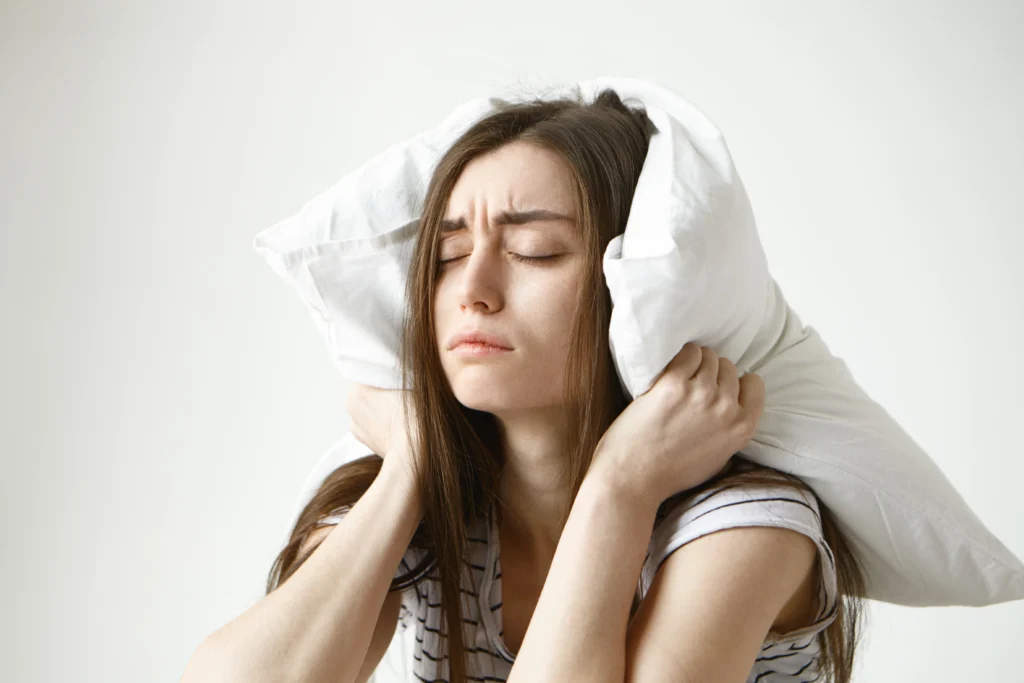
This pattern is extremely common.
Weekdays:
- 5 to 6 hours sleep
Weekends:
- 9 to 10 hours sleep
This creates something called social jet lag.
Your body cannot adjust quickly between these patterns.
The result:
- Morning headache
- Fatigue
- Brain fog (The Migraine Trust 2023)
Calculate your ideal sleep timings: “Sleep Calculator“
What to Do on Weekends Instead of Oversleeping
Instead of sleeping 3 to 4 hours extra:
- Wake up within 1 hour of your usual time
- Take a short nap later if needed (20 to 30 minutes)
- Go for light morning movement
- Get sunlight exposure
This keeps your body rhythm stable.
Who Is More Likely to Get Oversleep Headaches
Not everyone gets this type of headache.
But some people are more prone.
You are more likely to experience it if you:
- Sleep irregularly during weekdays
- Sit for long hours (desk job)
- Already have neck stiffness
- Use improper pillow support
- Experience migraines
- Have low daily physical activity
In clinic, I often notice this pattern in people who are active during weekdays but completely inactive on weekends.
Your body struggles with that sudden shift.
Types of Headaches Linked to Oversleeping
Tension Type Headache
- Dull pressure
- Feels like tight band
- Linked to muscle stiffness
Migraine Trigger
Oversleeping is a known trigger in migraine patients. (Kelman 2007)
Cervicogenic Headache
- Originates from neck
- Worse after long sleep
- Improves after movement
Lesser Known Causes You Should Know
These are rarely discussed but clinically important.
Teeth Grinding During Long Sleep
Can create tension in jaw and temples.
Poor Pillow Support
Improper pillow alignment stresses the neck for hours.
Sleeping Position
Sleeping on your stomach increases neck strain.
Reduced Oxygen in Some Individuals
Especially in people who snore or have sleep disturbances.
Sudden Stress Drop
After a stressful week, your body relaxes deeply on weekends.
This sudden drop can trigger headaches. (Healthline Editorial Team 2023)
Common Mistakes That Make Oversleep Headaches Worse
These are things I see almost daily:
- Sleeping extra to “fix” tiredness
- Ignoring pillow quality
- Using phone immediately after waking
- Skipping morning movement
- Drinking tea or coffee before water
- Staying inactive for hours after waking
Fixing just these can reduce headaches significantly.
How to Identify an Oversleep Headache
You can recognize it if:
- It happens after longer sleep than usual
- It improves after you start moving
- You feel neck stiffness
- Pain feels dull or heavy
Quick Self-Test: Is Your Headache Coming From Your Neck?
Try this simple check:
- Gently press the base of your skull
- Move your neck slowly side to side
If you feel:
- Tightness
- Reproduction of headache
- Relief after movement
Then your headache is likely coming from your neck.
This is very common after long sleep.
Physiotherapist’s Approach to Fix It
1. Fix Your Sleep Timing
Your body prefers routine over extra hours.
Try to:
- Sleep at the same time daily
- Wake up at the same time
Even on weekends.
2. Start a Simple Morning Movement Routine
Just 5 minutes can help.
- Neck rotations
- Chin tucks
- Shoulder rolls
- Upper back stretch
This improves:
- Blood flow
- Muscle activation
- Head pressure
3. Check Your Pillow
Your pillow should:
- Support natural neck curve
- Not push your head too high or too low
4. Hydrate Properly
Drink water:
- Before sleeping
- Immediately after waking
5. Avoid Long Catch Up Sleep
You cannot fix sleep debt in one day.
Instead:
- Improve daily sleep consistency
Simple 5-Minute Morning Reset Routine
Do this immediately after waking:
- 1 minute slow neck rotations
- 1 minute chin tucks
- 1 minute shoulder rolls
- 1 minute upper back stretch
- 1 minute deep breathing
Move gently.
No force. No speed.
This helps:
- Reduce stiffness
- Improve blood flow
- Ease headache naturally
Consistency matters more than intensity.
When You Should Not Ignore It
Seek medical advice if:
- Headaches are frequent
- Pain is severe
- You have nausea or vision problems
- Headache does not improve with movement
When It’s Not Just Oversleeping
Sometimes the headache is not due to sleep alone.
It may be linked to:
- Sleep apnea
- Migraine disorder
- High stress levels
- Poor posture habits
If headaches are frequent or severe, do not self-manage for too long.
What Happens If You Keep Ignoring It
If oversleep headaches become frequent and you ignore them:
- Neck stiffness can become chronic
- Headaches may become more frequent
- Pain threshold may reduce over time
- You may start depending on painkillers
This is where a simple issue slowly turns into a recurring problem.
Early correction is always easier.
One Simple Habit That Prevents Most Morning Headaches
Wake up and move.
Not your phone. Not your emails.
Your body.
Even 3 to 5 minutes of gentle movement can:
- Reset circulation
- Activate muscles
- Reduce head pressure
This is one of the simplest and most effective habits.
Final Thought
More sleep is not always better.
Your body works best with:
- Consistency
- Movement
- Proper alignment
If you wake up with a headache after long sleep, your body is not confused.
It is communicating.
Reader Takeaway
If you remember just this:
- Sleep consistently
- Avoid long oversleep
- Move your body after waking
- Support your neck properly
That alone can prevent most oversleep headaches.
Now you know why do I get headache after oversleeping, fix this one habit before your next “extra sleep” triggers it again.
Frequently Asked Questions
Can sleeping too much cause headaches?
Yes, oversleeping can disturb your sleep rhythm, reduce movement, and lead to dehydration, all of which can trigger headaches.
Why do I feel worse after sleeping more?
Long sleep can cause grogginess, neck stiffness, and delayed brain alertness, leading to a heavy head feeling.
How many hours of sleep is too much?
For most adults, regularly sleeping more than 9 hours may increase the risk of headaches.
Can my pillow cause morning headaches?
Yes, improper neck support during long sleep can strain muscles and lead to headaches.
Is oversleeping linked to migraines?
Yes, both lack of sleep and excessive sleep are known migraine triggers.
How can I prevent oversleep headaches?
Maintain a consistent sleep schedule, hydrate well, and include light movement after waking.
Stay tuned with us for more health related topics.
Follow us on LinkedIn and Instagram for more.
More Read


Medical Disclaimer!
This article has been reviewed and written under the guidance of our Head Physiotherapist, Dr. Kruti Raj (PT, MUHS,CPT,CMPT). The information shared is intended for educational purposes only and should not be considered a substitute for personalized medical advice, diagnosis, or treatment.
Please consult us or any other qualified healthcare professional before beginning any exercise program, especially if you are experiencing pain, recovering from injury, or managing a medical condition.


