Night routine for headache relief might be the missing piece if your headaches never seem to fully go away.
Most people try to fix headaches after waking up. That is already too late.
In clinic, I rarely see headaches that start in the morning.
They usually begin the night before.
What actually happens is simple:
- You carry neck tension into sleep
- Your posture locks that tension for hours
- Your body fails to reset overnight
So you wake up with pain.
Recent research shows poor sleep quality and muscle tension during sleep directly increase next-day headache risk (Rains et al., 2015)
Quick Answer
A simple night routine can significantly reduce next-day headaches. Focus on releasing neck tension with short exercises, maintaining proper pillow alignment, relaxing your jaw, limiting screen use before bed, and staying lightly hydrated. These small steps help reduce muscle strain, improve sleep quality, and prevent morning headaches.
Key Takeaways
- Morning headaches often start the night before
- Neck and jaw tension are common hidden causes
- A 10-minute routine can make a noticeable difference
- Pillow height and sleep posture matter more than comfort
- Relaxation before bed improves both sleep and pain levels
What really builds up during the night
This is the part most articles skip.
Your body is not fully relaxed during sleep if your setup is wrong.
Common overnight triggers
- Low-level neck muscle contraction
- Jaw clenching without awareness
- Poor blood flow at the base of skull
- Lack of movement for long hours
These factors irritate the cervical region.
And that matters because:
Neck dysfunction is strongly linked with headache frequency and intensity (Falla et al., 2018)
How to Know If Your Headache Is Coming From Sleep
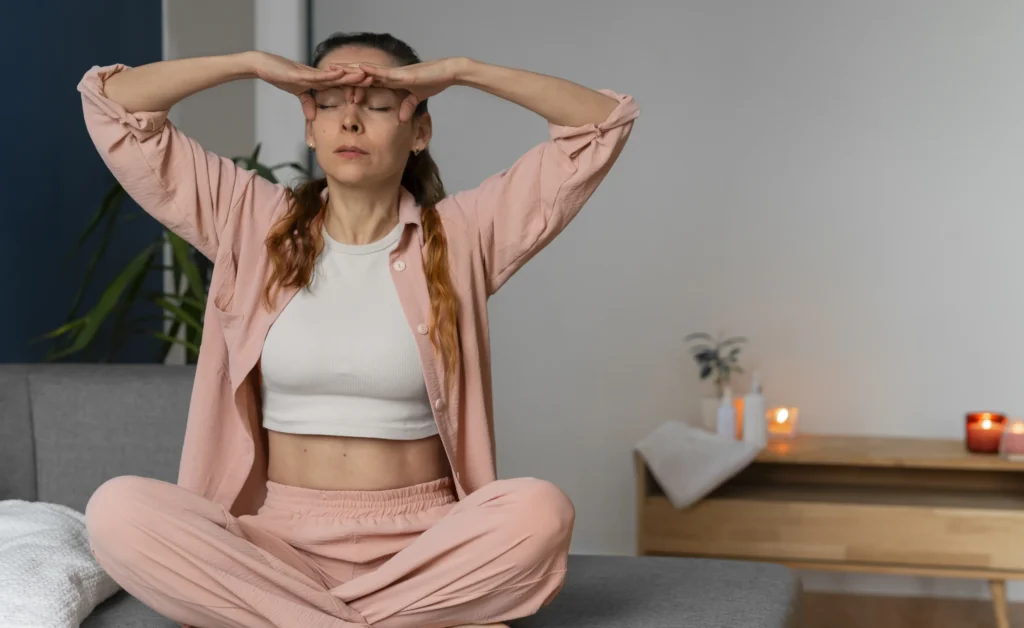
You don’t need tests for this.
Look for patterns:
- Headache is worse right after waking up
- Neck feels stiff or heavy in the morning
- Pain improves after moving around
- You feel relief after stretching your neck
- Headache starts at the base of skull and moves forward
If this sounds familiar, your headache is likely coming from night-time mechanics, not just stress or dehydration.
The goal of a night routine for headache relief
Not relaxation for the sake of it. Not long routines.
The goal is very specific:
- Reduce muscle tone before sleep
- Improve cervical alignment
- Calm the nervous system
- Support proper circulation
Even small changes here can reduce headaches significantly.
Why this approach works
This routine works because it targets the real cause:
- Muscle tension is reduced before sleep
- Blood flow improves in the neck
- Nervous system calms down
- Posture stays neutral overnight
You are not just treating pain.
You are removing the trigger.
Who benefits the most from this routine
This routine works best if you:
- Work long hours on a laptop
- Use your phone a lot
- Have frequent neck stiffness
- Wake up with headaches regularly
- Feel better after moving your neck
If that’s you, this routine is worth trying consistently.
1. The 10-minute neck reset that actually works
This is the most important step.
Do not skip this.
Simple sequence
- Chin tucks × 10
- Upper trapezius stretch 20 seconds each side
- Slow neck rotations × 10
- Suboccipital release using fingers or a ball
Why this works:
Most people spend the entire day in forward head posture.
That loads the neck muscles before sleep even begins.
This short routine:
- reduces muscle stiffness
- improves blood flow
- decreases trigger point activity
Exercise-based physiotherapy has been shown to reduce headache intensity and frequency (Gross et al., 2016)
2. Your pillow decides your morning
Most people choose pillows based on comfort.
That is the mistake.
Your neck needs neutral alignment.
Quick check
- Chin should not tilt forward
- Neck should not bend sideways
- Spine should stay straight
If your pillow is too high or too low, your muscles stay active all night.
And that leads to morning headaches.
Sleep posture and pillow support are strongly linked to headache frequency (Gordon et al., 2019)
3. Calm your muscles, not just your mind
You do not need complicated meditation.
You need muscle relaxation.
Because stress sits in your body, not just your thoughts.
What actually helps
- Lie down comfortably
- Tighten shoulders and neck for 3 seconds
- Release slowly
- Repeat 5 to 6 times
This is called progressive muscle relaxation.
It has been shown to reduce headache severity and improve sleep quality (Varvogli and Darviri, 2011)
4. Jaw relaxation. The hidden trigger
Many people with morning headaches clench their jaw at night.
They do not notice it.
But clinically, this is very common.
Simple correction
- Keep teeth slightly apart
- Let your tongue rest on the floor of your mouth
This reduces load on:
- temporalis muscle
- trigeminal nerve pathways
Which are both linked to headaches.
5. The last 30 minutes before sleep matter the most
You do not need a perfect evening routine.
Just fix the last 30 minutes.
Avoid
- Phone scrolling
- Bright lights
- Work-related stress
Do instead
- Low lighting
- Slow breathing
- Minimal stimulation
Screen exposure before bed reduces sleep quality and increases headache risk (Exelmans and Van den Bulck, 2016)
Your 60-Minute Pre-Sleep Timeline
Keep this simple. No perfection needed.
60 minutes before sleep
- Stop phone scrolling
- Dim lights
- Finish work
30 minutes before sleep
- Do neck reset routine
- Light stretching
10 minutes before sleep
- Breathing or muscle relaxation
- Jaw relaxation
That’s it.
No complicated routine. Just consistency.
6. Hydration without disrupting sleep
Yes, dehydration can trigger dehydration headaches.
But timing matters.
Better approach
- Stay hydrated during the day
- Drink a small glass of water before bed
Avoid drinking too much right before sleep.
Even mild dehydration has been linked to increased headache occurrence (Spigt et al., 2012)
7. Gentle movement before bed helps more than you think
Your body does not like staying still for long hours.
Without movement:
- muscles stiffen
- fascia tightens
- circulation reduces
What helps
- shoulder rolls
- light thoracic rotations
- gentle spinal movements
Movement-based therapy improves headache symptoms and reduces stiffness (Luedtke et al., 2020)
Simple 10-Minute Night Routine
If you want one easy plan, follow this:
- 2 minutes chin tucks and neck mobility
- 2 minutes upper trap and levator stretch
- 2 minutes suboccipital release
- 2 minutes shoulder rolls and light movement
- 2 minutes breathing and relaxation
No strain. No overthinking.
This is enough.
How Long Before You See Results
Some people feel relief in a few days.
For most:
- Mild headaches improve in 3–5 days
- Regular headaches reduce in 1–2 weeks
- Long-term issues take a few weeks
Consistency matters more than intensity.
What most people get wrong
They focus only on pain relief
Painkillers do not fix the cause.
They ignore the neck
Most headaches are linked to cervical issues.
They chase perfect sleep instead of proper setup
Your alignment matters more than sleep duration.
Calculate your ideal sleep timings here: “Sleep Calculator“
Common Mistakes That Keep Causing Headaches
These show up again and again:
- Using a pillow that feels soft but gives no support
- Stretching too aggressively at night
- Ignoring jaw tension
- Scrolling on phone lying down
- Sleeping in twisted positions
Fixing just one or two of these can make a noticeable difference.
A quick reality check
If your headache:
- feels worse on waking
- improves after moving
- comes with neck stiffness
It is very likely mechanical and sleep-related.
And this routine can help.
What to Do If You Still Wake Up With a Headache
Don’t panic. Don’t rush for medication immediately.
Try this first:
- Sit upright and do 10 slow chin tucks
- Apply gentle pressure at the base of your skull
- Drink a glass of water
- Do 2 minutes of slow neck movement
If it improves within 10-15 minutes, it confirms a mechanical cause.
When you should not ignore it
If you experience:
- severe or worsening headaches
- headaches that wake you at night
- dizziness or vision changes
Seek medical evaluation.
Red Flags You Should Not Ignore
Do not rely on routines if you notice:
- Sudden severe headache
- Headache with vision problems
- Vomiting or dizziness
- Headache waking you from sleep
- Increasing frequency over time
These need medical evaluation.
Small Changes That Make a Big Difference
You don’t need a complete lifestyle change.
Start with:
- Adjust pillow height slightly
- Keep your phone at eye level in the evening
- Relax your jaw before sleep
- Do 5 minutes of movement instead of none
Small corrections done daily work better than big changes done once.
Conclusion
If you keep waking up with headaches, it is not random.
Your body is reacting to how you’re ending your day.
The good part is this: you don’t need a complicated routine to fix it.
A few small changes can go a long way:
- releasing neck tension before sleep
- keeping your pillow and posture in check
- calming your body, not just your mind
- staying consistent with simple habits
You don’t have to do everything perfectly.
Just start with one or two steps and build from there.
In most cases, morning headaches are not something you have to live with.
They are often your body asking for better support at night.
Give this routine a fair try for a week or two.
Pay attention to how your body responds.
If you notice even a slight improvement, you are on the right track.
The right night routine for headache relief can quietly break the cycle, so your headaches stop coming back night after night.
FAQs
Why do I wake up with headaches?
Most morning headaches are linked to neck tension, poor sleep posture, or jaw clenching during the night.
Can changing my pillow really help?
Yes, using the correct pillow height helps maintain proper neck alignment and reduces strain.
How long before I see results?
Some people notice improvement within a few days, but consistent routines show better results in 1–2 weeks.
Are neck exercises necessary every night?
Short, gentle exercises before bed help reduce tension and are recommended for consistent relief.
Does stress affect morning headaches?
Yes, stress increases muscle tension, which can continue during sleep and trigger headaches.
Should I stop using my phone before bed?
Reducing screen time helps both posture and sleep quality, lowering headache risk.
What is the fastest way to reduce a morning headache?
Gentle neck movement, hydration, and suboccipital release often provide quick relief.
When should I see a doctor?
If headaches are severe, frequent, or come with symptoms like dizziness or vision changes.
Stay tuned with us for more health related topics.
Follow us on LinkedIn and Instagram for more.
More Read


Medical Disclaimer!
This article has been reviewed and written under the guidance of our Head Physiotherapist, Dr. Kruti Raj (PT, MUHS,CPT,CMPT). The information shared is intended for educational purposes only and should not be considered a substitute for personalized medical advice, diagnosis, or treatment.
Please consult us or any other qualified healthcare professional before beginning any exercise program, especially if you are experiencing pain, recovering from injury, or managing a medical condition.