Mistakes when treating headaches at home are more common than you think, often making the pain worse instead of better.
A patient walks in and says:
“I used to get headaches sometimes. Now it’s almost daily.”
When you dig deeper, there is a pattern.
Not a disease suddenly appearing.
But small daily mistakes quietly building up.
And most of them happen at home.
Quick Answer
Most people treat headaches as a simple pain problem, but they are often linked to posture, neck strain, screen habits, and daily routines. Relying only on painkillers or rest may give temporary relief, but it does not fix the real cause. Understanding triggers and correcting small daily habits is the key to long-term relief.
Key Takeaways
- Not all headaches are the same. Many originate from the neck and posture.
- Painkillers provide temporary relief but do not address the root cause.
- Long screen time and poor posture are major modern triggers.
- Too much rest can actually worsen stiffness and delay recovery.
- Small habits like hydration, sleep position, and breaks matter more than expected.
- Early signs like neck stiffness and eye strain should not be ignored.
- Correct movement and posture are more effective than aggressive treatments.
Below are the mistakes when treating headaches at home, most people make in initial phase:
Mistake #1: Treating Every Headache the Same Way
This is where things start going wrong.
People assume:
- All headaches are similar
- All headaches need the same treatment
That is simply not true.
Some headaches actually come from the neck.
These are called cervicogenic headaches. Pain starts in the cervical spine and travels to the head. (StatPearls Publishing 2023)
So if your headache is coming from your neck, taking a tablet will not fix the real issue.
It only delays it.
How to Identify What Type of Headache You Have (Quick Self-Check)
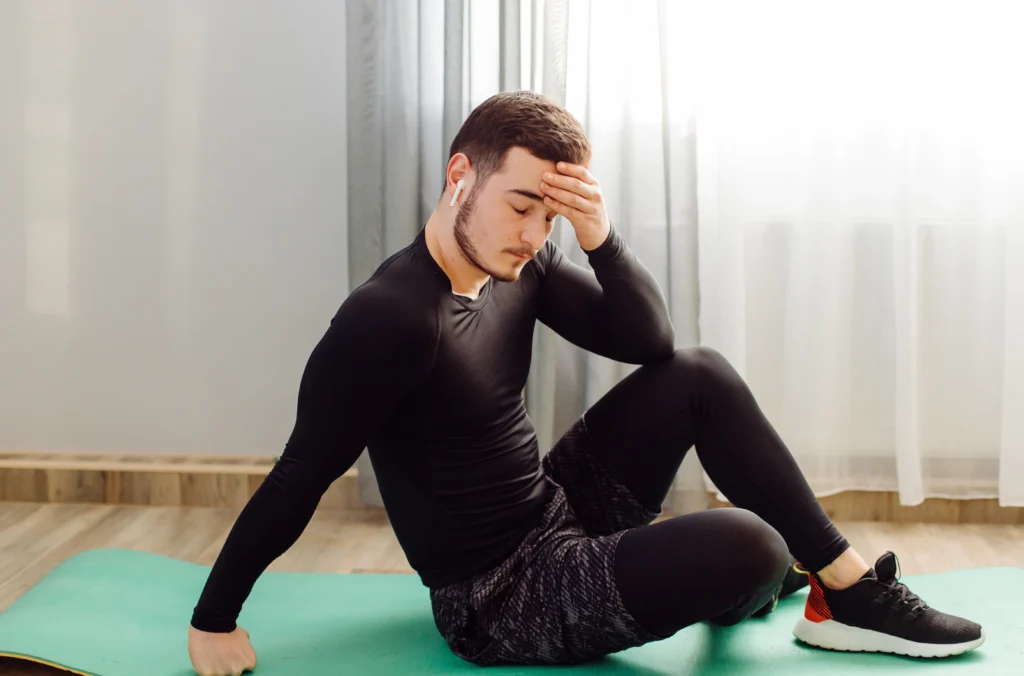
Not every headache feels the same. A small difference in symptoms can tell you a lot.
Here’s a simple way to think about it:
- Pain starts from neck and spreads to head → likely cervicogenic
- Tight band feeling around head → tension headache
- Throbbing with light sensitivity → migraine
Also notice timing:
- After screen use → posture-related
- Morning pain → pillow or sleep position
- End of day → muscle fatigue
This is not a diagnosis. But it gives you direction.
Most people don’t realize it, but a few simple mistakes when treating headaches at home could be the reason your pain keeps coming back.
Mistake #2: Ignoring the Neck Completely
This one surprises people the most.
Your upper neck shares nerve pathways with the head. That is why neck problems can feel like headaches.
Now think about your daily routine:
- Laptop work
- Phone scrolling
- Slouched sitting
Your head slowly moves forward.
And here is the interesting part.
Even a small forward shift increases load on your neck muscles significantly.
Recent findings show that forward head posture is strongly associated with neck pain and headache symptoms. (PMC Study 2024)
So that evening headache is not random. It is mechanical.
Mistake #3: Too Much Screen Time Without Breaks
This is becoming one of the biggest triggers today.
People sit for hours without moving. No posture reset. No break.
A recent study found that increased smartphone use is linked with higher headache intensity in young adults.(Riphah Journal of Rehabilitation Sciences 2025)
Another observation shows that more than 3 hours of continuous screen use increases the likelihood of cervicogenic headaches. (ResearchGate Study)
Your body is not designed to stay still for that long.
Movement is not optional. It is necessary.
Mistake #4: Depending Only on Painkillers
This is probably the most common habit.
Painkiller works. Pain reduces. You feel better.
But nothing changes in:
- posture
- muscle tightness
- joint movement
Over time, this creates a cycle.
Pain returns faster. Frequency increases.
Clinical discussions suggest that analgesics have limited long term benefit in musculoskeletal headaches.(SAGE Journals InnovAiT)
So yes, painkillers help. But they are not a solution.
Why Your Headache Keeps Coming Back
If your headache keeps returning, something is being missed.
Common reasons:
- Same posture every day
- No movement breaks
- Weak neck muscles
- Poor sleep setup
- Only symptom-based treatment
The pattern repeats. So the pain repeats.
Break the pattern. The headache reduces.
Mistake #5: Resting Too Much
Many people stop all activity when they have a headache.
It feels like the right thing to do.
But complete rest often leads to:
- stiffness
- reduced blood flow
- increased sensitivity
Gentle movement usually works better than complete inactivity.
In physiotherapy, we rarely say “do nothing”.
We say “move correctly”.
Mistake #6: Thinking Stress Is the Only Cause
Stress plays a role. No doubt.
But it is rarely the only factor.
What actually happens:
- muscles tighten
- breathing becomes shallow
- nervous system becomes sensitive
Now combine that with poor posture and long screen time.
The headache becomes stronger and more frequent.
A narrative review highlights that neck dysfunction and neurological factors often overlap in headache conditions. (ResearchGate Review 2024)
So if you treat only stress and ignore the body, you miss half the problem.
Mistake #7: Using Heat, Ice, or Massage Without Understanding
This is very common.
People try:
- hot packs
- ice packs
- strong massage
But without knowing the cause.
If the issue is muscle tightness, heat may help.
If there is irritation or inflammation, ice may help.
But guessing often makes things worse.
Also, aggressive self massage can irritate sensitive structures and increase pain.
More pressure is not better treatment.
Common Myths About Headaches You Should Stop Believing
Let’s clear a few things people often get wrong:
- “All headaches need rest” → Not always true
- “Strong massage fixes pain faster” → Can worsen symptoms
- “Painkiller means problem solved” → Only temporary relief
- “It’s just stress” → Often physical factors are involved
Understanding this saves you time and frustration.
Mistake #8: Ignoring Simple Triggers Like Hydration and Sleep
These look basic. But they matter more than people expect.
Mild dehydration alone can trigger dehydration headaches. (Spigt et al. 2012)
Poor sleep posture can strain the neck overnight.
Many people wake up with stiffness and blame stress, when the real issue is their pillow or sleeping position.
These small things add up.
Calculate your ideal sleeping time here: “Sleep Calculator“
Common Triggers People Don’t Realize
Sometimes the cause is not obvious.
These small things quietly build up:
- Skipping meals or long gaps between eating
- Too much caffeine or sudden withdrawal causing withdrawal headaches
- Bright screens in a dark room
- Clenching your jaw without noticing
- Carrying heavy bags on one side
Individually, they seem harmless.
Together, they create the perfect setup for a headache.
Mistake #9: Copying Exercises Without Understanding Them
This is risky.
YouTube and social media are full of exercises.
But not every exercise suits every person.
Common problems:
- wrong technique
- wrong timing
- wrong muscle activation
For example:
Strengthening without improving mobility can increase stiffness.
In physiotherapy, the order matters:
First mobility. Then control. Then strength.
Skipping steps delays recovery.
Mistake #10: Waiting Too Long Before Seeking Help
This is the most serious mistake.
What starts as occasional headache slowly becomes:
- frequent
- then daily
- then normal
By this stage, the nervous system becomes more sensitive.
Recovery becomes slower. (Ashina et al. 2021)
Early intervention always works better than late correction.
When You Should Not Treat a Headache at Home
Most headaches are harmless. But some are not.
Pay attention if you notice:
- Sudden severe headache unlike before
- Headache with dizziness or fainting
- Blurred vision or speech difficulty
- Weakness in arms or legs
- Headache after injury
If any of these are present, do not wait.
Get medical help immediately.
Lesser Known Clinical Facts
These are things patients usually do not expect:
- Jaw problems can contribute to headaches in a large number of cases (Physio-Pedia)
- Long sitting hours are strongly linked with headache severity (Pakistan BioMedical Journal)
- Neck flexion for prolonged periods increases headache symptoms (The Therapist Journal)
These are not rare findings. They are everyday patterns.
What You Should Do Instead
Keep it simple. Stay consistent.
- Adjust your screen to eye level
- Take a break every 30 to 40 minutes
- Move your neck gently during the day
- Stay hydrated
- Maintain regular meals
- Check your pillow and sleeping position
Most importantly:
Stop asking
“How do I stop this headache right now?”
Start asking
“Why does this keep happening?”
That question changes everything.
A Simple Daily Routine That Actually Helps Reduce Headaches
You don’t need a complicated plan. Just consistency.
Try this:
Morning
- Gentle neck movement for 2 to 3 minutes
- Check your pillow comfort
During Work
- Screen at eye level
- Break every 30 to 40 minutes
- Roll shoulders and move neck
Evening
- Reduce screen time before bed
- Light stretching
Hydration
- Sip water through the day
- Don’t wait until you feel thirsty
Small habits. Big difference.
What a Physiotherapist Actually Does for Headaches
Many people think physiotherapy means just exercises.
It’s more specific than that.
A physiotherapist will:
- Assess your posture
- Check neck joint movement
- Identify tight and weak muscles
- Understand your daily habits
Treatment may include:
- Manual therapy
- Targeted exercises
- Posture correction
- Lifestyle advice
It’s not random. It’s tailored.
Quick Do’s and Don’ts for Headaches
Do
- Maintain good posture
- Take regular breaks
- Stay hydrated
- Move your neck gently
Don’t
- Sit for long without movement
- Depend only on painkillers
- Ignore early symptoms
- Use aggressive self massage
A Quick 2-Minute Reset You Can Do Anywhere
If you feel a headache building up, try this.
It takes less than 2 minutes.
- Sit upright and bring your screen to eye level
- Gently tuck your chin in
- Roll your shoulders back slowly 5 times
- Take slow deep breaths for 30 seconds
- Move your neck gently side to side
No force. No rush.
This simple reset often reduces tension before it turns into pain.
Small Signs Your Body Gives Before a Headache Starts
Most headaches don’t appear suddenly.
Your body gives early signals:
- Neck stiffness
- Heaviness around eyes
- Tight shoulders
- Mild discomfort at the base of skull
Most people ignore these signs.
If you act early, you can often prevent the headache completely.
Mistakes People Make After the Headache Is Gone
This part is often ignored.
Once the pain goes away, people:
- Go back to the same posture
- Skip exercises
- Ignore early warning signs
- Repeat the same routine
And then the headache returns.
Relief is not recovery.
If nothing changes, the pattern repeats.
Final Thoughts
Headaches are often not sudden problems.
They are slow signals.
Signals that your body is not happy with something in your daily routine.
If you keep silencing those signals, the problem grows.
If you start listening, things improve faster than you expect.
Avoiding mistakes when treating headaches at home can make all the difference, helping you relieve pain effectively instead of unknowingly making it worse.
Frequently Asked Questions
Can neck problems really cause headaches?
Yes, many headaches originate from the neck. Poor posture and muscle strain can refer pain to the head.
Why do I get headaches after working on my laptop?
This is often due to forward head posture and prolonged muscle tension in the neck.
Are painkillers enough to treat headaches?
They help temporarily, but they do not fix the underlying cause like posture or muscle imbalance.
Can dehydration really trigger headaches?
Yes, even mild dehydration can lead to headaches and increased fatigue.
Is it better to rest completely during a headache?
Short rest helps, but too much inactivity can increase stiffness and prolong the pain.
When should I see a physiotherapist?
If headaches are frequent, recurring, or linked with neck pain, professional assessment is recommended.
Stay tuned with us for more health related topics.
Follow us on LinkedIn and Instagram for more.
More Read



Medical Disclaimer!
This article has been reviewed and written under the guidance of our Head Physiotherapist, Dr. Kruti Raj (PT, MUHS,CPT,CMPT). The information shared is intended for educational purposes only and should not be considered a substitute for personalized medical advice, diagnosis, or treatment.
Please consult us or any other qualified healthcare professional before beginning any exercise program, especially if you are experiencing pain, recovering from injury, or managing a medical condition.