


If you are experiencing headaches every evening, it can feel confusing and even a little worrying.
Many people tell me the same thing in the clinic.
They feel fine during the day, but by evening, a dull pressure starts building around the head or behind the eyes.
As a physiotherapist, I want you to understand one important thing. Your body is not behaving randomly.
It is responding to patterns you repeat every day.
Evening headaches are rarely caused by a single issue.
They are usually the result of small stressors adding up quietly until your system reaches its limit.
Let’s break this down in a way that actually makes sense to your body.
If you get headaches every evening, it is usually due to tension building up throughout the day from poor posture, long screen time, dehydration, stress, or skipped meals. Your body compensates during the day and signals discomfort once it reaches its limit. Simple habits like regular breaks, hydration, and posture correction can significantly reduce these headaches.
Key Takeaways
- Evening headaches are usually caused by accumulated strain, not a sudden problem
- Neck tension and poor posture are among the most common triggers
- Long screen time contributes to both eye strain and muscle fatigue
- Dehydration and irregular meals can worsen headache patterns
- Stress often shows up as a headache later in the day
- Small daily habits can prevent most recurring evening headaches
Who Is Most at Risk of Evening Headaches?
Certain people are more likely to experience this pattern:
- Desk job professionals
- Students with long screen hours
- Work from home setups without proper ergonomics
- People under constant mental stress
- Individuals with poor sleep habits
If you fall into one of these groups, your chances are higher, but the good part is that it is also very manageable.
What Exactly Is an Evening Headache?
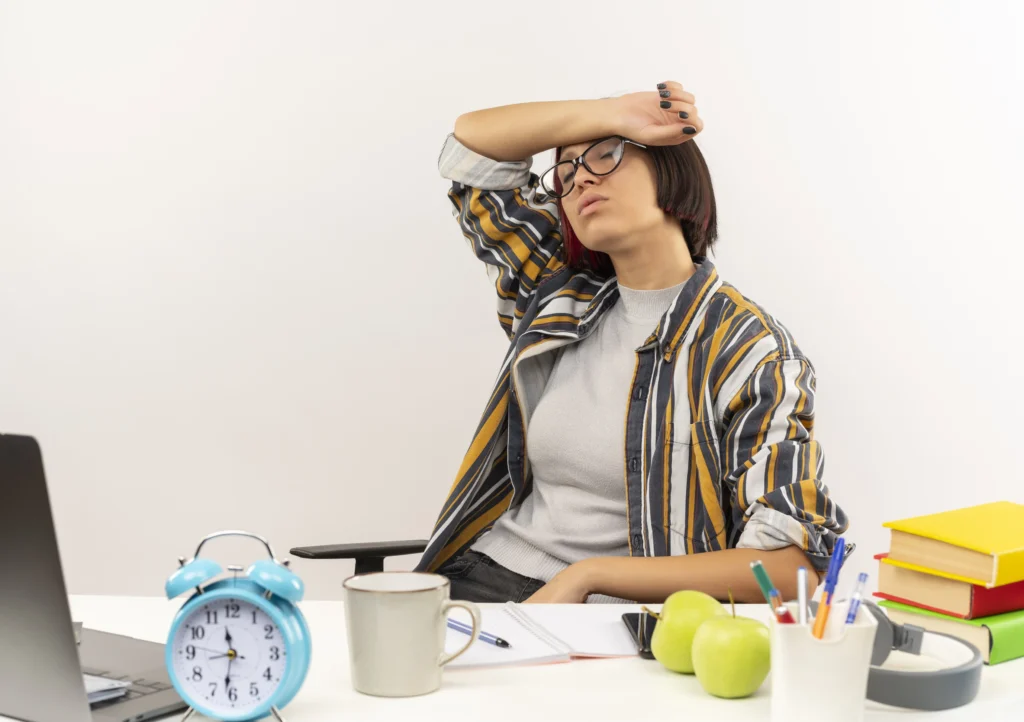
An evening headache is a recurring headache that begins in the late afternoon or evening, usually between 4 PM and 9 PM.
Most people describe it as:
- A dull, tightening sensation around the head
- Pressure behind the eyes
- Neck stiffness that builds gradually
- Fatigue mixed with irritability
From a physiotherapy point of view, these are most commonly:
- Tension-type headaches
- Cervicogenic headaches which originate from the neck
- Lifestyle-related headaches
Why Do Headaches Happen Specifically in the Evening?
Your body goes through changes throughout the day, even if you do not notice them.
By evening:
- Muscles are fatigued
- Hydration levels drop
- Blood sugar fluctuates
- Screen exposure accumulates
- Mental stress builds up
During the day, your body compensates. By evening, it stops compensating and starts reacting.
That is when the headache begins.
Causes of Evening Headaches
Most evening headaches are not caused by a single issue.
They build up through the day and show up when your body reaches its limit.
In clinical practice, I usually see a combination of physical strain, lifestyle habits, and stress contributing together.
Let’s look at the most common causes.
What Your Headache Location Is Telling You
This is something I often explain to patients. The location of your headache gives clues.
- Back of the head
Usually linked to neck stiffness and posture - Forehead or behind eyes
Common with screen fatigue and eye strain - Whole head, tight band feeling
Typical tension-type headache - One-sided pain
Could be migraine or stress-related
A small detail like location can help you understand the real cause faster.
1. Neck and Shoulder Muscle Fatigue
This is the most common reason I see in clinical practice.
If you sit for long hours, especially on a laptop:
- Your neck muscles stay constantly active
- Blood circulation reduces
- Muscle tension builds slowly
By evening, this results in a headache that feels like a tight band around your head.
A lesser known fact is that even a small forward head posture significantly increases load on the cervical spine. (Falla et al., 2018)
Patients often tell me their headache starts at the base of the skull and moves forward.
That is a classic sign of a neck-driven headache.
2. Screen Time and Eye Strain
Most people underestimate how much screen exposure affects their body.
When you look at screens for long hours:
- Your blink rate decreases
- Eye muscles remain constantly focused
- Your brain stays in a stimulated state
By evening, this leads to:
- Pain behind the eyes
- Frontal headaches
- Difficulty focusing
In clinic, I often see patients who feel fine during work but develop headaches once they stop.
This happens because the body finally shifts out of work mode.
3. Dehydration That Goes Unnoticed
Even mild dehydration can trigger headaches.
You may not feel thirsty, but your body still reacts.
By evening:
- Blood volume reduces
- Oxygen supply to tissues slightly decreases
- Pain-sensitive structures get activated
Many patients are surprised when increasing water intake alone reduces their headache frequency. (Spigt et al., 2012)
4. Blood Sugar Drops
If you skip meals or delay eating:
- Your blood sugar drops in the evening
- Your brain does not get a steady energy supply
This can cause:
- Headache
- Irritability
- Low energy
This is very common in people with irregular eating patterns, especially those working long hours.
5. Stress That Shows Up Later
This is something most people do not realize.
Stress headaches often appear after the stressful period is over.
During the day:
- Your body runs on stress hormones
In the evening:
- These hormone levels drop
- Your nervous system shifts
This leads to what we call a “let-down headache”.
It feels like your body finally slows down and then the headache begins.
6. Poor Posture Throughout the Day
Posture plays a bigger role than most people think.
If your daily position includes:
- Rounded shoulders
- Forward head
- Unsupported lower back
Your spine is under continuous strain.
By evening, this leads to:
- Joint stiffness
- Muscle fatigue
- Headache
This is especially common in desk jobs and work from home setups.
7. Caffeine Patterns
If you consume caffeine in the morning:
- Its effect reduces by evening
For some people, this causes:
- Mild withdrawal symptoms
- Headache (Juliano and Griffiths, 2004)
8. Sleep Quality and Recovery
Even if you sleep for enough hours, poor sleep quality can affect:
- Muscle recovery
- Pain tolerance
- Stress levels
This makes you more prone to headaches later in the day.
Calculate your ideal sleep here: “Sleep Calculator“
Common Mistakes That Make Evening Headaches Worse
Many people unknowingly make their headaches worse. I see this very often.
- Ignoring early neck stiffness
- Sitting for hours without moving
- Drinking water only when thirsty
- Skipping meals and then overeating
- Using painkillers frequently without fixing the cause
- Working on a laptop in bed or on the sofa
These habits may seem small, but over time they keep feeding the headache cycle.
How Do You Know What Is Causing Your Headache?
Ask yourself:
- Does your headache start with neck stiffness
- Do you spend more than 6 hours on screens
- Do you drink less water during the day
- Does your headache improve with rest or massage
- Are your headaches less frequent on weekends
If your answer is yes to most of these, your headache is likely due to lifestyle and musculoskeletal factors.
A Quick Self-Check: Is Your Headache Lifestyle-Related?
Before we go deeper, try this quick check.
If you relate to most of these, your headache is likely not serious and more related to daily habits:
- It starts slowly, not suddenly
- It feels like pressure or tightness, not throbbing
- It improves with rest, stretching, or sleep
- It is worse on workdays and better on weekends
- It begins in the neck or behind the eyes
If you nodded yes to 3 or more, your body is reacting to how you are using it during the day, not something dangerous.
Physiotherapy Approach to Treat Evening Headaches
This is where simple changes can make a big difference.
1. Posture Correction
Adjust your setup:
- Screen at eye level
- Feet flat on the ground
- Back supported
Your ears should be aligned with your shoulders.
2. Micro Breaks
Every 30 to 40 minutes:
- Take a short break
- Move your neck
- Roll your shoulders
This prevents tension from building up.
3. Neck Strengthening Exercises
Focus on:
- Deep cervical flexors
- Scapular muscles
This reduces strain on your neck.
4. Eye Relaxation
Follow the 20-20-20 rule:
- Every 20 minutes
- Look 20 feet away
- For 20 seconds
5. Hydration Routine
Do not drink water only when you feel thirsty.
Spread your water intake throughout the day.
6. Evening Relaxation Routine
A simple routine can help:
- Gentle stretching
- Heat pack on neck
- Slow breathing
This helps your body shift out of stress mode.
A Simple Daily Routine to Prevent Evening Headaches
You do not need a complicated plan. Just a few consistent habits.
Morning
- Drink water soon after waking up
- Do 2 to 3 minutes of neck mobility
During work
- Take short breaks every 30 to 40 minutes
- Adjust your screen to eye level
Afternoon
- Do not skip meals
- Step away from screens for a few minutes
Evening
- Light stretching
- Heat pack if your neck feels tight
- Slow breathing to relax
This routine works because it prevents the build-up instead of treating the pain later.
When Should You Seek Medical Help?
Most evening headaches are not serious, but consult a doctor if you have:
- Sudden severe headache
- Vision problems
- Vomiting
- Weakness or numbness
How Long Does It Take to See Improvement?
This is one of the most common questions I get.
If your headache is lifestyle-related:
- You may feel slight relief in a few days
- Noticeable improvement in 1 to 2 weeks
- Significant reduction in 3 to 4 weeks
Consistency matters more than intensity.
Small daily corrections work better than doing everything perfectly for one day.
Real Patterns I See in Clinic
Let me share something from daily practice.
Most people who come with evening headaches fall into one of these patterns:
- Corporate professionals sitting 8 to 10 hours daily
- People working on laptops without proper setup
- Individuals who ignore hydration and meals
- People who carry stress in their neck and shoulders
What is interesting is that once they fix these patterns, their headaches reduce without heavy medication.
Your body usually gives signals early. We just tend to ignore them.
A Gentle Reminder
Not every headache needs a tablet.
Sometimes, your body is simply asking for:
- Movement
- Rest
- Better posture
- Hydration
When you start listening to these signals early, headaches become less frequent and much easier to manage.
Frequently Asked Questions
1. Why do I get headaches at the same time every evening?
This usually happens because physical and mental strain builds up during the day and reaches a point where your body can no longer compensate.
2. Are evening headaches something to worry about?
Most evening headaches are not serious and are linked to lifestyle habits, but unusual or severe symptoms should be evaluated by a doctor.
3. Can neck pain cause evening headaches?
Yes, tight neck muscles and poor posture are one of the most common causes of headaches that appear later in the day.
4. Does screen time really affect headaches?
Prolonged screen use leads to eye strain and muscle tension, both of which can trigger headaches in the evening.
5. Can dehydration cause daily headaches?
Even mild dehydration can affect blood flow and trigger headaches, especially by the end of the day.
6. How can I prevent evening headaches naturally?
Maintaining good posture, taking regular breaks, staying hydrated, and managing stress can significantly reduce headache frequency.
Stay tuned with us for more health related topics.
Follow us on LinkedIn and Instagram for more.
More Read


Medical Disclaimer!
This article has been reviewed and written under the guidance of our Head Physiotherapist, Dr. Kruti Raj (PT, MUHS,CPT,CMPT). The information shared is intended for educational purposes only and should not be considered a substitute for personalized medical advice, diagnosis, or treatment.
Please consult us or any other qualified healthcare professional before beginning any exercise program, especially if you are experiencing pain, recovering from injury, or managing a medical condition.


