


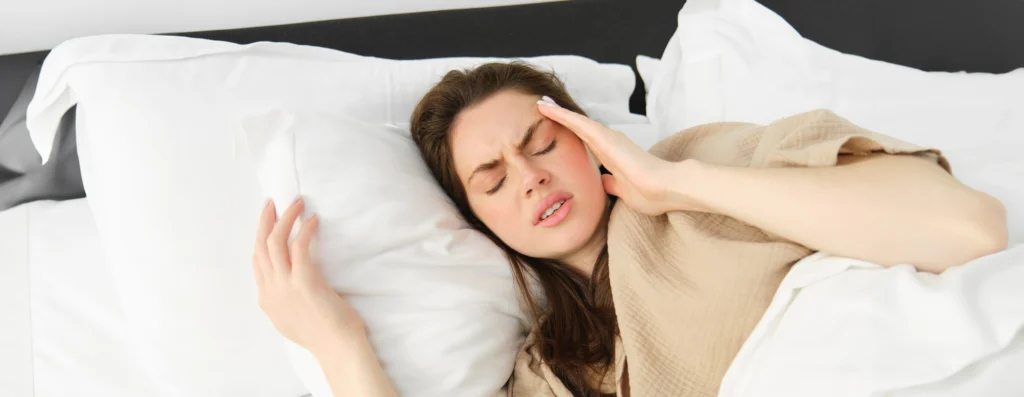
You finally get a chance to sleep longer; no alarms, no rush, just rest. And then you wake up with a headache, often linked to headache after oversleeping causes like disrupted sleep cycles or dehydration.
It feels heavy, sometimes dull, sometimes tight around the head or behind the eyes.
You might even wonder if sleeping more somehow made things worse.
This is something I hear quite often in clinic.
Patients usually say, “I slept more than usual, so why do I feel worse?”
The answer is simple but not obvious.
Your body does not just need sleep. It needs consistent, well-balanced sleep.
Let’s break this down properly.
Quick Answer
Headache after oversleeping usually happens because your body clock gets disrupted, your neck stays in one position too long, and your body goes longer without water or food. Small fixes like consistent sleep timing, proper pillow support, hydration, and gentle morning movement can help prevent it.
Key Takeaways
- Oversleeping can disturb your natural body rhythm and trigger headaches.
- Neck posture during long sleep is one of the most common hidden causes.
- Dehydration and delayed meals make the headache worse.
- Consistency in sleep timing matters more than sleeping longer.
- Simple physiotherapy movements in the morning can relieve symptoms quickly.
Do These Symptoms Sound Familiar?
You wake up and notice:
- Head feels heavy or tight
- Pain behind the eyes
- Neck feels stiff or hard to turn
- You feel slow, not refreshed
- Headache improves after moving around
If you relate to even 2-3 of these, oversleeping could be the trigger.
Is Oversleeping Actually a Problem?
Sleeping longer once in a while is not harmful.
But regularly sleeping beyond 8 to 9 hours can start affecting how your body functions.
Your system works on rhythm.
When that rhythm shifts suddenly, your brain and body take time to adjust.
That adjustment phase is where headaches often appear.
Even subtle changes in sleep timing can trigger headache after oversleeping causes, making consistency just as important as duration.
Headache After Oversleeping Causes
There is no single reason. Headache after oversleeping causes are usually a combination of small changes happening together.
1. Your Body Clock Gets Disturbed
Your brain follows a circadian rhythm. It controls when you feel alert and when you feel sleepy.
When you oversleep, you push that rhythm out of sync.
Your brain has already started preparing to wake you up, but you continue sleeping. This creates a mismatch.
That mismatch can lead to a foggy feeling and a headache.
Research has shown that irregular sleep patterns can directly influence headache frequency and severity. (Rains JC et al., 2018)
2. You Wake Up Dehydrated Without Realizing It
You go several hours without drinking water while sleeping.
If you extend that sleep, dehydration increases slightly.
Even mild dehydration can trigger headaches because it affects blood flow and brain function.
Many people notice that their headache improves after drinking water. That is not a coincidence. (Spigt M et al., 2012)
3. Your Neck Stays in One Position for Too Long
This is where physiotherapy becomes important.
When you sleep longer, your neck and upper back remain in the same position for extended periods.
This can lead to:
- Muscle stiffness
- Reduced circulation
- Joint restriction
The result is often a cervicogenic headache.
This type of headache usually starts at the back of the head and moves forward.
In practice, I often find that the real issue is not oversleeping alone. It is oversleeping with poor neck support.
4. Delay in Food Intake Affects Your Brain
Oversleeping usually means skipping or delaying breakfast.
That leads to lower blood sugar levels, leading to hunger headaches.
Your brain depends on glucose. When levels drop, headaches can occur.
This is especially common if you slept late and woke up much later than usual.
5. Neurochemical Changes in the Brain
Sleep affects neurotransmitters like serotonin.
These chemicals regulate both mood and pain perception.
When sleep patterns change suddenly, serotonin levels can fluctuate.
This makes your brain more sensitive to pain signals.
This is one of the reasons oversleeping can trigger migraine-like headaches in some people.
6. Sleep Inertia Makes Everything Feel Heavier
Sleep inertia is that sluggish, slow feeling after waking.
Oversleeping makes it worse.
Your brain remains in a low-activity state longer than needed.
That heaviness can translate into a dull headache.
Who Is More Prone to Oversleeping Headaches
You may notice this more if you:
- Have irregular sleep schedule
- Work late nights or shifts
- Already experience migraines
- Have neck or posture issues
- Sleep longer on weekends
Quick Self-Test: Is Your Headache Linked to Oversleeping?
Ask yourself:
- Did I sleep longer than usual today?
- Did I skip or delay breakfast?
- Did I wake up with neck stiffness?
- Did the headache improve after hydration or movement?
If most answers are yes, your headache is likely linked to oversleeping rather than something serious.
Different Types of Headaches Linked to Oversleeping
Not all headaches feel the same.
Here are the common ones I see:
Tension-Type Headache
- Feels like a tight band around the head
- Often linked with neck stiffness
- Most common after long sleep
Cervicogenic Headache
- Starts from the neck
- Moves toward the forehead
- Associated with poor pillow or posture
Migraine Trigger
- Oversleeping is a known trigger
- Common on weekends
- May include nausea or sensitivity to light
Can Oversleeping Trigger Migraine?
Yes, it can.
Changes in sleep timing are a known migraine trigger.
Even sleeping longer than usual can activate migraine pathways in sensitive individuals. (Rains JC et al., 2018)
Sleep Disorder Related Headache
Morning headaches can also be linked to sleep disorders like sleep apnea. (Kristiansen HA et al., 2011)
Physiotherapy Perspective
Let me share something practical.
People focus on sleep duration.
But clinically, posture matters just as much.
A few common issues I see:
- Pillow too high, pushing the neck forward
- Pillow too flat, not supporting the neck curve
- Sleeping with the head rotated to one side
Over time, this creates strain in the cervical spine.
When you add extra hours of sleep, that strain increases.
That is why some people wake up with both neck stiffness and headache together.
Best Sleeping Positions to Avoid Morning Headaches
1. Back Sleeping
- Keeps spine neutral
- Use a medium-height pillow
- Avoid pushing chin too forward
2. Side Sleeping
- Keep pillow between shoulder and head
- Neck should stay straight
- Avoid curling too much
Avoid This
- Sleeping on stomach
- Very high pillows
- Twisted neck positions
Small changes in sleeping positions here can make a huge difference.
How to Prevent Headache After Oversleeping
You do not need complicated solutions.
Small adjustments make a big difference.
1. Keep Your Sleep Timing Consistent
Try to wake up at the same time every day.
Even on weekends, avoid large variations.
Consistency stabilizes your body clock.
Calculate your ideal sleep here: “Sleep Calculator“
2. Check Your Pillow
Your pillow should support the natural curve of your neck.
A simple test:
If you wake up with stiffness, your pillow likely needs adjustment.
3. Start Your Morning With Gentle Movement
You do not need a full workout.
Just 2 minutes of movement:
- Slow neck rotations
- Chin tucks
- Shoulder rolls
This improves blood flow and reduces stiffness quickly.
4. Hydrate Early
Drink water within the first few minutes of waking.
This helps restore circulation and reduce headache triggers.
5. Eat Something Light Within an Hour
Even a small meal helps stabilize blood sugar.
This prevents headaches linked to delayed eating.
6. Avoid Staying in Bed After Waking
Lying awake in bed prolongs grogginess.
Get up, expose yourself to light, and start moving.
7. Focus on Sleep Quality, Not Quantity
Better sleep environment leads to better recovery:
- Comfortable mattress
- Proper pillow
- Reduced screen exposure before bed
What To Do If You Wake Up With a Headache
Keep it simple:
- Drink 1-2 glasses of water
- Sit upright, don’t stay in bed
- Do gentle neck movements
- Avoid screens for 10-15 minutes
- Eat something light
Most oversleep headaches improve within 20-30 minutes with this.
2-Minute Recovery Routine
Try this:
- Chin tuck × 10 reps
- Shoulder rolls × 10
- Gentle neck turns × 5 each side
No force. No pain.
Just smooth movement.
Normal vs Warning Signs: Know the Difference
Usually Normal
- Mild to moderate pain
- Improves with movement or hydration
- Happens after long sleep
- Associated with stiffness
Needs Medical Attention
- Severe or sudden headache
- Vomiting or blurred vision
- Daily morning headaches
- No relief with rest or hydration
If you notice warning signs, don’t ignore them.
When Should You Be Concerned
Occasional headaches are not a major issue.
But seek professional advice if:
- Headaches happen frequently
- Pain is severe or worsening
- You notice vision changes or dizziness
- Neck stiffness is persistent
Common Mistakes That Make It Worse
- Sleeping extra to “fix” the headache
- Skipping breakfast
- Staying in bed scrolling phone
- Ignoring pillow quality
- Drinking coffee before water
These habits can prolong the headache instead of relieving it.
A Quick Real-Life Example
A patient once told me:
“I only get headaches on Sundays.”
When we looked closer, the pattern was clear.
Weekdays: woke up at 7
Weekends: woke up at 10
The fix was simple. Not less sleep, just consistent timing.
Within a week, the headaches reduced significantly.
Final Thoughts
Oversleeping feels like recovery, but your body works best with balance.
Too little sleep is a problem.
Too much irregular sleep can be one too.
From a physiotherapy point of view, the combination of:
- Consistent timing
- Proper posture
- Early hydration
- Gentle movement
makes the biggest difference.
The goal is simple. Wake up feeling clear, not heavy.
Understanding Headache After Oversleeping causes helps you balance your sleep and avoid waking up with discomfort instead of feeling refreshed.
Frequently Asked Questions
1. Why do I get a headache after oversleeping?
Oversleeping disrupts your sleep rhythm, reduces hydration, and increases neck strain, which can trigger headaches.
2. Is sleeping too much bad for you?
Occasionally it’s fine, but regularly sleeping more than 9 hours can affect your body balance and lead to headaches.
3. Can a bad pillow cause morning headaches?
Yes, poor neck support during long sleep can lead to cervicogenic headaches.
4. Why do I get headaches only on weekends?
This is often due to changes in sleep timing and oversleeping compared to weekdays.
5. Does dehydration cause headaches after sleep?
Yes, going many hours without water can trigger headaches, especially after long sleep.
6. How can I prevent headaches after oversleeping?
Maintain consistent sleep timing, use proper pillow support, hydrate early, and move your neck gently after waking.
7. Can oversleeping trigger migraines?
Yes, changes in sleep pattern are known migraine triggers in sensitive individuals.
8. Should I reduce my sleep to avoid headaches?
Focus on consistent sleep rather than reducing sleep drastically. Balance is key.
Stay tuned with us for more health related topics.
Follow us on LinkedIn and Instagram for more.
More Read


Medical Disclaimer!
This article has been reviewed and written under the guidance of our Head Physiotherapist, Dr. Kruti Raj (PT, MUHS,CPT,CMPT). The information shared is intended for educational purposes only and should not be considered a substitute for personalized medical advice, diagnosis, or treatment.
Please consult us or any other qualified healthcare professional before beginning any exercise program, especially if you are experiencing pain, recovering from injury, or managing a medical condition.


