Round ligament pain during pregnancy can cause sudden sharp discomfort as the body adapts to a growing baby and changing pelvic support.
One of the strangest things about pregnancy pain is how suddenly it can appear.
You bend slightly while getting out of the car and feel a sharp pulling pain near the bikini line.
You roll over in bed too quickly and suddenly freeze for a few seconds.
Sometimes even sneezing feels like someone tugged hard inside the lower belly.
Most women immediately panic.
The good news is that this type of pain is often round ligament pain, one of the most common pregnancy discomforts during the second trimester.
And despite how intense it can feel, it is usually harmless.
What many women are not told, though, is this:
Round ligament pain is not only about “stretching ligaments.”
The way you breathe, stand, walk, sleep, move in bed, sit at work, and even how you use your hips can make the pain dramatically better or worse.
Quick Answer
Round ligament pain during pregnancy is usually caused by the stretching of supportive ligaments around the uterus, especially during the second trimester. Gentle physiotherapy exercises such as pelvic tilts, belly breathing, glute activation, and supported side-lying positions can help reduce pain naturally. Avoid sudden twisting movements, use pillow support while sleeping, and focus on controlled movement rather than complete bed rest.
Most women notice improvement when they combine posture correction, slow movement transitions, proper pelvic support, and daily gentle mobility exercises.
As a physiotherapist, I see many pregnant women who are advised to simply “rest more.”
But complete rest usually backfires.
The body becomes stiffer, pelvic muscles weaken further, and simple movements become more painful.
The right kind of movement matters.
Key Takeaways
- Round ligament pain is commonly triggered by sudden movements like rolling in bed, coughing, or standing quickly.
- Complete bed rest may worsen stiffness and pelvic instability during pregnancy.
- Pelvic tilts, breathing exercises, glute strengthening, and hip mobility work are commonly recommended by physiotherapists.
- Side sleeping with pillow support between the knees and under the belly can reduce pelvic strain.
- Overstretching during pregnancy may sometimes worsen symptoms because pregnancy hormones already loosen ligaments.
- Breathing mechanics surprisingly play a major role in abdominal pressure and pelvic tension.
- Supportive footwear and avoiding sudden twisting movements can significantly reduce discomfort.
- Persistent or severe pelvic pain should always be medically evaluated to rule out other pregnancy-related conditions.
Why Round Ligament Pain Suddenly Appears “Out of Nowhere”
The round ligaments are supportive bands that help hold the uterus in position.
As the uterus grows, especially between weeks 14 and 28, these ligaments stretch rapidly.
Sudden movements can pull on them quickly, creating sharp pain.
But here’s something many articles miss:
The ligament itself is rarely the only problem.
Usually, there is also:
- pelvic instability
- tight hip muscles
- poor pressure management
- weak glute muscles
- stiff rib cage movement
- excessive lower back arching
That combination increases tension through the abdomen and pelvis.
Many women notice symptoms more:
- while turning in bed
- after standing in the kitchen
- climbing stairs
- getting up from low sofas
- walking fast
- carrying toddlers
- coughing or sneezing
Interestingly, the pain is often worse on the right side because the growing uterus naturally rotates slightly toward the right in many pregnancies.
What Round Ligament Pain Actually Feels Like
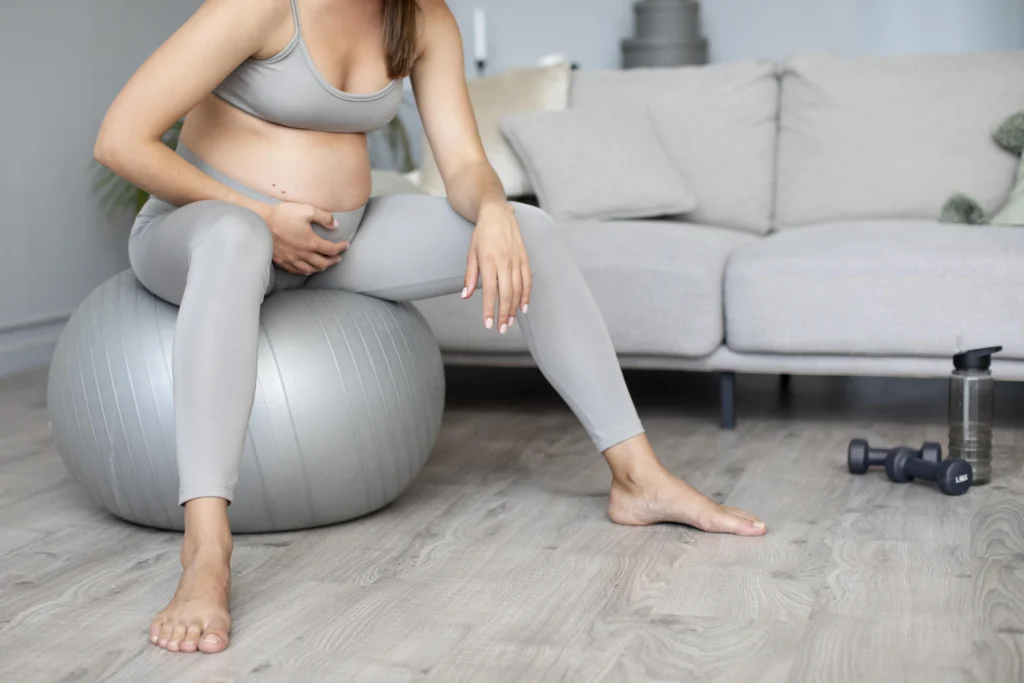
Women describe it differently.
Some say:
“It feels like a quick electric shock.”
Others describe:
“A pulling pain deep in the groin.”
Or:
“Like a stitch in the lower belly.”
Typical symptoms include:
- sharp pain in lower abdomen
- pulling sensation near groin
- discomfort during sudden movement
- pain lasting a few seconds to minutes
- tenderness after a busy day
One thing I commonly notice in clinic is that many women hold their breath during movement without realizing it.
That breath-holding increases pressure inside the abdomen and often worsens symptoms instantly.
The One Mistake That Makes Round Ligament Pain Worse
Moving too quickly.
That sounds simple, but it matters more than most women realize.
Pregnancy changes load transfer through the pelvis.
Quick twisting motions create sudden pulling forces through already stressed tissues.
The biggest triggers are usually:
- jumping out of bed
- twisting while standing
- fast walking after sitting long periods
- getting out of cars awkwardly
- carrying weight on one side
- sudden coughing without support
This is why many women say:
“It hurts for a second and then disappears.”
That quick pulling mechanism is classic round ligament irritation.
Why Complete Bed Rest Usually Does NOT Help
Many pregnant women become scared of movement after pain starts.
That fear is understandable, but too much rest often creates:
- tighter hips
- weaker pelvic muscles
- poor circulation
- increased stiffness
- reduced spinal support
Research now strongly supports gentle prenatal exercise and movement-based therapy for pregnancy-related pain conditions. (NIH)
The goal is not aggressive exercise.
The goal is controlled movement.
7 Round Ligament Pain Relief Exercises By Physiotherapists
These exercises are designed to reduce tension without overstretching vulnerable tissues.
If an exercise increases pain sharply, stop and modify it.
Pelvic Tilts
Pelvic Tilt is one of the simplest and most effective exercises for reducing strain through the lower back and pelvis.
How to Do It
- Stand against a wall.
- Gently flatten your lower back toward the wall.
- Tighten the lower abdominal muscles lightly.
- Hold for 5 seconds.
- Relax slowly.
Repeat 8 to 10 times.
Do not force the movement.
Most women accidentally overdo pelvic tilts by squeezing too aggressively.
Supported Belly Breathing
This exercise helps more than people expect.
Many pregnant women breathe shallowly into the upper chest because the diaphragm becomes restricted as pregnancy progresses.
That creates unnecessary abdominal tension.
Try This
- Sit comfortably.
- Place hands around lower ribs.
- Inhale slowly through the nose.
- Feel ribs expand sideways.
- Exhale gently through pursed lips.
You should not feel your shoulders lifting excessively.
A surprisingly high number of women notice reduced pelvic tension within days of improving breathing mechanics.
Side-Lying Hip Support Position
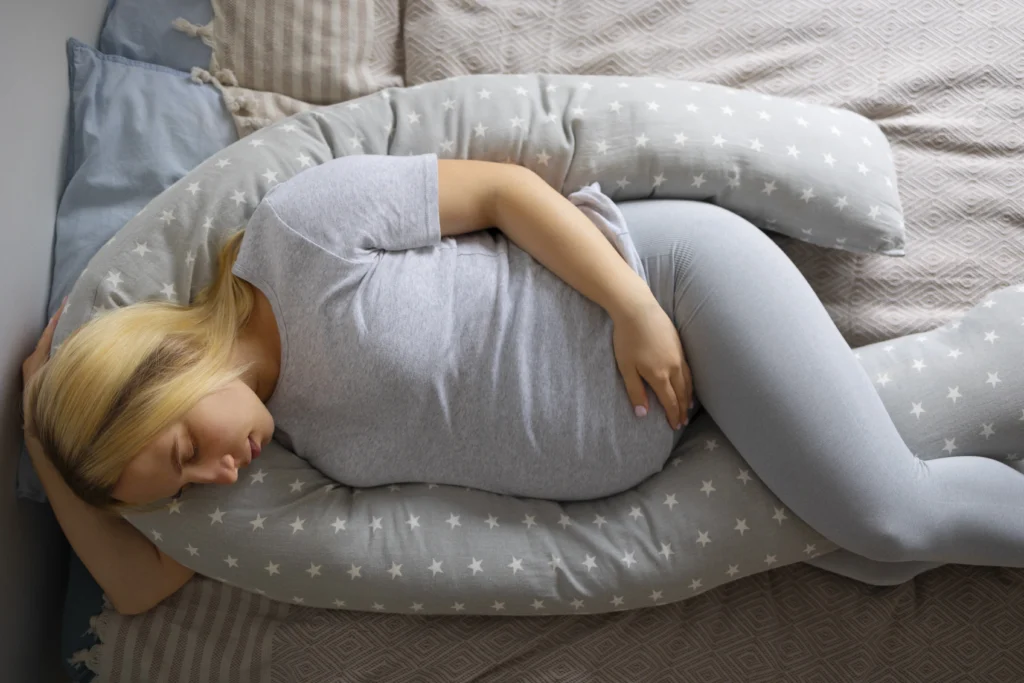
This is less of an exercise and more of a symptom-relief strategy.
What Helps
Lie on your left side with:
- pillow between knees
- small pillow under belly
- pillow behind lower back
This reduces rotational strain through the pelvis.
Many women immediately notice less pulling while sleeping this way.
Glute Activation Exercise
Weak glutes often overload the pelvis during walking.
Simple Version
- Lie on side comfortably.
- Keep knees bent.
- Slowly lift top knee slightly.
- Do not roll pelvis backward.
Small movement is enough.
You should feel work in the side hip, not the lower back.
Cat-Camel Mobility Movement
Cat-Camel is gentle movement reduces spinal stiffness.
How to Perform
- Get onto hands and knees.
- Slowly round the back.
- Then gently relax the spine downward.
- Move slowly with breathing.
Avoid large exaggerated movements.
This exercise should feel relieving, not intense.
Adductor Pillow Squeeze
Pelvic stability matters during pregnancy.
This simple exercise activates deep pelvic support muscles.
Instructions
- Sit comfortably.
- Place pillow between knees.
- Gently squeeze.
- Hold 5 seconds.
Do not hold your breath.
Hip Flexor Stretch
This is one of the most overlooked contributors to round ligament pain.
Tight hip flexors pull the pelvis forward and increase abdominal tension.
Gentle Stretch
- Kneel on one knee.
- Keep spine upright.
- Shift hips forward slightly.
- Stop before arching the lower back.
You should feel a mild stretch at the front of the hip.
Not pain.
A Lesser-Known Thing That Aggravates Round Ligament Pain
Constipation.
Very few pregnancy blogs discuss this properly.
When the bowel is full, pressure inside the abdomen increases.
That added pressure can irritate already sensitive pelvic tissues.
Hydration, walking, fiber intake, and breathing mechanics often help more than women expect.
The Sleeping Position Physiotherapists Usually Recommend
Most physiotherapists recommend side-lying during later pregnancy.
Usually the left side is preferred because it supports circulation and reduces pressure on major blood vessels.
But here’s something important:
Perfect positioning matters less than supported positioning.
A woman sleeping comfortably on her right side with proper pillow support is often better off than someone forcing an uncomfortable left-side posture all night.
The key is reducing pelvic twisting.
How to Turn in Bed Without Triggering Pain
This tip alone helps many women immediately.
Instead of twisting the trunk:
- Bend knees first.
- Tighten lower abdomen gently.
- Roll entire body together like a log.
- Use arms for support.
That reduces sudden ligament pulling.
What Most Women Get Wrong About Stretching
More stretching is not always better during pregnancy.
Because relaxin already increases tissue laxity, aggressive stretching can sometimes worsen instability.
This is especially common in naturally flexible women.
The focus should be:
- controlled mobility
- muscular support
- breathing coordination
- movement efficiency
Not extreme flexibility. (Vleeming et al. 2008)
Can Walking Help or Make It Worse?
Both are possible.
Gentle walking often improves:
- circulation
- stiffness
- muscle activation
- mood
- pelvic mobility
But long shopping trips, fast walking, or uneven surfaces commonly aggravate symptoms.
One clinical pattern I frequently notice:
Women feel okay during activity but experience stronger pulling pain later in the evening.
That delayed irritation is common.
Signs Your Body Probably Needs More Support
You may benefit from physiotherapy assessment if:
- pain keeps increasing weekly
- walking becomes difficult
- turning in bed is very painful
- you start limping
- pelvic pressure feels heavy
- symptoms affect sleep regularly
Early treatment is usually easier than waiting until pain becomes severe.
Round Ligament Pain vs Something More Serious
Round ligament pain is usually:
- brief
- movement-related
- sharp or pulling
- relieved with rest or position change
Contact your doctor immediately if pain is associated with:
- fever
- bleeding
- contractions
- severe abdominal tightness
- burning urination
- dizziness
- fluid leakage
- reduced fetal movement
Never ignore symptoms that feel unusual or persistent.
Small Daily Habits That Usually Help More Than Expected
Sometimes the smallest adjustments create the biggest relief.
Try:
- sitting with feet supported
- avoiding crossed-leg sitting for long periods
- wearing supportive footwear indoors
- rolling out of bed slowly
- avoiding sudden twisting
- exhaling during difficult movement
- taking shorter walking breaks instead of one long walk
- using a pillow under the belly during sleep
These are not dramatic fixes.
But combined together, they often reduce irritation significantly.
Final Thoughts From a Physiotherapist
Round ligament pain can be surprisingly intense for something considered “normal.”
Proper posture, gentle movement, and prenatal physiotherapy strategies can help improve round ligament pain in pregnancy safely.
Many women feel worried because the pain appears suddenly and sharply.
Others become frustrated because simple daily movements suddenly feel difficult.
But in most cases, the body is not damaged.
It is adapting.
The key is learning how to move with less tension and better support.
Pregnancy changes biomechanics faster than most muscles can adapt to.
That is why small things like breathing patterns, hip tightness, sleeping posture, and movement habits suddenly matter so much.
And honestly, many women improve not from one magical exercise, but from combining:
- slower movement
- smarter positioning
- pelvic support
- breathing control
- gentle strengthening
- reduced fear of movement
Consistency usually works better than intensity.
And if symptoms continue getting worse, seeing a women’s health physiotherapist early can make pregnancy far more comfortable.
Frequently Asked Questions
What does round ligament pain feel like during pregnancy?
Round ligament pain usually feels like a sharp pulling, stretching, or stabbing sensation in the lower belly or groin area, especially during sudden movements.
When is round ligament pain usually the worst?
Many women notice stronger pain during the second trimester, after long periods of standing, while turning in bed, or after a physically busy day.
Can walking help round ligament pain?
Gentle walking may improve circulation and reduce stiffness, but prolonged or fast walking can aggravate symptoms in some pregnant women.
What is the best sleeping position for round ligament pain?
Sleeping on the side with a pillow between the knees and under the belly is usually the most supportive and comfortable position.
Can stretching make round ligament pain worse?
Aggressive stretching may sometimes increase pelvic instability during pregnancy. Gentle controlled movement is usually safer and more effective.
Is round ligament pain dangerous for the baby?
Round ligament pain itself is usually harmless, but severe pain associated with bleeding, fever, contractions, or dizziness should be medically evaluated immediately.
Can physiotherapy help during pregnancy?
Yes. Women’s health physiotherapy can help improve posture, pelvic stability, breathing mechanics, and movement confidence during pregnancy.
When should I see a doctor for pregnancy pelvic pain?
Seek medical care if pain becomes severe, constant, or is associated with bleeding, contractions, fever, reduced fetal movement, or fluid leakage.
Stay tuned with us for more health related topics.
Follow us on LinkedIn and Instagram for more.
More Read




Medical Disclaimer!
This article has been reviewed and written under the guidance of our Head Physiotherapist, Dr. Kruti Raj (PT, MUHS,CPT,CMPT). The information shared is intended for educational purposes only and should not be considered a substitute for personalized medical advice, diagnosis, or treatment.
Please consult us or any other qualified healthcare professional before beginning any exercise program, especially if you are experiencing pain, recovering from injury, or managing a medical condition.