
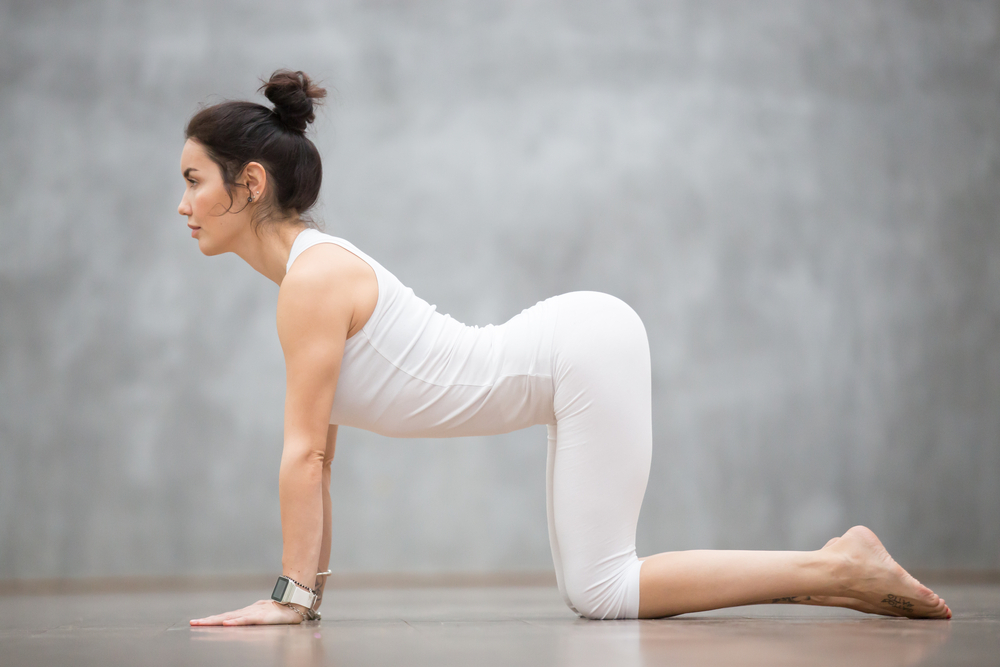

Back pain is a widespread issue that affects people of all ages and lifestyles, often limiting daily movement and reducing overall quality of life.
Fortunately, simple, mindful exercises can make a significant difference. One such movement that consistently shows benefits in clinical and fitness settings is the Cat Cow stretch (also called Marjaryasana-Bitilasana), a gentle spinal mobilization exercise that encourages flexibility, reduces tension, and enhances posture.
It is commonly recommended as part of warm-ups, stretching routines, and injury prevention programs.
What Is the Cat Cow Stretch?
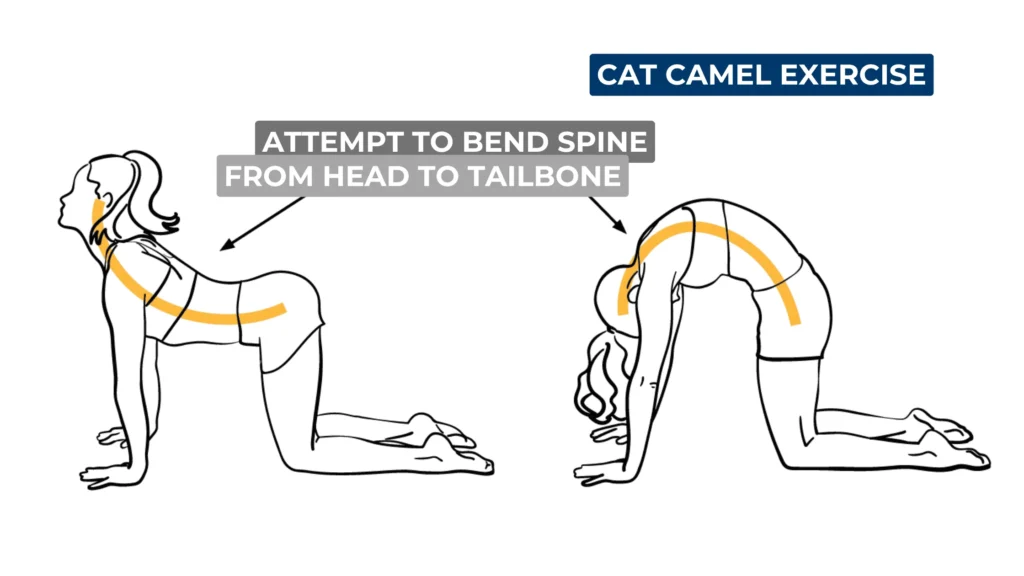
The Cat Cow stretch is a sequence of two complementary movements that gently flex and extend the spine.
The “cat” portion involves rounding the back upward, while the “Cow” or “Camel” portion involves arching the back downward.
This dynamic stretch helps increase spinal mobility, engage core muscles, and promote coordinated movement across the vertebrae.
This stretch is often included in yoga and physical therapy routines because it synchronizes movement with breath, improves body awareness, and mobilizes the spine through its natural range of motion.
Also Read: 10 Best Daily Stretches for Back Pain Relief at Home
Why Cat Cow Matters for Back Pain Relief
The Cat Cow stretch offers several key benefits that make it especially helpful for people with back discomfort:
Improves Spinal Flexibility and Mobility
When you move through the Cat Cow sequence, you encourage your spine to articulate segment by segment rather than move as a single rigid unit.
This lubricates spinal joints, improves range of motion, and reduces stiffness, especially after prolonged sitting or poor posture habits.
Enhances Core and Postural Control
Although it’s a gentle stretch, Cat Cow engages muscles in your abdomen and back that support spinal alignment.
Over time, this improves functional posture and reduces compensatory strain that often contributes to pain.
Promotes Joint Lubrication and Circulation
The flowing motion encourages synovial fluid circulation, which cushions joints and enhances nutrient delivery to spinal tissues.
This process supports tissue health and reduces friction that can lead to discomfort during everyday movements.
Encourages Mindful Breathing and Relaxation
Synchronizing breath with movement not only improves oxygen flow but also helps reduce stress and muscle tension throughout the body, including the back and neck.
Improved breath control has been linked to decreased overall muscle guarding and better nervous system regulation.
Supports Posture Awareness
Cat Cow helps you develop a sense of neutral spine positioning; a state in which your back remains balanced and aligned. Better posture patterns can have lasting benefits in reducing recurring back strain.
These benefits are why many professional fitness and medical institutions include Cat Cow as part of warm-ups, cool-downs, and movement therapy routines for back health.
Also Read: https://vcurehealthcare.com/low-back-pain-relief-unveiling-the-power-of-physiotherapy/
Step-by-Step Guide to Doing Cat Cow Correctly
Follow this precise sequence to perform the Cat Cow stretch safely and effectively:
Step 1: Set Up in Tabletop Position
Begin on all fours with your hands beneath your shoulders and your knees beneath your hips. Keep your back flat and your gaze toward the floor, maintaining a neutral spine.
Draw your belly slightly inward to support the lower back.
Step 2: Cow Pose (Inhale)
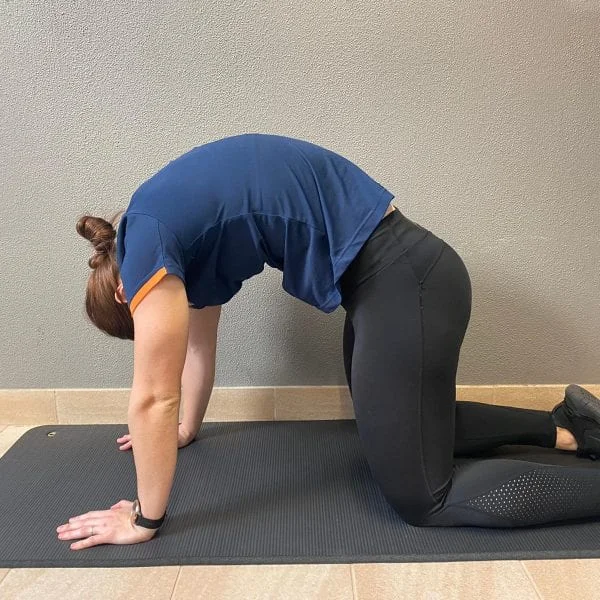
- Inhale slowly, and gently arch your back.
- Lift your chest forward and your head upward.
- Allow your belly to drop slightly toward the floor while lifting your tailbone.
- Keep your neck long and relaxed without overextending your head backward.
The cow phase emphasizes spinal extension and chest opening. ([turn0search0])
Step 3: Cat Pose (Exhale)
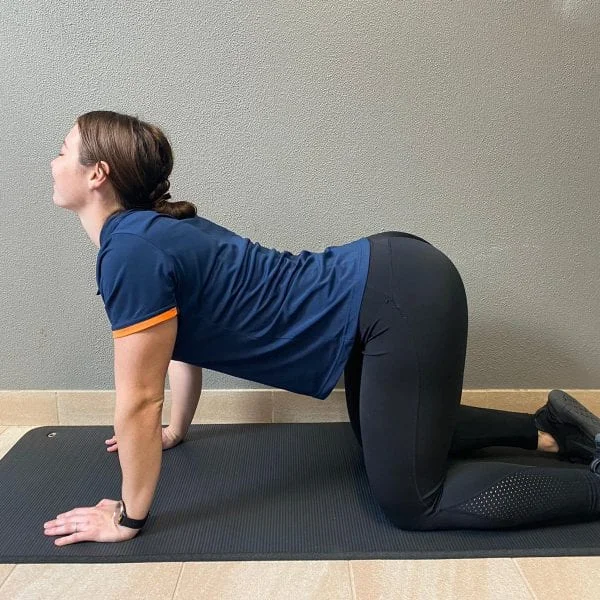
- Exhale slowly and round your spine upward.
- Tuck your tailbone under and draw your belly button toward your spine.
- Gently lower your head, bringing your chin toward your chest.
- Move smoothly rather than forcing the range of motion.
This phase emphasizes spinal flexion and core engagement. ([turn0search0])
Step 4: Repeat the Flow
Continue moving between Cow (inhale) and Cat (exhale) for 5–10 repetitions at a slow, controlled pace.
Focus on engaging your core and flowing with the breath rather than rushing the movements.
Variations and Modifications
The Cat Cow stretch is versatile and can be adapted to your needs:
Seated Cat Cow

Performed while sitting tall in a chair, this variation is ideal for those with knee or wrist discomfort. As you inhale, arch the back and broaden the chest.
As you exhale, round your spine and tuck your chin slightly.
Standing Cat Cow
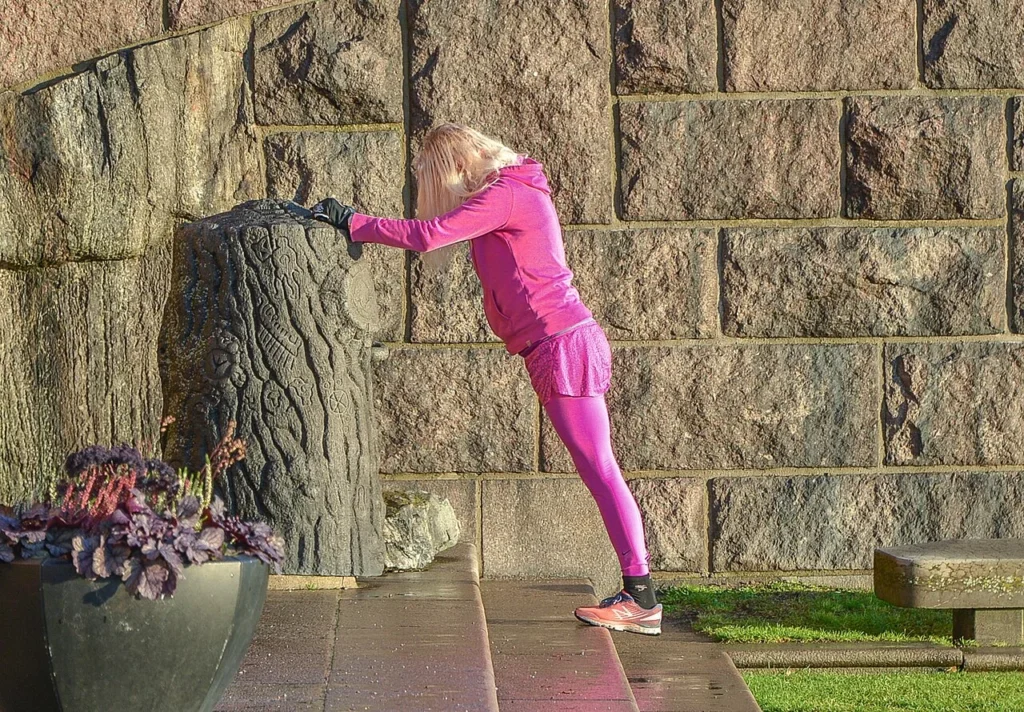
You can also perform this motion standing with hands on a chair or wall. This reduces pressure on wrists and knees while engaging similar spinal movements.
Supported Cat Cow
If you have wrist issues, position your hands in fists or forearms on the floor, or use yoga blocks under your hands to reduce strain. A cushion under the knees can also improve comfort.
Also read: Knee-to-Chest Stretch for Bach Pain Relief and Spinal Flexibility- A Complete Guide
Lesser-Known Facts and New Research Insights
While Cat Cow is widely practiced in yoga and fitness communities, there are a few lesser-known insights worth noting:
Dynamic Movements Engage the Nervous System
According to fitness therapy guidelines, dynamic stretches like Cat Cow not only condition muscles but also “wake up” the nervous system, improving joint proprioception and movement timing.
Chronic Desk Sitting Patterns Respond Well to Gentle Spine Mobilization
Because prolonged sitting reinforces tight hip flexors and stiff spinal joints, gentle spinal articulation exercises are particularly effective at restoring motion and reducing stiffness associated with sedentary lifestyles.
Breath-Linked Movement Helps Reduce Stress Responses
Coordinating inhale and exhale with motion activates the parasympathetic nervous system, which enhances relaxation and can counteract stress-related muscle tension.
This is why many clinicians integrate Cat Cow into relaxation and stretching routines.
Also read: https://vcurehealthcare.com/ultimate-guide-to-home-physiotherapy-for-back-pain/
How Often Should You Do Cat Cow?
For most people, incorporating Cat Cow into a daily routine or stretching sequence is beneficial. Try:
- Morning mobility: 5–10 reps to wake up the spine
- After sitting for long periods: 5–10 reps to reduce stiffness
- Pre-workout or cool-down: 5–10 reps to enhance range of motion
Consistency matters more than intensity, so focus on quality and ease with each repetition.
Safety Tips and Precautions
Although Cat Cow is generally considered safe for most people, keep the following in mind:
- Avoid excessive movement into pain or sharp sensations.
- Maintain slow, controlled motions rather than pushing into end-range positions.
- People with specific spinal conditions (e.g., herniated discs) may require modified approaches or clearance from a healthcare professional.
- If you feel discomfort in wrists, knees, or neck, use modifications such as forearm support or performing the stretch seated.
If unusual pain persists, consult a professional to ensure the stretch aligns with your individual needs.
Also read: Bridge Exercise for Back Pain and Strengthening: A Complete Evidence-Based Guide
My Experience as a Physiotherapist
When patients first try Cat Cow, many underestimate how coordinated breath and gentle movement can impact their back comfort.
What seems simple actually retrains spinal motion patterns and improves awareness of how your back moves.
Over time, this helps reduce stiffness, encourages smoother transitions from sitting to standing, and supports better posture in daily life.
A Common Belief I Regularly Correct
Many people think Cat Cow is “just yoga,” but clinically, it’s a dynamic spinal mobilization exercise that engages deep musculature and improves neural control of spinal movements.
It’s not about force; it’s about coordination and awareness.
A Physio Advice For This Week
- Do Cat Cow daily, ideally morning and evening
- Pair 10 slow repetitions with mindful breathing
- Break up prolonged sitting with brief mobility breaks
- Combine with other mild spine stretches for a balanced routine
Also read:How to Do a Pelvic Tilt Exercise for Lower Back Pain Relief
When I Would Refer You for Medical Evaluation
Seek professional evaluation if you experience:
- Progressive weakness or numbness
- Pain that shoots down the leg
- Loss of bladder/bowel control
- Severe, sharp pain during movement
These may indicate a condition requiring clinical assessment.
My Final Advice to You
Approach the Cat Cow stretch as a mindful movement, not a quick fix. Breathe with intention, move with control, and integrate this stretch into your daily routine.
Over time, the gentle rhythm and improved spinal mobility will support a more resilient, comfortable back.
Frequently Asked Questions (FAQ)
1. How long should I hold each Cat Cow position?
Hold each pose for the duration of your breath cycle, inhaling into Cow and exhaling into Cat, with each movement synchronized to breath.
2. Can Cat Cow help reduce lower back stiffness?
Yes, regular practice helps increase spinal mobility and reduce stiffness, especially when paired with mindful breathing.
3. Is Cat Cow good for beginners?
Absolutely. Cat Cow is accessible for beginners and can be modified based on comfort and mobility level.
4. Should I breathe in or out during Cat Cow?
Inhale during the Cow phase (spinal extension) and exhale during the Cat phase (spinal flexion), coordinating breath with movement.
5. Can Cat Cow worsen back pain?
If done too aggressively or without coordination, it might cause discomfort. Reduce range of motion and consult a clinician if pain persists.
6. How many repetitions are ideal?
Start with 5–10 slow repetitions and progress as tolerated.
7. Can Cat Cow improve posture?
Yes, improved spinal awareness and mobility supports better posture over time.
8. Is it safe for older adults?
With modifications such as seated or supported variants, it can be safe for many older adults.
9. Should I combine Cat Cow with other stretches?
Yes, combining it with hip and core stretches enhances overall effectiveness.
10. Can I do Cat Cow every day?
Yes, daily practice can help maintain spinal flexibility and reduce back tension.
Stay tuned with us. Follow us on social media for the latest medical updates.
Join us on, Instagram for the latest Health-related updates.


