


Whole exome sequencing in pregnancy is an advanced genetic test
It analyzes thousands of genes to help identify rare inherited conditions when other prenatal tests cannot provide a clear diagnosis.
The journey through pregnancy is filled with anticipation, hope, and countless decisions.
Along with routine ultrasounds and prenatal check-ups, advances in genetic medicine now allow doctors to investigate certain fetal conditions in far greater detail than ever before.
One of the most advanced diagnostic tools available today is Whole Exome Sequencing (WES), a test that can help identify :
the genetic cause of certain fetal abnormalities when other investigations have not provided clear answers.
For many expectant parents, hearing the term Whole Exome Sequencing can be overwhelming.
It often comes during an emotionally stressful time,
particularly after an ultrasound detects an unexpected fetal abnormality or when earlier genetic tests, such as chromosomal microarray analysis, fail to explain what doctors are seeing.
Questions such as :
Why do I need this test?, Will it tell me everything?, or Does this mean something is seriously wrong with my baby? are entirely understandable.
Quick Answer
Whole Exome Sequencing (WES) is an advanced diagnostic genetic test that examines the protein-coding regions of thousands of genes to identify disease-causing genetic variants. It is usually recommended when fetal structural abnormalities are detected on ultrasound but routine genetic tests, such as chromosomal microarray analysis, do not provide a diagnosis. WES can help identify many rare inherited disorders and support more informed pregnancy management.
As a women’s health physiotherapist, I frequently support women and families navigating high-risk pregnancies.
While physiotherapists do not perform or interpret genetic tests,
we work closely within multidisciplinary maternity teams to help women manage pregnancy-related discomfort, reduce anxiety, maintain safe physical activity, and prepare both physically and emotionally for the months ahead.
Understanding why additional investigations are recommended can often reduce uncertainty and help parents feel more involved in their care.
Unlike screening tests that estimate the likelihood of certain conditions,
Whole Exome Sequencing is a diagnostic genetic test designed to search for changes in thousands of genes associated with rare inherited disorders.
It has become an important option for carefully selected pregnancies, particularly when fetal structural abnormalities are detected but routine genetic investigations have not identified a cause.
Large prospective studies have shown that prenatal exome sequencing can substantially improve diagnostic rates in fetuses with structural anomalies that remain unexplained after standard chromosomal testing (Lord et al. 2019).
Rather than creating unnecessary concern, the purpose of this article is to:
help you understand what Whole Exome Sequencing is, when it may be recommended, what information it can provide, and what its limitations are.
By the end, you should feel better prepared to discuss this test with your obstetrician, fetal medicine specialist, or genetic counsellor if it becomes part of your pregnancy journey.
Key Takeaways
- Whole Exome Sequencing (WES) is an advanced diagnostic test that analyses thousands of protein-coding genes.
- It is most useful when fetal structural abnormalities remain unexplained after routine chromosomal testing.
- WES can identify many rare single-gene disorders that cannot be detected by karyotyping or chromosomal microarray analysis.
- A normal WES result does not rule out every genetic condition.
- Expert genetic counselling before and after testing is essential to understand the results and possible implications.
- Physiotherapists play an important role in supporting maternal wellbeing during high-risk pregnancies through education, movement, pain management, and emotional support.
At a Glance
| Feature | Whole Exome Sequencing (WES) |
|---|---|
| Test Type | Diagnostic genetic test |
| Sample Required | CVS or Amniotic Fluid |
| What It Analyses | Protein-coding genes (Exome) |
| Primary Purpose | Identify disease-causing gene variants |
| Usually Recommended | When fetal structural abnormalities remain unexplained after routine genetic testing |
| Can Detect Down Syndrome? | Indirectly through prior testing, but WES is not the primary test for aneuploidy |
| Can Detect Single-Gene Disorders? | Yes |
| Can Detect Every Genetic Disorder? | No |
| Genetic Counselling Required? | Recommended before and after testing |
What Is Whole Exome Sequencing?
Every human cell contains approximately 20,000 protein-coding genes, each carrying instructions that guide the body’s growth, development, and function.
Together, these genes form the exome, a relatively small portion of our DNA that nevertheless contains the majority of known disease-causing genetic variants.
Whole Exome Sequencing is a laboratory technique that examines these protein-coding regions in great detail,
searching for small genetic changes, known as variants, that may explain why a fetus has developed certain abnormalities.
Unlike chromosomal tests, which look for missing or extra pieces of chromosomes, WES focuses on changes within individual genes.
These changes may involve a single DNA letter or a small alteration that disrupts how a protein is produced.
In some cases, identifying one disease-causing variant can provide a diagnosis that would otherwise remain unknown.
Because many rare developmental disorders result from variants in single genes rather than whole chromosomes, WES has become an invaluable diagnostic tool when previous investigations are inconclusive.
Systematic reviews have shown that prenatal exome sequencing provides an additional diagnostic yield after normal karyotyping and chromosomal microarray results in fetuses with structural anomalies. (Rhiannon et al. 2022).
How Does Whole Exome Sequencing Work?
Imagine your baby’s DNA as a vast library containing thousands of books.
Each book represents a chromosome, while each chapter represents a gene.
Most pages describe how proteins should be built, allowing organs, muscles, bones, and the brain to develop normally.
Whole Exome Sequencing does not read every page in the library.
Instead, it focuses on the chapters that contain the instructions for building proteins.
Although these chapters account for only a small percentage of the entire genome, they contain the majority of currently recognised disease-causing variants.
This targeted approach makes WES both efficient and clinically valuable for investigating many rare inherited conditions.
The testing process usually begins after fetal DNA has been obtained through:
Chorionic Villus Sampling (CVS)
Performed between approximately 10 and 13 weeks of pregnancy, CVS collects a small sample of placental tissue for genetic analysis.
Amniocentesis
Usually performed after 15 weeks, amniocentesis collects a small amount of amniotic fluid containing fetal cells.
Once the DNA reaches the laboratory, advanced sequencing technology reads thousands of genes simultaneously.
Powerful bioinformatics software then compares these genetic sequences with reference databases to identify variants that may explain the baby’s ultrasound findings.
Because every individual naturally carries thousands of harmless genetic differences, interpreting WES requires careful analysis by clinical scientists and genetic specialists.
Only variants considered relevant to the baby’s clinical presentation are typically reported after multidisciplinary review.
Why Has Whole Exome Sequencing Become So Important?
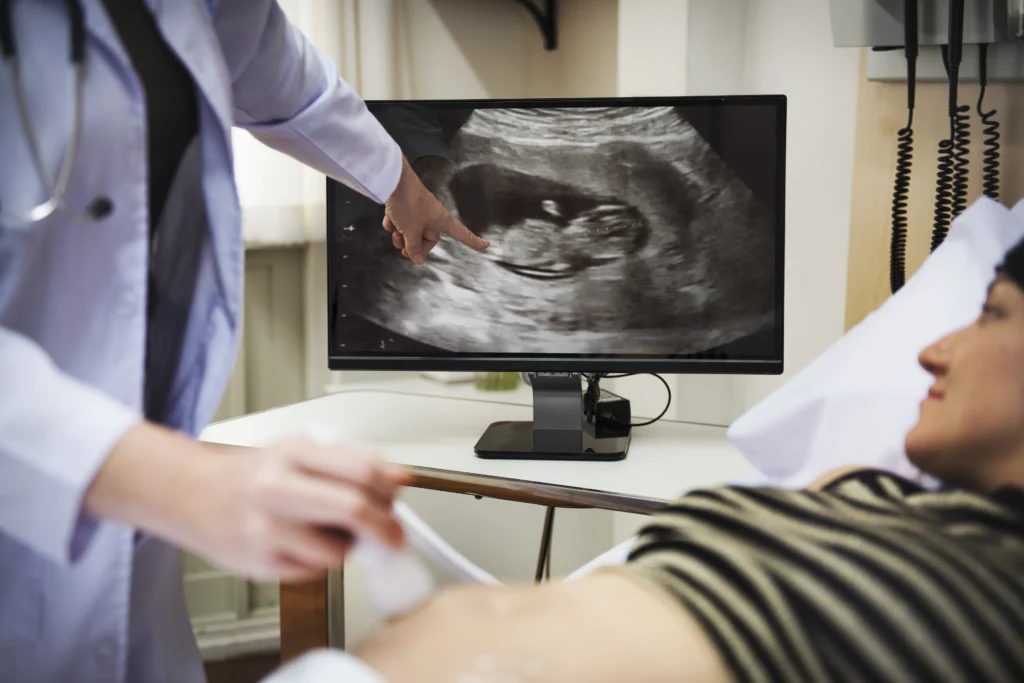
Over the past decade, prenatal diagnosis has shifted from looking only at chromosomes to examining individual genes.
This change has been driven by one simple observation.
Some babies have significant structural abnormalities visible on ultrasound, yet conventional karyotyping and chromosomal microarray analysis fail to identify a genetic explanation.
Whole Exome Sequencing helps bridge this diagnostic gap.
Large prospective studies have demonstrated that WES can identify :
additional disease-causing genetic variants in fetuses with structural abnormalities that remained unexplained after standard chromosomal investigations, improving diagnostic certainty and supporting more informed counselling for families. (Petrovski et al. 2019).
For families, this means a greater chance of receiving an explanation for complex ultrasound findings, understanding recurrence risks, and planning appropriate pregnancy and newborn care.
What Conditions Can Whole Exome Sequencing Detect?
One of the greatest strengths of Whole Exome Sequencing (WES) is its ability to identify single-gene disorders that may not be detected by conventional prenatal genetic tests.
These conditions are often rare, but they can have a significant impact on fetal development and pregnancy management.
Rather than looking for missing or extra chromosomes, WES searches for disease-causing variants within individual genes.
This makes it particularly valuable when fetal structural abnormalities are detected on ultrasound but chromosomal microarray analysis (CMA) and karyotyping have not identified a diagnosis.
Brain and Nervous System Disorders
Certain abnormalities affecting the fetal brain may be caused by variants in genes responsible for normal neurological development.
Examples include:
- Lissencephaly
- Microcephaly
- Hydrocephalus
- Joubert syndrome
- Other neurodevelopmental disorders
When brain abnormalities are identified on prenatal ultrasound or fetal MRI, WES may help determine the underlying genetic cause.
Skeletal Disorders
Skeletal abnormalities are among the most common reasons for prenatal WES.
Examples include:
- Thanatophoric dysplasia
- Osteogenesis imperfecta
- Achondroplasia
- Campomelic dysplasia
- Short-rib thoracic dysplasia
Because many skeletal dysplasias result from variants in single genes, WES often provides valuable diagnostic information when ultrasound findings are suggestive but not specific.
Prospective studies have shown that prenatal WES substantially improves the diagnosis of fetuses with suspected monogenic disorders after routine chromosomal investigations are negative (Szalai et al. 2024).
Congenital Heart Disorders
Some congenital heart defects occur as part of inherited genetic syndromes involving single-gene variants.
Examples include:
- Cardiomyopathies
- Noonan syndrome
- RASopathies
- Certain inherited arrhythmia syndromes
When cardiac abnormalities are accompanied by other structural findings, WES may help establish a more precise diagnosis.
Neuromuscular Disorders
Although relatively uncommon, some fetal movement abnormalities are caused by inherited neuromuscular disorders.
Examples include:
- Congenital myopathies
- Congenital muscular dystrophies
- Arthrogryposis syndromes
- Spinal muscular disorders caused by rare gene variants
Identifying the underlying cause can improve counselling regarding pregnancy outcomes and future family planning.
Metabolic and Rare Genetic Disorders
WES may also identify hundreds of rare inherited disorders affecting metabolism, organ development, immune function, and growth.
Because many of these conditions are individually rare, they are difficult or impossible to diagnose based on ultrasound findings alone.
What Whole Exome Sequencing Cannot Detect
Although WES is one of the most advanced genetic tests available, it is not a comprehensive test for every genetic condition.
Understanding its limitations is just as important as understanding its strengths.
Large Chromosomal Abnormalities
Conditions caused by an entire extra or missing chromosome, such as:
- Down syndrome
- Edwards syndrome
- Patau syndrome
are usually detected through other diagnostic methods, including karyotyping or chromosomal microarray analysis.
Although WES may occasionally identify clues suggesting these conditions, it is not designed as the primary test for detecting aneuploidies.
Balanced Chromosomal Rearrangements
Balanced translocations involve the exchange of chromosome segments without any gain or loss of genetic material.
Because the DNA sequence itself may remain unchanged, WES generally cannot detect these rearrangements.
Many Non-Coding Genetic Variants
Only about 1-2% of the human genome consists of protein-coding regions.
The remaining DNA contains regulatory elements that influence how genes function.
Since WES focuses only on the exome, it does not analyse most non-coding regions of the genome.
Environmental Causes of Birth Defects
Not every fetal abnormality has a genetic cause.
Some birth defects may result from:
- maternal infections
- certain medications
- poorly controlled diabetes
- nutritional deficiencies
- environmental exposures
Genetic testing cannot identify these non-genetic causes.
Whole Exome Sequencing vs NIPT
These tests are frequently confused, but they answer very different clinical questions.
| Whole Exome Sequencing | NIPT |
|---|---|
| Diagnostic test | Screening test |
| Analyses fetal genes | Analyses placental DNA fragments |
| Requires CVS or amniocentesis | Maternal blood sample |
| Detects many single-gene disorders | Screens mainly for common chromosomal abnormalities |
| Confirms diagnosis | Estimates risk |
An easy way to remember the difference is:
NIPT asks, “Could there be a problem?”
WES asks, “What is causing the problem?”
Whole Exome Sequencing vs Chromosomal Microarray Analysis
Although both tests investigate genetic disorders, they examine different types of abnormalities.
| Whole Exome Sequencing | Chromosomal Microarray Analysis |
|---|---|
| Detects variants within individual genes | Detects chromosomal deletions and duplications |
| Best for suspected monogenic disorders | Best for chromosomal copy number changes |
| Higher resolution for single-gene conditions | Higher resolution for chromosomal abnormalities |
| Often performed after normal CMA | Usually performed before WES |
Many fetal medicine centres now follow a stepwise approach in which CMA is performed first, followed by WES when chromosomal testing is normal but significant fetal abnormalities remain unexplained.
A systematic review and meta-analysis demonstrated that prenatal WES provides additional diagnostic yield after normal karyotyping and chromosomal microarray analysis in fetuses with structural anomalies. (Mellis et al. 2022).
Whole Exome Sequencing vs Karyotyping
Karyotyping has been used in prenatal diagnosis for decades.
It examines the overall number and structure of chromosomes.
Whole Exome Sequencing goes much deeper by analysing individual genes.
| Whole Exome Sequencing | Karyotyping |
|---|---|
| Detects gene variants | Detects large chromosomal abnormalities |
| Excellent for rare genetic disorders | Excellent for aneuploidies |
| High genetic resolution | Lower genetic resolution |
| Cannot detect balanced translocations reliably | Can identify balanced translocations |
Rather than replacing one another, these tests often complement each other.
Whole Exome Sequencing vs Whole Genome Sequencing
These technologies sound similar but analyse different amounts of DNA.
| Whole Exome Sequencing | Whole Genome Sequencing |
|---|---|
| Analyses protein-coding genes only | Analyses nearly the entire genome |
| Covers about 1–2% of DNA | Covers almost 100% of DNA |
| More widely used in prenatal care | Primarily used in specialised settings and research |
| Lower cost | Higher cost and more complex interpretation |
Whole Genome Sequencing has the potential to identify additional genetic changes, but interpreting the vast amount of information remains challenging.
For many clinical situations, WES provides an effective balance between diagnostic yield and practical interpretation.
Why Is Whole Exome Sequencing Usually Performed After Other Tests?
Many parents assume that because WES is one of the newest genetic technologies, it should automatically be the first test performed.
In reality, prenatal diagnosis follows a logical sequence.
Typical Diagnostic Pathway
| Step | Investigation | Purpose |
|---|---|---|
| 1 | Routine ultrasound | Detect structural abnormalities |
| 2 | NIPT (if appropriate) | Screen for common chromosomal conditions |
| 3 | CVS or Amniocentesis | Obtain fetal DNA |
| 4 | Karyotyping | Detect large chromosomal abnormalities |
| 5 | Chromosomal Microarray Analysis | Detect submicroscopic chromosomal gains and losses |
| 6 | Whole Exome Sequencing | Identify disease-causing variants in individual genes when earlier tests are inconclusive |
This stepwise approach helps ensure that each investigation is used where it offers the greatest clinical value.
Real-Life Clinical Scenarios
Scenario 1: A Normal CMA but an Abnormal Ultrasound
A detailed anatomy scan reveals multiple skeletal abnormalities.
Karyotyping and CMA are both normal.
Because a single-gene disorder is suspected, the fetal medicine specialist recommends WES.
Scenario 2: Multiple Organ Abnormalities
Ultrasound identifies abnormalities involving the heart, kidneys, and brain.
The pattern suggests a rare inherited syndrome that cannot be diagnosed using chromosome analysis alone.
WES may identify the responsible gene variant and provide a specific diagnosis.
Scenario 3: Recurrent Pregnancies with Similar Findings
A couple has experienced two pregnancies affected by similar unexplained fetal abnormalities.
WES may help identify an inherited condition and clarify the recurrence risk for future pregnancies.
A Lesser-Known Fact
One of the most fascinating aspects of Whole Exome Sequencing is that the data can sometimes be reanalyzed in the future.
As new disease-causing genes are discovered, a genetic variant that could not be interpreted today may become clinically meaningful months or even years later.
This evolving knowledge is one reason why prenatal genetics continues to advance rapidly and why ongoing communication with a genetics team can be valuable after testing.
Myth vs Fact
| Myth | Fact |
|---|---|
| Whole Exome Sequencing is the first genetic test offered during pregnancy. | WES is usually recommended only after ultrasound findings and routine genetic tests do not explain fetal abnormalities. |
| WES analyses the entire human genome. | WES examines only the protein-coding regions of genes, which contain most currently known disease-causing variants. |
| A normal WES result guarantees a healthy baby. | A normal result reduces the likelihood of many genetic disorders but cannot exclude every possible condition. |
| WES replaces all other prenatal genetic tests. | WES complements other tests such as NIPT, karyotyping, and chromosomal microarray analysis. |
| Every genetic change found by WES causes disease. | Some variants are benign or classified as Variants of Uncertain Significance (VUS). |
Understanding Your Whole Exome Sequencing Results
Waiting for genetic test results can be one of the most emotionally challenging parts of pregnancy.
It is completely normal to experience a mixture of hope, anxiety, and uncertainty, particularly when Whole Exome Sequencing (WES) has been recommended because of an unexpected ultrasound finding.
Unlike many routine blood tests, WES results are not always simply reported as “normal” or “abnormal.”
Instead, they require careful interpretation by a multidisciplinary team that includes clinical geneticists, laboratory scientists, fetal medicine specialists, and genetic counsellors.
A Positive (Diagnostic) Result
A positive result means that WES has identified a pathogenic or likely pathogenic genetic variant that explains the baby’s ultrasound findings or clinical presentation.
Receiving a diagnosis may feel overwhelming, but it can also provide important answers.
A confirmed diagnosis helps healthcare professionals:
- explain the baby’s condition more accurately
- discuss expected pregnancy outcomes
- plan specialist care before delivery
- prepare neonatal management
- estimate recurrence risk in future pregnancies
Studies have shown that prenatal WES provides a meaningful increase in diagnostic yield for fetuses with structural abnormalities, allowing more precise counselling and pregnancy management. (Lai et al. 2022)
A Negative Result
A negative result means that no disease-causing genetic variant was identified within the exome.
Although this can be reassuring, it does not completely exclude a genetic disorder.
There are several reasons for this.
Some conditions may be caused by:
- variants outside the exome
- changes that current technology cannot detect
- genes that have not yet been linked to human disease
- non-genetic causes of fetal abnormalities
For this reason, healthcare professionals interpret WES alongside ultrasound findings, family history, and other laboratory investigations.
Variant of Uncertain Significance (VUS)
One of the most challenging outcomes is identifying a Variant of Uncertain Significance (VUS).
This means that a genetic change has been detected, but there is currently insufficient scientific evidence to determine whether it causes disease.
A VUS should not automatically be considered harmful.
Many variants are later reclassified as either:
- benign
- likely benign
- likely pathogenic
- pathogenic
as additional research becomes available.
Because of this uncertainty, expert genetic counselling is essential before making important clinical decisions.
Incidental Findings
Occasionally, WES identifies a genetic variant that is unrelated to the baby’s current ultrasound findings.
These are known as incidental findings.
Examples may include:
- inherited cancer predisposition genes
- adult-onset neurological conditions
- cardiovascular disorders
- carrier status for unrelated inherited diseases
Whether these findings are reported depends on laboratory policies, parental consent, and national clinical guidelines.
This is one reason why detailed pre-test counselling is considered an important part of prenatal WES.
Benefits of Whole Exome Sequencing
Whole Exome Sequencing has significantly expanded the ability to diagnose rare genetic disorders during pregnancy.
Improved Diagnostic Accuracy
The greatest benefit is its ability to identify disease-causing variants that cannot be detected by karyotyping or chromosomal microarray analysis.
This improves the likelihood of obtaining a diagnosis in carefully selected pregnancies.
Better Pregnancy Management
A confirmed diagnosis helps healthcare professionals:
- coordinate specialist care
- determine whether additional fetal monitoring is required
- prepare for delivery at an appropriate centre
- anticipate neonatal interventions
Early diagnosis also allows parents to make informed decisions with guidance from their healthcare team.
Improved Genetic Counselling
Knowing the exact genetic diagnosis allows families to understand:
- inheritance patterns
- recurrence risk
- implications for future pregnancies
- whether parental testing is recommended
Systematic reviews have demonstrated that prenatal WES significantly improves diagnostic yield after normal chromosomal investigations in fetuses with structural abnormalities. (Ozer et al. 2025)
Limitations of Whole Exome Sequencing
Despite its remarkable capabilities, WES is not a perfect test.
Understanding its limitations helps families develop realistic expectations.
It Does Not Detect Every Genetic Disorder
WES focuses only on protein-coding genes.
It generally does not detect:
- balanced chromosomal rearrangements
- many repeat expansion disorders
- mitochondrial DNA disorders
- many non-coding genetic variants
Additional investigations may still be required depending on the clinical situation.
Interpretation Can Be Complex
Every person naturally carries thousands of genetic variants.
Determining which of these are disease-causing requires sophisticated laboratory analysis and expert interpretation.
Sometimes no clear diagnosis can be made despite comprehensive testing.
Results May Change Over Time
One of the unique aspects of genomic medicine is that scientific knowledge continues to evolve.
A variant that cannot be interpreted today may become clinically significant in the future as new evidence emerges.
For this reason, some genetics centres may recommend re-evaluating previously generated WES data if new information becomes available.
Ethical Considerations
Whole Exome Sequencing raises important ethical questions because it can reveal far more information than conventional genetic tests.
Informed Consent
Before testing, parents should understand:
- what WES can detect
- what it cannot detect
- the possibility of uncertain results
- whether incidental findings may be reported
Making an informed decision begins with understanding both the benefits and limitations of testing.
Psychological Impact
Waiting for WES results can create significant emotional stress.
Some parents describe the uncertainty as more difficult than the testing procedure itself.
This highlights the importance of ongoing emotional support from healthcare professionals and family members.
Future Re-analysis
One fascinating aspect of genomic medicine is that WES data may become more valuable over time.
As scientists discover new disease-causing genes, laboratories may be able to reinterpret previously unexplained variants and provide additional information.
This evolving knowledge represents one of the most exciting developments in modern prenatal genetics.
Lesser-Known Facts About Whole Exome Sequencing
Many expecting parents are surprised to learn that:
- WES analyses only 1-2% of the human genome, yet captures approximately 85% of currently recognised disease-causing variants.
- Not every abnormal ultrasound finding has a genetic explanation.
- Many rare genetic disorders cannot be diagnosed without sequencing individual genes.
- A normal WES result does not guarantee that a baby has no genetic condition.
- WES results may occasionally be reinterpreted in the future as scientific knowledge advances.
- WES is generally reserved for carefully selected pregnancies rather than routine prenatal screening.
A Physiotherapist’s Perspective
Being referred for advanced genetic testing can be emotionally overwhelming.
Many women experience uncertainty while waiting for appointments, laboratory results, and specialist consultations.
Although physiotherapists do not diagnose genetic disorders, we play an important role in supporting overall maternal wellbeing throughout pregnancy.
Depending on your obstetrician’s recommendations, physiotherapy may help you:
- remain physically active safely
- manage pregnancy-related back pain and pelvic pain
- improve posture and mobility
- practise breathing and relaxation techniques
- strengthen the pelvic floor
- prepare for labour and postpartum recovery
Equally important is providing reassurance.
Many women worry that needing additional investigations automatically means something is seriously wrong with their baby.
In reality, Whole Exome Sequencing is recommended to obtain more information, not to confirm the worst-case scenario.
For many families, the results provide reassurance or valuable guidance for planning the remainder of the pregnancy.
Questions to Ask Your Healthcare Provider
If Whole Exome Sequencing has been recommended, consider asking:
- Why is WES appropriate in my pregnancy?
- What abnormalities are you trying to explain?
- Have karyotyping and chromosomal microarray already been completed?
- What are the possible results?
- What happens if a Variant of Uncertain Significance is identified?
- Could incidental findings be reported?
- Will my partner or I need additional testing?
- How long will the results take?
- How might the findings influence pregnancy care?
Preparing these questions before your appointment can help you better understand the purpose of testing and make informed decisions.
Final Thoughts
Whole Exome Sequencing has transformed prenatal diagnosis by helping healthcare professionals identify rare genetic conditions that were previously difficult or impossible to diagnose before birth. While it is not recommended for every pregnancy, it offers valuable insights when routine investigations do not provide clear answers.
Understanding the strengths and limitations of WES, together with guidance from your obstetrician, fetal medicine specialist, genetic counsellor, and physiotherapist, can help you make informed decisions and navigate pregnancy with greater confidence.
Conclusion
Whole Exome Sequencing has transformed prenatal diagnosis by helping identify rare genetic conditions that may not be detected through conventional testing.
Although it is not recommended for every pregnancy, it can provide valuable answers when fetal abnormalities remain unexplained after routine investigations.
Understanding what WES can and cannot detect enables parents to make informed decisions alongside their obstetrician, fetal medicine specialist, and genetic counsellor.
Combined with compassionate multidisciplinary care, including physiotherapy support when appropriate, evidence-based prenatal care helps families navigate pregnancy with greater confidence, knowledge, and preparation.
Frequently Asked Questions
What is Whole Exome Sequencing (WES)?
Whole Exome Sequencing is a diagnostic genetic test that analyses the protein-coding regions of thousands of genes to identify disease-causing variants associated with inherited disorders.
When is WES recommended during pregnancy?
WES is usually recommended when fetal structural abnormalities are identified on ultrasound but routine genetic tests have not provided a diagnosis.
Is Whole Exome Sequencing the same as NIPT?
No. NIPT is a screening test that estimates the likelihood of certain chromosomal conditions, while WES is a diagnostic test that analyses individual genes.
Can WES detect every genetic disorder?
No. WES focuses on protein-coding genes and cannot detect every type of genetic or chromosomal abnormality.
Can WES detect every genetic disorder?
No. WES focuses on protein-coding genes and cannot detect every type of genetic or chromosomal abnormality.
Why is genetic counselling important before and after WES?
Genetic counselling helps families understand the purpose of testing, interpret the results accurately, and discuss the possible implications for pregnancy management and future family planning.
Stay tuned with us for more health related topics.
Follow us on LinkedIn and Instagram for more.
More Read


Medical Disclaimer!
This article has been reviewed and written under the guidance of our Head Physiotherapist, Dr. Kruti Raj (PT, MUHS,CPT,CMPT). The information shared is intended for educational purposes only and should not be considered a substitute for personalized medical advice, diagnosis, or treatment.
Please consult us or any other qualified healthcare professional before beginning any exercise program, especially if you are experiencing pain, recovering from injury, or managing a medical condition.


