Non-invasive prenatal testing is a blood test during pregnancy that screens for certain chromosomal conditions without using invasive procedures.
A few weeks after seeing that positive pregnancy test, many parents find themselves learning an entirely new language.
hCG.
Dating scan.
NT scan.
PAPP-A.
And then another unfamiliar term appears:
NIPT.
For some people, the recommendation arrives during a routine appointment.
For others, it comes after an NT scan discussion.
Sometimes a friend mentions it.
Sometimes it appears while searching pregnancy forums late at night.
Regardless of how you first hear about it, the same question usually follows:
“What exactly is NIPT?”
And perhaps an even bigger question:
“Do I need it?”
The answer starts with understanding what NIPT was designed to do.
Quick Answer
NIPT (Non-Invasive Prenatal Testing) is a blood test that analyzes tiny fragments of placental DNA circulating in the mother’s bloodstream. It helps screen for chromosomal conditions such as Down syndrome (Trisomy 21), Trisomy 18, and Trisomy 13 with very high accuracy. However, NIPT is a screening test, not a diagnostic test, which means positive results should be confirmed through additional testing.
Unlike traditional screening tests that estimate risk using ultrasound findings and blood markers,
NIPT analyzes tiny fragments of DNA circulating in the mother’s bloodstream to provide a highly accurate assessment of certain chromosomal conditions (Jayashankar et al., 2023).
It is one of the most significant advances in prenatal screening developed over the past two decades.
But despite its impressive accuracy, it is also one of the most misunderstood tests in pregnancy.
Key Takeaways
- NIPT analyzes cell-free DNA found in the mother’s bloodstream.
- The test can usually be performed from 10 weeks of pregnancy onward.
- NIPT primarily screens for Down syndrome, Trisomy 18, and Trisomy 13.
- Detection rates for Down syndrome exceed 99% in many studies.
- NIPT is more accurate than traditional first-trimester screening for common trisomies.
- A low-risk result significantly reduces the likelihood of the screened conditions.
- A high-risk result does not automatically mean the baby has a chromosomal condition.
- Positive NIPT results should be confirmed through diagnostic testing.
- NIPT and NT scans provide different but complementary information.
- NIPT is one of the most significant advances in prenatal screening in recent decades.
The Pregnancy Test That Doesn’t Actually Test The Baby
At first glance, NIPT sounds almost impossible.
How can a simple blood sample from the mother provide information about the baby?
The answer lies in something known as cell-free DNA (cfDNA).
During pregnancy, tiny fragments of DNA from the placenta enter the mother’s bloodstream.
Researchers discovered that these fragments can be analyzed through a maternal blood sample to estimate the likelihood of certain chromosomal abnormalities (Rafi et al., 2017).
This means no needles near the baby.
No procedures inside the uterus.
No direct contact with the fetus.
Just a blood test.
That is why the test is called:
Non-Invasive Prenatal Testing.
The word “non-invasive” is important.
Unlike procedures such as amniocentesis or chorionic villus sampling (CVS), NIPT does not involve entering the uterus.
For many parents, that distinction provides significant reassurance.
What Conditions Does NIPT Screen For?
One of the most common misconceptions about NIPT is that it checks for every possible genetic condition.
It does not.
Most standard NIPT panels primarily screen for:
Trisomy 21 (Down Syndrome)
The most commonly screened chromosomal condition.
Trisomy 18 (Edwards Syndrome)
A less common but serious chromosomal abnormality.
Trisomy 13 (Patau Syndrome)
Another rare chromosomal condition associated with significant health challenges.
Some laboratories may also offer expanded screening panels that include:
- Sex chromosome abnormalities
- Selected microdeletion syndromes
- Additional chromosomal conditions
However, the exact conditions screened vary depending on the testing provider.
This is why discussing the specific panel with your healthcare provider is important.
Why NIPT Has Received So Much Attention
To understand why NIPT transformed prenatal screening, it helps to look at what came before it.
For many years, first-trimester screening relied on:
- Maternal age
- NT scan measurements
- Blood markers such as PAPP-A and free β-hCG
These tests remain valuable and continue to be widely used.
However, researchers discovered that analyzing cell-free DNA could improve screening performance significantly.
Large studies and meta-analyses have demonstrated that NIPT detects approximately:
- 99-99.7% of trisomy 21 cases
- 97-98% of trisomy 18 cases
- 97-99% of trisomy 13 cases
while maintaining very low false-positive rates
Those numbers explain why NIPT has become such an important tool in modern prenatal care.
Why Accuracy Matters
Imagine two screening tests.
One identifies most affected pregnancies while producing relatively few false alarms.
The other identifies fewer cases and generates more unnecessary anxiety.
Most parents would naturally prefer the first option.
This is one reason NIPT has gained widespread acceptance.
Higher screening accuracy means:
- More reliable risk assessment
- Fewer unnecessary invasive procedures
- Greater reassurance for many families
Research comparing NIPT with traditional first-trimester screening consistently shows superior performance for detecting trisomy 21 (Garg et al., 2025).
That does not make older screening methods obsolete.
But it does explain why NIPT is increasingly discussed during prenatal appointments.
NIPT vs The NT Scan: Are They The Same Thing?
This is one of the questions I hear most often.
The short answer:
No.
The NT scan and NIPT are different tests.
NT Scan
Measures the fluid-filled space behind the baby’s neck using ultrasound.
NIPT
Analyzes cell-free DNA from a maternal blood sample.
The two tests provide different types of information.
In fact, many healthcare providers view them as complementary rather than competing investigations.
An NT scan can identify structural findings that a blood test cannot detect.
NIPT can provide highly accurate chromosomal risk assessment that ultrasound alone cannot provide.
This is one reason some women undergo both.
When Can NIPT Be Performed?
Timing is another common question.
Most NIPT tests can be performed from around 10 weeks of pregnancy onward.
By this stage, there is usually enough placental DNA circulating in the mother’s bloodstream to allow reliable analysis.
This early timing offers an important advantage.
It provides information during the first trimester when additional options for assessment and decision-making remain available.
For many parents, earlier answers mean less time spent worrying.
What Research Has Discovered
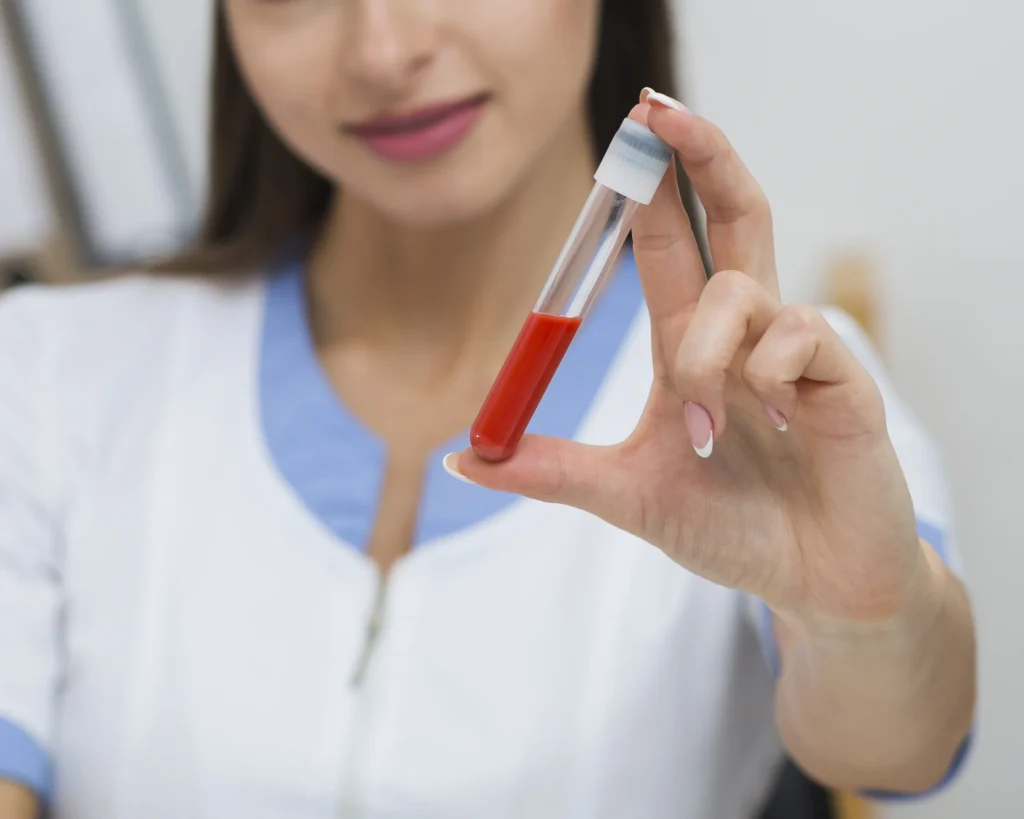
The emergence of cell-free DNA screening has been one of the most significant developments in prenatal medicine.
A large meta-analysis examining NIPT performance reported detection rates approaching 99% for trisomy 21 while maintaining extremely low false-positive rates.
Subsequent studies have consistently confirmed the high accuracy of NIPT for common chromosomal abnormalities (Zheng et al., 2022).
These findings have transformed prenatal screening practices worldwide.
However, researchers have also emphasized an equally important message:
High accuracy does not equal certainty.
And that distinction matters more than many parents realize.
The Most Important Thing To Understand About NIPT
If there is one concept every expectant parent should remember, it is this:
NIPT is a screening test.
Not a diagnostic test.
That means it estimates the likelihood of a condition being present.
It does not confirm a diagnosis.
Researchers and professional societies consistently emphasize that positive NIPT results should be confirmed with diagnostic testing before major decisions are made (Allyse et al. 2015).
This distinction often gets lost because NIPT performs so well.
But it remains one of the most important facts about the test.
A Small Reassurance Before Your Blood Test
Many parents approach NIPT with mixed emotions.
Excitement.
Curiosity.
Hope.
Anxiety.
All at the same time.
That emotional mixture is completely normal.
The reason NIPT has become so widely used is not because it creates more uncertainty.
It is because it helps reduce uncertainty.
For many families, a simple blood sample provides reassurance that was previously unavailable during early pregnancy.
And sometimes, reassurance is exactly what parents need most during the first trimester.
Can NIPT Ever Be Wrong?
This is usually the question that sits quietly in the back of every parent’s mind.
After hearing that NIPT detects more than 99% of Down syndrome cases, many people naturally wonder:
“If it’s that accurate, why isn’t it considered diagnostic?”
The answer is simple.
Because no screening test is perfect.
Although NIPT has remarkably high detection rates, false-positive and false-negative results can still occur (Dondorp et al., 2016).
This means:
- A high-risk result does not automatically mean a baby has a chromosomal condition.
- A low-risk result does not completely eliminate the possibility of a condition.
The likelihood may become much higher or much lower.
But it never becomes absolute certainty.
That is why healthcare providers continue to describe NIPT as a screening test rather than a diagnostic test.
Why Can False Positives Happen?
This is one of the most misunderstood aspects of NIPT.
Many parents assume the blood test is analyzing the baby’s DNA directly.
In reality, most NIPT tests analyze DNA fragments that originate primarily from the placenta.
Most of the time, placental DNA accurately reflects the baby’s chromosomes.
Occasionally, however, differences can occur.
Researchers have identified several reasons why false-positive results may happen, including:
- Placental mosaicism
- Vanishing twin pregnancies
- Maternal chromosomal variations
- Technical limitations
These situations are uncommon, but they help explain why confirmation testing remains important following a positive result.
Why Can False Negatives Happen?
False negatives are less common but still possible.
A false-negative result occurs when a screening test reports low risk even though a chromosomal condition is present.
Potential reasons include:
- Low fetal fraction
- Biological variation
- Technical limitations
This is one reason healthcare providers never rely solely on a single test.
Ultrasound findings, clinical history, and additional assessments remain important parts of prenatal care.
What Does “Low Risk” Actually Mean?
One of the most reassuring results parents can receive is a low-risk NIPT report.
However, understanding what that result means is important.
A low-risk result means the likelihood of the screened chromosomal conditions is significantly reduced.
It does not mean zero risk.
No screening test can provide a guarantee.
Instead, NIPT shifts the probability strongly toward reassurance.
For most families, that reassurance is exactly what they were hoping for.
What Happens After A High-Risk Result?
Receiving a high-risk result can be emotionally overwhelming.
Many parents describe feeling as though time suddenly stops.
Questions appear immediately.
“Does my baby definitely have Down syndrome?”
“What happens next?”
“Did I do something wrong?”
The answer to the last question is easy:
No.
Nothing about a high-risk screening result suggests that a parent caused the outcome.
The next step is usually further evaluation.
Depending on the situation, healthcare providers may discuss:
Chorionic Villus Sampling (CVS)
A diagnostic test performed during early pregnancy.
Amniocentesis
A diagnostic procedure involving analysis of amniotic fluid.
Additional Ultrasound Assessment
Used to gather more information about fetal development.
These tests provide diagnostic information that screening tests cannot.
NIPT vs Amniocentesis: Understanding The Difference
Many parents confuse NIPT and amniocentesis.
The two tests serve different purposes.
NIPT
- Screening test
- Blood sample only
- Non-invasive
- Estimates risk
Amniocentesis
- Diagnostic test
- Sample obtained from amniotic fluid
- Invasive procedure
- Can confirm chromosomal abnormalities
Think of NIPT as an exceptionally accurate screening tool.
Think of amniocentesis as the test that provides definitive answers.
Both have important roles in prenatal care.
NIPT vs CVS
Chorionic villus sampling (CVS) occupies a similar role.
Like amniocentesis, CVS is considered a diagnostic procedure.
Its purpose is confirmation rather than screening.
The decision between CVS, amniocentesis, or additional monitoring depends on:
- Gestational age
- Individual risk factors
- Ultrasound findings
- Personal preferences
This is why discussions with fetal medicine specialists are often individualized.
Things Nobody Tells You About NIPT
The Blood Test Is Usually The Easy Part
For most women, the blood draw takes only a few minutes.
Waiting for results is often far more difficult.
More Information Can Create More Emotions
Some parents expect NIPT to eliminate anxiety entirely.
Instead, it sometimes introduces new decisions and questions.
That is a normal part of the process.
A High-Risk Result Is Not A Diagnosis
This point cannot be repeated enough.
Screening identifies increased probability.
It does not confirm a condition.
Most Results Are Reassuring
This is something many people forget when reading stories online.
The majority of NIPT results are low risk.
What My Patients Often Ask
“Should Everyone Have NIPT?”
This depends on individual circumstances, healthcare systems, availability, and personal preferences.
The decision should be discussed with your healthcare provider.
“Can NIPT Tell Me The Gender Of My Baby?”
Many NIPT panels can identify fetal sex chromosomes.
However, the primary purpose of the test is chromosomal screening.
“If My NT Scan Was Normal, Do I Still Need NIPT?”
The answer depends on your goals and the recommendations of your healthcare team.
The two tests provide different information.
“Is NIPT Better Than The NT Scan?”
Not necessarily.
NIPT and NT scans answer different questions.
Many healthcare providers view them as complementary rather than competing tests.
A Note From A Physiotherapist
One thing I have noticed over the years is that many parents approach NIPT hoping it will remove all uncertainty from pregnancy.
Unfortunately, no test can do that.
Pregnancy is full of unknowns.
What NIPT does provide is better information.
And better information often leads to better decisions.
Sometimes the goal of testing is not certainty.
Sometimes the goal is simply clarity.
That distinction can make the waiting period feel much easier to navigate.
What NIPT Cannot Tell You
NIPT is incredibly powerful.
But it also has limits.
It cannot predict intelligence.
It cannot predict personality.
It cannot identify every genetic condition.
It cannot guarantee a healthy pregnancy.
It cannot replace detailed ultrasound assessments.
Like every medical test, it answers some questions while leaving others unanswered.
One Less Thing To Worry About
Many parents worry that agreeing to NIPT means they are expecting bad news.
In reality, most families choose NIPT because they want information and reassurance.
For the vast majority of women, the test provides exactly that.
A low-risk result.
A sense of relief.
And a little more confidence moving forward.
If Nobody Has Told You This Today…
It is okay to feel nervous while waiting for NIPT results.
It is okay to check your phone repeatedly.
It is okay to wonder what the report will say.
Many parents experience the same emotions.
But remember:
A screening test is not predicting your future.
It is providing information to help guide your journey.
And information is often one of the most powerful tools in prenatal care.
One Less Thing To Worry About
Most NIPT results are low risk and provide reassurance to expecting parents.
Even when a result is classified as high risk, additional testing is available to provide clearer answers before any major decisions are made.
Final Thoughts
NIPT has transformed prenatal screening by allowing healthcare providers to analyze cell-free DNA through a simple maternal blood sample.
Research has shown that NIPT provides extremely high detection rates for common chromosomal abnormalities such as trisomy 21, trisomy 18, and trisomy 13 while maintaining very low false-positive rates (Jayashankar et al., 2023).
Despite this impressive performance, NIPT remains a screening test rather than a diagnostic test. Positive results require confirmation through procedures such as CVS or amniocentesis.
Most importantly, NIPT provides something many expectant parents value deeply:
Earlier information.
Greater reassurance.
And more opportunities to make informed decisions throughout pregnancy.
Sometimes a simple blood test can answer questions that once seemed impossible to explore so early in pregnancy.
Frequently Asked Questions About NIPT
What is NIPT?
NIPT is a blood test that analyzes cell-free DNA in the mother’s bloodstream to screen for certain chromosomal conditions.
When can NIPT be performed?
Most NIPT tests can be performed from around 10 weeks of pregnancy onward.
Can NIPT diagnose Down syndrome?
No. NIPT is a screening test and cannot confirm a diagnosis. Diagnostic testing is required for confirmation.
How accurate is NIPT?
Studies show that NIPT detects more than 99% of Down syndrome cases while maintaining very low false-positive rates.
What happens if my NIPT result is high risk?
Your healthcare provider may recommend additional testing such as CVS, amniocentesis, or detailed ultrasound assessments.
Can NIPT be wrong?
Yes. Although highly accurate, false-positive and false-negative results can still occur.
Do I still need an NT scan if I have NIPT?
Many healthcare providers recommend both because each test provides different information.
Is NIPT safe?
Yes. NIPT requires only a maternal blood sample and poses no direct risk to the baby.
Stay tuned with us for more health related topics.
Follow us on LinkedIn and Instagram for more.
More Read


Medical Disclaimer!
This article has been reviewed and written under the guidance of our Head Physiotherapist, Dr. Kruti Raj (PT, MUHS,CPT,CMPT). The information shared is intended for educational purposes only and should not be considered a substitute for personalized medical advice, diagnosis, or treatment.
Please consult us or any other qualified healthcare professional before beginning any exercise program, especially if you are experiencing pain, recovering from injury, or managing a medical condition.