


Many women assume severe cramps are normal, but comparing Endometriosis vs Normal Period Pain may reveal important differences.
Almost every woman experiences menstrual cramps at some point in her life.
For many, the discomfort is manageable and lasts only a day or two.
However, for others, the pain becomes so intense that it interferes with work, school, relationships, and everyday activities.
One of the biggest challenges is knowing whether the pain is simply a normal part of menstruation or a symptom of an underlying medical condition like endometriosis.
Quick Answer
Normal period pain usually lasts for 1–3 days during menstruation and improves with rest, heat therapy, exercise, or pain medication. Endometriosis pain is often more severe, may occur before, during, or between periods, and can be associated with painful intercourse, bowel or bladder pain, heavy bleeding, fatigue, and infertility. If your menstrual pain disrupts daily life or worsens over time, seek medical evaluation.
Endometriosis affects approximately 1 in 10 women of reproductive age worldwide, making it one of the most common gynecological disorders.
Yet, despite its prevalence, many women wait years before receiving a diagnosis because severe menstrual pain is often dismissed as “normal.”
Recognizing the differences between typical menstrual cramps and endometriosis-related pain can help you seek appropriate medical care sooner and improve your quality of life.
Evidence: The World Health Organization estimates that around 190 million women and girls of reproductive age worldwide are affected by endometriosis, making it a major public health concern.
Key Takeaways
- Normal period cramps usually last only a few days and improve with simple treatments.
- Endometriosis pain often worsens over time and may occur outside of menstruation.
- Pain during sex, bowel movements, urination, or infertility can be warning signs of endometriosis.
- Early diagnosis can improve symptom control, fertility planning, and overall quality of life.
- Physiotherapy can help manage pelvic pain, muscle tension, and movement-related symptoms but does not cure endometriosis.
- If your period pain interferes with work, school, or daily activities, consult a healthcare professional.
What Is Normal Period Pain?
Normal menstrual cramps, also called primary dysmenorrhea, occur when the uterus contracts to shed its lining during menstruation.
These contractions are triggered by hormone-like substances known as prostaglandins.
Higher prostaglandin levels can lead to stronger contractions and increased pain.
Typical characteristics of normal period pain include:
- Begins a few hours before or on the first day of menstruation.
- Peaks during the first 24-48 hours.
- Improves within one to three days.
- Feels like cramping in the lower abdomen.
- May radiate to the lower back or thighs.
- Usually responds well to heat therapy, exercise, or NSAIDs.
Although uncomfortable, normal cramps generally do not prevent women from participating in their usual daily activities.
What Is Endometriosis?
Endometriosis is a chronic inflammatory condition in which tissue similar to the lining of the uterus grows outside the uterus.
These growths are commonly found on the ovaries, fallopian tubes, pelvic lining, bladder, bowel, and, less commonly, in other areas of the body.
Like the uterine lining, these implants respond to hormonal changes during the menstrual cycle.
However, because the tissue is located outside the uterus, it cannot be shed normally.
This can lead to inflammation, scarring, adhesions, and persistent pelvic pain.
Endometriosis is not simply “bad period pain.”
It is a chronic medical condition that may affect physical health, fertility, mental well-being, and quality of life.
Evidence: Endometriosis is now recognized as a chronic systemic inflammatory disease rather than only a gynecological disorder, with significant effects on pain, fertility, and overall quality of life (Simancas-Racines et al. 2026).
How Common Is Endometriosis?
Although awareness has increased in recent years, endometriosis remains underdiagnosed.
Current estimates suggest that:
- Around 10% of women of reproductive age are affected.
- It affects approximately 190 million women worldwide.
- Many women experience symptoms for 7-10 years before receiving a diagnosis.
- Up to 50% of women with infertility may have endometriosis.
- The condition can begin during adolescence, even shortly after the first menstrual period.
Delayed diagnosis often occurs because symptoms vary greatly from person to person.
Some women experience severe pain with minimal disease, while others have extensive endometriosis with relatively mild symptoms.
Normal Period Pain vs Endometriosis: Key Differences
| Feature | Normal Period Pain | Endometriosis |
|---|---|---|
| Pain timing | During menstruation only | Before, during, after, or between periods |
| Pain severity | Mild to moderate | Moderate to severe, often worsening over time |
| Duration | 1-3 days | May last several days or throughout the month |
| Response to pain relief | Usually improves with heat or NSAIDs | Often only partially relieved |
| Heavy periods | Sometimes | May occur |
| Pain during sex | Rare | Common |
| Pain during bowel movements | Rare | Common during menstruation |
| Infertility | Not typical | May occur |
| Chronic pelvic pain | No | Common |
| Underlying disease | No | Yes |
Why Is Endometriosis Often Missed?
Many women are told that severe cramps are simply part of being a woman.
Unfortunately, this misconception can delay diagnosis for years.
Other reasons include:
- Symptoms overlap with irritable bowel syndrome (IBS) and bladder disorders.
- Pain severity does not always reflect disease severity.
- Symptoms may change over time.
- Some women have irregular or atypical presentations.
- Awareness among patients and even healthcare providers has historically been limited.
Early recognition is important because treatment can reduce pain, improve quality of life, and help preserve fertility in appropriate cases.
10 Warning Signs Your Pain May Be Endometriosis
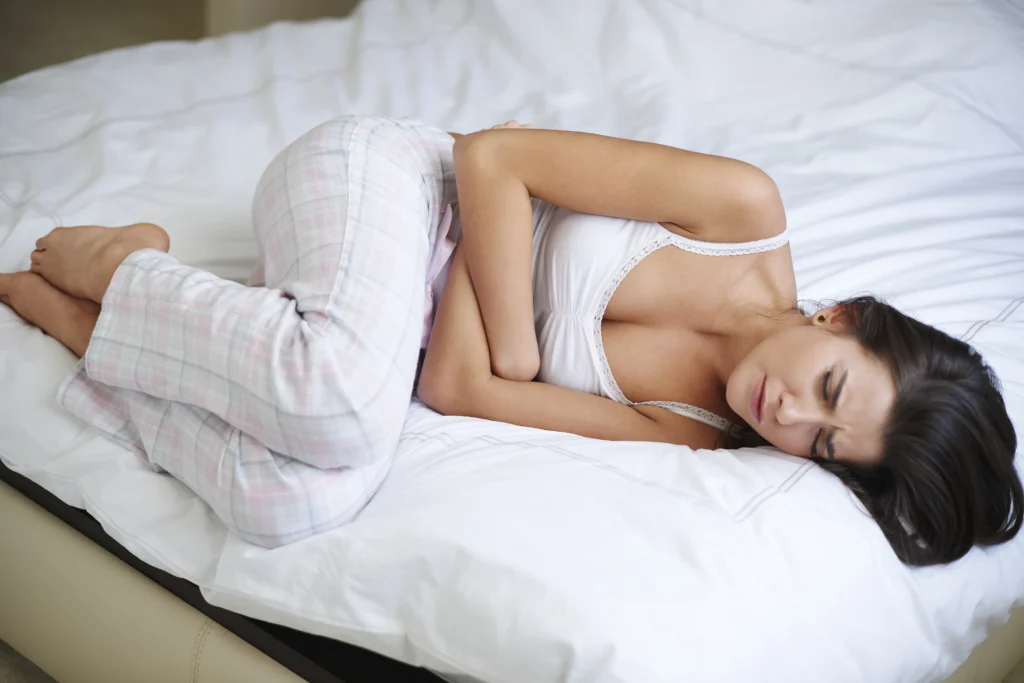
While every woman experiences menstrual cramps differently, certain symptoms are more suggestive of endometriosis than normal period pain.
If you recognize several of these warning signs, it’s worth discussing them with a gynecologist.
1. Pain That Gets Worse Every Year
Normal menstrual cramps tend to remain relatively consistent over time.
In contrast, endometriosis-related pain often becomes progressively more severe as the condition advances.
If your periods have become increasingly painful over the past few years, don’t ignore the change.
2. Pain Before Your Period Even Starts
Typical menstrual cramps usually begin just before or on the first day of your period.
Endometriosis pain may start several days earlier and continue well after your menstrual bleeding has stopped.
3. Pain Lasting Beyond Your Period
Many women with endometriosis experience chronic pelvic pain throughout the month rather than only during menstruation.
Persistent pelvic discomfort between periods is one of the hallmark features of the condition.
4. Pain During Sexual Intercourse
Deep pain during or after intercourse (dyspareunia) is a common symptom of endometriosis because endometrial-like tissue can affect structures behind the uterus, uterosacral ligaments, or pelvic floor muscles.
Pain during sex is not considered a normal feature of healthy menstruation.
5. Painful Bowel Movements or Urination During Your Period
If bowel movements or urination become painful only during menstruation, endometriosis affecting the bowel or bladder may be responsible.
Some women also experience bloating, constipation, diarrhea, or painful gas during their periods.
6. Heavy Menstrual Bleeding
Although not every woman with endometriosis has heavy periods, some experience excessive menstrual bleeding, prolonged periods, or spotting between cycles.
Heavy bleeding alone does not confirm endometriosis, but it should be evaluated alongside other symptoms.
7. Difficulty Becoming Pregnant
Approximately 30% – 50% of women with endometriosis experience infertility, making it one of the leading causes of female infertility worldwide.
If you’ve been trying to conceive without success and also experience severe menstrual pain, your doctor may recommend an evaluation for endometriosis.
Evidence: Endometriosis is strongly associated with infertility, and early diagnosis can improve fertility planning and treatment outcomes (da Silva et al. 2026)
8. Fatigue That Doesn’t Improve With Rest
Many women with endometriosis report persistent fatigue, even when they get adequate sleep.
Researchers believe that chronic inflammation, ongoing pain, hormonal changes, and poor sleep quality may all contribute to fatigue associated with endometriosis.
9. Pain That Doesn’t Respond Well to Painkillers
Normal menstrual cramps usually improve with nonsteroidal anti-inflammatory drugs (NSAIDs), heat therapy, or gentle exercise.
If your pain remains severe despite these treatments or repeatedly forces you to miss work, school, or social activities, further medical evaluation is recommended.
10. Daily Activities Become Difficult
One of the most important warning signs is when menstrual pain begins affecting your quality of life.
You should not have to:
- Miss school or work every month.
- Stay in bed because of cramps.
- Cancel social activities.
- Avoid exercise due to pain.
- Live with persistent pelvic discomfort between periods.
If these situations sound familiar, it’s time to seek professional advice.
Symptoms Beyond Menstrual Cramps
Endometriosis is much more than painful periods.
Depending on where the endometrial-like tissue is located, symptoms can vary significantly.
Common symptoms include:
- Chronic pelvic pain
- Lower back pain
- Pain during or after sexual intercourse
- Pain during bowel movements
- Pain during urination during menstruation
- Abdominal bloating (“endo belly”)
- Constipation or diarrhea around your period
- Fatigue
- Nausea
- Difficulty becoming pregnant
- Irregular or heavy menstrual bleeding
Not every woman experiences all these symptoms, and some may have very mild disease despite significant pain.
Who Is at Higher Risk?
Although the exact cause of endometriosis remains unclear, several factors may increase the likelihood of developing the condition:
- A family history of endometriosis.
- Starting menstruation at an early age.
- Short menstrual cycles.
- Heavy or prolonged periods.
- Never having been pregnant.
- Certain congenital abnormalities affecting menstrual flow.
- Delayed childbirth.
Having one or more risk factors does not necessarily mean you will develop endometriosis, but it may increase your overall risk.
Common Myths About Endometriosis
Myth 1: Severe period pain is always normal.
Fact: Pain that interferes with daily life or progressively worsens should always be medically assessed.
Myth 2: Teenagers cannot have endometriosis.
Fact: Symptoms often begin during adolescence, and early diagnosis can prevent years of unnecessary suffering.
Myth 3: Pregnancy permanently cures endometriosis.
Fact: Pregnancy may temporarily improve symptoms for some women, but it is not a cure.
Myth 4: A normal ultrasound completely rules out endometriosis.
Fact: Many cases, especially superficial endometriosis, may not be visible on routine imaging.
Evidence: International guidelines emphasize that endometriosis is a clinical diagnosis supported by imaging where appropriate, and a normal ultrasound does not exclude disease (ACOG Clinical Practice Guideline No. 11 et al. 2026).
Myth vs Fact
Myth
Fact
Severe period pain is normal.
Pain that interferes with daily life or progressively worsens should be medically evaluated.
Endometriosis only affects older women.
Symptoms often begin during adolescence or early adulthood.
Pregnancy permanently cures endometriosis.
Pregnancy may temporarily reduce symptoms but is not a cure.
A normal ultrasound completely rules out endometriosis.
Many cases cannot be detected on routine ultrasound and require clinical assessment.
When Should You See a Doctor?
Arrange a medical evaluation if you experience any of the following:
- Severe menstrual pain that limits your daily activities.
- Pain that worsens with each menstrual cycle.
- Pain during sexual intercourse.
- Painful bowel movements or urination during your period.
- Heavy menstrual bleeding with severe cramps.
- Difficulty becoming pregnant.
- Chronic pelvic pain lasting beyond your menstrual period.
- Menstrual pain that does not improve with over-the-counter medication or self-care.
Early diagnosis can reduce unnecessary suffering and help you access treatments that improve pain control, fertility, and overall quality of life.
How Is Endometriosis Diagnosed?
Diagnosing endometriosis can be challenging because its symptoms often overlap with other conditions, such as:
irritable bowel syndrome (IBS), pelvic inflammatory disease (PID), adenomyosis, and bladder disorders.
There is no single blood test that can definitively diagnose endometriosis.
Your healthcare provider will usually begin with a detailed discussion about your symptoms, menstrual history, and medical history, followed by a physical examination if appropriate.
Diagnostic methods may include:
Medical History
Your doctor may ask about:
- The timing and severity of your menstrual pain.
- Pain during sexual intercourse.
- Painful bowel movements or urination.
- Heavy menstrual bleeding.
- Fertility concerns.
- Family history of endometriosis.
Pelvic Examination
A pelvic examination may help identify tenderness, pelvic floor muscle tightness, ovarian cysts, or other abnormalities.
However, many women with endometriosis have a normal pelvic examination.
Imaging Tests
Imaging cannot detect every type of endometriosis but can identify ovarian endometriomas and deep infiltrating disease.
Common imaging tests include:
- Transvaginal ultrasound
- Pelvic ultrasound
- MRI in selected cases
Laparoscopy
Laparoscopy remains the most definitive method to confirm endometriosis because it allows direct visualization of endometrial-like tissue and, when appropriate, tissue biopsy for histological confirmation.
However, advances in imaging and clinical assessment mean that many patients can begin treatment based on symptoms and imaging findings without immediate surgery.
Evidence: Current international recommendations support a patient-centered approach in which diagnosis is based on symptoms, clinical assessment, and imaging when appropriate, with laparoscopy reserved for selected situations (ACOG Clinical Practice Guideline No. 11 et al. 2026).
Treatment Options for Endometriosis
Treatment depends on several factors, including age, symptom severity, fertility goals, and the extent of the disease.
1. Pain Relief Medications
Nonsteroidal anti-inflammatory drugs (NSAIDs), such as ibuprofen or naproxen, may reduce pain in some women, particularly when taken at the onset of symptoms.
2. Hormonal Therapy
Hormonal treatments aim to reduce the hormonal stimulation of endometrial-like tissue and may include:
- Combined oral contraceptive pills
- Progestin-only therapy
- Levonorgestrel-releasing intrauterine system (LNG-IUS)
- Gonadotropin-releasing hormone (GnRH) agonists or antagonists
- Other hormone-modulating medications, depending on individual circumstances
These treatments help manage symptoms but do not permanently cure endometriosis.
3. Surgical Treatment
Surgery may be recommended when:
- Pain remains severe despite medical treatment.
- Endometriomas require management.
- Fertility is affected.
- Deep infiltrating endometriosis involves surrounding organs.
Whenever possible, surgery aims to remove endometriosis while preserving healthy tissue and reproductive function.
4. Lifestyle Measures
Many women benefit from combining medical treatment with healthy lifestyle habits, including:
- Regular physical activity
- Adequate sleep
- Stress management techniques
- A balanced, anti-inflammatory eating pattern
- Heat therapy for symptom relief
Lifestyle measures should complement, not replace, medical care.
Can Physiotherapy Help?
Yes.
Physiotherapy can play an important role in the multidisciplinary management of endometriosis, particularly for women with persistent pelvic pain, muscle tension, movement limitations, or pelvic floor dysfunction.
A women’s health physiotherapist may help by:
- Assessing pelvic floor muscle function.
- Reducing muscle tightness and trigger points through manual therapy.
- Teaching breathing and relaxation techniques.
- Improving posture and movement patterns.
- Prescribing individualized stretching and strengthening exercises.
- Guiding gradual return to physical activity.
- Educating patients about pain management and self-care strategies.
Physiotherapy does not remove endometriosis lesions, but it can reduce secondary musculoskeletal pain, improve function, and enhance quality of life when integrated with medical treatment.
Lesser-Known Facts About Endometriosis
Many people think endometriosis only causes painful periods, but research has revealed several lesser-known facts about this condition:
- Endometriosis can affect teenagers and may begin soon after the first menstrual periods.
- Some women with minimal disease experience severe pain, while others with extensive disease have few symptoms.
- The condition has been identified in locations outside the pelvis, including the diaphragm and, in rare cases, the lungs.
- Chronic inflammation associated with endometriosis can contribute to fatigue and reduced quality of life.
- Diagnostic delays averaging several years are still reported worldwide, highlighting the importance of early recognition and appropriate referral.
- Endometriosis is a chronic condition that often requires long-term, individualized management rather than a single treatment.
Expert Tips from a Women’s Health Physiotherapist
- Don’t assume severe menstrual pain is something you simply have to tolerate.
- Keep a menstrual diary noting pain intensity, bleeding patterns, and associated symptoms to help your healthcare provider identify patterns.
- Stay physically active with exercises that are comfortable for you, as regular movement may help reduce pain and improve overall well-being.
- Practice diaphragmatic breathing and relaxation techniques to reduce pelvic floor muscle tension.
- Use heat therapy as recommended for temporary symptom relief.
- Follow your prescribed treatment plan and attend regular follow-up appointments.
- Seek care from a multidisciplinary team, including a gynecologist and women’s health physiotherapist; if symptoms continue to affect your daily life.
Conclusion
Not every painful period is caused by endometriosis, but menstrual pain that is severe, progressive, or accompanied by symptoms such as:
painful intercourse, bowel or bladder pain, heavy bleeding, chronic pelvic pain, or infertility should never be ignored.
Early recognition and timely evaluation can lead to an earlier diagnosis, more effective symptom management, and better long-term health outcomes.
If your menstrual pain consistently interferes with work, school, exercise, or everyday activities, speak with a qualified healthcare professional.
Appropriate treatment, whether medical, surgical, physiotherapy-based, or a combination of these approaches, can significantly improve quality of life.
Evidence: Comprehensive reviews show that endometriosis requires individualized, multidisciplinary care focused on pain control, fertility goals, and long-term quality of life (Becker et al. 2022).
Final Thoughts
Many women are told that severe menstrual pain is simply part of being a woman, but persistent or disabling pain should never be ignored. Understanding the differences between normal period cramps and endometriosis can lead to earlier diagnosis, better symptom management, and improved quality of life. If your symptoms interfere with work, school, relationships, or everyday activities, speak with a qualified healthcare professional. Early recognition and appropriate treatment can make a meaningful difference to your long-term health.
Frequently Asked Questions
Can endometriosis feel like normal period cramps?
Early-stage endometriosis may resemble normal menstrual cramps, but the pain is often more severe, lasts longer, worsens over time, or occurs outside the menstrual period.
Can I have endometriosis even if my ultrasound is normal?
Yes. A normal ultrasound does not rule out endometriosis, especially superficial disease. Your doctor may recommend additional evaluation based on your symptoms.
Does severe period pain always mean endometriosis?
No. Other conditions such as adenomyosis, fibroids, pelvic inflammatory disease, or primary dysmenorrhea can also cause severe menstrual pain.
Can physiotherapy help with endometriosis?
Women’s health physiotherapy may help reduce pelvic floor muscle tension, improve movement, and decrease chronic pelvic pain as part of a multidisciplinary treatment plan.
When should I see a doctor?
Seek medical advice if your pain prevents normal daily activities, worsens each month, occurs outside your period, or is associated with infertility, heavy bleeding, or painful intercourse.
Stay tuned with us for more health related topics.
Follow us on LinkedIn and Instagram for more.
More Read


Medical Disclaimer!
This article has been reviewed and written under the guidance of our Head Physiotherapist, Dr. Kruti Raj (PT, MUHS,CPT,CMPT). The information shared is intended for educational purposes only and should not be considered a substitute for personalized medical advice, diagnosis, or treatment.
Please consult us or any other qualified healthcare professional before beginning any exercise program, especially if you are experiencing pain, recovering from injury, or managing a medical condition.


