


If you’ve ever experienced painful menstrual cramps, chances are someone has handed you a hot water bottle or suggested placing a heating pad over your lower abdomen.
For generations, heat has been one of the most commonly used home remedies for period pain.
Unlike many traditional remedies that rely only on anecdotal experiences, heat therapy has been extensively studied by researchers over the last two decades.
Today, it is recognized as one of the safest and most effective non-pharmacological options for relieving primary dysmenorrhea (painful periods without an underlying pelvic disease)
Quick Answer
Yes. Heat therapy is one of the most effective non-drug treatments for period pain. Applying gentle heat to the lower abdomen or lower back may help relax muscles, improve blood circulation, and reduce menstrual cramps. Heating pads, hot water bottles, heat patches, and warm baths are all practical options when used safely.
Recent scientific evidence has strengthened this recommendation even further.
A comprehensive systematic review and meta-analysis published in Frontiers in Medicine;
evaluated 57 randomized controlled trials involving 5,359 women and concluded that heat therapy significantly reduced menstrual pain compared with no treatment.
The review also found that heat therapy provided pain relief comparable to non-steroidal anti-inflammatory drugs (NSAIDs) while resulting in fewer adverse effects (Yuan et al. 2026).
As a physiotherapist,
I frequently recommend heat therapy because it is affordable, easy to use, widely available, and suitable for many women experiencing mild to moderate menstrual cramps.
While it cannot treat underlying conditions such as endometriosis or adenomyosis,
it can become an important part of a comprehensive pain-management strategy alongside exercise, healthy nutrition, stress management, and medical care when required.
In this article,
we’ll explore how heat therapy works, what research says about its effectiveness, the safest ways to use it, and when it may not be enough.
Key Takeaways
- Heat therapy is supported by scientific evidence as a safe and effective option for relieving primary dysmenorrhea.
- Heating pads, hot water bottles, heat patches, and warm baths can all help reduce menstrual cramps.
- Applying heat early, when cramps begin, may provide better symptom relief.
- Gentle warmth is safer and more effective than excessive heat.
- Heat therapy works best when combined with exercise, healthy nutrition, adequate sleep, and stress management.
- Persistent or worsening menstrual pain requires medical assessment.
What Is Heat Therapy?
Heat therapy, also known as thermotherapy, refers to the controlled application of warmth to relieve pain, stiffness, and muscle tension.
For menstrual cramps, heat is usually applied to:
- The lower abdomen
- The lower back
- The pelvic region
The goal is not to make the skin extremely hot.
Instead, gentle, consistent warmth helps relax muscles and improve local blood flow, creating conditions that reduce discomfort.
Common methods include:
- Electric heating pads
- Hot water bottles
- Disposable heat patches
- Microwaveable wheat bags
- Warm towels
- Warm baths
Unlike medication, heat therapy works externally and does not enter the bloodstream.
This makes it a practical option for women who cannot take certain pain medicines or who prefer to begin with conservative, non-drug treatments.
Can Heat Really Reduce Period Pain?
Absolutely, and the evidence supporting its use is stronger than many people realize.
Menstrual cramps occur because the uterus contracts to shed its lining.
These contractions are triggered by prostaglandins, hormone-like chemicals that increase during menstruation.
Women with higher prostaglandin levels often experience stronger uterine contractions and more severe pain.
Heat therapy doesn’t stop prostaglandin production, but it helps reduce the pain caused by these contractions through several physiological mechanisms.
The latest systematic review found that women receiving heat therapy experienced significantly lower pain scores than those receiving no treatment.
Even more encouraging, comparisons with NSAIDs showed that heat therapy achieved similar levels of pain relief while causing substantially fewer side effects (Yuan et al. 2026).
These findings support heat therapy as one of the most evidence-based self-care strategies currently available for primary dysmenorrhea.
How Does Heat Help Relieve Menstrual Cramps?
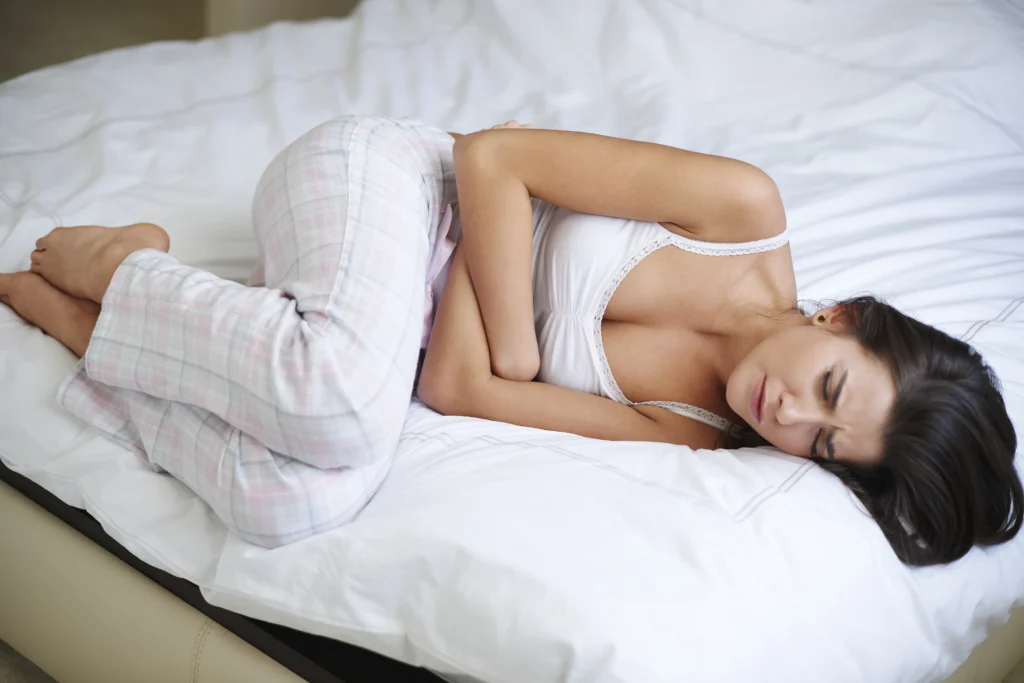
Many women assume that heat simply feels comforting.
In reality, several biological processes occur when warmth is applied to painful muscles and tissues.
It Relaxes Tight Muscles
Heat increases tissue temperature, allowing muscles surrounding the uterus, lower abdomen, pelvis, and lower back to relax more easily.
Reduced muscle tension often translates into less cramping and improved comfort.
It Improves Blood Circulation
Warmth causes blood vessels to dilate, increasing circulation around the pelvis.
Better blood flow delivers oxygen and nutrients to tissues while helping remove metabolic waste products that may contribute to discomfort.
It Reduces Pain Perception
Heat activates temperature-sensitive receptors within the skin.
These sensory signals may reduce the transmission of pain messages travelling to the brain, making cramps feel less intense.
This mechanism is commonly explained using the Gate Control Theory of Pain,
which proposes that non-painful sensory input can partially inhibit pain signals reaching the central nervous system.
It Encourages Relaxation
Pain often causes people to tense their abdominal muscles and breathe more shallowly.
Applying warmth naturally encourages relaxation, slower breathing, and reduced muscle guarding, all of which may contribute to lower pain intensity.
Research has also suggested that local heat application improves quality of life and daily functioning in women experiencing primary dysmenorrhea by helping reduce pain-related limitations (Demet et al. 2025)
Heating Pad vs. Hot Water Bottle: Which One Should You Choose?
One of the most common questions women ask is whether an electric heating pad works better than a traditional hot water bottle.
The answer is reassuring, both are effective when they provide gentle, consistent warmth.
Heating Pad
Advantages
- Consistent temperature
- Adjustable heat settings
- Convenient for home use
- Reusable
Limitations
- Requires electricity or battery power
- Less convenient while travelling
Hot Water Bottle
Advantages
- Affordable
- Portable
- Doesn’t require electricity
- Easy to use
Limitations
- Gradually loses heat
- Requires refilling
- Temperature cannot be adjusted after filling
Current research has not demonstrated a clear advantage of one device over the other.
The most important factor is applying comfortable, sustained warmth safely rather than the type of heat source itself.
Heat Patches: Pain Relief While You’re on the Move
If you’ve ever needed to attend work, college, or travel during your period, holding a hot water bottle simply isn’t practical.
This is where disposable heat patches or wearable heat wraps become a convenient alternative.
Unlike traditional heating pads, heat patches generate continuous low-level warmth for several hours and can be worn discreetly beneath clothing.
For many women, this means they can continue their daily routine without needing to stay near an electrical outlet or repeatedly refill a hot water bottle.
Benefits of Heat Patches
- Portable and discreet.
- Provide continuous low-level heat for several hours.
- Allow greater freedom of movement.
- Useful during work, travel, or school.
- Require no electricity.
Clinical research has shown encouraging results.
A randomized controlled trial comparing a continuous low-level heat wrap with ibuprofen found that the heated patch provided menstrual pain relief comparable to ibuprofen over two days of treatment.
Women using the heat wrap also experienced quicker noticeable period pain relief when heat was combined with ibuprofen (Akin et al. 2001).
Warm Baths: Relaxation Beyond Pain Relief
A warm bath doesn’t just warm the abdomen, it provides gentle heat to the lower back, hips, pelvic muscles, and legs simultaneously.
Many women notice that menstrual cramps are accompanied by stiffness throughout the body.
Spending 15 to 20 minutes in a comfortably warm bath may help reduce overall muscle tension while promoting relaxation.
Warm baths may also:
- Encourage deeper breathing.
- Reduce stress.
- Improve sleep quality.
- Ease lower back discomfort.
- Promote a sense of overall comfort.
Avoid excessively hot water, as very high temperatures can cause dizziness or overheating.
Warm Towels and Microwave Heat Packs
If you don’t own a heating pad or hot water bottle, a warm towel can still provide temporary relief.
Simply soak a towel in warm water, wring it out carefully, and place it over the lower abdomen or lower back.
Microwaveable wheat bags, rice bags, and gel packs offer another convenient option because they mould comfortably to the body while retaining warmth.
Regardless of the device you choose, the goal remains the same: gentle, sustained warmth rather than intense heat.
Does Heat Work as Well as Painkillers?
One of the most surprising findings from menstrual pain research is that heat therapy performs remarkably well when compared with commonly used pain medication.
Several randomized controlled trials have compared continuous low-level heat therapy with ibuprofen and other NSAIDs.
The results consistently suggest that heat therapy provides meaningful pain relief, and in some studies, women reported improvements comparable to those taking medication.
The most recent systematic review concluded that heat therapy and NSAIDs demonstrated similar short-term effectiveness for reducing menstrual pain,
while heat therapy was associated with fewer adverse effects.
This does not mean heat should replace medication for everyone.
Women experiencing severe pain or underlying conditions such as endometriosis may still require medical treatment.
Instead, heat therapy should be viewed as an evidence-based option that may reduce the need for medication in some women or complement it when appropriate (Kirsch et al. 2024)
When Is the Best Time to Apply Heat?
Many women wait until cramps become severe before reaching for a heating pad.
However, some research suggests that using heat as soon as cramps begin may provide better symptom control than waiting until pain becomes intense.
For women with predictable menstrual cycles, applying warmth during the first signs of discomfort may help interrupt the pain cycle earlier.
Although everyone’s experience is different, many healthcare professionals recommend:
- Applying heat at the onset of cramps.
- Using it for 15-30 minutes at a time with traditional heating devices.
- Following manufacturer instructions for wearable heat patches.
- Combining heat with gentle movement and diaphragmatic breathing where appropriate.
Consistency is often more beneficial than applying very intense heat for a short period.
Common Mistakes That Reduce the Effectiveness of Heat Therapy
Even though heat therapy is simple, a few common mistakes can reduce its benefits.
Using Excessively High Temperatures
Hotter isn’t always better.
Very high temperatures increase the risk of burns without providing additional pain relief.
Comfortable warmth is all that’s needed.
Falling Asleep on an Electric Heating Pad
Leaving an electric heating pad on for prolonged periods, particularly while sleeping, increases the risk of burns and skin irritation.
Choose devices with automatic shut-off functions whenever possible.
Applying Heat Directly to Bare Skin
Always place a protective layer, such as clothing or a towel, between your skin and the heat source unless the manufacturer’s instructions specifically state otherwise.
This helps prevent burns and reduces the risk of a condition known as erythema ab igne, a mottled skin discoloration caused by repeated exposure to heat.
Using Heat as the Only Treatment
Although heat therapy is highly effective for many women, it works best when combined with other healthy habits.
Regular physical activity, stretching, adequate hydration, balanced nutrition, stress management, and good sleep all contribute to healthier menstrual cycles.
Who Should Avoid or Modify Heat Therapy?
Heat therapy is considered safe for most women with primary dysmenorrhea, but it isn’t appropriate in every situation.
Before reaching for a heating pad, it’s worth considering whether warmth is the right choice for your symptoms.
You should avoid or modify heat therapy if you:
- Have reduced skin sensation or nerve damage that makes it difficult to detect excessive heat.
- Have an open wound, skin infection, burn, or rash where you plan to apply heat.
- Notice unusual swelling, redness, or inflammation that worsens with warmth.
- Have recently experienced an abdominal injury or surgery unless your healthcare provider advises otherwise.
- Are using a heating device that cannot regulate temperature safely.
If you have a chronic medical condition such as diabetes, peripheral neuropathy, or circulation problems, speak with your healthcare provider before using prolonged heat therapy.
Remember, heat should always feel soothing, not painful.
Myth vs Fact
| Myth | Fact |
|---|---|
| Heat therapy is only a comfort measure. | Research shows that heat therapy can significantly reduce menstrual pain and may provide relief comparable to some NSAIDs. |
| The hotter the heating pad, the better it works. | Comfortable, moderate heat is effective and much safer than excessive temperatures. |
| Heat therapy can cure severe period pain. | Heat helps manage symptoms but does not treat underlying conditions such as endometriosis or fibroids. |
| Only heating pads are effective. | Hot water bottles, heat patches, warm baths, and warm towels may also provide meaningful relief. |
Safety Tips for Using Heat Therapy
Heat therapy is simple, but using it correctly helps maximise its benefits while reducing the risk of burns.
Here are a few practical safety tips:
- Keep the temperature warm rather than extremely hot.
- Place a thin towel or layer of clothing between your skin and the heat source if required.
- Follow the manufacturer’s instructions for heating pads and heat wraps.
- Avoid falling asleep while using an electric heating pad unless it has an automatic shut-off feature.
- Check your skin regularly for redness or irritation.
- Allow your skin to cool between repeated applications if needed.
These precautions may seem small, but they help ensure that heat therapy remains both safe and effective.
Can You Combine Heat Therapy with Other Treatments?
Absolutely.
Heat therapy doesn’t have to be used on its own.
In fact, combining it with other evidence-based approaches often provides better overall symptom management than relying on a single strategy.
For many women, heat works well alongside:
- Gentle stretching exercises.
- Yoga for period pain.
- Walking or light physical activity.
- Deep diaphragmatic breathing.
- Healthy nutrition and adequate hydration.
- Over-the-counter pain medication when recommended by a healthcare professional.
A recent systematic review highlighted that combining non-pharmacological approaches may improve comfort while reducing reliance on medication in some women with primary dysmenorrhea (Li et al. 2024).
Expert Tips from a Women’s Health Physiotherapist
One of the biggest misconceptions I hear is that heat therapy should only be used once the pain becomes unbearable.
In reality, many women experience better results when they apply warmth as soon as the first signs of cramping appear.
Early heat application may help reduce muscle guarding before discomfort becomes more intense.
I also encourage women not to spend the entire day resting in bed with a heating pad.
While rest is important when you feel unwell, combining heat therapy with gentle movement often produces better results.
A short walk around your home, simple stretching exercises, or a few minutes of diaphragmatic breathing can complement the relaxing effects of warmth.
Finally, remember that every menstrual cycle is different.
Some months you may only need a heating pad for 20 minutes, while during others you may benefit from combining heat with exercise, healthy eating, and appropriate medical treatment.
Listening to your body is far more valuable than following a rigid routine.
When Heat Therapy Isn’t Enough
Although heat therapy is highly effective for many women, it isn’t designed to treat the underlying causes of severe menstrual pain.
If your symptoms continue despite using heat correctly, don’t assume that intense pain is simply something you have to live with.
Persistent or worsening cramps may indicate conditions such as:
- Endometriosis
- Adenomyosis
- Uterine fibroids
- Pelvic inflammatory disease
- Ovarian cysts
These conditions require proper medical assessment and may need treatments beyond self-care strategies.
Heat can still provide temporary comfort, but it should never delay an appropriate diagnosis.
When Should You See a Doctor?
Arrange a medical review if you experience:
- Period pain that becomes progressively worse over time.
- Menstrual cramps that continue after your period ends.
- Heavy menstrual bleeding requiring frequent pad or tampon changes.
- Pain during sexual intercourse.
- Fever, chills, or abnormal vaginal discharge.
- Sudden severe pelvic pain.
- Pain that interferes with work, school, sleep, or daily activities despite using heat therapy, medication, and other self-care measures.
Early evaluation helps identify underlying conditions sooner and allows you to receive the most appropriate treatment.
Final Thoughts
Heat therapy is a simple yet scientifically supported way to manage period pain. Whether you prefer a heating pad, hot water bottle, or warm bath, using gentle heat correctly may help ease cramps and improve comfort. For the best results, combine heat therapy with regular movement, healthy eating, quality sleep, and appropriate medical care whenever symptoms become severe or persistent.
Conclusion
Heat therapy remains one of the simplest, safest, and most evidence-supported non-drug treatments for period pain.
Whether you prefer a heating pad, hot water bottle, heat patch, or warm bath, applying gentle warmth to the lower abdomen or lower back can help relax muscles, improve circulation, and reduce the intensity of menstrual cramps.
The greatest benefit comes from using heat correctly and incorporating it into a broader approach to menstrual health.
Regular exercise, stretching, balanced nutrition, adequate hydration, quality sleep, and stress management all work together to support your body throughout the menstrual cycle.
Most importantly, remember that painful periods should never be dismissed as something you simply have to endure.
If heat therapy and other conservative treatments fail to provide adequate relief, or if your symptoms become more severe over time, seek medical advice.
Identifying and treating the underlying cause early can make a significant difference to your long-term health and quality of life.
With the right combination of self-care, evidence-based treatments, and professional support when needed, many women can successfully manage period pain and continue living active, healthy lives.
Frequently Asked Questions
1. Does a heating pad really help period cramps?
Yes. Studies suggest that local heat therapy can reduce menstrual pain by relaxing muscles, improving blood flow, and decreasing pain perception.
2. How long should I use a heating pad for period pain?
Traditional heating pads are commonly used for 15–30 minutes at a time, while wearable heat patches should be used according to the manufacturer’s instructions.
3. Is a hot water bottle as effective as a heating pad?
Yes. Both provide gentle warmth and can be effective when used safely. The choice depends on convenience and personal preference.
4. Can I sleep with a heating pad?
It is generally safer to avoid sleeping with an electric heating pad unless it has an automatic shut-off feature. This helps reduce the risk of burns.
5. Where should I place heat for period pain?
Most women benefit from placing heat on the lower abdomen or lower back, depending on where their pain is most noticeable.
6. Can heat therapy replace pain medication?
Heat therapy may reduce the need for medication in some women, but severe pain or underlying medical conditions still require appropriate medical care.
7. Is heat therapy safe for everyone?
Most women can use heat therapy safely, but it should be avoided over damaged skin or where sensation is reduced. If you have certain medical conditions, consult your healthcare provider first.
8. When should I see a doctor instead of relying on heat therapy?
Seek medical advice if your pain becomes progressively worse, is associated with heavy bleeding, fever, fainting, or significantly affects your daily life.
Stay tuned with us for more health related topics.
Follow us on LinkedIn and Instagram for more.
More Read


Medical Disclaimer!
This article has been reviewed and written under the guidance of our Head Physiotherapist, Dr. Kruti Raj (PT, MUHS,CPT,CMPT). The information shared is intended for educational purposes only and should not be considered a substitute for personalized medical advice, diagnosis, or treatment.
Please consult us or any other qualified healthcare professional before beginning any exercise program, especially if you are experiencing pain, recovering from injury, or managing a medical condition.


