


Hip pain at night can make it difficult to find a comfortable sleeping position, interrupt rest and leave you feeling stiff the following morning.
Quick Answer: Hip Pain at Night
Hip pain at night can result from greater trochanteric pain syndrome, gluteal tendinopathy, hip osteoarthritis, hip flexor irritation or referred pain from the lower back. Sleeping directly on a painful hip may increase pressure on sensitive tissues.
Changing your sleeping position, modifying aggravating activities and following an appropriate physiotherapy programme may help when the cause is musculoskeletal.
Important: Seek prompt medical assessment for persistent, unexplained or worsening night pain. Severe pain after an injury, inability to bear weight, or a hot, swollen hip with fever requires urgent medical care.
The discomfort may come from the hip joint, surrounding tendons and muscles, the lower back or, less commonly, an underlying medical condition.
Understanding where the pain occurs, what makes it worse and whether other symptoms are present can help identify the likely cause.
Physiotherapy may improve pain, strength and movement in many cases, but persistent or unexplained night-time pain should not automatically be treated as a routine muscle problem.
Key Takeaways
- Outer hip pain: May be associated with gluteal tendinopathy or greater trochanteric pain syndrome.
- Groin pain and stiffness: Can occur with hip osteoarthritis or other hip joint problems.
- Buttock pain or radiating symptoms: May involve the lower back or irritated nerves.
- Sleeping position matters: Avoiding direct pressure on a painful hip may improve comfort.
- Physiotherapy can help: Individualised exercise, activity modification and gradual strengthening may improve function.
- Persistent night pain needs attention: Do not ignore worsening, unexplained symptoms or other warning signs.
Why Does Hip Pain Get Worse at Night?
Hip pain may become more noticeable when you lie down because pressure on the affected area changes.
For example, sleeping on the painful side can compress the tendons and soft tissues around the outer hip.
During the day, walking and other activities may distract you from discomfort.
At night, when you are resting, you may become more aware of pain that was less noticeable earlier.
Your sleeping position can also influence symptoms.
Keeping the hip bent for a prolonged period or lying directly on an irritated area may increase discomfort.
However, pain that repeatedly wakes you from sleep, becomes progressively worse or occurs without a clear explanation deserves medical assessment.
Night-time pain alone does not indicate a serious condition, but it should be considered alongside your other symptoms.
Common Causes of Hip Pain at Night
1. Greater Trochanteric Pain Syndrome
Greater trochanteric pain syndrome (GTPS) is a common cause of pain on the outside of the hip.
It often involves irritation or reduced load tolerance of the gluteal tendons, sometimes accompanied by inflammation of nearby tissues.
You may notice:
- Pain on the outer hip when lying on that side.
- Tenderness when pressing the bony area on the side of the hip.
- Discomfort when climbing stairs or walking uphill.
- Pain when standing on one leg or getting up from a chair.
The symptoms may worsen at night because the body weight compresses the sensitive tissues against the mattress.
Physiotherapy usually focuses on reducing excessive tendon compression, gradually improving gluteal muscle strength and rebuilding tolerance for everyday activities.
Complete rest is not generally necessary, but temporarily modifying aggravating movements may help.
Research supports education and exercise as important components of conservative management for gluteal tendinopathy. (Kjeldsen et al., 2024)
2. Hip Osteoarthritis
Hip osteoarthritis develops when the joint undergoes structural changes that can affect movement and load tolerance.
It becomes more common with age, although symptoms and severity vary between individuals.
Possible symptoms include:
- A deep ache in the groin, front of the hip or thigh.
- Stiffness after sitting or resting.
- Difficulty putting on socks or shoes.
- Reduced hip movement.
- Pain during walking, standing or turning in bed.
Some people with hip osteoarthritis experience discomfort at night, particularly when symptoms are more persistent.
However, night pain is not specific to osteoarthritis and should not be used to diagnose it.
Physiotherapy may include progressive strengthening, mobility exercises, walking advice and activity modification.
A physiotherapist can adjust the program according to pain, function and the person’s ability to tolerate exercise.
The 2024 American Academy of Orthopedic Surgeons guideline summary supports appropriate non-surgical management for symptomatic hip osteoarthritis. (Hannon et al., 2024)
3. Gluteal Tendon Irritation
The gluteal tendons connect muscles in the buttocks to the outer hip.
These muscles help stabilize the pelvis during walking, climbing stairs and standing on one leg.
When the tendons become irritated or cannot tolerate the demands placed on them, pain may develop around the outer hip.
Symptoms may increase after a sudden rise in walking distance, running, hill climbing or other repetitive activities.
Sleeping on the affected side can also aggravate the pain.
Treatment depends on the severity of symptoms and the activities that trigger them.
A physiotherapist may recommend temporarily reducing aggravating loads before introducing progressively challenging hip-strengthening exercises.
Avoid assuming that every painful outer hip needs aggressive stretching.
Some positions can increase compression around the gluteal tendons and make symptoms worse.
4. Hip Flexor or Other Soft-Tissue Problems
The hip flexors help lift the thigh and contribute to movements such as walking, climbing stairs and getting into a car.
Irritation around these muscles or tendons can cause pain at the front of the hip or in the groin.
Symptoms may be more noticeable when lifting the knee, extending the hip or changing position in bed.
Other soft-tissue problems, including muscle strains, can also produce discomfort after exercise or an unfamiliar activity.
A clinical assessment can help determine whether the symptoms are consistent with a muscle or tendon problem.
Treatment may involve modifying painful activities, restoring comfortable movement and gradually rebuilding strength.
5. Referred Pain From the Lower Back
Not all pain felt around the hip originates in the hip joint.
Problems involving the lower back can cause pain that spreads into the buttock, outer hip or thigh.
Possible clues include back stiffness, pain that changes with spinal movement, tingling, numbness or discomfort extending down the leg.
Nerve irritation may also cause burning, shooting or electric-like sensations.
These symptoms require assessment because the appropriate treatment differs from that for an isolated hip tendon problem.
Physiotherapy may address spinal movement, nerve-related symptoms, strength and functional activity when the assessment indicates that the lower back is contributing to the pain. (Chamberlain et al., 2021)
6. Hip Injury or Stress Fracture
A fall, direct impact or sudden twisting movement can injure the hip and surrounding structures.
Some fractures cause immediate severe pain, while stress fractures may develop gradually after repetitive loading.
Potential warning signs include:
- Pain that increases when standing or putting weight on the leg.
- A recent fall or significant injury.
- Difficulty walking or bearing weight.
- Deep groin pain that persists or worsens with activity.
Stress fractures may occur after a sudden increase in repetitive activity and can sometimes develop without a single obvious injury.
People with weakened bones or other risk factors may be more vulnerable.
Do not begin strengthening exercises or attempt to walk through severe pain if a fracture is possible.
Seek urgent medical assessment.
Sudden severe hip pain after an injury, particularly with an inability to walk or bear weight, requires emergency evaluation.
7. Less Common Medical Causes
Occasionally, hip pain at night may be associated with infection, inflammatory conditions or a tumor affecting bone or nearby tissues.
These causes are less common than musculoskeletal problems, but recognizing warning signs is important.
Seek prompt medical advice if hip pain is persistent, unexplained, progressively worsening or accompanied by symptoms such as fever, unexplained weight loss or a new lump.
Hip pain with a hot or swollen joint, fever or feeling seriously unwell may indicate an infection and needs urgent assessment.
Persistent bone pain that is worse at night is one symptom that can occur with bone cancer, but it is much more commonly caused by other conditions. (NHS)
Where Do You Feel the Pain?
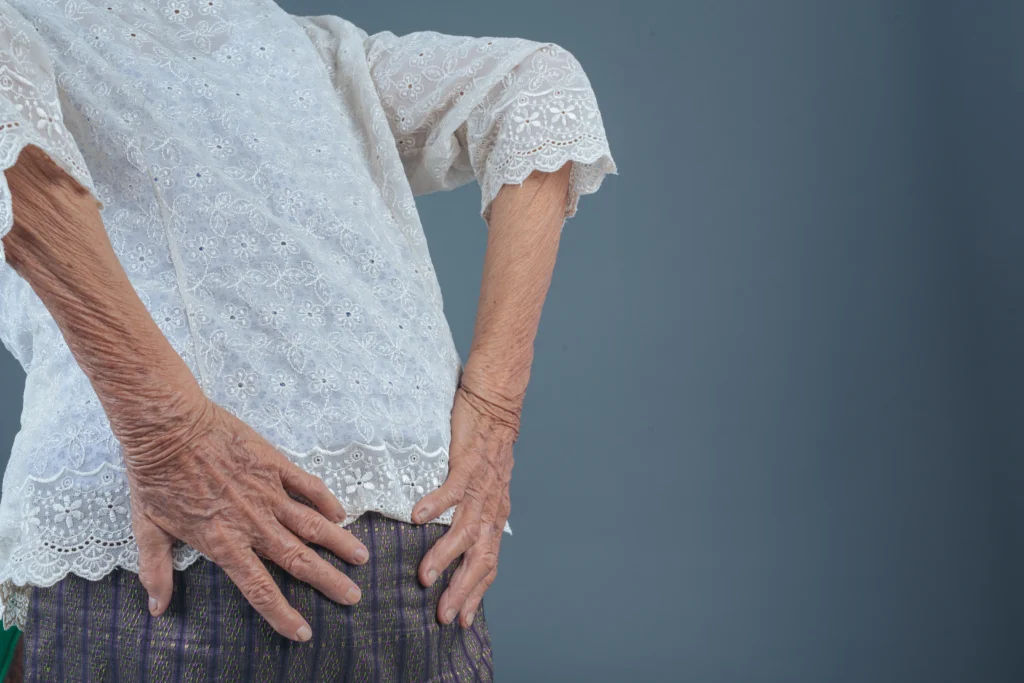
The location of your pain can provide useful clues, although it cannot confirm the diagnosis on its own.
| Pain location | Possible causes | Other clues |
|---|---|---|
| Outer hip | GTPS or gluteal tendinopathy | Pain when lying on the affected side |
| Groin or front of hip | Hip osteoarthritis, joint-related problems or hip flexor irritation | Pain with hip movement or weight-bearing |
| Buttock or back of hip | Lower-back referral or gluteal problems | Symptoms may change with spinal movement |
| Hip and thigh | Hip joint problems, tendon irritation or nerve-related pain | Stiffness, radiating pain or altered sensation |
| Deep pain with difficulty bearing weight | Injury or possible fracture | Often requires prompt medical assessment |
Use these patterns as a guide rather than a self-diagnosis. Several conditions can cause similar symptoms.
How Is Hip Pain at Night Diagnosed?
A healthcare professional will usually ask when the pain started, where it occurs, whether it affects sleep and which movements make it better or worse.
They may also ask about recent injuries, changes in exercise, fever, unexplained weight loss and other medical symptoms.
The physical examination may include:
- Assessing hip movement and stiffness.
- Checking gluteal and other hip muscle strength.
- Observing walking, balance and functional movements.
- Examining the lower back when referred pain is suspected.
- Identifying whether pressure or particular positions reproduce symptoms.
Imaging is not required for every case.
X-rays or other investigations may be appropriate when the history and examination suggest a fracture, significant joint disease or another condition requiring further evaluation.
Persistent, unexplained or worsening night pain should be assessed rather than managed indefinitely with home exercises.
How Physiotherapy Can Help Hip Pain at Night
Physiotherapy is often useful when the pain is caused by a musculoskeletal condition such as gluteal tendinopathy or hip osteoarthritis.
The program should match the underlying problem instead of relying on the same exercises for everyone.
1. Reduce Pressure on Sensitive Tissues
For pain on the outside of the hip, a physiotherapist may recommend avoiding direct pressure on the painful side temporarily.
Try sleeping on the opposite side with a pillow between your knees, or lie on your back with a pillow supporting your legs if comfortable.
The aim is to reduce irritation without forcing the hip into a painful position.
2. Modify Activities Without Becoming Inactive
If symptoms worsen after long walks, stair climbing or exercise, temporarily reduce the activity that triggers them.
Shorter walks or more frequent breaks may be better tolerated than one long session.
Avoid prolonged bed rest unless a healthcare professional has advised it for a specific reason.
Unnecessary inactivity can contribute to stiffness and loss of strength.
3. Build Strength Gradually
When serious causes have been excluded and exercise is appropriate, a physiotherapist may introduce exercises based on your assessment.
Examples include:
- Sit-to-stand practice: Helps improve the strength needed to rise from a chair.
- Supported standing hip abduction: May help strengthen the muscles that stabilize the pelvis.
- Gentle hip mobility exercises: Can help maintain comfortable movement when stiffness is present.
- Progressive walking: Builds activity tolerance when weight-bearing is safe and symptoms allow.
These are examples, not a universal prescription.
For gluteal tendon pain, exercise selection and positioning should minimize unnecessary compression.
For hip osteoarthritis, strengthening and functional exercises may be adapted to the person’s mobility and pain levels.
Do not start these exercises if you have severe unexplained pain, a recent significant injury or signs of infection.
4. Monitor Pain and Sleep
Your response over the following hours and overnight can help guide exercise progression.
If an exercise causes a substantial increase in pain, leaves you more uncomfortable for the rest of the day or repeatedly disrupts sleep, reduce its intensity or stop and seek guidance.
The goal is gradual improvement in strength, movement and daily function, not pushing through worsening symptoms.
5. Progress Towards Everyday Activities
Once pain is better controlled, rehabilitation may progress to longer walks, stair climbing, balance exercises and other activities that matter to you.
Progression should be based on improved function and recovery between sessions, rather than a fixed timeline.
If symptoms are not improving as expected, the diagnosis and treatment plan may need to be reviewed.
Myth vs Fact: Hip Pain at Night
Myth: Hip pain at night always means arthritis.
Fact: Tendon irritation, referred lower-back pain, injuries and other conditions can also cause night-time hip pain.
Myth: Complete bed rest is the best treatment for hip pain.
Fact: When serious causes have been excluded, comfortable movement and appropriately progressed exercise may support recovery. Activity should be modified if it aggravates symptoms.
Myth: Stretching every hip muscle will relieve the pain.
Fact: The right approach depends on the cause. Some stretches and positions may aggravate irritated tendons or painful joints.
Myth: Night-time hip pain can always be managed at home.
Fact: Persistent, unexplained or worsening pain requires assessment. Severe pain after injury, inability to bear weight or signs of infection need urgent medical attention.
What Can You Do at Home?
If your symptoms are mild, there is no significant injury and no warning sign is present, a few practical adjustments may help.
- Change your sleeping position: Avoid lying directly on a painful outer hip.
- Use pillows for support: Place one between your knees when side-sleeping or under your knees when lying on your back.
- Keep moving comfortably: Gentle daytime movement may reduce stiffness, provided weight-bearing is safe.
- Avoid sudden increases in activity: Build walking and exercise gradually.
- Track your symptoms: Note the location, severity, triggers and whether pain is waking you up.
- Arrange an assessment if pain persists: Repeated night-time discomfort should not be ignored simply because it improves temporarily.
Do not use painkillers or home treatments to delay assessment when symptoms are severe, unexplained or getting worse.
When Should You Seek Medical Attention?
Seek emergency medical care if you have severe hip pain after an injury, cannot walk or put weight on the leg, or develop a hot, swollen hip with fever or feeling seriously unwell.
Arrange prompt medical assessment if you experience:
- Persistent pain that repeatedly wakes you at night.
- Pain that is becoming more severe or occurs at rest without an obvious cause.
- Unexplained weight loss, fever or a new lump.
- New weakness, significant numbness or other concerning neurological symptoms.
- Symptoms that do not improve or keep returning despite appropriate activity modification.
Night pain does not automatically mean something serious is happening.
However, persistent or unexplained symptoms deserve assessment before beginning a rehabilitation program.
A Lesser-Known Fact About Hip Pain at Night
The side of the hip that hurts is not always the source of the problem.
Pain around the outer hip may involve the gluteal tendons, while symptoms felt in the buttock or thigh may be referred from the lower back.
This distinction matters because exercises that help one condition may aggravate another.
For example, repeatedly stretching an irritated tendon may not be as helpful as adjusting compressive positions and gradually improving the tendon’s load tolerance.
A physiotherapy assessment can help identify the likely source of pain, establish which movements are safe and guide an appropriate rehabilitation plan.
Final Thoughts
Hip pain at night can interfere with sleep, movement and everyday comfort. Although conditions such as gluteal tendinopathy and hip osteoarthritis are common explanations, the right treatment depends on identifying the underlying cause.
Adjusting your sleeping position, modifying painful activities and following a personalised physiotherapy programme may help when the problem is musculoskeletal.
Do not ignore pain that persists, worsens or has no clear explanation. A timely clinical assessment can help determine the next steps and ensure that rehabilitation is appropriate and safe.
Conclusion
Hip pain at night can result from gluteal tendinopathy, hip osteoarthritis, soft-tissue irritation, referred lower-back pain or an injury.
Less commonly, it may indicate a condition that needs urgent medical attention.
Changing your sleeping position, modifying aggravating activities and following an appropriate physiotherapy program may help when the cause is musculoskeletal.
However, persistent, worsening or unexplained night-time hip pain should be medically assessed rather than treated with exercises alone.
The most effective approach is to identify the cause, address the factors contributing to the pain and progress rehabilitation safely.
Frequently Asked Questions
1. Why does my hip hurt more when I sleep on my side?
Side-sleeping can place pressure on the outer hip and compress sensitive gluteal tendons. Try sleeping on the opposite side with a pillow between your knees, or on your back with support under your knees if comfortable.
2. Can hip bursitis cause pain at night?
Yes. Irritation around the outer hip, historically often called hip bursitis, can cause pain when lying on the affected side. Many cases involve gluteal tendon problems as well, so an assessment can help identify the likely cause.
3. Can hip osteoarthritis cause night pain?
Yes. Hip osteoarthritis can cause persistent aching, stiffness and discomfort at night. However, night pain can have several causes and does not confirm osteoarthritis on its own.
4. What is the best sleeping position for hip pain?
You may find it more comfortable to sleep on your back with a pillow under your knees or on the unaffected side with a pillow between your knees. Choose the position that reduces discomfort without forcing the hip into a painful posture.
5. Should I exercise when my hip hurts at night?
Gentle movement and tailored strengthening may help some musculoskeletal conditions. However, severe, unexplained or worsening pain should be assessed first. Reduce or modify exercises that significantly aggravate symptoms or disrupt sleep.
6. When should I worry about hip pain at night?
Seek prompt medical assessment for persistent, unexplained or worsening pain, especially with fever or unexplained weight loss. Severe pain after an injury, inability to bear weight or a hot, swollen hip with fever requires urgent medical care.
Stay tuned with us for more health related topics.
Follow us on LinkedIn and Instagram for more.
Medical Disclaimer
This article is for educational and informational purposes only. It does not replace professional medical advice, diagnosis or treatment. The causes of hip pain vary, and the information provided here cannot determine the cause of an individual’s symptoms.
Consult a qualified healthcare professional for persistent, unexplained or worsening hip pain. Seek urgent medical care for severe pain after an injury, inability to bear weight, or a hot, swollen hip accompanied by fever or feeling seriously unwell. Do not delay medical assessment to try exercises described in this article.


