


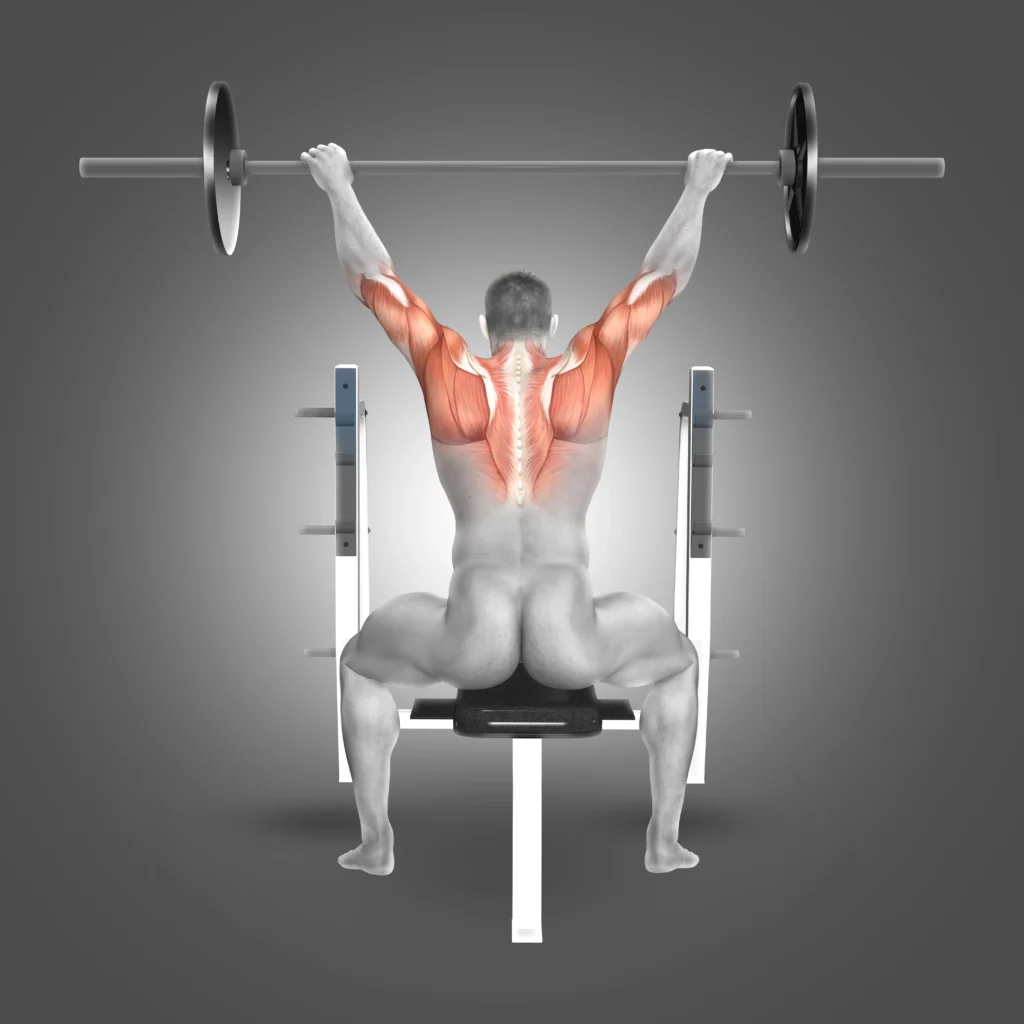
Shoulder pain during overhead press often starts with small movement mistakes that gradually overload the joint.
Shoulder pain is one of those problems gym people try to ignore for way too long.
At first, it feels harmless.
A slight pinch during incline press.
Mild discomfort while reracking the barbell.
Tightness after shoulder day.
Maybe a weird click during pull-ups.
Most people stretch a little, take pre-workout, and continue training.
Then suddenly:
- bench press starts hurting
- overhead press feels unstable
- side sleeping becomes painful
- warm-ups take forever
- lighter weights feel heavier than before
I see this pattern all the time in active adults and regular gym-goers.
The surprising part is this.
Most gym shoulder injuries are not caused by one dramatic incident.
They build slowly through bad movement habits, poor recovery, excessive volume, ego lifting, and ignoring small warning signs.
Quick Answer
Shoulder pain from gym workouts is usually caused by poor lifting mechanics, excessive pressing volume, weak rotator cuff muscles, poor scapular control, or lack of recovery. Most cases improve with exercise modification, physiotherapy-based strengthening, better shoulder stability, thoracic mobility work, and proper load management rather than complete rest.
- Reduce painful exercises temporarily instead of stopping gym completely
- Strengthen rotator cuff and shoulder blade stabilizers
- Improve thoracic spine mobility and posture
- Avoid excessive overhead pressing and ego lifting
- Use controlled rehab exercises consistently
- See a physiotherapist if pain persists beyond 2 to 3 weeks
The good news is that most shoulder pain from gym workouts improves without injections or surgery when treated early with the right rehab approach.
And no, the answer is not simply “stop lifting.”
In fact, complete rest often makes the shoulder feel weaker and stiffer.
What usually works better is smarter loading, better mechanics, proper rehab exercises, and understanding why the pain started in the first place.
This article is written from a physiotherapy perspective for people who actually train.
Not for people who want generic advice copied from every fitness blog online.
Key Takeaways
- Most gym-related shoulder pain develops gradually from overload and poor movement patterns
- Bench press mistakes, weak upper back muscles, and excessive overhead work are common triggers
- Shoulder pain does not always mean structural damage or the need for surgery
- Scapular stability and thoracic mobility are often ignored but extremely important for recovery
- Complete rest is usually less effective than modified training and progressive rehab
- Rotator cuff strengthening should focus on control rather than heavy resistance
- Poor sleep, stress, dehydration, and overtraining can slow tendon healing significantly
- Early physiotherapy intervention often prevents long-term shoulder problems
Why Shoulder Pain Happens So Easily in the Gym
The shoulder is incredibly mobile.
That sounds great until you realize mobility without control is exactly why shoulders get injured so often.
Unlike the hip joint, the shoulder sacrifices stability for movement.
It relies heavily on muscles and movement coordination to stay healthy.
Which means if:
- your shoulder blade moves poorly
- your upper back is stiff
- your rotator cuff is weak
- your training volume is excessive
- your pressing form is bad
your shoulder starts compensating.
And shoulders hate compensation.
One thing many lifters do not realize is that shoulder pain is usually not about “damage.”
It is often about overload.
There is a huge difference.
Recent physiotherapy research shows many people with rotator cuff tears on MRI have absolutely no pain at all. (Jedd Wellenkotter, 2026)
That means scans alone do not explain symptoms.
Pain is influenced by:
- load tolerance
- sleep
- stress
- movement quality
- inflammation
- recovery capacity
- nervous system sensitivity
This is why two people can have similar MRI findings but completely different pain levels.
The Biggest Gym Mistakes Destroying Your Shoulders
Training Chest More Than Back
This is probably the most common issue.
A lot of people train:
- chest twice a week
- front delts constantly
- heavy pressing movements
- dips
- incline dumbbell press
- push-ups
but barely train their upper back properly.
Over time the shoulders drift forward, the chest tightens, and scapular mechanics worsen.
Then pressing starts irritating the front of the shoulder.
A good general rule:
Your pulling volume should match or slightly exceed your pressing volume.
Most people do the opposite.
Poor Bench Press Form
Bench press itself is not dangerous.
Bad bench press mechanics are.
Common mistakes:
- elbows flared too wide
- bouncing the bar
- shoulders rolling forward
- excessive arch without upper back stability
- lowering too deep with dumbbells
- weak scapular control
One thing I commonly notice is people obsess over bench numbers while ignoring shoulder positioning completely.
Heavy weight with poor mechanics eventually catches up.
Too Much Overhead Pressing
Not every shoulder tolerates high-frequency overhead training.
Especially if someone has:
- stiff thoracic spine
- poor scapular upward rotation
- previous shoulder irritation
- poor mobility
- excessive training fatigue
The issue is not overhead pressing itself.
The issue is forcing overhead mechanics your body cannot control properly.
Ignoring Early Pain Signals
This is where most gym injuries become chronic.
People ignore:
- clicking with pain
- pain while lowering weights
- pain reaching behind the back
- night discomfort
- weakness during pressing
- painful warm-ups
- pinching sensation overhead
Then they continue maxing out anyway.
Pain during lifting is information.
Not weakness.
Shoulder Pain Does Not Always Mean You Need to Stop Training
This is one of the biggest myths online.
Most people do not need complete rest.
They need exercise modification.
For example:
- neutral-grip dumbbell press instead of barbell bench
- landmine press instead of strict overhead press
- cable rows instead of painful pull-ups
- reduced pressing volume temporarily
- slower controlled reps
- Research increasingly supports graded loading instead of total inactivity for many tendon-related shoulder problems. (Williams B, Gyer G. 2025)
The shoulder often heals better when it continues receiving tolerable movement and controlled loading.
The Shoulder Blade Is Usually the Real Problem
This is the part many people never hear about.
A lot of shoulder pain actually starts from poor scapular control.
Your shoulder blade is supposed to move smoothly during pressing, pulling, and overhead movement.
But in many gym-goers:
- it tips forward
- shrugs excessively
- rotates poorly
- loses stability under fatigue
When that happens, the shoulder joint compensates.
That compensation increases stress on:
- rotator cuff tendons
- biceps tendon
- subacromial tissues
Modern physiotherapy focuses heavily on scapular mechanics for this reason. (Kibler et al. 2013)
One Lesser-Known Reason Your Shoulder Hurts: Your Upper Back
A stiff thoracic spine can completely change shoulder mechanics.
This is extremely common in people who:
- sit long hours
- work on laptops
- drive a lot
- have rounded posture
- train chest excessively
If the upper back cannot extend properly, the shoulder tries to create movement from the wrong place.
That increases overload during:
- overhead press
- incline press
- snatches
- pull-ups
Sometimes improving thoracic mobility reduces shoulder pain faster than isolated shoulder stretches.
And honestly, most gym-goers do not spend nearly enough time working on thoracic mobility.
How to Fix Shoulder Pain From Gym Properly
Step 1: Stop Aggravating It Repeatedly
This sounds obvious but people rarely do it.
If dips cause sharp pain every session, repeatedly testing them is not rehab.
It is irritation.
You do not have to stop training completely.
But temporarily reducing painful movements helps calm excessive irritation.
Usually I recommend:
- reducing load
- reducing volume
- shortening painful range
- slowing tempo
- improving form
- choosing shoulder-friendly exercise variations
There is a difference between discomfort and sharp joint pain.
Learn the difference.
Step 2: Improve Scapular Control
This is where rehab often starts.
Wall Slides
Simple but effective.
Stand against a wall with forearms supported and slowly slide upward while keeping control through the shoulder blades.
People are often shocked how weak and shaky they feel doing this correctly.
That tells you a lot.
Serratus Punches
One of the most underrated shoulder rehab exercises.
The serratus anterior muscle helps stabilize the scapula during pressing and overhead movement.
Weak serratus control is incredibly common in lifters with chronic shoulder pain.
Controlled Scapular Retractions
Not aggressive squeezing.
Not bodybuilding-style jerking.
Slow controlled movement.
Most people move far too fast during rehab exercises.
Rotator Cuff Rehab That Actually Helps
A lot of people use excessively heavy bands and turn rehab into another ego competition.
The rotator cuff responds better to controlled loading than sloppy heavy movement.
Side-Lying External Rotation
Still one of the best exercises physiotherapists use.
Light dumbbell. Slow movement. No momentum.
The goal is control, not exhaustion.
Band External Rotations
Useful if performed properly.
Keep:
- elbow tucked
- shoulder relaxed
- movement slow
- ribs controlled
If your upper traps are doing all the work, you are missing the point.
The Truth About Stretching
Stretching is not always the answer.
This surprises people.
Some shoulders are not actually tight.
They are unstable and irritated.
Aggressive stretching in unstable shoulders can worsen symptoms.
This is why random YouTube rehab routines often fail.
You need to know whether your shoulder needs:
- mobility
- stability
- strength
- load reduction
- movement correction
- thoracic mobility
- recovery
Sometimes the answer is not more stretching.
Sometimes it is better control.
Why Your Warm-Up Might Be Useless
Most gym warm-ups are rushed and ineffective.
People do:
- random arm circles
- band pull-aparts for 30 seconds
- static stretching
- then jump straight into heavy pressing
A better shoulder warm-up prepares:
- thoracic mobility
- scapular activation
- rotator cuff engagement
- movement control
Even 8 to 10 minutes done properly can change shoulder mechanics significantly.
Exercises That Usually Feel Better During Recovery
These are commonly better tolerated:
Landmine Press
Probably one of the best pressing alternatives for irritated shoulders.
The angled pressing path feels much smoother for many people.
Chest-Supported Rows
Excellent for upper back strength without excessive shoulder irritation.
Farmer’s Carries
Underrated exercise.
They improve:
- shoulder stability
- grip strength
- scapular endurance
- postural control
And unlike flashy rehab drills, they carry over well into real lifting.
Face Pulls
Still valuable when performed correctly.
But most people use too much weight and turn them into ugly rowing movements.
Keep them controlled.
Exercises That Commonly Irritate Shoulders
Temporarily reducing these movements often helps:
- deep dips
- behind-the-neck presses
- upright rows
- very wide-grip bench press
- excessive kipping pull-ups
- extremely deep dumbbell pressing
This does not mean these exercises are “bad forever.”
It means irritated tissues sometimes need smarter loading.
Recovery Is More Than Exercise
People underestimate recovery constantly.
Tendons recover slower than muscles.
You may feel “strong enough” before tissues are actually ready for repeated heavy loading.
Recovery worsens with:
- poor sleep
- high stress
- dehydration
- calorie deficits
- excessive training frequency
- low protein intake
Sleep quality especially matters more than people realize.
Poor sleep increases pain sensitivity significantly.
Why Some People Never Fully Recover
Usually because they:
- return too quickly
- ignore symptoms
- keep testing painful movements
- chase PRs too early
- skip rehab once pain reduces
- never fix movement quality
Pain reduction is not the same as recovery.
A shoulder that feels “okay” is not automatically ready for maximal loading again.
Newer Physiotherapy Research Is Changing Shoulder Rehab
Older rehab models focused heavily on posture correction and isolated strengthening.
Modern rehab is becoming more movement-based and individualized.
Recent research is focusing more on:
- load tolerance
- movement confidence
- scapular coordination
- progressive loading
- exercise adherence
- nervous system sensitivity
2024 studies showed targeted scapular stabilization programs improved shoulder pain and function significantly compared to generalized rehab approaches. (Aydin et al. 2024)
Newer clinical practice guidelines are also moving away from fear-based messaging around shoulder scans and structural findings. (Physiotutors 2025)
When You Should See a Physiotherapist
Please stop self-diagnosing every shoulder issue as “rotator cuff.”
Get assessed if you have:
- significant weakness
- night pain
- instability
- loss of motion
- symptoms lasting over 2 to 3 weeks
- pain during daily activities
- history of dislocation
- numbness or tingling
A proper physiotherapy assessment looks at:
- movement quality
- scapular control
- thoracic mobility
- strength deficits
- training habits
- exercise tolerance
Not just where it hurts.
Final Thoughts
Most gym-related shoulder pain is fixable.
But the solution is usually not found in random stretches, painkillers, or completely avoiding the gym forever.
The people who recover best are usually the ones who:
- stop ignoring early symptoms
- train smarter instead of harder
- improve movement quality
- strengthen stabilizers consistently
- respect recovery
- stay patient during rehab
And honestly, the shoulder usually responds very well when you finally give it what it actually needs instead of constantly fighting it.
Strong shoulders are not just built through heavy lifting.
They are built through control, balance, good mechanics, and intelligent training decisions.
Ignoring shoulder pain during overhead press can slowly lead to chronic inflammation, weakness, and long-term shoulder problems.
Frequently Asked Questions
Can I continue going to the gym with shoulder pain?
Yes, in many cases you can continue training with modified exercises, lighter loads, and improved movement mechanics instead of completely stopping workouts.
Why does my shoulder hurt during bench press?
Shoulder pain during bench press is commonly caused by flared elbows, excessive pressing volume, poor shoulder blade control, or weak rotator cuff muscles.
What are the best exercises for shoulder rehab?
Wall slides, face pulls, serratus punches, external rotations, chest-supported rows, and landmine presses are commonly recommended during shoulder rehabilitation.
How long does shoulder pain from lifting weights take to heal?
Mild shoulder irritation may improve within a few weeks while tendon-related injuries can require several months depending on training load and recovery habits.
Should I stretch my shoulder if it hurts after workouts?
Not always. Some painful shoulders need more stability and strength rather than aggressive stretching. Stretching an unstable shoulder may worsen symptoms.
When should I see a physiotherapist for shoulder pain?
You should seek professional help if pain lasts more than 2 to 3 weeks, affects sleep, causes weakness, or limits normal gym activities.
Stay tuned with us for more health related topics.
Follow us on LinkedIn and Instagram for more.
More Read


Medical Disclaimer!
This article has been reviewed and written under the guidance of our Head Physiotherapist, Dr. Kruti Raj (PT, MUHS,CPT,CMPT). The information shared is intended for educational purposes only and should not be considered a substitute for personalized medical advice, diagnosis, or treatment.
Please consult us or any other qualified healthcare professional before beginning any exercise program, especially if you are experiencing pain, recovering from injury, or managing a medical condition.


