


Does your hip sometimes feel as though it might buckle while walking, climbing stairs, standing on one leg, or changing direction?
This sensation can be unsettling, particularly when you feel unsure whether your leg will support your body weight.
Quick Answer: Why Does Your Hip Feel Like It Might Give Way?
A hip that feels as though it might buckle can be associated with hip joint instability, muscle weakness, pain-related changes in muscle control, labral injuries, or structural differences such as hip dysplasia.
The sensation does not always mean that the joint is physically loose. A clinical assessment helps distinguish true instability from other causes of giving way.
Can physiotherapy help? Depending on the cause, physiotherapy may improve hip strength, balance, movement control, and confidence during daily activities. Repeated giving way should be assessed rather than treated with exercises alone.
Hip joint instability is one possible cause, but a feeling of giving way does not always mean the joint is physically loose.
Muscle weakness, pain-related changes in muscle control, labral injuries, and structural differences in the hip can produce similar symptoms.
Understanding the underlying cause is important because treatment may involve physiotherapy, activity modification, or specialist assessment.
This guide explains the possible causes, how hip instability is assessed, and how physiotherapy may help improve stability and confidence during movement.
Key Takeaways
- A hip that feels like it might give way does not always have true structural instability.
- Possible causes include muscle weakness, pain-related muscle inhibition, hip micro instability, labral injuries, and hip dysplasia.
- Assessment may involve a clinical examination and, when indicated, X-rays or MRI.
- Physiotherapy may improve strength, pelvic control, balance, and everyday function.
- Exercise selection should reflect the underlying diagnosis and the person’s symptoms.
- Avoid repeatedly testing painful or unstable movements or pushing through sharp pain.
- Sudden severe hip pain, suspected dislocation, or inability to bear weight requires urgent medical attention.
What Is Hip Joint Instability?
The hip is a ball-and-socket joint formed by the head of the femur, or thigh bone, and the acetabulum, the socket in the pelvis.
Its stability depends on several structures working together, including the shape of the bones, joint capsule, ligaments, labrum, and surrounding muscles.
Hip joint instability occurs when the joint does not maintain its normal stability during movement.
It can range from subtle, symptomatic movement within the joint to a partial or complete dislocation.
Hip micro instability refers to symptomatic excessive movement of the hip that does not involve an obvious dislocation.
It can cause hip pain, apprehension, or a feeling that the hip is unreliable during certain activities.
However, the terms hip instability and giving way are not interchangeable.
A person may feel that their hip is buckling because of pain or muscle weakness without having structural joint instability. (Kraeutler et al., 2016)
Why Does Your Hip Feel Like It Might Give Way?
Several conditions can cause this sensation.
The symptoms may overlap, so an assessment is needed to identify the most likely explanation.
1. Weak Hip and Gluteal Muscles
The gluteal muscles help control the pelvis and thigh during walking, stair climbing, and single-leg activities.
If these muscles are weak or poorly coordinated, movement may feel less controlled.
You might notice your pelvis dropping when standing on one leg, difficulty climbing stairs, or reduced control when stepping down from a kerb.
Muscle weakness does not automatically mean that the joint itself is unstable.
It may also develop because pain has reduced your activity levels or another hip condition is affecting movement.
2. Hip Microinstability
Hip microinstability involves symptomatic excessive movement within the joint without a complete dislocation.
It may be associated with ligament or joint-capsule laxity, labral injuries, structural differences, or previous hip surgery.
Some people experience deep groin pain, discomfort during hip extension and rotation, or a sense that the hip is unreliable during walking or sport.
The diagnosis can be challenging because symptoms overlap with other hip conditions, and there is no single symptom or examination test that confirms every case. (Cohen et al., 2023)
3. Hip Dysplasia
Hip dysplasia occurs when the socket does not adequately cover the femoral head.
Reduced coverage can affect how forces are distributed through the joint and may contribute to pain or instability.
Adults with hip dysplasia may experience groin pain, fatigue around the hip, or discomfort during prolonged walking and physical activity.
Physiotherapy may improve strength and movement control, but it cannot change the underlying shape of the hip socket.
Structural concerns may require assessment by an orthopaedic specialist.
4. Labral Tears
The hip labrum is a ring of fibrocartilage around the socket.
It contributes to joint stability and helps maintain the seal between the femoral head and the socket.
A labral tear may cause groin pain, clicking, catching, or discomfort during twisting and deep hip bending.
Some people also describe a sensation of giving way.
However, a labral tear does not automatically mean that the hip is unstable.
Labral injuries can occur alongside other conditions, and imaging findings must be interpreted in the context of symptoms and examination results.
5. Pain-Related Muscle Inhibition
Pain can temporarily interfere with normal muscle activation and coordination.
When this happens, the leg may feel weak or unreliable during weight-bearing activities.
This can occur with painful joint conditions, tendon problems, or other injuries.
In these cases, the sensation of giving way may reflect difficulty controlling movement rather than excessive movement within the joint.
This distinction matters because treatment for pain-related giving way may differ from treatment for structural instability.
6. Previous Hip Injury or Surgery
Trauma may damage the joint capsule, ligaments, labrum, or surrounding structures.
A previous dislocation or subluxation can also affect joint stability.
In some cases, instability develops after hip surgery if stabilising structures have been affected.
New or worsening symptoms after surgery should be discussed with the treating surgical team.
What Are the Symptoms of Hip Joint Instability?
Symptoms vary according to the underlying cause and severity. Common features include:
- A giving-way sensation: The hip or leg feels unreliable during walking, turning, or climbing stairs.
- Deep groin pain: Discomfort may occur at the front of the hip during weight-bearing or particular movements.
- Clicking or popping: These sensations may accompany labral or other joint problems, but painless clicking alone does not confirm instability.
- Reduced confidence during movement: You may hesitate when standing on one leg or changing direction.
- Difficulty with sport: Running, pivoting, jumping, or kicking may provoke symptoms.
- Muscle fatigue: The muscles around the hip may tire during prolonged standing or walking.
Repeated giving way, especially when accompanied by pain or difficulty bearing weight, should not be ignored.
What Increases the Risk of Hip Instability?
Several factors may contribute to hip instability or increase the likelihood of symptoms.
- Structural differences: Hip dysplasia or variations in bone alignment may affect joint stability.
- Ligament laxity: Increased flexibility or reduced restraint from the joint capsule and ligaments may contribute in some people.
- Previous injuries: Damage to stabilising structures may affect joint function.
- Repetitive sporting demands: Activities involving repeated hip extension, rotation, and high loads may expose an underlying problem.
- Previous hip surgery: Changes to the joint capsule or other stabilising tissues can sometimes contribute to instability.
- Reduced muscle capacity: Poor strength or coordination may affect movement control, although it does not establish structural instability by itself.
These factors do not mean that someone will necessarily develop hip instability.
A clinical assessment is needed to understand how they relate to the individual’s symptoms.
How Is Hip Joint Instability Diagnosed?
Diagnosis begins with a detailed history and physical examination.
A healthcare professional may ask when the symptoms started, whether there was an injury, which movements trigger them, and whether you have experienced previous hip dislocations or surgery.
Physical Examination
A physiotherapist or clinician may assess:
- Hip range of motion.
- Hip and pelvic muscle strength.
- Balance and single-leg control.
- Walking pattern and stair-climbing ability.
- Movements that reproduce pain or apprehension.
- Specific clinical tests when instability is suspected.
Specialist tests can contribute useful information, but no single test should be used in isolation.
Findings must be interpreted alongside the person’s symptoms and other examination results.
Imaging Tests
Depending on the suspected cause, investigations may include:
- X-rays: Assess bone shape, joint alignment, and features of hip dysplasia.
- MRI: May identify labral injuries and other soft-tissue abnormalities.
- MR arthrography: May be considered in selected cases to evaluate particular structures within the joint.
- CT: May be useful when detailed assessment of bone anatomy is required.
Imaging cannot always confirm micro instability on its own.
A systematic review found that the evidence supporting specific imaging features as diagnostic markers remains limited. (Reiman et al., 2019)
How Can Physiotherapy Help Hip Joint Instability?
Physiotherapy may help selected people improve strength, movement control, balance, and tolerance to daily activities.
Treatment should be tailored to the underlying diagnosis because muscle weakness, structural instability, and pain-related giving way require different approaches.
1. Strengthen the Hip Muscles
The gluteal muscles and other muscles around the hip contribute to pelvic control and movement during daily activities.
Depending on the assessment, a physiotherapist may introduce:
- Gluteal contractions: Gently tighten the buttock muscles without moving the hip.
- Bridges: Lift the pelvis while keeping the movement comfortable.
- Standing hip abduction: Move one leg sideways while maintaining an upright posture.
- Supported sit-to-stand: Practise rising from a chair with controlled movement.
- Low step-ups: Build functional strength when weight-bearing is well tolerated.
These exercises are examples rather than a universal program.
The starting position, range, resistance, and repetitions should be adapted to the diagnosis and symptoms.
2. Improve Pelvic Control and Balance
The hip needs to remain controlled while the body moves over one leg during walking and stair climbing.
Once basic strength and weight-bearing are comfortable, a physiotherapist may introduce supported balance activities and controlled stepping exercises.
The aim is to improve coordination without repeatedly provoking the giving-way sensation.
Unsupported balance challenges are not appropriate if the hip may buckle and cause a fall.
3. Modify Painful Movements
Some movements may aggravate instability or associated hip conditions.
Depending on the diagnosis, temporary modifications may include:
- Reducing deep squats or lunges that provoke symptoms.
- Avoiding forceful hip stretching.
- Limiting sudden pivoting or twisting.
- Reducing running and jumping while symptoms are being assessed.
- Using a handrail when climbing stairs if the hip feels unreliable.
Activity modification should reduce aggravation without unnecessarily stopping all movement.
4. Progress Towards Walking and Sport
Returning to sport requires more than reduced pain. Strength, balance, movement control, and confidence should also be considered.
A physiotherapist may gradually progress walking duration, resistance exercises, stepping tasks, and sport-specific movements.
Running, jumping, and rapid changes of direction should be introduced only when appropriate for the diagnosis and recovery stage.
Research on treatment for hip micro instability suggests that conservative management can be part of care, but high-quality evidence evaluating specific rehabilitation program remains limited. (Matthewson et al., 2023)
What Should You Avoid If Your Hip Feels Unstable?
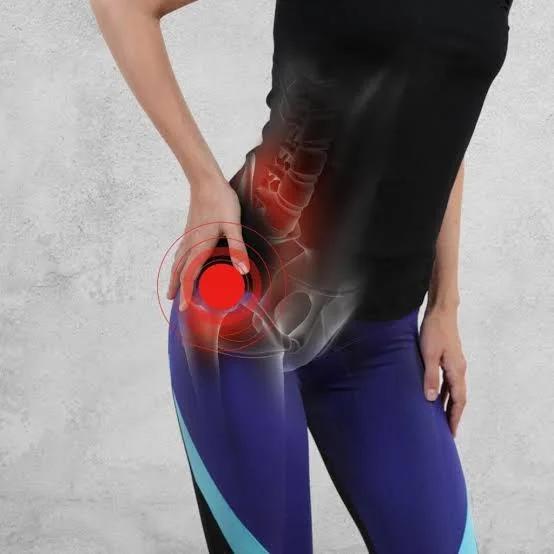
Until the cause is clear, avoid repeatedly testing the hip by deliberately placing it in positions that make it buckle.
You may need to modify sudden changes of direction, jumping, deep hip movements, or exercises that produce sharp pain or repeated giving way.
Do not assume that stretching more or pushing through pain will make the hip more stable.
If symptoms continue, a clinical assessment is safer than repeatedly experimenting with exercises.
Hip Joint Instability: Myth vs Fact
MYTH: If your hip gives way, the joint must be loose.
FACT: Pain, muscle weakness, and changes in muscle coordination can also make the leg feel unreliable. True joint instability requires appropriate assessment.
MYTH: Strengthening exercises fix every type of hip instability.
FACT: Strengthening may improve function in selected cases, but it cannot correct every structural problem. Treatment must match the underlying cause.
MYTH: Clicking always means hip instability.
FACT: Clicking can occur for several reasons. Painless clicking alone does not establish instability or confirm a labral injury.
MYTH: You should push through pain to make the hip stronger.
FACT: Exercises should be adapted to symptoms and diagnosis. Sharp pain, repeated buckling, or worsening symptoms should prompt reassessment.
Can Hip Joint Instability Improve Without Surgery?
Some people improve with conservative treatment, particularly when symptoms are related to muscle weakness, movement control, or a condition that responds to rehabilitation.
Treatment may involve physiotherapy, activity modification, and management of associated pain.
The outcome depends on the cause and severity.
Structural abnormalities, recurrent dislocations, significant injuries, or persistent instability despite appropriate rehabilitation may require specialist assessment.
Exercises cannot correct every structural problem, and surgery may be considered in selected cases.
The most appropriate treatment is the one that addresses the underlying cause rather than the sensation of giving way alone.
When Should You Seek Medical Advice?
Arrange a clinical assessment if your hip repeatedly gives way, pain persists, walking becomes difficult, or symptoms interfere with exercise and everyday activities.
Seek urgent medical care if:
- The hip suddenly becomes severely painful after an injury.
- You cannot stand or bear weight on the affected leg.
- The hip appears deformed or you suspect a dislocation.
- Hip pain is accompanied by fever, significant swelling, or feeling seriously unwell.
A suspected hip dislocation is a medical emergency. Do not attempt to force the joint back into place.
A Lesser-Known Fact About Hip Instability
A feeling of instability does not always mean the hip joint is physically loose.
Pain can interfere with muscle activation and coordination, making the leg feel as though it might buckle.
Conversely, subtle hip microinstability can cause symptoms without a dramatic dislocation.
Research also suggests that hip micro instability can overlap with femoroacetabular impingement, and the diagnostic criteria are not yet fully standardized.
This is another reason to avoid self-diagnosis based on one symptom or scan finding. (Caliesch et al., 2024)
Final Thoughts: Managing Hip Joint Instability
A hip that feels as though it might give way can have several causes, ranging from muscle weakness to structural joint problems. The sensation alone cannot confirm true instability.
Physiotherapy may help improve strength, pelvic control, balance, and confidence during everyday movement when appropriate for the underlying condition. A tailored program is safer and more effective than repeatedly testing painful movements.
If your hip repeatedly gives way, pain persists, or walking becomes difficult, arrange a professional assessment. Seek urgent care if you suspect a dislocation or cannot bear weight after an injury.
Conclusion
A hip that feels as though it might give way can be associated with muscle weakness, pain-related movement changes, hip micro instability, dysplasia, labral injuries, or previous trauma.
Physiotherapy may help improve strength, pelvic control, balance, and functional movement when appropriate for the underlying condition.
However, repeated giving way should not be ignored, particularly when accompanied by groin pain or difficulty bearing weight.
If your hip feels unreliable during walking or exercise, seek a professional assessment to identify the cause and develop an appropriate treatment plan.
Frequently Asked Questions About Hip Joint Instability
1. Why does my hip feel like it might give way?
This sensation may be associated with muscle weakness, pain-related changes in muscle control, hip microinstability, labral injuries, or structural differences such as hip dysplasia. An assessment can help identify the cause.
2. Can physiotherapy help hip joint instability?
Physiotherapy may help improve hip strength, balance, movement control, and daily function in selected cases. Treatment should be tailored to the underlying diagnosis.
3. What exercises can help an unstable hip?
Depending on the diagnosis, a physiotherapist may recommend gluteal contractions, bridges, standing hip abduction, or supported sit-to-stand exercises. Avoid unsupported balance challenges if your hip may buckle.
4. Is hip instability the same as hip dysplasia?
No. Hip dysplasia is a structural difference in which the socket does not adequately cover the femoral head. It can contribute to instability in some people, but the conditions are not identical.
5. Can hip joint instability improve without surgery?
Some people improve with physiotherapy and activity modification, depending on the cause and severity. Structural problems or recurrent dislocations may require specialist assessment.
6. When should I seek medical help for a hip that gives way?
Seek assessment for repeated giving way, persistent pain, or difficulty walking. Sudden severe pain, suspected dislocation, or inability to bear weight requires urgent medical care.
Stay tuned with us for more health related topics.
Follow us on LinkedIn and Instagram for more.
More Read


Medical Disclaimer
This article is intended for general educational purposes only and is not a substitute for professional medical advice, diagnosis, or treatment. A hip that feels unstable may have several causes requiring different management approaches. Consult a qualified healthcare professional before starting or changing an exercise program. Sudden severe hip pain, suspected hip dislocation, or inability to bear weight requires urgent medical evaluation.


