


Walking but not losing weight can be frustrating, especially when you are consistent, but several factors can affect how your body responds.
You started walking because it seemed like one of the simplest and most sustainable ways to lose weight.
No expensive gym membership, no complicated workout program, and no extreme diet.
Just a daily walk and a commitment to move more.
A few weeks later, however, the scale still looks the same.
Quick Answer
Walking every day can support weight loss, but it does not guarantee that the scale will move immediately. Factors such as calorie intake, sleep quality, stress levels, hormones, medications, muscle mass, and water retention can all influence body weight. In many cases, people are improving their health and losing body fat even when the scale appears unchanged.
It is a frustrating experience.
After all, if you’re exercising consistently, shouldn’t the weight be dropping?
Not necessarily.
Walking is an excellent form of physical activity and can absolutely support weight loss.
However, body weight is influenced by many factors beyond exercise alone.
Your eating habits, sleep quality, stress levels, hormones, muscle mass, medications, and even normal fluctuations in body water can all affect what you see on the scale.
The good news is that a lack of immediate weight loss does not automatically mean your efforts are failing.
In many cases, your body may be changing in ways that the scale simply cannot show.
Key Takeaways
- Walking helps with weight management, but it is only one piece of the puzzle.
- Fat loss and weight loss are not always the same thing.
- Water retention and muscle gain can hide progress on the scale.
- Poor sleep, stress, and inactive habits outside exercise may affect results.
- Your body becomes more efficient at familiar activities over time.
- Strength training can complement walking and support healthy body composition.
- Comparing your progress with others can be misleading.
- Consistency matters far more than quick fixes.
Weight Loss and Fat Loss Are Not the Same Thing
One of the biggest misconceptions about weight loss is assuming that body weight and body fat always change together.
Your total body weight includes:
- Body fat
- Muscle
- Water
- Glycogen (stored carbohydrate)
- Bones
- Organs
- Food and fluids in your digestive system
Because of this, it is possible to lose fat without seeing a dramatic change in body weight.
For example, when you become more active, your muscles often store more glycogen.
Glycogen naturally holds water, which can temporarily increase body weight.
Likewise, if you are strength training alongside walking, you may gain a small amount of lean muscle while losing fat.
As a result, the scale may stay the same even though your body composition is improving.
This is why relying solely on body weight can be misleading.
Other indicators of progress often provide a clearer picture, including:
- A smaller waist measurement
- Looser-fitting clothes
- Improved stamina
- Better energy levels
- Increased walking speed
- Improved fitness
If these things are improving, your walking routine is likely helping, even if the scale has not caught up yet.
Walking Burns Calories, But Energy Balance Still Matters
Walking increases the number of calories your body uses throughout the day.
That is one reason it is consistently recommended as part of a healthy lifestyle.
However, exercise is only one side of the equation.
Many people unintentionally consume additional calories after exercise because they feel hungrier or believe they have earned a reward.
Depending on portion sizes, calorie-dense snacks or drinks can replace a substantial part of the energy used during a walk.
This does not mean you need to obsessively count calories.
It simply means that physical activity and nutrition work together.
Research from the American College of Sports Medicine shows that :
physical activity plays an important role in weight management and weight-loss maintenance, particularly when combined with appropriate dietary habits. (Donnelly et al. 2009)
Walking helps create the conditions for weight loss, but it cannot always overcome habits that consistently increase calorie intake.
Are You Walking Enough?
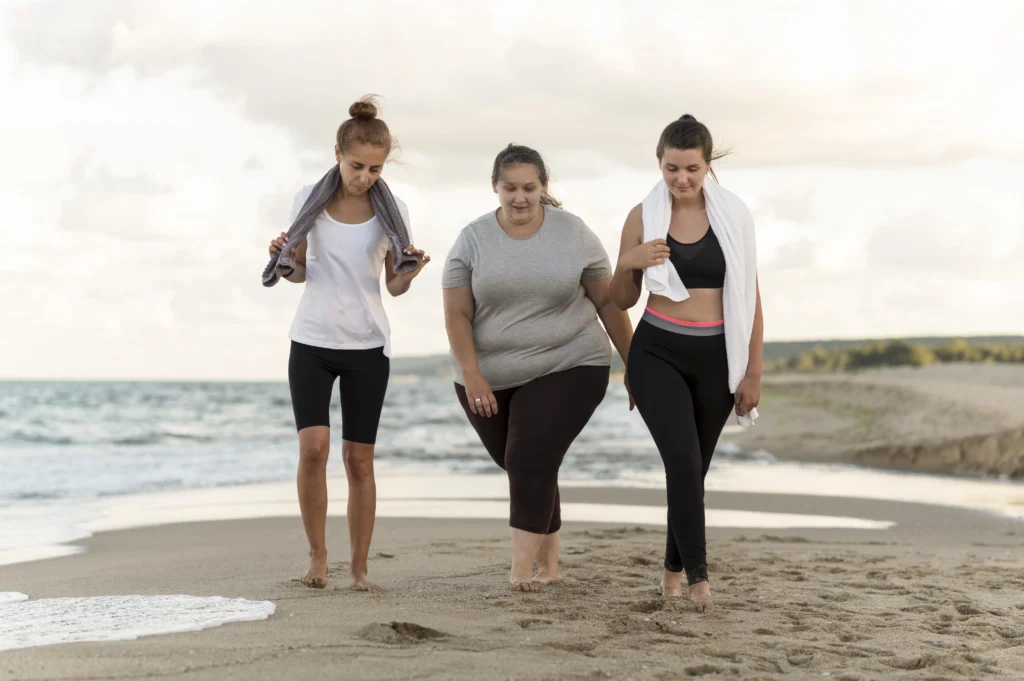
Many people overestimate how much activity they are actually doing.
A short stroll around the neighborhood is beneficial for health, but it may not provide the same results as a longer, brisk walk performed regularly throughout the week.
The World Health Organization recommends that:
adults accumulate 150 to 300 minutes of moderate-intensity physical activity per week and perform muscle-strengthening activities on two or more days weekly. (Bull et al. 2020)
Moderate-intensity walking usually means walking fast enough that your breathing becomes slightly heavier while still allowing you to hold a conversation.
For some people, simply increasing the pace of their walks or adding an extra ten to fifteen minutes can make a meaningful difference over time.
Hidden Reasons You’re Not Losing Weight
Sometimes the issue is not the walk itself.
Instead, it is the collection of small habits that happen throughout the rest of the day.
Reward Eating
After completing a walk, many people feel they have earned a treat.
There is nothing wrong with enjoying your favorite foods occasionally.
However, if every workout is followed by a high-calorie reward, it can reduce the calorie deficit that walking helped create.
Sitting for the Rest of the Day
A 30-minute walk is beneficial, but what happens during the remaining waking hours matters too.
If you spend most of the day sitting, your overall energy expenditure may remain relatively low.
Small movements such as taking the stairs, standing regularly, doing household chores, or walking during work breaks can contribute significantly to daily activity levels.
Poor Sleep
Sleep is often overlooked in conversations about weight loss.
People who consistently sleep too little may find weight management more challenging.
Research has linked shorter sleep duration with changes that can influence appetite, food choices, and overall energy balance. (Patel and Hu 2008)
Improving sleep quality will not magically cause weight loss, but it may make healthy habits easier to maintain.
Calculate your ideal sleep timings here: “Sleep calculator“
Chronic Stress
Long-term stress can influence eating patterns, motivation, sleep quality, and daily activity.
Some people lose their appetite when stressed. Others eat more comfort foods or become less active.
A daily walk can be a useful stress-management tool, but it may not completely offset the effects of chronic stress on lifestyle habits.
Weekend Habits
Many people are disciplined during the week and then become far more relaxed on weekends.
A few restaurant meals, extra snacks, or larger portions can slow overall progress without being immediately obvious.
This is not about avoiding social occasions. It is about recognizing patterns that may be influencing your results.
Could a Medical Condition Be Affecting Your Progress?
Lifestyle habits explain most weight-loss challenges, but they are not the only factor.
Certain health conditions and medications can make weight management more difficult.
Examples include:
- Hypothyroidism
- Polycystic ovary syndrome (PCOS)
- Menopause-related hormonal changes
- Certain antidepressants
- Some steroid medications
- Certain diabetes medications
This does not mean you should assume there is a medical problem if weight loss is slow.
However, if you have consistently followed healthy habits for several months and are seeing little or no progress, discussing your concerns with a healthcare professional may be worthwhile.
How to Make Walking More Effective for Weight Loss
The solution is not necessarily to stop walking and switch to a more intense form of exercise.
Walking remains one of the most accessible and sustainable physical activities available.
Instead, consider making a few practical adjustments.
Increase Your Pace
Walking slightly faster increases the challenge without requiring extra time.
Even small increases in intensity can help improve fitness and increase overall energy expenditure.
Walk Longer
Adding ten or fifteen minutes to your usual route can gradually increase your weekly activity volume.
Small changes performed consistently often produce better results than drastic changes that are difficult to maintain.
Add Hills or Inclines
Walking uphill engages more muscles and requires greater effort than walking on flat ground.
This can increase the overall challenge of your workout without requiring you to run.
Include Strength Training
Walking is excellent for cardiovascular health, but strength training offers additional benefits.
The World Health Organization recommends muscle-strengthening activities at least twice per week. (Bull et al. 2020)
Preserving muscle mass during weight loss can support overall body composition and long-term health.
Stay Active Beyond Your Workout
Your daily walk is important, but your total daily movement matters too.
Simple habits such as walking while talking on the phone, standing more often, or choosing stairs over elevators can help create a more active lifestyle overall.
A Note From a Physiotherapist
Walking is one of the safest and most sustainable forms of exercise for most adults. Instead of focusing only on body weight, pay attention to improvements in stamina, mobility, energy levels, and overall fitness. Small increases in walking pace, daily movement, and strength training often deliver better long-term results than extreme exercise plans.
Why Do Some People Lose Weight Walking While Others Don’t?
Two people can follow nearly identical walking programs and experience very different results.
Researchers have found substantial variation in how individuals respond to exercise.
Differences in appetite, food intake, daily movement, genetics, sleep, and other compensatory behaviors can all influence outcomes. (Cox et al. 2017)
This is why comparing your progress with someone else’s can be misleading.
Walking is an important tool, but it works within the context of your overall lifestyle.
The Bottom Line
If you walk every day and are not losing weight, it does not automatically mean that walking is ineffective.
You may be improving your cardiovascular health, increasing your fitness, reducing stress, building healthier habits, and even losing body fat without seeing major changes on the scale.
Walking remains one of the most sustainable forms of exercise, and research consistently supports its role in weight management when combined with healthy eating habits and an active lifestyle.
Instead of focusing only on the number on the scale, pay attention to the bigger picture.
Improvements in fitness, energy levels, waist circumference, and overall well-being are all signs that your efforts are moving you in the right direction.
Weight loss is rarely a straight line, but consistency with healthy habits often produces meaningful results over time.
Remember
The scale only measures body weight—not your fitness, energy, strength, or overall health. If you’re walking consistently, sleeping well, and building healthy habits, you’re making progress even if the number on the scale hasn’t changed yet.
Frequently Asked Questions
Can I walk every day and still not lose weight?
Yes. Weight loss depends on many factors, including calorie intake, sleep, stress, hormones, medications, and overall activity levels. Walking supports weight management, but it is only one part of the equation.
How much walking is usually needed for weight loss?
The World Health Organization recommends 150–300 minutes of moderate-intensity physical activity per week. Some people may require higher activity levels and dietary changes to achieve significant weight loss.
Why am I walking but not losing belly fat?
Walking can help reduce overall body fat, but spot reduction is not possible. Fat loss occurs throughout the body based on genetics, hormones, and other biological factors.
Can I lose fat without losing weight?
Yes. Fat loss can occur while muscle mass increases or water retention temporarily rises. This may cause the scale to remain stable even though body composition is improving.
Does walking speed matter for weight loss?
Generally, brisk walking burns more energy than slow walking and may improve fitness more quickly. However, consistency is usually more important than speed alone.
Can stress affect my weight-loss progress?
Yes. Stress can influence eating habits, sleep quality, and physical activity levels, all of which may affect weight management.
Should I add strength training if I already walk every day?
For many people, yes. Strength training helps preserve muscle mass and can complement a walking routine as part of a healthy weight-management plan.
When should I speak with a doctor about difficulty losing weight?
If you have consistently followed healthy habits for several months without seeing expected progress, it may be worth discussing possible medical conditions or medications with a healthcare professional.
Stay tuned with us for more health related topics.
Follow us on LinkedIn and Instagram for more.
More Read


Medical Disclaimer!
This article has been reviewed and written under the guidance of our Head Physiotherapist, Dr. Kruti Raj (PT, MUHS,CPT,CMPT). The information shared is intended for educational purposes only and should not be considered a substitute for personalized medical advice, diagnosis, or treatment.
Please consult us or any other qualified healthcare professional before beginning any exercise program, especially if you are experiencing pain, recovering from injury, or managing a medical condition.


