


Trichomoniasis is one of the most common sexually transmitted infections (STIs) worldwide, yet many people are unaware they have it because the infection often causes no noticeable symptoms.
It is caused by a microscopic parasite called Trichomonas vaginalis, which primarily infects the lower genital tract in women and the urethra in men.
Although the infection is usually treatable with prescription medication, leaving it untreated can increase the risk of other sexually transmitted infections, pregnancy complications, and persistent genital inflammation.
Quick Answer
Trichomoniasis is a common sexually transmitted infection (STI) caused by the parasite Trichomonas vaginalis. Many people have no symptoms, while others may experience frothy yellow-green vaginal discharge, genital itching, burning during urination, or pain during sex. The infection is curable with prescription antiparasitic medication, and both sexual partners should be treated to prevent reinfection.
Women are more likely than men to experience symptoms, which may include abnormal vaginal discharge, itching, burning, redness, discomfort during urination, and pain during sexual intercourse.
However, approximately 70% of infected individuals have few or no symptoms, making regular screening and timely medical evaluation important, particularly for those at increased risk.
According to the World Health Organization (WHO),
trichomoniasis is one of the four most common curable sexually transmitted infections worldwide, contributing significantly to the global burden of reproductive tract infections. (World Health Organization, 2024)
Key Takeaways
- Trichomoniasis is a common sexually transmitted infection caused by the parasite Trichomonas vaginalis.
- Many infected individuals have no symptoms, making routine STI screening important for at-risk people.
- Women may experience frothy yellow-green discharge, vaginal itching, burning, and pain during intercourse.
- Diagnosis is best confirmed using laboratory testing, particularly nucleic acid amplification tests (NAATs).
- The infection is curable with prescription antiparasitic medication.
- Both sexual partners should receive treatment to prevent reinfection.
- Untreated trichomoniasis may increase the risk of HIV transmission, pregnancy complications, and other sexually transmitted infections.
- Pelvic health physiotherapy can support recovery for women with persistent pelvic pain or pelvic floor dysfunction after treatment.
What Is Trichomoniasis?
Trichomoniasis is a parasitic sexually transmitted infection caused by Trichomonas vaginalis, a single-celled protozoan parasite.
Unlike bacterial vaginosis, which is caused by an imbalance of vaginal bacteria, or vaginal yeast infections, which result from fungal overgrowth,
trichomoniasis develops when this parasite infects the genital tract.
In women, the parasite commonly infects:
- The vagina
- The vulva
- The cervix
- The urethra
In men, it most often affects:
- The urethra
- The prostate (occasionally)
Many infected individuals remain asymptomatic for months, unknowingly transmitting the infection to sexual partners.
Early diagnosis and treatment are important to prevent complications and stop further spread.
How Common Is Trichomoniasis?
Trichomoniasis is the most common non-viral sexually transmitted infection worldwide.
Although it is highly prevalent, awareness remains relatively low because many infected individuals do not experience symptoms.
Global estimates indicate:
- Millions of new infections occur each year.
- Women are diagnosed more frequently than men.
- Infection is more common among sexually active adults.
- Reinfection is common if sexual partners are not treated simultaneously.
According to the Centers for Disease Control and Prevention (CDC),
trichomoniasis is the most prevalent non-viral sexually transmitted infection in the United States, and approximately 70% of infected people have minimal or no symptoms,
allowing the infection to spread unknowingly. (CDC, Sexually Transmitted Infections Treatment Guidelines, 2021)
How Is Trichomoniasis Spread?
Trichomoniasis spreads primarily through sexual contact with an infected partner.
The parasite is transmitted during:
- Vaginal intercourse
- Genital-to-genital contact
- Sharing contaminated sex toys that have not been properly cleaned
The infection most commonly spreads from:
- Penis to vagina
- Vagina to penis
- Vagina to vagina
Unlike some infections, trichomoniasis is not typically spread through:
- Toilet seats
- Swimming pools
- Towels
- Hugging
- Kissing
- Sharing food or utensils
Because many infected individuals have no symptoms, they may unknowingly transmit the parasite to others.
What Causes Trichomoniasis?
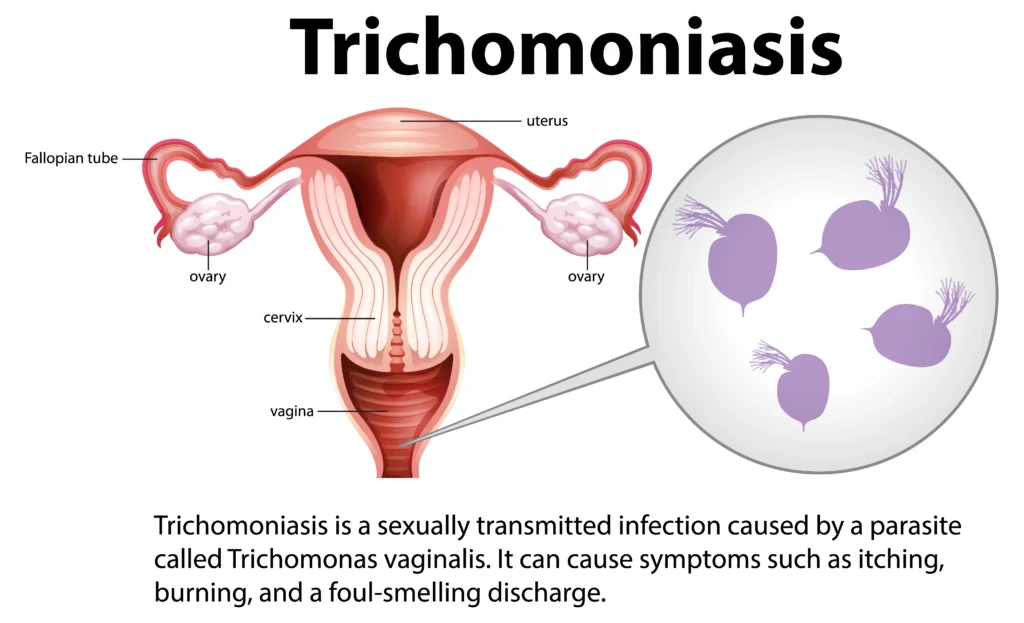
The infection is caused by the protozoan parasite Trichomonas vaginalis.
Once the parasite enters the genital tract during sexual contact, it attaches to the lining of the vagina or urethra and multiplies, leading to inflammation and irritation.
The body’s immune response contributes to the redness, itching, discharge, and discomfort associated with the infection.
Unlike bacterial vaginosis or vaginal yeast infections, trichomoniasis cannot develop spontaneously due to changes in vaginal bacteria or fungi.
It requires exposure to the parasite through sexual contact.
According to MedlinePlus, trichomoniasis is caused by infection with the parasite Trichomonas vaginalis, which is transmitted through sexual activity and can infect both women and men. (MedlinePlus, 2024)
Risk Factors for Trichomoniasis
Anyone who is sexually active can develop trichomoniasis, but certain factors increase the risk of infection.
These include:
1. Unprotected Sexual Activity
Not using condoms consistently increases the likelihood of exposure to Trichomonas vaginalis.
2. Multiple Sexual Partners
Having multiple current or recent sexual partners increases the chance of acquiring sexually transmitted infections, including trichomoniasis.
3. Previous Sexually Transmitted Infections
Individuals with a history of STIs have a higher risk of developing another sexually transmitted infection.
4. Previous Trichomoniasis Infection
Having trichomoniasis once does not provide immunity.
Reinfection is common, particularly if sexual partners are not treated.
5. Inconsistent Partner Treatment
If only one partner receives treatment, the untreated partner can continue to carry the parasite and reinfect the other partner after trichomoniasis treatment.
6. Lack of Routine STI Screening
Many infections remain undiagnosed because they cause few or no symptoms.
Regular screening in high-risk individuals helps identify infections early and reduces transmission.
According to researches,
trichomoniasis reinfection frequently occurs when sexual partners are not treated at the same time, emphasizing the importance of partner evaluation and treatment. (Zhan et al. 2013)
Symptoms of Trichomoniasis
Many people with trichomoniasis do not develop noticeable symptoms, making it easy to unknowingly spread the infection to sexual partners.
When symptoms do occur, they usually appear within 5 to 28 days after exposure, although some individuals may remain symptom-free for months.
Symptoms differ between women and men, with women generally experiencing more noticeable signs of infection.
Symptoms in Women
Women with trichomoniasis may experience:
- Thin, frothy vaginal discharge
- Yellow-green, gray, or white vaginal discharge
- Unpleasant or foul-smelling vaginal odor
- Vaginal itching and irritation
- Burning sensation around the vagina
- Redness and swelling of the vulva
- Pain during urination (dysuria)
- Pain during sexual intercourse (dyspareunia)
- Lower abdominal or pelvic discomfort (less common)
- Increased vaginal discharge
A characteristic finding in some women is a “strawberry cervix,” where the cervix develops small red spots due to inflammation.
Although this sign is highly suggestive of trichomoniasis, it is not present in every case.
Symptoms in Men
Men are more likely to have no symptoms, but when symptoms develop, they may include:
- Burning during urination
- Burning after ejaculation
- Mild irritation inside the penis
- Clear or thin discharge from the penis
- Frequent urge to urinate
- Discomfort in the urethra
Because symptoms are often mild or absent, men may unknowingly transmit the infection to their partners.
According to the Centers for Disease Control and Prevention (CDC),
approximately 70% of infected individuals have minimal or no symptoms, highlighting the importance of testing in at-risk individuals. (CDC, Sexually Transmitted Infections Treatment Guidelines, 2021)
How Is Trichomoniasis Diagnosed?
Trichomoniasis cannot be diagnosed based on symptoms alone because its symptoms overlap with those of bacterial vaginosis, vaginal yeast infections, and several other sexually transmitted infections.
Healthcare providers use a combination of clinical evaluation and laboratory testing.
Medical History
Your healthcare provider may ask about:
- Current symptoms
- Sexual history
- Recent sexual partners
- Previous sexually transmitted infections
- Pregnancy status
- Current medications
- Previous episodes of trichomoniasis
Physical Examination
In women, a pelvic examination may reveal:
- Vaginal inflammation
- Frothy vaginal discharge
- Cervical inflammation
- Redness of the vaginal walls
- Strawberry cervix (in some cases)
In men, examination findings are often minimal.
Laboratory Tests
Several tests can confirm trichomoniasis.
Nucleic Acid Amplification Test (NAAT)
NAAT is considered the most sensitive and preferred diagnostic test because it accurately detects the DNA of Trichomonas vaginalis.
Microscopic Examination
A vaginal fluid sample may be examined under a microscope to identify the parasite, although this method is less sensitive than NAAT.
Rapid Antigen Tests
Some clinics use rapid diagnostic tests that provide results within a short period.
Culture
Culture may be used in selected situations but is less commonly performed now because highly sensitive molecular tests are widely available.
According to StatPearls (NCBI Bookshelf),
nucleic acid amplification tests (NAATs) are currently the preferred diagnostic method because of their superior sensitivity and specificity compared with microscopy. (Jenks et al. 2026)
Possible Complications of Trichomoniasis
When diagnosed early, trichomoniasis is usually easy to treat.
However, untreated infections may increase the risk of several health complications.
Possible complications include:
Increased Risk of HIV
Inflammation caused by trichomoniasis increases susceptibility to acquiring and transmitting HIV.
Pelvic Inflammation
Persistent infection may contribute to chronic genital inflammation and ongoing discomfort.
Pregnancy Complications
Untreated trichomoniasis during pregnancy has been associated with:
- Premature rupture of membranes
- Preterm birth
- Low birth weight babies
Increased Risk of Other STIs
The infection may increase susceptibility to other sexually transmitted infections because inflammation weakens the body’s natural protective barriers.
Recurrent Infection
Reinfection commonly occurs when sexual partners are not treated simultaneously or when individuals have unprotected sexual contact before completing treatment.
Trichomoniasis During Pregnancy
Pregnant women with trichomoniasis require prompt medical evaluation because untreated infection has been associated with adverse pregnancy outcomes.
Possible risks include:
- Premature labor
- Premature rupture of membranes
- Low birth weight
- Increased genital inflammation
Treatment decisions during pregnancy should always be made in consultation with a qualified healthcare provider to ensure the safety of both the mother and baby.
According to the World Health Organization (WHO),
early diagnosis and treatment of sexually transmitted infections during pregnancy are important for improving maternal and newborn health outcomes. (World Health Organization, 2024)
Can Physiotherapy Help?
Physiotherapy does not treat the Trichomonas vaginalis parasite, and antiparasitic medication is required to eliminate the infection.
However, women who experience persistent pelvic discomfort, pelvic floor muscle tightness, or pain during sexual intercourse after treatment may benefit from pelvic health physiotherapy.
A women’s health physiotherapist may help by:
- Assessing pelvic floor muscle function
- Reducing pelvic floor muscle overactivity
- Improving muscle relaxation and coordination
- Managing pain during intercourse
- Teaching breathing and relaxation exercises
- Providing bladder and bowel health education
- Supporting recovery from chronic pelvic pain associated with recurrent genital infections
Pelvic floor rehabilitation is particularly valuable for women who develop protective muscle tension due to repeated pain or inflammation.
When combined with appropriate medical treatment, physiotherapy can help restore pelvic comfort, improve quality of life, and support long-term pelvic health.
Treatment for Trichomoniasis
Trichomoniasis is a curable sexually transmitted infection, and most people recover completely when they receive appropriate treatment and follow their healthcare provider’s instructions.
Because the infection is caused by the parasite Trichomonas vaginalis, it requires prescription antiparasitic medication.
Antifungal medications used for yeast infections and antibiotics prescribed for bacterial vaginosis are not effective against this parasite.
Early treatment of trichomoniasis not only relieves symptoms but also reduces the risk of complications and prevents transmission to sexual partners.
Prescription Medications
Healthcare providers commonly prescribe oral antiparasitic medications to eliminate the parasite.
Treatment may involve:
- Oral antiparasitic medication
- A single-dose regimen or a multi-day treatment course, depending on individual circumstances
- Alternative treatment plans for persistent or recurrent infections
- Repeat testing in selected cases to confirm the infection has cleared
Patients should complete the full course of medication exactly as prescribed, even if symptoms improve before treatment is finished.
According to the Centers for Disease Control and Prevention (CDC),
oral nitroimidazole medications are the only recommended treatment for trichomoniasis, and treatment recommendations may vary depending on whether the infection is occurring in women, men, or as a recurrent infection. (CDC, Sexually Transmitted Infections Treatment Guidelines, 2021)
Why Is Partner Treatment Important?
Treating only one partner can result in reinfection, even if symptoms disappear completely.
Healthcare providers usually recommend that:
- All current sexual partners receive treatment.
- Partners complete treatment before resuming sexual activity.
- Sexual activity is avoided until both partners have completed treatment and symptoms have resolved.
- Recently treated individuals consider follow-up testing if recommended by their healthcare provider.
Partner treatment plays a crucial role in breaking the cycle of reinfection and reducing the spread of trichomoniasis within the community.
According to the studies, simultaneous treatment of sexual partners is essential to prevent reinfection. (ACOG)
Home Care and Self-Care Tips
While medication is necessary to cure trichomoniasis, healthy self-care practices can support recovery and reduce irritation during treatment.
Helpful measures include:
- Complete the full course of prescribed medication.
- Avoid sexual activity until treatment is completed and symptoms have resolved.
- Inform and encourage sexual partners to seek treatment.
- Wear loose-fitting, breathable cotton underwear.
- Maintain good genital hygiene using mild, unscented products.
- Avoid vaginal douching, as it can disrupt the natural vaginal environment.
- Stay well hydrated and maintain a healthy lifestyle.
- Attend follow-up appointments if symptoms persist or recur.
Self-treatment with over-the-counter products is not effective for trichomoniasis because the infection is caused by a parasite rather than bacteria or fungi.
Can Trichomoniasis Be Prevented?
Although no prevention strategy is 100% effective, several measures can significantly reduce the risk of acquiring or spreading trichomoniasis.
Prevention tips include:
- Use condoms consistently and correctly during sexual activity.
- Limit the number of sexual partners.
- Undergo regular STI screening if sexually active and at increased risk.
- Ensure both partners receive treatment if infection is diagnosed.
- Avoid sexual contact until treatment is complete.
- Discuss STI testing with new sexual partners.
- Seek prompt medical evaluation if symptoms develop.
Practicing safer sex and encouraging open communication with partners are important steps in preventing sexually transmitted infections.
Myth vs Fact
| Myth | Fact |
|---|---|
| Only women get trichomoniasis. | Both women and men can become infected, although women are more likely to develop noticeable symptoms. |
| You will always know if you have trichomoniasis. | Most infected people have mild or no symptoms and may unknowingly spread the infection. |
| Trichomoniasis goes away on its own. | The infection requires prescription antiparasitic medication for effective treatment. |
| If my symptoms disappear, I don’t need treatment. | The parasite can remain in the body even if symptoms improve, increasing the risk of complications and transmission. |
| Only one partner needs treatment. | Both sexual partners should be treated to prevent reinfection. |
When Should You See a Doctor?
Seek medical advice if you experience:
- Frothy yellow-green vaginal discharge
- Vaginal itching or burning
- Pain during urination
- Foul-smelling vaginal discharge
- Pain during sexual intercourse
- Penile discharge or urethral irritation
- Symptoms after unprotected sexual contact
- Symptoms during pregnancy
- Persistent or recurrent genital symptoms
- A sexual partner has been diagnosed with trichomoniasis or another sexually transmitted infection
Early diagnosis and treatment help prevent complications and reduce the spread of infection.
Final Thoughts
Trichomoniasis is one of the most common yet frequently overlooked sexually transmitted infections because many people have few or no symptoms. Early diagnosis, prompt treatment, and simultaneous treatment of sexual partners are essential to prevent reinfection and reduce the spread of the infection. Practicing safer sex, attending regular STI screenings when appropriate, and seeking medical care for persistent genital symptoms can protect your reproductive health. Women with ongoing pelvic discomfort after treatment may also benefit from pelvic health physiotherapy as part of a comprehensive recovery plan.
Conclusion
Trichomoniasis is one of the most common curable sexually transmitted infections, yet many people remain unaware they have it because symptoms are often mild or absent.
Prompt diagnosis, appropriate antiparasitic treatment, and simultaneous treatment of sexual partners are essential to eliminate the infection and prevent reinfection.
Practicing safer sex, undergoing regular STI screening when appropriate, and seeking medical attention for abnormal vaginal discharge, genital irritation, or urinary symptoms can help protect both individual and public health.
Women who continue to experience pelvic pain or discomfort after the infection has resolved may also benefit from pelvic health physiotherapy to address associated pelvic floor dysfunction and improve overall quality of life.
According to Whom?, early diagnosis and proper treatment of trichomoniasis are important to prevent complications, reduce transmission, and support long-term reproductive health. (Bouchemal et al. 2017)
Frequently Asked Questions (FAQs)
1. What causes trichomoniasis?
Trichomoniasis is caused by the parasite Trichomonas vaginalis, which spreads through sexual contact.
2. Can trichomoniasis be cured?
Yes. Trichomoniasis is curable with prescription antiparasitic medication when taken as directed.
3. Can men have trichomoniasis?
Yes. Men can become infected, although many have no symptoms and may unknowingly transmit the infection.
4. How long does trichomoniasis last if untreated?
Without treatment, the infection can persist for months or even years and continue to spread to sexual partners.
5. Should my partner be treated?
Yes. Both current sexual partners should receive treatment to prevent reinfection.
6. Can I get trichomoniasis again?
Yes. Previous infection does not provide immunity, and reinfection is common if an untreated partner remains infected.
7. When should I see a doctor?
Consult a healthcare provider if you develop abnormal discharge, genital itching, burning during urination, pain during sex, or if your partner has been diagnosed with an STI.
Stay tuned with us for more health related topics.
Follow us on LinkedIn and Instagram for more.
More Read


Medical Disclaimer!
This article has been reviewed and written under the guidance of our Head Physiotherapist, Dr. Kruti Raj (PT, MUHS,CPT,CMPT). The information shared is intended for educational purposes only and should not be considered a substitute for personalized medical advice, diagnosis, or treatment.
Please consult us or any other qualified healthcare professional before beginning any exercise program, especially if you are experiencing pain, recovering from injury, or managing a medical condition.


