


Wondering if your symptoms could be bacterial vaginosis?
Bacterial vaginosis (BV) is the most common vaginal infection among women of reproductive age, affecting millions of women worldwide.
It occurs when the natural balance of bacteria in the vagina is disrupted, allowing harmful bacteria to outnumber the beneficial Lactobacillus species that normally help maintain a healthy vaginal environment.
This imbalance can lead to symptoms such as thin gray or white vaginal discharge, a strong fishy odor, burning during urination, and vaginal discomfort.
However, nearly half of women with bacterial vaginosis may have no noticeable symptoms, making regular gynecological check-ups important for early detection.
Quick Answer
Bacterial vaginosis (BV) is the most common cause of abnormal vaginal discharge in women of reproductive age. It develops when the natural balance of healthy vaginal bacteria is disrupted, leading to symptoms such as a thin gray or white discharge and a fishy vaginal odor. Although BV is not a sexually transmitted infection (STI), timely diagnosis and treatment are important to prevent complications and reduce the risk of recurrence.
Although bacterial vaginosis is not classified as a sexually transmitted infection (STI), sexual activity can increase the risk of developing the condition.
If left untreated, BV may increase the likelihood of acquiring sexually transmitted infections, pelvic inflammatory disease (PID), and pregnancy-related complications such as preterm birth.
Fortunately, bacterial vaginosis is treatable with appropriate medical care, and adopting healthy vaginal hygiene practices can help reduce the risk of recurrence.
This article explains the causes, symptoms, diagnosis, treatment, prevention strategies, and the role of physiotherapy in supporting women with bacterial vaginosis.
Key Takeaways
- Bacterial vaginosis is the most common cause of abnormal vaginal discharge in women of reproductive age.
- BV occurs when healthy Lactobacillus bacteria decrease and harmful bacteria overgrow.
- The hallmark symptoms are a thin gray or white discharge and a strong fishy vaginal odor.
- BV is not considered a sexually transmitted infection, but sexual activity can increase the risk.
- Prompt treatment with prescribed antibiotics usually resolves symptoms and helps prevent complications.
- Avoiding vaginal douching and maintaining healthy vaginal hygiene may reduce the risk of recurrence.
What Is Bacterial Vaginosis?
Bacterial vaginosis is a common vaginal condition caused by an imbalance in the normal vaginal microbiome.
In a healthy vagina, beneficial Lactobacillus bacteria produce lactic acid and hydrogen peroxide, helping maintain an acidic vaginal pH that protects against harmful microorganisms.
In bacterial vaginosis, the number of protective lactobacilli decreases while anaerobic bacteria such as Gardnerella vaginalis, Prevotella, Mobiluncus, and Atopobium vaginae multiply excessively.
This change raises the vaginal pH and results in the characteristic symptoms of bacterial vaginosis.
Common features of BV include:
- Thin gray, white, or off-white vaginal discharge
- Strong fishy vaginal odor
- Odor that becomes more noticeable after sexual intercourse
- Mild burning during urination
- Mild vaginal irritation
- Often no symptoms at all
Unlike vaginal yeast infections, bacterial vaginosis usually does not cause intense itching or thick cottage cheese-like discharge.
Is Bacterial Vaginosis a Sexually Transmitted Infection?
No. Bacterial vaginosis is not considered a sexually transmitted infection (STI).
However, sexual activity influences the balance of vaginal bacteria and can increase the risk of developing BV.
Women are more likely to develop bacterial vaginosis if they:
- Have a new sexual partner
- Have multiple sexual partners
- Do not use barrier protection consistently
- Have female sexual partners
- Frequently practice vaginal douching
It is also important to note that women who have never been sexually active can still develop bacterial vaginosis;
because the condition primarily results from an imbalance in vaginal bacteria rather than transmission of a specific pathogen.
According to the UK’s National Health Service (NHS),
bacterial vaginosis develops due to changes in the natural balance of bacteria inside the vagina and is not classified as a sexually transmitted infection, although sexual activity is recognized as a risk factor. (NHS, 2024)
Who Is at Risk of Developing Bacterial Vaginosis?
Although bacterial vaginosis can affect women of any age after puberty, certain factors increase the likelihood of developing the condition.
Higher-risk groups include:
- Women aged 15 – 44 years
- Sexually active women
- Women with multiple sexual partners
- Women with female sexual partners
- Women who douche regularly
- Women who smoke
- Women using scented intimate hygiene products
- Women with previous episodes of bacterial vaginosis
- Women whose vaginal microbiome has been disrupted after antibiotic use
Having one or more risk factors does not necessarily mean a woman will develop BV, but understanding these risks can help support preventive measures.
What Causes Bacterial Vaginosis?
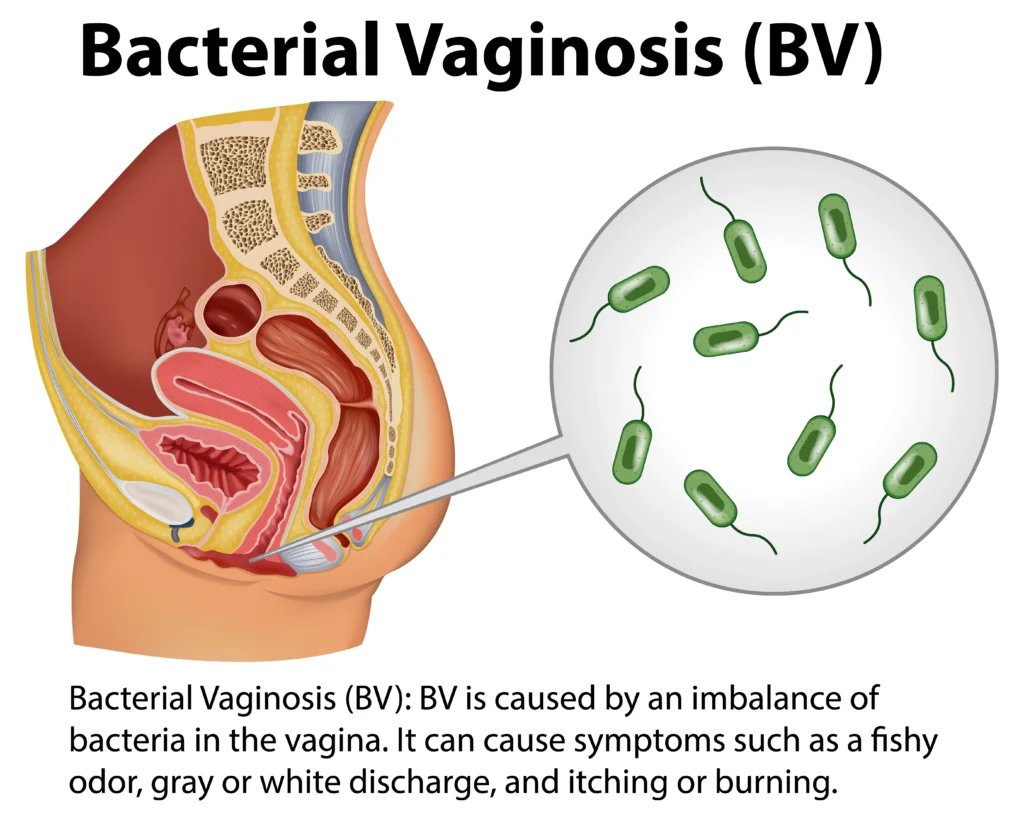
The exact cause of bacterial vaginosis is not completely understood.
Instead of being caused by a single organism, BV develops when the healthy vaginal microbiome becomes imbalanced.
Normally, Lactobacillus bacteria dominate the vagina and maintain an acidic environment (pH around 3.8 – 4.5).
When these protective bacteria decrease, anaerobic bacteria multiply rapidly, resulting in inflammation, altered vaginal discharge, and the characteristic fishy odor.
Researchers believe that several lifestyle, hormonal, and behavioral factors contribute to this bacterial imbalance rather than a single infectious source. (Mondal et al. 2023)
Risk Factors for Bacterial Vaginosis
Several factors may disturb the natural vaginal microbiome and increase the risk of bacterial vaginosis.
1. Vaginal Douching
Frequent douching removes beneficial bacteria and alters vaginal acidity, making it easier for harmful bacteria to grow.
2. New or Multiple Sexual Partners
Although BV is not an STI, changes in sexual activity may alter the vaginal bacterial environment and increase susceptibility.
3. Cigarette Smoking
Smoking has been associated with reduced populations of healthy lactobacilli and a higher incidence of recurrent bacterial vaginosis.
4. Antibiotic Use
Broad-spectrum antibiotics can disturb the balance of healthy vaginal bacteria, increasing the likelihood of bacterial overgrowth.
5. Hormonal Changes
Hormonal fluctuations during menstruation, pregnancy, or menopause may influence the vaginal microbiome in some women.
6. Lack of Protective Lactobacilli
Some women naturally have fewer protective lactobacilli, making them more susceptible to bacterial imbalance and recurrent BV.
Recent research published in Nature Reviews Disease Primers highlights that;
bacterial vaginosis is a polymicrobial condition driven by disruption of the vaginal microbiota rather than infection by a single bacterial species, emphasizing the importance of restoring a healthy vaginal ecosystem. (Redelinghuys et al. 2020)
Symptoms of Bacterial Vaginosis
Approximately 50–84% of women with bacterial vaginosis may have no noticeable symptoms,
which means the condition is often detected during a routine gynecological examination or while being evaluated for another concern.
When symptoms do occur, they are usually mild but can significantly affect comfort, confidence, and quality of life.
Common symptoms include:
- Thin gray, white, or off-white vaginal discharge
- Strong fishy vaginal odor
- Odor that becomes more noticeable after sexual intercourse
- Mild burning sensation during urination
- Vaginal irritation or discomfort
- Increased vaginal discharge
- Mild vulvar itching (less common)
- Feeling of vaginal wetness
Unlike vaginal yeast infections, bacterial vaginosis typically does not cause severe itching, redness, or thick cottage cheese-like discharge.
According to MedlinePlus, bacterial vaginosis commonly presents with a thin vaginal discharge and a fishy odor, although many women remain asymptomatic. (MedlinePlus)
Myth vs Fact
| Myth | Fact |
|---|---|
| Bacterial vaginosis is a sexually transmitted infection. | No. BV is caused by an imbalance of normal vaginal bacteria, although sexual activity can increase the risk. |
| Poor hygiene is the only cause of BV. | BV develops because of changes in the vaginal microbiome and is influenced by several factors, including douching, smoking, and changes in sexual activity. |
| BV will always go away without treatment. | Some cases improve naturally, but many require antibiotics to relieve symptoms and reduce complications. |
| Having BV once means it won’t come back. | Recurrence is common, so maintaining good vaginal health and following medical advice are important. |
How Is Bacterial Vaginosis Diagnosed?
Diagnosis is based on a combination of medical history, symptom assessment, physical examination, and laboratory evaluation.
A healthcare provider may perform:
Medical History
Your healthcare provider may ask about:
- Vaginal discharge characteristics
- Vaginal odor
- Itching or burning
- Menstrual history
- Sexual history
- Previous vaginal infections
- Pregnancy status
- Recent antibiotic use
- Personal hygiene practices
Pelvic Examination
A pelvic examination helps evaluate:
- Vaginal discharge
- Vaginal inflammation
- Cervical abnormalities
- Signs of other vaginal infections
Vaginal pH Testing
Healthy vaginal pH is generally between 3.8 and 4.5.
Women with bacterial vaginosis often have a vaginal pH greater than 4.5, which supports the diagnosis.
Microscopic Examination
A sample of vaginal discharge is examined under a microscope to identify clue cells, which are vaginal epithelial cells coated with bacteria.
Their presence is one of the hallmark findings in bacterial vaginosis.
Whiff Test
A potassium hydroxide (KOH) solution may be added to the vaginal discharge sample.
A strong fishy odor after adding KOH, known as the positive whiff test, supports the diagnosis.
Laboratory Testing
When the diagnosis is uncertain or recurrent infections occur, additional laboratory tests may include:
- Gram stain (Nugent scoring)
- Molecular diagnostic tests (NAATs)
- Vaginal microbiome testing
- STI screening if clinically indicated
The American Society for Microbiology notes that Gram stain with Nugent scoring remains the laboratory reference standard for diagnosing bacterial vaginosis,
while nucleic acid amplification tests (NAATs) are increasingly used because of their high diagnostic accuracy. (Muzny et al. 2023)
Possible Complications of Bacterial Vaginosis
Although bacterial vaginosis is often mild, untreated infections may increase the risk of several reproductive and gynecological complications.
Possible complications include:
Increased Risk of Sexually Transmitted Infections
Women with bacterial vaginosis are at greater risk of acquiring:
- HIV
- Chlamydia
- Gonorrhea
- Herpes simplex virus
- Human papillomavirus (HPV)
The altered vaginal microbiome reduces the natural protective barrier against infectious organisms.
Pelvic Inflammatory Disease (PID)
Untreated bacterial vaginosis may contribute to pelvic inflammatory disease, particularly following gynecological procedures.
PID can lead to:
- Chronic pelvic pain
- Infertility
- Ectopic pregnancy
- Tubal damage
Recurrent Bacterial Vaginosis
One of the greatest challenges is recurrence.
Many women experience repeated episodes within months after treatment because the healthy vaginal microbiome has not been fully restored.
Post-Surgical Infections
Women with untreated bacterial vaginosis may have an increased risk of infection following procedures such as:
- Hysterectomy
- Endometrial biopsy
- Surgical abortion
- Intrauterine procedures
Bacterial Vaginosis During Pregnancy
Pregnant women with symptomatic bacterial vaginosis should seek medical evaluation because untreated BV has been associated with adverse pregnancy outcomes.
Potential pregnancy-related complications include:
- Premature rupture of membranes (PROM)
- Preterm labor
- Preterm birth
- Low birth weight
- Postpartum uterine infection
- Chorioamnionitis (in some cases)
Early diagnosis and appropriate treatment can reduce certain pregnancy-related risks.
Pregnant women should only use medications prescribed by their healthcare provider.
The Mayo Clinic advises that pregnant women experiencing symptoms of bacterial vaginosis should consult their healthcare provider,
as treatment may help reduce the risk of pregnancy complications. (Mayo Clinic)
Can Physiotherapy Help?
Physiotherapy does not treat bacterial vaginosis itself because BV is caused by an imbalance of vaginal bacteria that requires medical management.
However, women’s health physiotherapy can be valuable for women who experience pelvic floor dysfunction, pelvic pain, or painful sexual intercourse associated with recurrent vaginal infections.
A pelvic health physiotherapist may assist by:
- Assessing pelvic floor muscle function
- Treating pelvic floor muscle overactivity
- Reducing pain during intercourse (dyspareunia)
- Teaching diaphragmatic breathing and relaxation techniques
- Improving pelvic floor muscle coordination
- Providing bladder and bowel health education
- Supporting postpartum pelvic recovery
- Advising on healthy lifestyle habits that complement medical treatment
Physiotherapy should always be considered an adjunct to, not a replacement for, evidence-based medical treatment for bacterial vaginosis.
Treatment for Bacterial Vaginosis
Bacterial vaginosis (BV) is a treatable condition, but it requires appropriate medical management to restore the normal balance of vaginal bacteria.
Because BV is caused by an imbalance in the vaginal microbiome rather than a single infectious organism,
treatment focuses on reducing the overgrowth of harmful bacteria and allowing beneficial Lactobacillus species to recover.
It is important to complete the full course of prescribed medication, even if symptoms improve within a few days, as stopping treatment early may increase the risk of recurrence.
Antibiotic Treatment
Healthcare providers commonly prescribe antibiotics to treat bacterial vaginosis.
Treatment may include:
- Oral antibiotics
- Vaginal antibiotic gels
- Vaginal antibiotic creams
- Alternative antibiotics for recurrent infections
The choice of medication depends on the severity of symptoms, pregnancy status, allergies, previous episodes, and individual medical history.
Management of Recurrent Bacterial Vaginosis
Some women experience repeated episodes despite successful initial treatment.
For recurrent BV, healthcare providers may recommend:
- Extended antibiotic therapy
- Suppressive treatment regimens
- Reassessment for other vaginal infections
- Lifestyle modifications
- Follow-up examinations
Research continues to explore methods for restoring the normal vaginal microbiome and reducing recurrence.
Should Sexual Partners Be Treated?
Routine treatment of male sexual partners is not generally recommended, as studies have not consistently shown that it reduces recurrence.
However, healthcare providers may provide individualized advice depending on the patient’s medical history and sexual practices.
Women should discuss partner management with their healthcare provider, particularly if infections recur frequently.
Home Care Tips
Although home care cannot cure bacterial vaginosis, healthy habits can support recovery and reduce the likelihood of recurrence.
Helpful self-care measures include:
- Complete the entire course of prescribed medication.
- Avoid vaginal douching.
- Wash only the external genital area with lukewarm water.
- Avoid scented soaps, vaginal sprays, powders, and deodorants.
- Wear breathable cotton underwear.
- Change out of wet clothing promptly after swimming or exercise.
- Practice safer sex.
- Avoid unnecessary antibiotic use unless prescribed.
- Maintain good menstrual hygiene.
- Attend follow-up appointments if symptoms return.
These measures help maintain the natural vaginal environment and complement medical treatment.
Can Probiotics Help?
Researchers continue to investigate whether probiotics may help restore the normal vaginal microbiome after treatment for bacterial vaginosis.
Some studies suggest that probiotics containing Lactobacillus species may support recolonization of healthy vaginal bacteria and reduce recurrence in certain women.
However, evidence remains mixed, and probiotics should not replace standard antibiotic treatment.
A systematic review published in Frontiers in Cellular and Infection Microbiology reported that;
probiotics show promise as an adjunct to conventional treatment, but additional high-quality studies are needed before routine recommendations can be made. (Li C. et al. 2023)
Can Physiotherapy Help?
Physiotherapy does not eliminate the bacterial imbalance responsible for bacterial vaginosis.
However, women who develop pelvic pain, painful intercourse, pelvic floor muscle dysfunction, or anxiety related to recurrent infections may benefit from pelvic floor rehabilitation.
A women’s health physiotherapist may help by:
- Assessing pelvic floor muscle function
- Reducing pelvic floor muscle tightness
- Improving pelvic floor coordination
- Teaching breathing and relaxation exercises
- Managing pain during intercourse
- Providing bladder and bowel health education
- Supporting postpartum pelvic recovery
Pelvic floor rehabilitation can improve comfort and quality of life when used alongside appropriate medical treatment.
How Can Bacterial Vaginosis Be Prevented?
Although bacterial vaginosis cannot always be prevented, adopting healthy vaginal care practices may reduce the risk of developing or recurring infections.
Prevention strategies include:
- Avoid vaginal douching.
- Limit the use of scented feminine hygiene products.
- Practice safer sex.
- Wear breathable cotton underwear.
- Change menstrual products regularly.
- Avoid prolonged moisture in the genital area.
- Stop smoking if applicable.
- Complete all prescribed medications.
- Attend regular gynecological check-ups.
- Seek early medical care if symptoms recur.
Maintaining a healthy vaginal microbiome is one of the most effective ways to reduce the risk of bacterial vaginosis.
When Should You See a Doctor?
Consult a healthcare professional if you experience:
- A strong fishy vaginal odor
- Thin gray or white vaginal discharge
- Burning during urination
- Vaginal irritation or discomfort
- Symptoms during pregnancy
- Fever or pelvic pain
- Bloody vaginal discharge
- Symptoms that return after treatment
- Recurrent bacterial vaginosis
- New symptoms following antibiotic treatment
Prompt diagnosis allows early treatment and helps reduce the risk of complications.
Final Thoughts
Bacterial vaginosis is a common but treatable condition that develops when the natural balance of vaginal bacteria is disrupted. Although it is not a sexually transmitted infection, it should not be ignored, especially if symptoms persist or recur. Early diagnosis, appropriate medical treatment, healthy intimate hygiene, and avoiding practices such as vaginal douching can help restore vaginal health and reduce the risk of future episodes. Women experiencing recurrent pelvic discomfort or pelvic floor dysfunction may also benefit from pelvic floor physiotherapy as part of a comprehensive care plan.
Conclusion
Bacterial vaginosis is the most common cause of abnormal vaginal discharge in women of reproductive age and results from an imbalance in the normal vaginal microbiome rather than a traditional sexually transmitted infection.
Although many women experience no symptoms, others may develop a characteristic fishy odor, thin gray or white discharge, and mild irritation.
Timely diagnosis and appropriate antibiotic treatment are highly effective for most women, but recurrence remains common.
Maintaining healthy vaginal hygiene, avoiding douching, practicing safer sex, and seeking early medical evaluation for persistent symptoms can help reduce the risk of recurrence and protect reproductive health.
For women experiencing pelvic floor dysfunction or pain associated with recurrent infections, pelvic floor physiotherapy may provide valuable supportive care as part of a comprehensive treatment plan.
According to MedlinePlus, early diagnosis and proper treatment help relieve symptoms, reduce complications, and support long-term vaginal health. (MedlinePlus, U.S. National Library of Medicine, 2024)
Frequently Asked Questions
1. What is bacterial vaginosis?
Bacterial vaginosis is a common vaginal condition caused by an imbalance in the normal vaginal bacteria.
2. Is bacterial vaginosis an STI?
No. BV is not classified as a sexually transmitted infection, although sexual activity can increase the risk.
3. What are the common symptoms of bacterial vaginosis?
Typical symptoms include thin gray or white vaginal discharge, a fishy vaginal odor, mild burning during urination, and increased vaginal discharge.
4. Can bacterial vaginosis go away on its own?
Some mild cases may improve naturally, but symptomatic BV usually requires medical treatment with antibiotics.
5. Can bacterial vaginosis return after treatment?
Yes. Recurrence is common, which is why preventive measures and follow-up care are important.
6. Can probiotics cure bacterial vaginosis?
Current evidence suggests probiotics may support recovery in some women, but they should not replace prescribed antibiotics.
7. Can bacterial vaginosis affect pregnancy?
Untreated BV during pregnancy has been associated with an increased risk of preterm birth and other pregnancy-related complications.
8. When should I see a doctor?
Seek medical evaluation if you have persistent fishy vaginal odor, abnormal discharge, pelvic pain, fever, or symptoms during pregnancy.
Stay tuned with us for more health related topics.
Follow us on LinkedIn and Instagram for more.
More Read


Medical Disclaimer!
This article has been reviewed and written under the guidance of our Head Physiotherapist, Dr. Kruti Raj (PT, MUHS,CPT,CMPT). The information shared is intended for educational purposes only and should not be considered a substitute for personalized medical advice, diagnosis, or treatment.
Please consult us or any other qualified healthcare professional before beginning any exercise program, especially if you are experiencing pain, recovering from injury, or managing a medical condition.


