


How to lose weight safely after pregnancy is a common concern for new mothers,
but recovery, hormones, and your body’s healing process matter too.
For many women, one of the biggest surprises after giving birth is that losing weight does not feel the same as it did before pregnancy.
You may be eating well, trying to stay active, and doing everything you think you should be doing, yet the scale hardly moves.
At the same time, social media can make it seem as though everyone else is “bouncing back” within a few weeks.
Quick Answer
Weight loss often feels different after pregnancy because your body is recovering from childbirth, adjusting to hormonal changes, coping with sleep deprivation, and sometimes breastfeeding. Safe postpartum weight loss is usually gradual and focuses on healing, healthy habits, and rebuilding strength rather than rapid dieting.
As a physiotherapist, I often meet new mothers who feel frustrated, guilty, or even worried that something is wrong with their body.
The truth is that your body is recovering from one of the biggest physical events of your life.
After pregnancy, your body is not simply trying to lose weight.
It is healing, adjusting hormonally, caring for a baby, and adapting to an entirely new routine.
Understanding these changes can help you approach postpartum weight loss with more patience and much less self-criticism.
Key Takeaways
- Postpartum weight loss is different because your body is still healing.
- Hormonal changes and sleep deprivation can affect recovery.
- Breastfeeding does not guarantee weight loss.
- Core muscles and the pelvic floor need time to recover.
- Gentle movement is often better than extreme exercise.
- Crash diets may slow recovery and increase fatigue.
- The scale is only one measure of progress.
- A healthy postpartum journey focuses on strength, movement, and long-term well-being.
Why Does Weight Loss Feel Different After Pregnancy?
The postpartum period is unlike any other stage of life.
Your body has spent months growing a baby, supporting the placenta, increasing blood volume, and preparing for childbirth.
After delivery, many of these systems gradually return toward their pre-pregnancy state, but the process takes time.
The American College of Obstetricians and Gynecologists describes the postpartum period as an ongoing process of physical recovery and adaptation rather than a single event. (ACOG 2018)
As a physiotherapist, I often remind women that healing and weight loss are not always happening at the same speed.
Your Hormones Are Still Changing
Many women think that pregnancy hormones disappear immediately after birth.
In reality, the body continues to go through significant hormonal adjustments during the postpartum period.
These changes can influence:
- Energy levels
- Mood
- Appetite
- Sleep patterns
- Recovery
This does not mean that hormones make weight loss impossible.
It simply means that your body is working through a complex recovery process.
Sleep Deprivation Changes Everything
One of the most overlooked reasons postpartum weight loss feels difficult is lack of sleep.
Caring for a newborn often means interrupted sleep for weeks or even months.
Many mothers are surprised by how much this affects their daily life.
Poor sleep may influence:
- Hunger
- Food choices
- Motivation to exercise
- Fatigue
- Stress levels
As a physiotherapist, I often tell mothers that recovery is not only about exercise.
Rest is also an important part of healing.
Sometimes the healthiest goal is not to train harder but to recover better.
Calculate your ideal sleep timings here: “Sleep Calculator“
Does Breastfeeding Always Help You Lose Weight?
This is one of the biggest myths surrounding postpartum weight loss.
Many women are told that breastfeeding will automatically melt away pregnancy weight.
The reality is much more complicated.
Some mothers lose weight while breastfeeding.
Others notice very little change.
Some even find it difficult to lose weight until breastfeeding decreases.
Research examining postpartum weight retention suggests that the relationship between breastfeeding and weight loss varies among women and is influenced by many different factors. (Lambrinou et al. 2019)
This is one reason why comparing yourself with other mothers is rarely helpful.
Your Body Is Healing, Not Just Burning Calories
After childbirth, the body is repairing muscles, connective tissues, and in some cases healing from surgery.
Women who have experienced a cesarean birth may have additional healing needs.
The body also continues to adapt after vaginal delivery.
This recovery process requires energy.
As a physiotherapist, I encourage women to think of the postpartum period as rehabilitation rather than a race to lose weight.
Why the Scale Does Not Tell the Whole Story
Many mothers focus entirely on the number they see on the scale.
However, body weight is only one measure of recovery.
Your body is also experiencing changes in:
- Fluid balance
- Muscle strength
- Core function
- Posture
- Physical endurance
A woman may become stronger, healthier, and more physically active even if the scale changes very slowly.
Pregnancy Changes the Way You Move
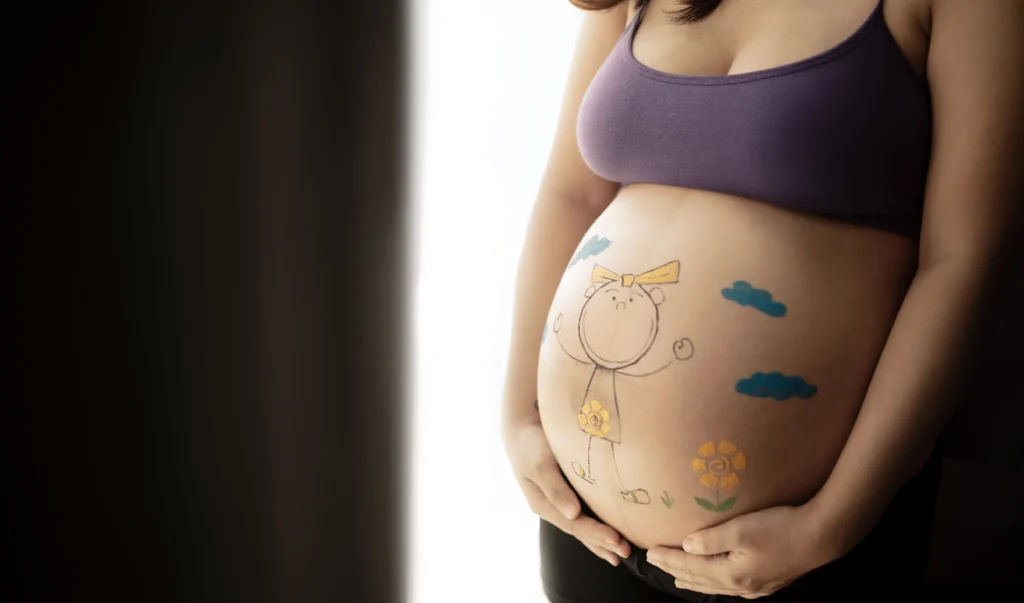
Pregnancy changes posture, balance, and the way the body distributes weight.
Research on the biomechanics of pregnancy shows that pregnancy influences posture and movement strategies as the body adapts to a changing center of gravity. (Conder et al. 2019)
These changes do not disappear overnight after childbirth.
Many women need time to rebuild strength and movement confidence.
A Lesser-Known Fact About Postpartum Recovery
Many women expect their abdomen to become flat soon after giving birth.
In reality, the uterus gradually shrinks over several weeks, while the abdominal wall and surrounding tissues continue to recover.
It is completely normal for the body to need time to heal.
This natural recovery process is one reason why patience is such an important part of postpartum health.
Small Daily Habits Matter More Than Extreme Diets
Many women feel pressure to lose weight quickly post pregnancy.
Unfortunately, strict diets and intense exercise programs are often difficult to maintain during the early postpartum months.
Simple habits are usually more realistic:
- Gentle walking
- Eating balanced meals
- Drinking enough water
- Sleeping whenever possible
- Accepting help from family and friends
- Returning to exercise gradually
Small improvements repeated consistently often produce better long-term results than extreme approaches.
Physiotherapist’s Perspective
One of the most common things I hear from new mothers is,
“I do not recognize my body anymore.”
My answer is always the same.
Your body has done something extraordinary.
It has grown, carried, and delivered a baby.
Recovery deserves the same patience and care that pregnancy required.
As a physiotherapist,
I encourage women to stop comparing themselves with unrealistic images online and focus instead on healing, movement, and strength.
Weight loss can be part of the journey, but it should not become the only measure of success.
Your body is not simply trying to become smaller.
It is trying to recover.
Why Your Core Feels Different After Having a Baby
Many women expect to return to their normal exercise routine soon after delivery.
Instead, they often notice that their body feels unfamiliar.
Simple activities such as standing for long periods, lifting the baby, or getting out of bed may feel more challenging than expected.
One reason is that pregnancy places significant demands on the abdominal wall and trunk muscles.
The body needs time to recover.
As a physiotherapist, I often explain that rebuilding strength after pregnancy is similar to rehabilitation after any major physical event.
The goal is not to rush.
The goal is to recover well.
What About the Pelvic Floor?
The pelvic floor muscles support the bladder, bowel, and pelvic organs.
Pregnancy and childbirth can place additional stress on these muscles.
Some women may notice:
- A feeling of heaviness
- Urine leakage during coughing or sneezing
- Reduced core stability
- Changes in physical confidence
As a physiotherapist, I encourage women not to ignore these symptoms because effective treatment options are often available.
Is It Safe to Exercise After Pregnancy?
Many mothers are uncertain about when they should start exercising again.
The answer depends on factors such as:
- Type of delivery
- Individual recovery
- Medical history
- Advice from the healthcare provider
For most women, gentle movement can begin gradually as they feel able.
Walking is often one of the simplest ways to start rebuilding endurance.
The American College of Obstetricians and Gynecologists supports a gradual return to physical activity after pregnancy as part of a healthy lifestyle.
Why Crash Diets Often Backfire
After pregnancy, many women feel pressure to lose weight quickly.
Strict diets may seem tempting, especially when surrounded by unrealistic expectations on social media.
However, severe calorie restriction may leave a recovering mother feeling:
- More tired
- More hungry
- Less able to exercise
- Less able to care for herself
As a physiotherapist, I prefer to focus on building sustainable habits rather than encouraging rapid weight loss.
Long-term health is usually more important than short-term changes on the scale.
A Better Approach to Postpartum Weight Loss
Healthy postpartum belly fat and weight management is often built around small daily habits.
Some of the most helpful strategies include:
Move a Little Every Day
A gentle walk with the baby can be an excellent starting point.
Strengthen Gradually
As recovery progresses, appropriate strengthening exercises may help rebuild confidence and physical function.
Eat Regular, Balanced Meals
Skipping meals often increases hunger and makes healthy choices more difficult later in the day.
Accept Help
Many new mothers try to do everything themselves.
Support from family and friends can create more time for rest and self-care.
Celebrate Non-Scale Victories
Being able to walk longer, lift your baby comfortably, or sleep better are all meaningful signs of recovery.
A Lesser-Known Fact About Postpartum Weight
Many women become discouraged because they still look pregnant after giving birth.
In reality, the uterus, abdominal muscles, and connective tissues all need time to recover.
Fluid shifts, healing tissues, and normal postpartum adaptations can also influence body shape.
The body you see during the first weeks after childbirth is not the final stage of recovery.
Why Comparing Yourself With Others Can Be Harmful
Every postpartum journey is different.
Some women lose weight quickly.
Others lose it gradually.
Some experience periods where their weight stays the same for weeks.
Many factors influence recovery, including:
- Genetics
- Sleep
- Breastfeeding
- Physical activity
- Nutrition
- Stress
- Type of delivery
Comparing your journey with someone else’s rarely tells the whole story.
Myths vs Facts About Postpartum Weight Loss
| Myth | Fact |
|---|---|
| Breastfeeding always melts away baby weight. | Weight changes during breastfeeding vary between women. |
| You should get your old body back quickly. | Recovery is different for every mother. |
| The scale is the best way to measure progress. | Strength, mobility, energy, and confidence also matter. |
| Intense workouts are the fastest solution. | Gradual exercise is often safer and more sustainable. |
Myths vs Facts
Myth
Breastfeeding always causes rapid weight loss.
Fact
Weight changes during breastfeeding vary from one woman to another.
Myth
You should get your pre-pregnancy body back as quickly as possible.
Fact
Postpartum recovery is an individual process that takes time.
Myth
The scale is the best measure of progress.
Fact
Strength, energy, mobility, and confidence are also important signs of recovery.
Myth
You need intense exercise to lose weight after pregnancy.
Fact
Gentle movement and gradual progression are often more sustainable.
Final Thoughts
Weight loss after pregnancy often feels different because your body is recovering from one of the biggest physical and emotional changes of your life. Healing, hormones, sleep, and caring for a baby all influence the journey.
As a physiotherapist, I encourage mothers to think beyond the scale. Building strength, improving movement, restoring core function, and taking care of your overall health are equally important milestones.
There is no perfect timeline for postpartum recovery. Every mother and every pregnancy are unique, and comparing yourself with others can create unnecessary stress.
A Gentle Reminder:
Your body is not simply trying to lose weight. It is healing, adapting, and supporting you through motherhood. Give it the patience and care it deserves.
Physiotherapist’s Perspective
One of the biggest lessons I have learned is that postpartum recovery is not only physical.
Many women carry enormous pressure to look the way they did before pregnancy.
I encourage mothers to think differently.
Instead of asking,
“Why is my body not the same?”
try asking,
“What has my body accomplished?”
It has grown a baby.
It has adapted to enormous physical changes.
It is now learning to recover while caring for a newborn.
That deserves patience and kindness.
Small daily habits often build stronger results than extreme plans.
Frequently Asked Questions
Why is postpartum weight loss so difficult?
Hormonal changes, sleep deprivation, recovery from childbirth, and lifestyle adjustments can all affect weight loss.
Does breastfeeding always help you lose weight?
No. Some women lose weight while breastfeeding, while others notice little or no change.
When can I start exercising after pregnancy?
The timing depends on your recovery and your healthcare provider’s advice, but gentle movement is often encouraged.
Can I diet immediately after giving birth?
Extreme dieting is generally not recommended because your body needs energy to recover.
Why do I still look pregnant after childbirth?
The uterus and abdominal tissues need time to recover, and this is a normal part of postpartum healing.
Can weak core muscles affect postpartum recovery?
Yes. Pregnancy places demands on the abdominal muscles, and gradual rehabilitation may help restore function.
What is the safest way to lose weight after pregnancy?
A balanced approach that includes healthy eating, gentle exercise, and realistic expectations is often the safest strategy.
Should I compare my progress with other mothers?
No. Every postpartum recovery journey is unique and influenced by many different factors.
Stay tuned with us for more health related topics.
Follow us on LinkedIn and Instagram for more.
More Read


Medical Disclaimer!
This article has been reviewed and written under the guidance of our Head Physiotherapist, Dr. Kruti Raj (PT, MUHS,CPT,CMPT). The information shared is intended for educational purposes only and should not be considered a substitute for personalized medical advice, diagnosis, or treatment.
Please consult us or any other qualified healthcare professional before beginning any exercise program, especially if you are experiencing pain, recovering from injury, or managing a medical condition.


