


Postpartum belly recovery exercises can help rebuild core strength, improve abdominal support, and support safer recovery after childbirth.
A lot of women think postpartum belly recovery is about getting their “old stomach back.”
Honestly, most mothers I see in the clinic are not even worried about aesthetics at first.
They say things like:
“My stomach feels disconnected.”
“I still look pregnant.”
“My lower back hurts every time I carry the baby.”
“Why does my core feel so weak?”
“Why do I leak urine when I sneeze?”
And sometimes the hardest part is this:
Nobody really prepares women for how strange the body can feel after childbirth.
The internet usually swings between two extremes.
Either it pushes “bounce back” culture or it scares mothers into avoiding movement altogether.
Real recovery sits somewhere in the middle.
Quick Answer
Postpartum belly recovery exercises focus on rebuilding deep core strength, improving pelvic floor coordination, restoring breathing mechanics, and reducing pressure on healing abdominal tissues after pregnancy. The safest and most effective postpartum exercises usually include diaphragmatic breathing, pelvic floor activation, heel slides, glute bridges, bird dog exercises, and gradual walking progression.
From a physiotherapy perspective, recovery is not only about flattening the stomach. It is about restoring function, reducing back pain, improving stability, and helping mothers feel strong and confident again after childbirth.
As physiotherapists, we do not just focus on flattening the belly.
We focus on restoring pressure control, breathing mechanics, pelvic support, posture, confidence, and strength that actually helps mothers move through daily life without pain or heaviness.
Because let’s be honest.
Lifting a baby carrier, breastfeeding in awkward positions, waking up every two hours, carrying a growing infant on one hip, and surviving on interrupted sleep is already physical work.
Your recovery exercise plan has to support that reality.
Key Takeaways
- Postpartum belly recovery is about healing core function, not just weight loss.
- Diastasis recti is common after pregnancy, but recovery should focus on strength and pressure control rather than gap closure alone.
- Breathing exercises and pelvic floor coordination are often the first step in safe postpartum rehabilitation.
- Exercises like heel slides, glute bridges, bird dog, and walking are gentle yet highly effective for rebuilding stability.
- Rushing into crunches, planks, or intense workouts too early may worsen pelvic floor symptoms and abdominal pressure issues.
- Sleep deprivation, constipation, rib flare, and cesarean scar restrictions can all affect postpartum core recovery.
- Recovery timelines vary greatly between women, and slow progress does not mean failure.
- Pelvic health physiotherapy can help mothers dealing with leakage, heaviness, pain, or persistent abdominal weakness.
Why the Belly Feels Different After Pregnancy
Pregnancy changes the abdominal wall in ways many women do not expect.
The growing uterus stretches:
- the abdominal muscles,
- connective tissue,
- fascia,
- ribs,
- diaphragm,
- and pelvic floor.
In many women, the two sides of the rectus abdominis separate during pregnancy.
This is called diastasis recti.
(Norwegian researchers 2016), found that abdominal separation is extremely common during pregnancy and early postpartum recovery.
But here is something many articles fail to explain properly.
A postpartum belly is not only about muscle separation.
Sometimes the issue is:
- poor pressure management,
- weak glutes,
- rib flare,
- shallow breathing,
- pelvic floor tension,
- scar restriction after cesarean birth,
- constipation-related straining,
- or simply exhaustion and deconditioning.
I have seen mothers with a small abdominal gap who function very well.
And I have also seen mothers with minimal visible separation who still feel unstable, weak, and uncomfortable.
This is why modern physiotherapy focuses more on function than obsession over “closing the gap.”
The Mistake Many Mothers Make Too Early
One common pattern I see is this:
A mother gets cleared for exercise at six weeks postpartum and immediately starts:
- crunches,
- intense Pilates,
- planks,
- running,
- HIIT workouts,
- or online “flat tummy challenges.”
Then symptoms begin.
Leakage.
Pressure.
Back pain.
Abdominal doming.
Pelvic heaviness.
The body was technically “healed enough” medically, but not necessarily ready for high pressure loading.
That distinction matters.
Recent rehabilitation reviews emphasize gradual load progression and individualized postpartum rehabilitation rather than aggressive early strengthening.
(Sperstad et al. 2024) discussed how postpartum rehab should prioritize functional recovery and pressure regulation rather than cosmetic abdominal correction alone.
What Postpartum Core Recovery Actually Means
A strong postpartum core is not about aggressively pulling the stomach inward.
In fact, many mothers over-brace constantly without realizing it.
They hold tension all day because they are trying to “keep the tummy tight.”
Ironically, this can make breathing worse and increase pelvic floor tension.
A healthy postpartum core should:
- respond automatically,
- support movement,
- manage pressure,
- coordinate with breathing,
- and work together with the pelvic floor.
That is the real goal.
The Exercises I Usually Start With First
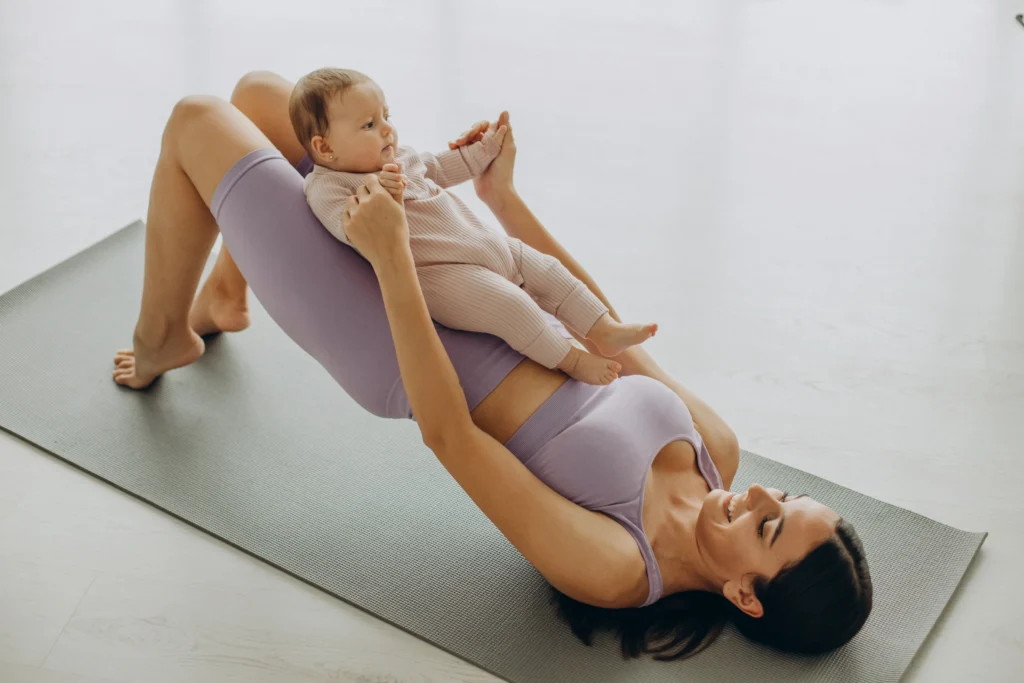
1. Breathing Retraining
This sounds too simple, which is exactly why many women skip it.
But breathing changes dramatically during pregnancy.
The rib cage expands. The diaphragm shifts upward.
Many mothers develop shallow chest breathing without noticing.
Then postpartum recovery begins with the same dysfunctional pattern still present.
What I Tell Mothers
Lie down comfortably.
Place one hand on the ribs and one on the lower abdomen.
Breathe in slowly through the nose.
Let the ribs expand sideways instead of lifting the shoulders.
Exhale gently through the mouth.
Do not force the stomach inward aggressively.
Just breathe.
(Pavel Kolář et al. 2012) explained how diaphragmatic function contributes significantly to trunk stability and lumbopelvic control.
This exercise looks basic. But clinically, it changes a lot.
2. Pelvic Floor Connection Work
Not every postpartum pelvic floor is weak.
Some are actually over-tight and fatigued.
This surprises many women.
Mothers who constantly “hold tension” or feel anxious about recovery sometimes struggle to relax the pelvic floor fully.
That matters because muscles that cannot relax properly also struggle to contract efficiently.
Gentle Starting Exercise
During exhalation:
- imagine softly lifting the pelvic floor,
- then fully relax.
The relaxation phase matters just as much.
3. Heel Slides
I still use heel slides often because they help reconnect breathing with deep abdominal control without excessive strain.
How to Do Them
- Lie on your back.
- Bend both knees.
- Gently engage the lower abdomen during exhalation.
- Slowly slide one heel away.
- Return slowly.
If the abdomen bulges outward, the movement is probably too difficult right now.
That is not failure. It is feedback.
4. Glute Bridges
Postpartum recovery is not only about the abs.
Weak glutes often contribute to:
- pelvic instability,
- back pain,
- poor lifting mechanics,
- and pressure compensation patterns.
Why I Like This Exercise
Glute bridges strengthens the hips without placing aggressive pressure on healing abdominal tissues.
And practically speaking, mothers need strong hips.
Especially when they spend half the day carrying babies, laundry baskets, strollers, and diaper bags.
5. Walking
Walking is underrated in postpartum recovery.
Not power walking.
Not “step goals.”
Just walking consistently.
Gentle walking improves:
- circulation,
- mood,
- endurance,
- stiffness,
- bowel movement regulation,
- and recovery confidence.
For exhausted mothers, sometimes a calm 15-minute walk outside is more therapeutic than an intense online workout.
A Lesser-Known Thing That Affects Belly Recovery
Rib Flare
This is something social media rarely talks about.
During pregnancy, the ribs expand outward.
After delivery, many women stay stuck in that position because:
- breastfeeding posture,
- poor sleep positions,
- baby carrying,
- and upper body tension keep reinforcing it.
When ribs stay flared:
- the core struggles to generate pressure properly,
- the lower back compensates,
- and abdominal tension changes.
Sometimes correcting rib mechanics improves abdominal function faster than obsessing over abdominal exercises alone.
The “Mom Pooch” Is Not Always Fat
This is important.
Some mothers become frustrated because they:
- eat healthy,
- exercise regularly,
- and still notice lower abdominal fullness.
That lower belly appearance may involve:
- connective tissue laxity,
- pressure mechanics,
- scar adhesions,
- bloating,
- rib positioning,
- pelvic posture,
- or deep core coordination.
Not just body fat.
And honestly, postpartum recovery timelines vary wildly.
Some women feel strong at 4 months.
Others need 18 months before their body truly feels stable again.
Both experiences are normal.
Cesarean Scar Mobility Matters More Than Most People Realize
This topic is often ignored completely.
A cesarean section cuts through multiple tissue layers.
Even after the scar “looks healed,” underlying tissue restriction may remain.
I have seen women months postpartum who still:
- avoid touching the scar,
- feel numbness,
- struggle with abdominal activation,
- or notice pulling sensations while moving.
Gentle scar mobility work under professional guidance can improve:
- comfort,
- tissue glide,
- posture,
- and movement confidence.
Why Sleep Deprivation Slows Recovery
This is the part many fitness influencers conveniently skip.
Recovery is biological.
And biology struggles without rest.
(NIH) discussed how sleep restriction negatively affects tissue healing and metabolic recovery.
Now imagine:
- fragmented sleep,
- breastfeeding demands,
- stress hormones,
- physical exhaustion,
- and poor nutrition happening together.
Of course recovery feels slower.
Sometimes mothers think:
“My exercises are not working.”
But the body may simply be overwhelmed.
Calculate your ideal sleep timings here: “Sleep Calculator“
Constipation Can Worsen Postpartum Belly Issues
Nobody talks about this enough either.
Repeated straining during bowel movements increases abdominal pressure significantly.
Over time, this may aggravate:
- pelvic floor symptoms,
- abdominal doming,
- hemorrhoids,
- and pressure discomfort.
Simple things help:
- hydration,
- fiber intake,
- foot support while using the toilet,
- relaxed breathing,
- and avoiding breath-holding.
Signs You Are Progressing Too Fast
Slow down and reassess if exercises cause:
- pelvic heaviness,
- urine leakage,
- abdominal bulging,
- sharp pain,
- pressure downward,
- worsening back pain,
- or excessive fatigue.
These symptoms are useful signals.
Not something to ignore.
What About Planks?
Women ask me this constantly.
Planks are not “bad.”
But timing matters.
An early postpartum body often struggles with pressure regulation.
A plank demands significant abdominal and pelvic floor coordination.
Instead of rushing into full planks, I usually progress mothers gradually:
- breathing control,
- deep core activation,
- quadruped stability,
- modified side planks,
- then eventually more demanding movements.
Progression matters more than the exercise itself.
The Emotional Side of Postpartum Recovery
Some women cry during physiotherapy sessions.
Not because exercises hurt.
But because they finally realize:
- their symptoms are common,
- recovery takes time,
- and they are not “failing.”
Postpartum recovery can feel isolating.
Especially online where everyone appears to “bounce back” immediately.
But many mothers quietly struggle with:
- pelvic pressure,
- painful intercourse,
- weakness,
- body image frustration,
- scar discomfort,
- and fear of movement.
A huge part of physiotherapy is helping mothers trust their bodies again.
When Should You See a Pelvic Health Physiotherapist?
Please do not ignore symptoms just because people say:
“That’s normal after childbirth.”
Some symptoms are common.
That does not mean they should be accepted forever.
Seek professional assessment if you experience:
- persistent urinary leakage,
- pelvic heaviness,
- severe abdominal doming,
- painful scars,
- lower back pain,
- painful intercourse,
- constipation,
- tailbone pain,
- or inability to activate the core properly.
Pelvic health physiotherapy can genuinely improve quality of life.
What Current Research Actually Says About Diastasis Recovery
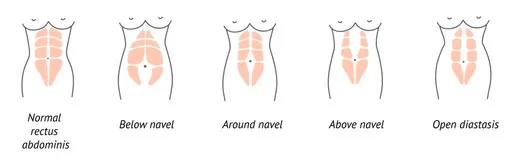
One thing I appreciate about newer research is that it has become more realistic.
Older approaches focused heavily on “closing the abdominal gap.”
Newer evidence focuses more on:
- function,
- symptom improvement,
- tension generation,
- movement quality,
- and pressure management.
Recent reviews suggest individualized exercise remains beneficial, but no single magical exercise protocol exists for every woman.
(Skoura et al. 2024) also noted that postpartum training can improve abdominal muscle function and physical outcomes even if separation does not fully disappear.
That perspective is healthier and more practical.
A Simple Beginner Weekly Recovery Plan
Daily
- Gentle breathing work
- Short walks
- Posture awareness
- Hydration
3 to 4 Times Weekly
- Heel slides
- Glute bridges
- Bird dog exercises
- Pelvic floor coordination work
- Modified side planks
What I Usually Recommend
Start easier than you think you need to.
Most postpartum mothers recover better with consistency rather than intensity.
Final Thoughts
Consistent postpartum belly recovery exercises can gradually improve strength, stability, and long-term abdominal recovery.
Postpartum belly recovery is not just about aesthetics.
It is about feeling supported in your own body again.
And honestly, recovery rarely looks linear.
Some weeks feel encouraging.
Other weeks feel frustrating for no obvious reason.
That is normal.
The strongest postpartum recoveries are usually not built through punishment workouts or unrealistic “snap back” expectations.
They are built slowly:
- through movement,
- breathing,
- sleep when possible,
- nourishment,
- patience,
- and realistic progression.
Your body did something extraordinary.
Healing deserves the same level of respect.
Frequently Asked Questions
1. When can I start postpartum belly recovery exercises?
Most women can begin gentle breathing and pelvic floor exercises within days after delivery if approved by their doctor. More structured strengthening exercises are usually introduced gradually after 6 weeks.
2. Can postpartum exercises help with diastasis recti?
Yes. Physiotherapy-based postpartum exercises may improve abdominal tension, deep core function, posture, and pressure management, which can help reduce symptoms related to diastasis recti.
3. Are crunches safe after pregnancy?
Traditional crunches may place excessive pressure on healing abdominal tissues during early recovery. Many physiotherapists recommend rebuilding deep core control first before progressing to advanced abdominal exercises.
4. Why does my stomach still look pregnant months after delivery?
A postpartum belly may be related to muscle separation, connective tissue changes, bloating, posture, rib flare, hormonal recovery, or weak deep core muscles. Recovery can take several months or longer.
5. Is walking enough for postpartum recovery?
Walking is one of the most beneficial low-impact postpartum exercises. It supports circulation, endurance, mental health, and gradual physical recovery without excessive abdominal strain.
6. Can cesarean scars affect core strength?
Yes. Cesarean scar tissue may contribute to abdominal tightness, discomfort, reduced mobility, and altered muscle activation patterns if not addressed properly.
7. How long does postpartum belly recovery usually take?
Every recovery timeline is different. Some women improve within a few months, while others continue healing for over a year depending on sleep, activity, delivery type, and overall health.
8. When should I see a pelvic floor physiotherapist?
Seek professional help if you experience urinary leakage, pelvic heaviness, persistent abdominal doming, painful scars, back pain, or difficulty returning to exercise safely.
Stay tuned with us for more health related topics.
Follow us on LinkedIn and Instagram for more.
More Read


Medical Disclaimer!
This article has been reviewed and written under the guidance of our Head Physiotherapist, Dr. Kruti Raj (PT, MUHS,CPT,CMPT). The information shared is intended for educational purposes only and should not be considered a substitute for personalized medical advice, diagnosis, or treatment.
Please consult us or any other qualified healthcare professional before beginning any exercise program, especially if you are experiencing pain, recovering from injury, or managing a medical condition.


