


Exercises for pelvic organ prolapse can help:
improve pelvic support, reduce pressure symptoms, and strengthen the muscles that support the pelvic organs
One of the biggest mistakes I see in clinic is women completely stopping exercise after being diagnosed with pelvic organ prolapse.
Many are scared that movement will make things “fall further.”
Some stop walking. Some avoid lifting their child. Others quietly give up gym workouts they once enjoyed.
But in reality, the right kind of movement usually helps far more than complete rest.
Pelvic organ prolapse is not simply a “weak pelvic floor” problem.
Modern physiotherapy looks at breathing patterns, pressure management, posture, bowel habits, hip strength, deep core coordination, and daily movement mechanics as well.
That is why two women with the same prolapse grade can feel completely different symptoms.
Some feel heaviness only after long days.
Others notice symptoms mainly during workouts, constipation, or prolonged standing.
And interestingly, symptom severity does not always match the stage of prolapse.
Quick Answer
The best exercises for pelvic organ prolapse focus on improving pelvic floor coordination, breathing mechanics, deep core stability, hip strength, and pressure management rather than aggressive abdominal training.
Physiotherapists commonly recommend pelvic floor breathing, properly guided Kegel exercises, bridges, heel slides, clamshells, walking, and gentle mobility work like cat-cow stretches.
Exercises should never increase heaviness, pressure, or vaginal bulging significantly. Consistency, posture correction, bowel management, and proper breathing are often more important than doing intense workouts.
A recent review highlighted that some women with more significant prolapse report minimal symptoms, while others with mild prolapse experience major discomfort. (Manonai et al. 2024)
As pelvic floor physiotherapists, our goal is not just “strengthening.”
It is helping women move, breathe, lift, and exercise with better pressure control and confidence.
Key Takeaways
- Pelvic organ prolapse rehab is not only about Kegel exercises.
- Breathing mechanics and pressure management play a major role in symptom control.
- Exercises like bridges, heel slides, walking, and clamshells are often better tolerated than aggressive abdominal workouts.
- Constipation and chronic straining can worsen prolapse symptoms significantly.
- Symptoms may fluctuate throughout the day and do not always match prolapse severity.
- Heavy lifting with breath-holding commonly increases pelvic pressure.
- Consistency matters more than intensity when rebuilding pelvic floor function.
- Pelvic floor physiotherapy can improve confidence, mobility, and quality of life.
What Is Pelvic Organ Prolapse?
Pelvic organ prolapse happens when the support structures inside the pelvis become less supportive over time.
This may allow the bladder, uterus, or rectum to descend downward into the vaginal canal.
Pregnancy and vaginal childbirth are common contributors, but they are not the only reasons.
I also see prolapse in:
- menopausal women
- women with chronic constipation
- women who lift heavy weights incorrectly
- women with chronic cough
- runners and athletes
- women with connective tissue laxity
Even high-level athletes can develop prolapse symptoms due to repetitive pressure loading.
Symptoms Women Commonly Notice
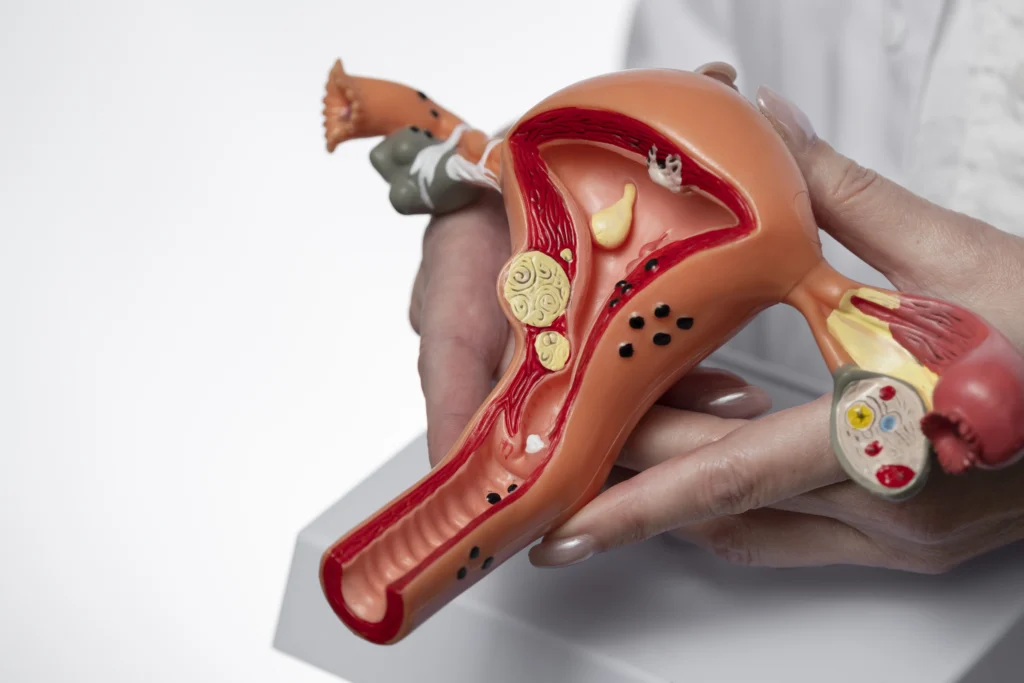
Symptoms often fluctuate during the day.
Most women feel lighter in the morning and heavier by evening.
Common symptoms include:
- dragging sensation
- heaviness in the vagina
- pressure after standing
- urinary leakage
- difficulty emptying the bladder
- constipation
- lower back ache
- discomfort during workouts
Some women describe it as:
“It feels like something is dropping.”
Others say:
“I feel pressure after carrying groceries or standing in the kitchen too long.”
That variation is completely normal.
Why Traditional Core Exercises Sometimes Make Prolapse Worse
This surprises many women.
Doing more crunches or aggressively “bracing the core” is not always helpful.
In fact, excessive abdominal pressure can worsen symptoms.
Modern pelvic rehab focuses less on forceful tightening and more on coordination.
One lesser-known issue is breath-holding during movement.
Many women unknowingly hold their breath while lifting, exercising, or even getting out of bed.
This dramatically increases downward pressure.
That is why breathing mechanics matter far more than most people realize.
The Best Exercises for Pelvic Organ Prolapse
Pelvic Floor Breathing
This is usually the first exercise I teach.
Not Kegels.
Breathing.
Because the diaphragm and pelvic floor work together like a pressure system.
How to Do It
- Lie comfortably with knees bent
- Place one hand on your ribs
- Inhale gently through the nose
- Let the ribs expand sideways
- Exhale slowly through the mouth
- During exhalation, gently lift the pelvic floor
Do not squeeze aggressively.
The movement should feel subtle.
Why It Helps
Women with prolapse often over-grip their abdominal muscles all day without realizing it.
This exercise teaches the body to manage pressure more naturally.
Recent pelvic rehab literature increasingly emphasizes breathing coordination and pressure management instead of isolated squeezing exercises. (PubMed)
Kegel Exercises Done Properly
Kegels can help, but they are not magic.
And honestly, many women perform them incorrectly.
Some grip too hard. Some never fully relax.
Some use their buttocks instead of pelvic floor muscles.
A healthy pelvic floor should both contract and relax.
A Better Way to Think About Kegels
Instead of:
“Squeeze as hard as possible.”
Think:
“Lift gently and let go completely.”
Basic Routine
- Hold gently for 3 to 5 seconds
- Relax fully
- Repeat 8 to 10 times
- Avoid breath-holding
If symptoms worsen afterward, scale back.
More is not always better.
Supervised pelvic floor muscle training remains one of the most evidence-supported conservative treatments for prola
Bridge Exercise
Bridge exercise is one of my favorite early strengthening exercises because it trains the glutes without excessive strain.
Weak glute muscles can change pelvic loading mechanics during walking and lifting.
How to Perform
- Lie on your back
- Bend the knees
- Exhale gently
- Lift hips slowly
- Hold briefly
- Lower with control
If you feel vaginal pressure increasing, reduce the height.
Symptoms are useful feedback.
Heel Slides
Heel slides are excellent for rebuilding deep core coordination safely.
Steps
- Lie on your back
- Gently activate pelvic floor during exhalation
- Slowly slide one heel forward
- Return slowly
- Alternate sides
The goal is controlled movement, not intensity.
Clamshells
Hip strength matters more than most women realize.
Poor hip stability may increase compensatory pelvic strain during daily movement.
How to Do Clamshells
- Lie on your side
- Keep feet together
- Lift the top knee slowly
- Avoid rolling backward
You should feel the side hip working, not the lower back.
Modified Squats
Women are often told to “never squat again.”
That advice is usually too simplistic.
The issue is not squatting itself. It is how pressure is managed.
Helpful Tips
- Exhale during the effort phase
- Avoid breath-holding
- Start shallow
- Use support if needed
- Stop if heaviness increases significantly
A well-controlled squat is often more functional than avoiding movement altogether.
Walking
Walking is underrated for pelvic health.
It improves circulation, bowel motility, mobility, and overall conditioning.
But there is nuance here too.
Long exhausting walks may aggravate symptoms in some women, especially during flare-ups.
Shorter walks with rest breaks are often better tolerated initially.
Cat-Cow Stretch
Cat-cow stretch is a gentle mobility exercise helps reduce tension around the pelvis and spine.
How to Perform
- Start on hands and knees
- Inhale while gently arching the back
- Exhale while rounding slightly
- Move slowly with breathing
Many women report temporary symptom relief after mobility-based exercises.
Supported Child’s Pose
Child’s Pose is often surprisingly comforting during symptom flare-ups.
How to Do It
- Kneel comfortably
- Place pillows under the chest
- Relax into the position
- Focus on slow breathing
Some women notice the heaviness eases temporarily because gravity load reduces in this position.
Exercises That May Need Modification
Not every exercise suits every body.
And not every prolapse responds the same way.
Some women tolerate running beautifully.
Others feel symptomatic after 10 minutes.
Generally, symptoms guide progression better than fear.
Exercises that commonly aggravate symptoms include:
- heavy deadlifts
- intense sit-ups
- double-leg raises
- high-impact jumping
- heavy breath-holding lifts
- aggressive bootcamp workouts
That does not mean these movements are permanently forbidden.
It means progression matters.
Constipation
Honestly, this gets ignored far too often.
Repeated straining during bowel movements places enormous pressure on pelvic tissues.
Some women diligently do pelvic floor exercises while straining every morning due to constipation.
That combination rarely works well.
Helpful Physiotherapy Tips
- elevate the feet slightly during bowel movements
- avoid prolonged pushing
- increase hydration
- increase fiber gradually
- avoid “hovering” over the toilet seat
Interestingly, using a small footstool may improve rectal alignment and reduce strain.
Posture Matters More Than Most Women Think
Poor posture does not directly “cause” prolapse, but it influences pressure distribution.
Slumped sitting for long hours may increase downward pressure.
Rigid “military posture” is not ideal either.
What we want is adaptable posture.
Think:
- relaxed rib cage
- neutral breathing
- less gripping
- less abdominal clenching
Constant stomach sucking-in is surprisingly common in women with pelvic floor dysfunction.
Menopause and Prolapse
Many women first notice prolapse symptoms around perimenopause.
This is not coincidental.
Hormonal changes affect collagen quality and tissue support.
Declining estrogen may contribute to tissue thinning and reduced elasticity.
But this does not mean improvement is impossible after menopause.
I have seen women in their 60s and 70s significantly improve symptoms with targeted physiotherapy and pressure-management training.
The Emotional Side Nobody Talks About
This part matters.
Many women quietly stop:
- exercising
- intimacy
- social activities
- travel
- dancing
- lifting grandchildren
Not because they physically cannot, but because they are scared.
Fear itself changes movement patterns.
Women begin guarding, bracing, and avoiding movement.
That often creates even more tension and pressure problems.
Recovery is not only physical. Confidence matters too.
How Long Does It Take to Notice Improvement?
Most women need at least 8 to 12 weeks of consistent rehab before noticing meaningful changes.
But symptom fluctuations are normal.
Some days feel lighter. Some feel heavier.
Progress is rarely perfectly linear.
What usually works best is:
- consistency
- gradual progression
- better pressure management
- realistic expectations
Your body generally responds better to steady habits than extreme workouts.
When to See a Pelvic Floor Physiotherapist
Please seek professional assessment if you notice:
- worsening heaviness
- visible vaginal bulging
- persistent urinary leakage
- pain during exercise
- difficulty emptying bladder or bowels
- symptoms limiting daily life
A pelvic floor physiotherapist can assess:
- muscle coordination
- breathing mechanics
- posture
- pressure strategies
- movement habits
- exercise tolerance
That individualized guidance makes a huge difference.
Final Thoughts
Consistent exercises for pelvic organ prolapse may help improve prolapse symptoms and support better pelvic health over time.
Pelvic organ prolapse is incredibly common, but many women still feel isolated when symptoms begin.
The good news is that movement is not the enemy.
In most cases, smart movement helps.
The best prolapse rehab programs are no longer based on endless squeezing exercises alone.
Modern physiotherapy focuses on whole-body coordination, pressure control, breathing, movement confidence, and sustainable strengthening.
And perhaps most importantly, recovery is rarely about perfection.
Small consistent habits usually matter far more than doing “the perfect exercise program” for one week and stopping.
Your pelvic floor does not need punishment.
It needs support, coordination, patience, and smarter movement.
Frequently Asked Questions
Can exercise make pelvic organ prolapse worse?
Certain high-pressure exercises like heavy lifting, intense crunches, and breath-holding workouts may worsen symptoms. However, properly guided pelvic floor exercises usually help improve support and symptom control.
Are Kegel exercises enough for prolapse?
Not always. Modern pelvic physiotherapy also focuses on breathing, posture, bowel habits, deep core coordination, and pressure management.
What is the safest exercise for prolapse beginners?
Pelvic floor breathing, walking, heel slides, and supported bridges are usually safe starting exercises for many women with mild to moderate prolapse symptoms.
Can walking help pelvic organ prolapse?
Yes. Walking improves circulation, mobility, bowel health, and overall conditioning. Shorter walks are often better tolerated during symptom flare-ups.
How long does pelvic floor rehab take?
Most women notice gradual improvement within 8 to 12 weeks of consistent pelvic floor rehabilitation and lifestyle modifications.
Should I stop exercising if I have prolapse?
Usually no. In many cases, avoiding all movement leads to more weakness and fear. The key is choosing exercises that support the pelvic floor without excessive pressure.
Stay tuned with us for more health related topics.
Follow us on LinkedIn and Instagram for more.
More Read


Medical Disclaimer!
This article has been reviewed and written under the guidance of our Head Physiotherapist, Dr. Kruti Raj (PT, MUHS,CPT,CMPT). The information shared is intended for educational purposes only and should not be considered a substitute for personalized medical advice, diagnosis, or treatment.
Please consult us or any other qualified healthcare professional before beginning any exercise program, especially if you are experiencing pain, recovering from injury, or managing a medical condition.


