


The best sleeping position for shoulder pain could make a bigger difference than painkillers for some people.
You go to bed feeling completely fine.
Then you wake up and something feels off.
Your shoulder feels stiff.
Reaching overhead feels tight. Turning your arm feels uncomfortable.
Most people assume they “slept wrong.”
That is partly true. But not in the way you think.
Quick Answer
Shoulder pain during sleep is usually caused by prolonged pressure, poor arm support, or awkward positioning that stresses the rotator cuff and surrounding tissues. The most effective way to reduce pain is to avoid sleeping on the painful shoulder, support your arm with a pillow, and maintain a neutral sleeping posture. Small adjustments in sleeping position can significantly reduce morning stiffness and discomfort within a few days.
In clinical practice, shoulder pain after sleep is rarely caused by one bad position for one night.
It usually builds slowly.
Small amounts of pressure, repeated night after night, start irritating the tissues around the shoulder.
By the time pain shows up, it has already been developing for weeks.
From a physiotherapy perspective, sleep is not just rest.
It is a long period where your shoulder either recovers or gets stressed continuously.
Key Takeaways
- Sleeping on the painful shoulder can compress tendons and worsen irritation over time
- Arm support using a pillow is one of the simplest and most effective fixes
- Back sleeping with proper arm positioning reduces stress on the shoulder joint
- Side sleeping is safe if done on the non painful side with support
- Morning stiffness often improves with movement, indicating positional irritation
- Pillow height and alignment affect both neck and shoulder comfort
- Night pain does not always mean serious injury but should not be ignored if persistent
- Long term relief requires both posture correction and shoulder strengthening
Why Sleeping Position Matters More Than People Realize
The shoulder is designed for movement, not stability.
It depends heavily on muscles to stay supported during the day.
At night, muscle activity reduces.
The joint relies more on passive structures like tendons and ligaments.
If your position places the shoulder under pressure, that pressure stays there for hours.
Compare this with exercise.
You may load your shoulder in the gym for 45 minutes.
But during sleep, that same shoulder can stay compressed for 3 to 5 hours without interruption.
That is enough to irritate even a healthy shoulder.
Recent evidence supports this.
People who regularly sleep on one side show a higher association with rotator cuff issues, especially when the same shoulder is consistently loaded during sleep (Richards et al., 2024)
The Most Common Sleeping Position That Triggers Shoulder Pain

Side Sleeping on the Painful Shoulder
This is the most frequent pattern seen in clinic.
Patients often say:
“I can only fall asleep on that side. It feels comfortable at first.”
That initial comfort is misleading.
When you lie on your shoulder:
- your body weight compresses the joint
- blood flow reduces gradually
- the bursa becomes sensitive
- rotator cuff tendons get irritated
Pain usually does not appear immediately.
It builds over time and shows up in the morning.
Research has shown that prolonged side lying itself can contribute to shoulder pain due to sustained compression of tissues (Zenian, 2010)
A Position People Rarely Question
Sleeping With the Arm Overhead
This is very common, especially in people who:
- sleep on their stomach
- hug pillows tightly
- keep their arm under the head
In this position, the shoulder stays elevated and rotated for long periods.
That reduces the available space for the rotator cuff tendons.
If the shoulder is already sensitive, this position increases irritation.
Some people also wake up with:
- tingling in the hand
- numbness
- heaviness in the arm
This is not just circulation. Nerve compression can also play a role.
Why Shoulder Pain Feels Worse at Night
Many people worry when pain increases at night.
It does not always mean the condition is worsening.
There are a few physiological reasons for this:
- cortisol levels drop during sleep
- movement reduces significantly
- compressed tissues stay compressed longer
- there are fewer distractions from pain
Rotator cuff related shoulder pain is strongly linked with sleep disturbance and increased night pain perception (Daher et al., 2024)
The Real Reason Morning Stiffness Happens
One detail that often gets missed is lack of movement.
During the day, your shoulder moves constantly.
Movement helps circulate joint fluid and keeps tissues flexible.
At night, movement reduces.
If the shoulder is irritated, staying still for long periods makes it feel stiff and painful in the morning.
That is why many people say:
“It hurts when I wake up, but feels better after moving around.”
This pattern usually indicates positional irritation, not serious structural damage.
The Worst Position for Shoulder Pain
Stomach Sleeping
This position creates multiple problems at once.
Typically:
- the neck is rotated to one side
- one shoulder is elevated
- the arm gets trapped or twisted
This puts continuous strain on both the shoulder and the neck.
In some cases, what feels like shoulder pain is partly coming from the neck.
Changing sleep posture alone can reduce symptoms in such cases even before starting treatment.
Best Sleeping Positions for Shoulder Pain Relief
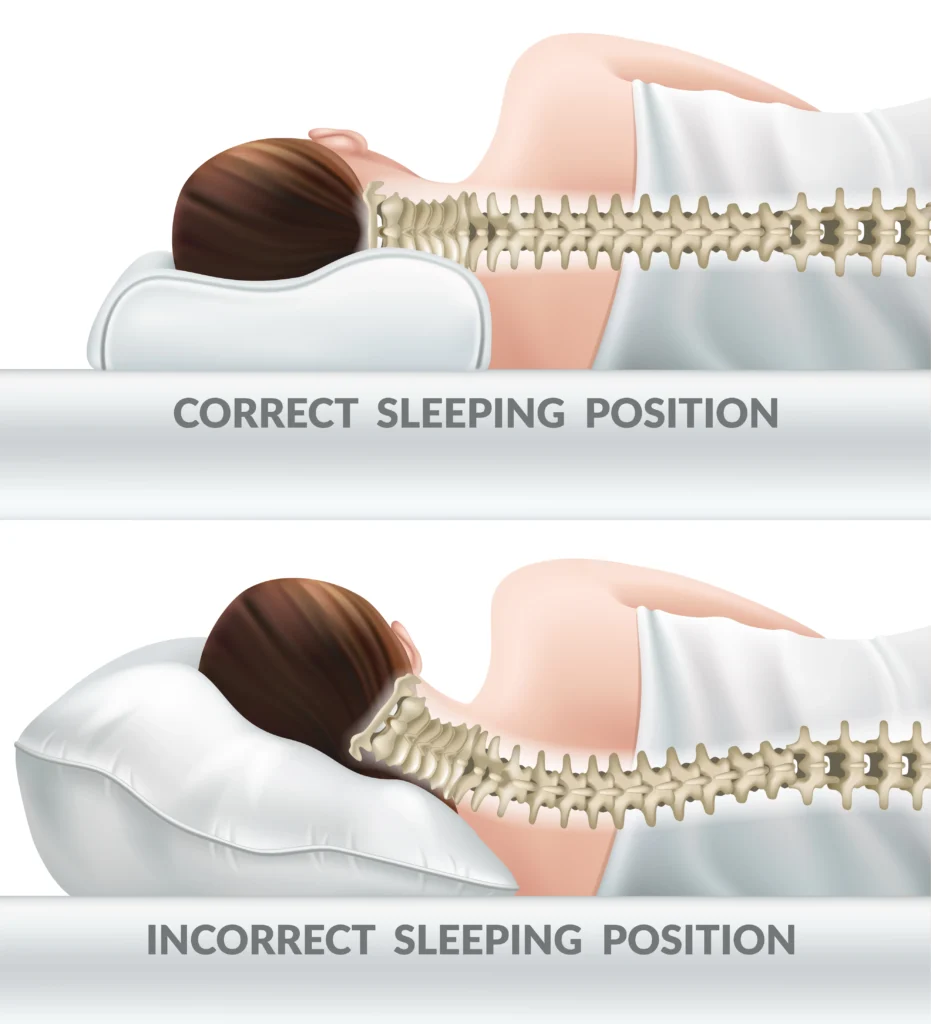
Back Sleeping With Proper Support
This is usually the most neutral option.
However, simply lying flat is not enough.
If the arm falls backward, it can still strain the shoulder.
A better setup:
- place a small pillow under the forearm
- keep the elbow slightly supported
- allow the shoulder to stay relaxed
This reduces stress on the joint and improves comfort.
Side Sleeping With Modifications
You do not have to completely stop side sleeping.
Instead:
- lie on the non painful side
- keep a pillow in front of you
- rest your top arm on the pillow
- avoid letting the shoulder roll forward
The pillow prevents the arm from pulling downward and stressing the joint.
This small adjustment often makes a noticeable difference within a few days.
The Role of Pillows and Mattress
Pillow Height
This matters more than material.
If the pillow is too high:
- the neck bends sideways
- shoulder muscles tighten
If it is too low:
- the shoulder collapses inward
The goal is a neutral neck position.
Mattress Support
A very hard mattress increases pressure points.
A very soft mattress allows excessive sinking.
A medium firm surface usually provides better pressure distribution.
However, arm positioning often has a greater impact than mattress type.
A Pattern Seen in Active Individuals
People who exercise regularly often overlook sleep posture.
If the shoulder is already stressed from:
- gym training
- overhead lifting
- tight chest muscles
then poor sleep positioning continues loading the same tissues.
This is why some active individuals feel worse in the morning despite proper training technique.
Signs That Your Shoulder Pain Is Sleep Related
You may notice:
- pain is worse in the morning
- stiffness reduces after movement
- changing sides changes symptoms
- lying on one shoulder increases pain
- night discomfort interrupts sleep
These patterns strongly suggest positional factors.
When It Is More Than Just Sleeping Position
Sometimes sleep posture is not the root cause but a trigger.
Underlying conditions may include:
- rotator cuff irritation
- frozen shoulder
- bursitis
- neck related pain
Seek professional help if:
- pain lasts more than 2 to 3 weeks
- movement becomes restricted
- weakness develops
- pain spreads below the elbow
A Physiotherapist’s Perspective
Most people look for the best sleeping position.
But the more important question is:
Why is the shoulder sensitive in the first place?
A healthy shoulder usually tolerates different positions without major pain.
Long term improvement often requires:
- strengthening the rotator cuff
- improving shoulder mobility
- correcting posture during the day
- reducing repetitive strain
Sleeping position reduces irritation.
Rehabilitation improves tolerance.
Both are important.
Conclusion
Shoulder pain during sleep is common, but it is rarely random.
It is usually the result of:
- prolonged compression
- unsupported arm positioning
- reduced movement
- existing tissue sensitivity
The positive part is that small changes often lead to noticeable improvement.
Sometimes just supporting the arm with a pillow changes everything.
Sometimes avoiding one specific position reduces pain significantly.
Pay attention to how your shoulder feels in the morning.
That is often your body giving you feedback about what happened overnight.
Finding the best sleeping position for shoulder pain can reduce nighttime strain and help your shoulder recover more comfortably.
Frequently Asked Questions
1. Why does my shoulder hurt more after sleeping?
Prolonged pressure and reduced movement during sleep can irritate shoulder tissues, leading to stiffness and discomfort in the morning.
2. Is side sleeping bad for shoulder pain?
Side sleeping is not harmful if done correctly, but lying on the painful shoulder without support can increase irritation.
3. What is the best sleeping position for shoulder pain?
Back sleeping with arm support or modified side sleeping on the non painful side is usually recommended.
4. Can a pillow help reduce shoulder pain?
Yes, placing a pillow under or in front of your arm reduces strain and improves shoulder alignment.
5. Why does shoulder pain improve during the day?
Movement improves circulation and reduces stiffness, helping ease symptoms after waking.
6. Can mattress type affect shoulder pain?
Yes, a very soft or very hard mattress can increase pressure. A medium firm mattress usually works best.
7. When should I see a physiotherapist?
If pain lasts more than a few weeks, limits movement, or causes weakness, professional evaluation is recommended.
8. Can exercises fix sleep related shoulder pain?
Exercises improve strength and tolerance, but correcting sleeping posture is equally important.
Stay tuned with us for more health related topics.
Follow us on LinkedIn and Instagram for more.
More Read


Medical Disclaimer!
This article has been reviewed and written under the guidance of our Head Physiotherapist, Dr. Kruti Raj (PT, MUHS,CPT,CMPT). The information shared is intended for educational purposes only and should not be considered a substitute for personalized medical advice, diagnosis, or treatment.
Please consult us or any other qualified healthcare professional before beginning any exercise program, especially if you are experiencing pain, recovering from injury, or managing a medical condition.


