


Back pain is one of the leading reasons people visit a physiotherapy clinic. One diagnosis that often worries patients is degenerative disc disease (DDD).
The name itself sounds alarming.
Many people immediately imagine that their spine is “wearing out” or that surgery is inevitable.
As a physiotherapist, I hear the same questions almost every week:
- “Is my spine permanently damaged?”
- “Will I end up in a wheelchair?”
- “Can exercise make it worse?”
- “Should I stop bending or lifting forever?”
The reassuring news is that for most people, the answer is no.
Quick Answer
Degenerative disc disease (DDD) is the gradual wear and tear of the spinal discs that naturally occurs with aging. Despite its name, it is not always a disease or a serious condition. Many people have disc degeneration without any pain. When symptoms do occur, they often include back or neck pain, stiffness, or nerve-related symptoms such as sciatica. In most cases, physiotherapy, regular exercise, posture correction, weight management, and healthy lifestyle habits are the most effective treatments, while surgery is only needed in a small percentage of patients with severe nerve compression or persistent symptoms.
Degenerative disc disease is not actually a disease in the traditional sense.
Instead, it describes the natural aging and gradual wear of the spinal discs that sit between your vertebrae.
Surprisingly, many people have disc degeneration visible on an MRI but experience little or no pain.
Recent research continues to show that imaging findings alone do not always explain symptoms, which is why treatment should focus on the whole person rather than just the scan. (PubMed)
From a physiotherapy perspective, understanding how your spine works is far more important than fearing the words written in your MRI report.
Key Takeaways
- Degenerative disc disease is usually a normal part of aging and does not always cause pain or disability.
- MRI findings do not always match symptoms. Many people have disc degeneration without experiencing back or neck pain.
- Physiotherapy is one of the most effective first-line treatments and focuses on improving movement, reducing pain, and strengthening the muscles supporting the spine.
- Regular walking, core strengthening, stretching, and posture correction can significantly improve symptoms and reduce future flare-ups.
- Prolonged bed rest is no longer recommended. Staying active helps nourish spinal discs and speeds recovery.
- Maintaining a healthy weight, quitting smoking, managing stress, and getting quality sleep all contribute to better spinal health.
- Most people with degenerative disc disease do not require surgery and recover well with conservative treatment.
- Seek urgent medical attention if you experience loss of bowel or bladder control, progressive leg weakness, numbness around the groin, fever with back pain, or severe unexplained weight loss.
- Early diagnosis, consistent physiotherapy, and healthy daily habits can help you stay active and prevent symptoms from worsening.
Understanding Your Spinal Discs
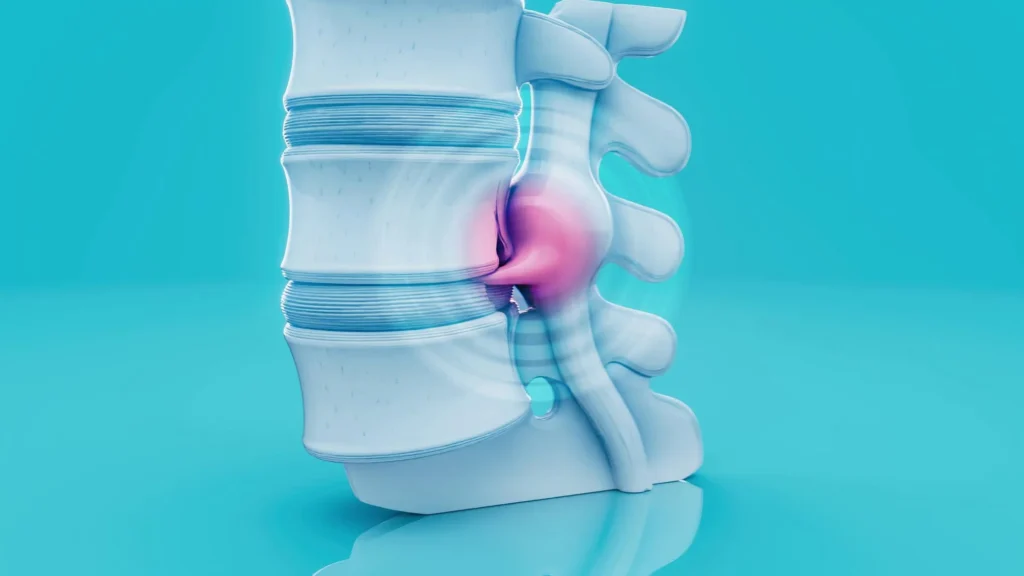
Think of your spine as a stack of building blocks separated by soft cushions.
These cushions are called intervertebral discs.
Each disc has two main parts:
- Nucleus pulposus: a soft, jelly-like center that absorbs shock.
- Annulus fibrosus: a strong outer ring made of tough collagen fibers.
Together, these discs allow your spine to:
- Bend forward and backward
- Twist safely
- Absorb the impact of walking, running, and jumping
- Protect the spinal nerves
Unlike muscles, spinal discs have a limited blood supply. Instead, they receive nutrients through movement.
This means regular, healthy movement actually helps nourish the discs, while prolonged inactivity may reduce their nutrition over time. (NCBI)
What Is Degenerative Disc Disease?
Degenerative disc disease occurs when one or more spinal discs gradually lose their normal structure and function over time.
As the disc ages, it may:
- Lose water content
- Become thinner
- Develop small cracks in the outer layer
- Lose some of its shock-absorbing ability
- Become less flexible
These changes are a normal part of aging, much like developing wrinkles or gray hair.
The important point is this:
Disc degeneration does not always cause pain.
Large imaging studies have shown that many healthy adults without back pain have degenerative changes on MRI.
Therefore, MRI findings should always be interpreted alongside a person’s symptoms and physical examination rather than being viewed in isolation. (PubMed)
Is Degenerative Disc Disease Actually a Disease?
This is one of the biggest misconceptions.
The term “degenerative disc disease” sounds frightening, but it is somewhat misleading.
It does not mean:
- your spine is falling apart,
- your discs are disappearing overnight,
- or that you are destined for disability.
Many spine specialists now describe it as age-related disc degeneration rather than a disease because it reflects changes that naturally occur throughout life.
As physiotherapists, we focus less on the MRI report and more on questions such as:
- How well are you moving?
- Which activities increase your pain?
- What muscles are weak?
- Can we improve your movement patterns?
These factors often influence recovery much more than the appearance of the scan. (NCBI)
What Causes Degenerative Disc Disease?
Several factors contribute to disc degeneration. In most people, it develops due to a combination of aging, genetics, and lifestyle.
Natural Aging
The biggest contributor is simply getting older.
Over time:
- discs gradually lose water,
- collagen fibers weaken,
- elasticity decreases,
- the disc becomes less capable of absorbing shock.
These changes can begin surprisingly early, sometimes in your twenties, although symptoms may not appear until much later.
Genetics
Many people blame themselves for developing disc degeneration, but genetics plays a major role.
Research suggests that inherited factors influence how quickly spinal discs age, even among people with healthy lifestyles.
Some individuals develop significant degeneration despite staying active, while others maintain healthy discs well into older age.
Smoking
Smoking reduces blood flow and oxygen delivery to spinal tissues.
Because discs already receive limited nutrition, smoking accelerates their degeneration and slows healing.
Smokers also tend to experience more persistent low back pain than non-smokers. (SPINE-health)
Obesity
Excess body weight increases mechanical loading on the lumbar spine.
In addition, obesity is associated with chronic low-grade inflammation, which may contribute to disc degeneration and ongoing pain.
Sedentary Lifestyle
Many people assume rest protects the spine.
Ironically, prolonged sitting and physical inactivity may reduce the normal movement needed to nourish spinal discs.
Regular walking, strengthening exercises, and changing positions throughout the day help maintain spinal health.
Repetitive Mechanical Stress
Jobs involving:
- heavy lifting,
- repeated twisting,
- whole-body vibration,
- prolonged bending,
may increase stress on spinal discs over many years, especially when combined with poor lifting techniques.
Lesser-Known Risk Factors
Some lesser-known factors may also influence disc health.
Poor Sleep
Deep sleep is when much of the body’s tissue recovery occurs.
People with chronic sleep deprivation often report higher pain sensitivity and slower recovery from musculoskeletal conditions.
Diabetes
Poorly controlled blood sugar can affect collagen quality and tissue healing, potentially contributing to faster degeneration.
Chronic Psychological Stress
Stress affects much more than mood.
Persistent stress increases muscle tension, alters pain processing within the nervous system, and can amplify back pain even when structural changes are relatively mild.
Modern pain science recognizes that emotions, stress, sleep, and physical health all interact in chronic spine pain.
Common Symptoms of Degenerative Disc Disease
Symptoms vary widely.
Some people experience no discomfort, while others develop persistent pain.
Common symptoms include:
Localized Back Pain
Pain usually develops gradually.
It may be:
- dull,
- aching,
- deep,
- difficult to pinpoint.
Pain often worsens after prolonged sitting because sitting increases pressure inside the lumbar discs.
Neck Pain
When degeneration affects the cervical spine, symptoms may include:
- neck stiffness,
- headaches,
- Neck pain while looking down,
- discomfort after computer work.
Pain During Certain Movements
Many patients report increased discomfort while:
- bending forward,
- lifting heavy objects,
- twisting,
- sitting for long periods.
Walking often feels better than sitting.
Morning Stiffness
Some individuals wake up feeling stiff but improve after moving around for 15 to 30 minutes.
This is partly because gentle movement restores joint lubrication and activates supporting muscles.
Intermittent Flare-Ups
Another lesser-known feature is that symptoms often come and go.
Many people remain pain-free for months before experiencing temporary flare-ups after:
- gardening,
- long travel,
- unusual exercise,
- lifting heavy furniture.
This does not necessarily mean the degeneration has suddenly worsened.
When Does Disc Degeneration Become Painful?
One of the biggest mysteries in spine care is why one person with severe MRI changes has no pain while another with mild degeneration experiences significant discomfort.
Researchers believe pain may develop when:
- inflammatory chemicals irritate nearby nerves,
- tiny tears develop in the disc,
- spinal muscles become weak,
- movement patterns become inefficient,
- surrounding joints become overloaded,
- fear of movement leads to stiffness and deconditioning.
Pain is therefore influenced by multiple biological, psychological, and lifestyle factors rather than the disc alone.
This modern understanding has transformed physiotherapy by shifting the focus from “fixing damaged discs” to improving overall spinal function. (SPRINGER)
Can Degenerative Disc Disease Cause Nerve Pain?
Yes, sometimes.
As discs lose height, nearby structures may become compressed.
This can contribute to:
- sciatica,
- numbness,
- tingling,
- burning pain,
- weakness in an arm or leg.
However, not every person with disc degeneration develops nerve compression.
That is why a thorough physical assessment remains essential before deciding on treatment.
How Is Degenerative Disc Disease Diagnosed?
Diagnosis begins with a detailed history and physical examination.
As physiotherapists, we assess:
- posture,
- walking pattern,
- spinal movement,
- muscle strength,
- flexibility,
- nerve function,
- balance,
- pain triggers,
- daily activities.
These findings often provide more useful information than imaging alone.
MRI
MRI is considered the best imaging test because it clearly shows:
- disc hydration,
- disc height,
- annular tears,
- nerve compression,
- surrounding soft tissues.
However, MRI findings should always be interpreted carefully because many age-related changes are completely normal and may not require treatment. (Chrisheywoodphysio)
X-rays
X-rays can reveal:
- reduced disc space,
- bone spurs,
- spinal alignment.
They cannot show the discs themselves in detail.
CT Scan
CT scans are sometimes used when MRI cannot be performed or when surgeons need additional information about the bones.
Can Degenerative Disc Disease Be Reversed?
This is one of the most common questions I hear in the clinic.
The honest answer is that the structural changes within a degenerated disc cannot usually be completely reversed.
\Once a disc loses water content or becomes thinner, it rarely returns to its original youthful state.
However, this does not mean your spine cannot become stronger, less painful, or more functional.
Research has consistently shown that pain, disability, and quality of life can improve significantly through exercise therapy, education, and lifestyle changes, even if follow-up MRI scans look similar.
In other words, you treat the person, not the scan.
This is a cornerstone of modern physiotherapy and is reflected in international clinical practice guidelines. (WHO Guidelines)
The Physiotherapy Approach
Why It Should Be Your First Line of Treatment?
Unless there are serious neurological problems or another medical emergency, physiotherapy is considered one of the safest and most effective first-line treatments for degenerative disc disease.
As physiotherapists, our goal is not simply to reduce pain for a few days. We aim to:
- Improve spinal stability
- Restore movement
- Strengthen supporting muscles
- Increase confidence in movement
- Reduce the frequency of flare-ups
- Help you return to work, hobbies, and exercise safely
Clinical guidelines from the American College of Physicians recommend exercise-based care and non-drug approaches as first-line management for most people with chronic low back pain. (ACP Journals)
Physiotherapy Treatments That Really Work
Education About Pain
One of the most powerful treatments is understanding your condition.
Many patients avoid movement because they fear causing more damage.
In reality, avoiding activity often leads to weaker muscles, stiffer joints, and increased pain.
Learning that movement is generally safe helps reduce fear and improves recovery.
Individualized Exercise Therapy
There is no single “best exercise” for everyone with degenerative disc disease.
Instead, a physiotherapist designs a program based on:
- Pain location
- Mobility restrictions
- Muscle weakness
- Daily activities
- Occupation
- Fitness level
Research consistently shows that individualized exercise programs reduce pain and improve function better than prolonged rest.
Core Strengthening
Your core muscles act like a natural brace for your spine.
Important muscles include:
- Transverse abdominis
- Multifidus
- Pelvic floor
- Diaphragm
- Oblique muscles
When these muscles work together, they reduce excessive stress on spinal discs.
Examples include:
- Abdominal bracing
- Dead bugs
- Bird-dog exercises
- Modified planks
- Bridge exercises
Flexibility Training
Tight muscles can increase stress on the spine.
Your physiotherapist may prescribe stretches for:
- Hamstrings
- Hip flexors
- Gluteal muscles
- Piriformis
- Thoracic spine
Improving flexibility allows the body to distribute movement more efficiently.
Manual Therapy
Some patients benefit from hands-on treatment, including:
- Joint mobilization
- Soft tissue release
- Trigger point therapy
- Gentle spinal mobilization
Current evidence suggests that manual therapy works best when combined with exercise rather than being used alone.
Postural Retraining
Many people spend eight to ten hours sitting every day.
Poor sitting habits may contribute to repeated flare-ups.
Simple adjustments include:
- Sitting with feet flat on the floor
- Keeping the monitor at eye level
- Supporting the lower back
- Standing up every 30 to 45 minutes
- Alternating between sitting and standing when possible
Lesser-Known Fact: Walking Is One of the Best Exercises for Your Spine
Many people think they need complicated rehabilitation equipment.
In reality, one of the best activities for disc health is regular walking.
- Improves blood circulation
- Activates core muscles
- Lubricates spinal joints
- Reduces stiffness
- Helps maintain a healthy body weight
- Improves mental well-being
Starting with just 10-15 minutes and gradually increasing duration can make a meaningful difference.
Daily Habits That Help Protect Your Spine
Small habits repeated every day often matter more than occasional treatments.
Stay Physically Active
Avoid staying in bed unless advised for a specific medical reason.
Gentle movement keeps joints and muscles healthy.
Maintain a Healthy Weight
Even modest weight loss reduces the load placed on the lumbar spine during everyday activities.
Lift Smart
Instead of bending only through your back:
- Bend your knees.
- Keep the object close to your body.
- Tighten your core.
- Avoid twisting while lifting.
Improve Sleep
A supportive mattress and a comfortable sleeping position may reduce morning stiffness.
Many people find relief by:
- Sleeping on their side with a pillow between the knees
- Sleeping on their back with a pillow under the knees
Quit Smoking
Stopping smoking benefits not only your heart and lungs but also your spinal discs and overall recovery.
Things to Do
If you have degenerative disc disease, these habits can help manage symptoms and reduce flare-ups:
- Stay active with regular walking or low-impact exercise.
- Perform your physiotherapy exercises consistently.
- Strengthen your core muscles.
- Maintain good posture without becoming overly rigid.
- Take regular breaks from prolonged sitting.
- Manage your body weight.
- Sleep for seven to nine hours each night.
- Eat a balanced diet rich in protein, calcium, and vitamin D.
- Stay hydrated, as overall hydration supports healthy body tissues.
- Seek professional advice if symptoms change or worsen.
Things to Avoid
Certain habits can increase pain or delay recovery.
Try to avoid:
- Prolonged bed rest
- Sitting continuously for several hours
- Smoking
- Ignoring persistent pain
- Lifting heavy objects with poor technique
- Sudden increases in exercise intensity
- Self-diagnosing based solely on MRI findings
- Becoming fearful of all movement
Remember, the goal is not to avoid movement but to move wisely.
Common Myths About Degenerative Disc Disease
Myth: My discs are worn out, so I should stop exercising.
Reality: Appropriate exercise is one of the most effective treatments for degenerative disc disease.
Myth: Pain always means more damage.
Reality: Pain is influenced by many factors, including muscle strength, stress, sleep quality, and nervous system sensitivity.
Myth: Everyone with disc degeneration needs surgery.
Reality: Most people improve with conservative treatment and never require surgery.
Myth: My MRI determines my future.
Reality: Many people with significant MRI changes live active, pain-free lives.
When Should You See a Doctor Immediately?
While most cases are not emergencies, seek urgent medical attention if you experience:
- Loss of bowel or bladder control
- Numbness around the groin or saddle area
- Severe weakness in one or both legs
- Fever with back pain
- Unexplained weight loss
- History of cancer with new back pain
- Pain following significant trauma
- Persistent night pain that does not improve with rest
These symptoms may indicate a more serious underlying condition requiring prompt evaluation.
Will You Need Surgery?
Fortunately, most people with degenerative disc disease do not need surgery.
Surgery may be considered when:
- Symptoms persist despite months of appropriate conservative treatment
- Significant nerve compression causes progressive weakness
- Pain severely limits daily life despite comprehensive rehabilitation
- There is spinal instability or another structural problem requiring surgical correction
Even when surgery is necessary, physiotherapy remains essential both before and after the procedure to optimize recovery.
Can Degenerative Disc Disease Be Prevented?
Although aging cannot be stopped, you can slow the progression of disc degeneration and reduce your risk of painful flare-ups by adopting healthy habits.
Focus on:
- Regular exercise
- Maintaining a healthy weight
- Good lifting technique
- Avoiding smoking
- Staying active throughout the day
- Managing stress
- Getting adequate sleep
- Treating back pain early rather than waiting until it becomes severe
These lifestyle choices support not only your spine but also your overall health.
My Clinical Insight
One of the biggest mistakes I see is patients believing that an MRI report defines their future.
I’ve treated individuals with severe-looking scans who returned to running, hiking, and full-time work through structured rehabilitation.
I’ve also seen people with only mild MRI changes experience significant pain because of weak muscles, poor movement habits, stress, or fear of activity.
Your MRI is only one piece of the puzzle.
Successful recovery depends on improving how your body moves,
strengthening the muscles that support your spine, staying physically active, and addressing lifestyle factors such as sleep, stress, and weight management.
As physiotherapists, our aim is to help you build a spine that is stronger and more resilient, not one that is feared.
Final Thoughts
Hearing the words “degenerative disc disease” can be unsettling, but it should not be viewed as a life sentence.
In many cases, disc degeneration is simply part of the normal aging process.
The presence of changes on an MRI does not automatically mean you will experience chronic pain or disability.
The encouraging news is that there is strong scientific evidence supporting conservative management.
Through physiotherapy, regular exercise, education, and healthy lifestyle choices, most people can reduce pain, improve function, and continue living active, fulfilling lives.
Rather than focusing solely on what your MRI shows, focus on what your body can do today and what it can achieve with the right guidance.
With patience, consistency, and an individualized rehabilitation plan, your spine can become stronger, more adaptable, and better equipped to support you for years to come.
Frequently Asked Questions
Is degenerative disc disease a serious condition?
Not usually. It is often a normal part of aging, and many people improve with physiotherapy, exercise, and healthy lifestyle changes without needing surgery.
Can degenerative disc disease be cured?
The disc changes themselves cannot usually be reversed, but symptoms can often be managed successfully through physiotherapy and exercise.
What is the best exercise for degenerative disc disease?
Walking, core strengthening, stretching, and individualized physiotherapy exercises are among the most effective treatments.
Does walking help degenerative disc disease?
Yes. Walking helps improve spinal mobility, circulation, muscle strength, and overall back health.
Should I avoid bending?
No. Learning proper movement techniques is usually better than avoiding bending altogether.
Can degenerative disc disease cause leg pain?
Yes. If nearby spinal nerves become irritated or compressed, symptoms such as sciatica, tingling, or weakness may occur.
Will I need surgery?
Most people recover well with conservative treatment and never require surgery.
Can I live normally with degenerative disc disease?
Yes. Most people can continue leading active lives with proper physiotherapy and healthy lifestyle habits.
Stay tuned with us for more health related topics.
Follow us on LinkedIn and Instagram for more.
More Read


Medical Disclaimer!
This article has been reviewed and written under the guidance of our Head Physiotherapist, Dr. Kruti Raj (PT, MUHS,CPT,CMPT). The information shared is intended for educational purposes only and should not be considered a substitute for personalized medical advice, diagnosis, or treatment.
Please consult us or any other qualified healthcare professional before beginning any exercise program, especially if you are experiencing pain, recovering from injury, or managing a medical condition.


