


Can arthritis cause persistent lower back pain?
Lower back pain is one of the most common health complaints worldwide, affecting nearly 619 million people according to the Global Burden of Disease Study.
While muscle strain, poor posture, and slipped discs are often blamed, arthritis is an equally important but frequently overlooked cause.
Many people are surprised to learn that arthritis is not limited to the knees or hands.
It can also affect the joints of the spine, leading to chronic stiffness, inflammation, and persistent lower back pain that may worsen over time. (Global Burden of Disease Study 2021)
Quick Answer
Yes, arthritis can cause lower back pain. It commonly affects the facet joints, sacroiliac joints, and surrounding spinal structures, leading to pain, stiffness, reduced flexibility, and sometimes pain radiating into the hips or legs. Osteoarthritis is the most common cause, while inflammatory conditions such as ankylosing spondylitis and psoriatic arthritis can also affect the lower back. Fortunately, physiotherapy, regular exercise, weight management, posture correction, and early treatment can significantly reduce symptoms and improve long-term spinal health.
From a physiotherapist’s perspective,
understanding the connection between arthritis and back pain is essential because early diagnosis and targeted rehabilitation can significantly reduce pain, improve movement, and delay disability.
Unfortunately, many individuals assume that persistent back pain is simply a normal part of aging, allowing arthritis to progress silently for years.
In this comprehensive guide,
you’ll discover how arthritis causes lower back pain, which types are responsible, warning signs to watch for, and what current medical research says about managing this condition effectively.
Key Takeaways
- Arthritis is a common but often overlooked cause of chronic lower back pain.
- Osteoarthritis, ankylosing spondylitis, psoriatic arthritis, and rheumatoid arthritis may all affect the spine.
- Morning stiffness, reduced flexibility, and pain that worsens after inactivity are common warning signs.
- Many people with spinal arthritis improve significantly through physiotherapy and targeted exercise.
- Strong core and hip muscles help reduce stress on arthritic spinal joints.
- Maintaining a healthy body weight decreases both mechanical stress and chronic inflammation.
- Walking, swimming, cycling, and physiotherapist-guided exercises are among the safest activities.
- Smoking, prolonged sitting, poor lifting technique, and inactivity can accelerate spinal degeneration.
- Imaging findings do not always match pain severity, making clinical assessment equally important.
- Early diagnosis and consistent rehabilitation can delay disability and improve quality of life.
Why Does Arthritis Cause Lower Back Pain?
Many people think arthritis only damages cartilage.
In reality, arthritis is much more complex.
It gradually changes the entire joint environment, including cartilage, bone, ligaments, muscles, and nerves.
The lower back contains five lumbar vertebrae connected by small joints called facet joints.
These joints guide spinal movement while maintaining stability.
Like knee or hip joints, facet joints are lined with cartilage.
As arthritis develops, this protective cartilage begins to wear away.
Without smooth cartilage, bones start rubbing against each other.
The body reacts by producing inflammation and attempting to repair the damaged area.
Unfortunately, these repair mechanisms often create abnormal bone growths known as osteophytes or bone spurs, which further restrict movement and sometimes compress nearby nerves.
Research published in Nature Reviews Rheumatology explains that;
spinal osteoarthritis involves progressive cartilage degeneration, remodeling of the underlying bone, inflammation of surrounding tissues, and changes in pain-processing pathways, making back pain much more than a simple “wear-and-tear” condition. (Nature)
Understanding Your Spine: Why Arthritis Targets the Lower Back
The lumbar spine works harder than almost any other part of the body.
Every time you:
- Sit
- Stand
- Bend
- Lift groceries
- Climb stairs
- Exercise
- Sleep
your lower back absorbs enormous mechanical forces.
Studies estimate that sitting places approximately 140% more pressure on lumbar discs than standing upright.
Improper lifting may increase spinal loading several-fold, accelerating degenerative changes over time. (CDC Stacks)
This constant stress explains why arthritis commonly develops in the lumbar spine, especially after the age of 45.
Types of Arthritis That Can Cause Lower Back Pain
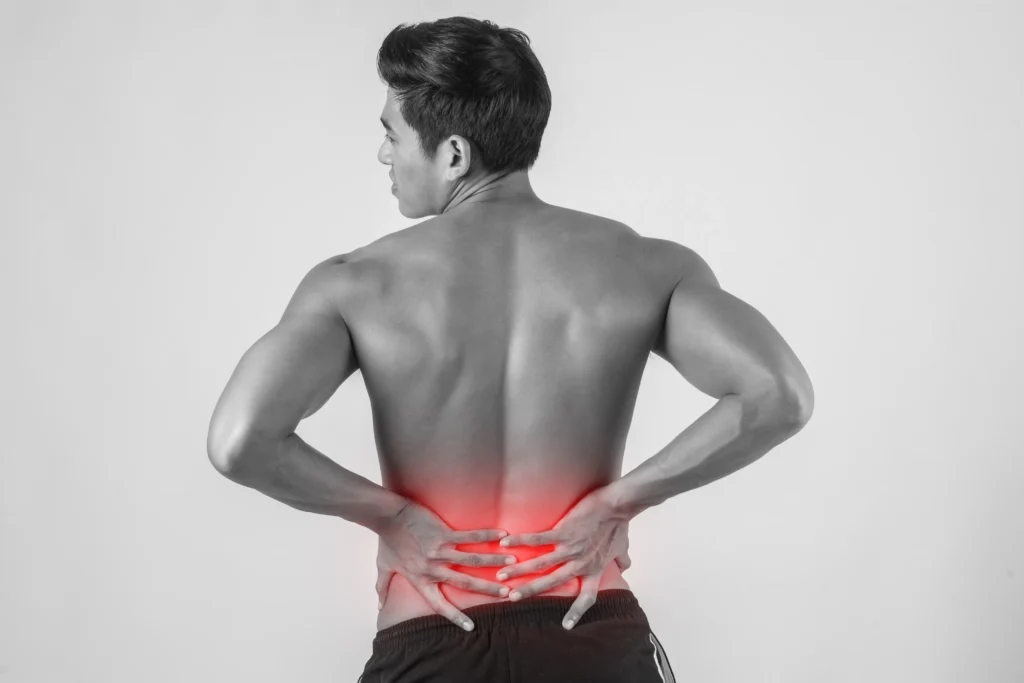
Not all arthritis behaves the same way.
Some types primarily damage cartilage, while others are driven by the immune system.
Understanding which type affects your spine helps determine the most appropriate treatment.
Osteoarthritis (The Most Common Cause)
Osteoarthritis is responsible for the majority of arthritis-related lower back pain.
Instead of being caused solely by aging, modern research shows osteoarthritis develops because of a combination of:
- Repetitive stress
- Previous injuries
- Genetics
- Obesity
- Muscle weakness
- Inflammation
- Sedentary lifestyle
Over time, cartilage inside the facet joints gradually thins.
The body responds by forming thicker bone around the joints.
These changes lead to:
- Lower back stiffness
- Pain after prolonged standing
- Difficulty bending backward
- Reduced spinal flexibility
- Pain during twisting movements
According to the American College of Rheumatology,
spinal osteoarthritis becomes increasingly common after age 50 and is one of the leading contributors to chronic disability worldwide. (ACR)
Ankylosing Spondylitis
Unlike osteoarthritis, ankylosing spondylitis is an autoimmune inflammatory disease.
Instead of wearing out joints, the immune system mistakenly attacks tissues around the spine.
Over many years, inflammation may cause spinal bones to gradually fuse together, creating a rigid “bamboo spine.”
One important clue is that symptoms usually begin before age 40.
Typical features include:
- Morning stiffness lasting over 30 minutes
- Pain improving with exercise
- Pain worsening during rest
- Night-time back pain
- Gradual loss of flexibility
The Assessment of SpondyloArthritis International Society (ASAS) and the European Alliance of Associations for Rheumatology (EULAR) emphasize that;
early diagnosis combined with exercise and physiotherapy can significantly slow functional decline. (BMJ Journals)
Psoriatic Arthritis
Most people associate psoriasis with skin disease.
However, around one-third of individuals with psoriasis eventually develop inflammatory arthritis.
The spine and sacroiliac joints may become inflamed, producing persistent lower back pain that often mimics sciatica or mechanical back pain.
Patients frequently experience:
- Buttock pain
- Morning stiffness
- Fatigue
- Swollen fingers or toes
- Skin plaques
Early recognition is important because treating the underlying inflammation can prevent irreversible joint damage. (NPFC)
Rheumatoid Arthritis
Rheumatoid arthritis rarely starts in the lumbar spine.
Instead, it mainly affects:
- Hands
- Wrists
- Feet
- Knees
However, chronic systemic inflammation weakens muscles, alters posture, and increases spinal degeneration over time.
People living with rheumatoid arthritis are also more likely to develop osteoporosis, making spinal fractures another possible source of lower back pain.
The American College of Rheumatology notes that effective control of inflammation reduces long-term musculoskeletal complications. (ACR)
How Arthritis Actually Produces Pain
One of the biggest myths is that damaged cartilage itself hurts.
Interestingly, cartilage contains almost no pain nerves.
Instead, arthritis pain comes from several surrounding structures.
Inflamed Joint Capsule
Inflammation stretches the joint capsule, activating pain receptors.
Bone Marrow Changes
MRI studies have shown bone marrow lesions strongly correlate with pain intensity in spinal osteoarthritis.
These microscopic inflammatory areas can become major pain generators. (PMC)
Muscle Guarding
Your body naturally tightens surrounding muscles to protect painful joints.
Although helpful initially, prolonged muscle tension creates additional stiffness and discomfort.
As physiotherapists,
we often find that patients have both joint pain and secondary muscle dysfunction, which explains why exercises targeting strength and flexibility are so effective.
Ligament Thickening
Arthritis can cause ligaments surrounding the spinal canal to thicken.
Over time, this narrows available space for nerves.
This process contributes to spinal stenosis, another common source of chronic lower back pain.
Lesser-Known Fact: Arthritis Pain Isn’t Always Caused by “Wear and Tear”
Many people believe arthritis develops simply because joints get old.
Current research paints a different picture.
Scientists now recognize osteoarthritis as a low-grade inflammatory disease involving immune cells, inflammatory proteins, metabolic changes, and alterations in nerve sensitivity.
This explains why two people with similar X-rays can experience dramatically different pain levels.
One individual may have severe arthritis with little discomfort, while another with mild imaging changes experiences disabling pain. (Benjamin Domb MD)
Risk Factors That Increase Arthritis-Related Lower Back Pain
Several factors increase the likelihood of developing arthritis in the spine.
Excess Body Weight
Extra weight places greater mechanical stress on lumbar joints while also increasing inflammatory chemicals released by body fat.
Research shows obesity significantly accelerates spinal degeneration and chronic back pain. (Spine MD)
Previous Back Injuries
Even injuries sustained years earlier can increase the risk of arthritis developing later in life.
Small cartilage injuries may gradually worsen with repeated loading.
Poor Core Strength
Weak abdominal and spinal stabilizing muscles force joints to absorb higher loads.
This is one reason physiotherapy focuses heavily on improving core endurance rather than simply strengthening the back muscles.
Sedentary Lifestyle
Ironically, avoiding movement often worsens arthritis.
Healthy cartilage receives nutrients through joint movement. Reduced activity decreases cartilage nutrition while increasing stiffness.
The World Health Organization recommends regular physical activity to maintain musculoskeletal health and reduce disability associated with arthritis and chronic back pain. (WHO)
Smoking
Smoking reduces blood flow to spinal tissues, increases inflammation, slows healing, and accelerates degeneration of discs and joints.
Multiple studies have demonstrated a clear association between smoking and chronic low back pain. (JPMS)
Can Arthritis Cause Sciatica-Like Pain?
Yes, and this is often misunderstood.
As arthritis progresses, bone spurs, swollen joints, or thickened ligaments may compress nearby spinal nerves.
This compression can produce symptoms that closely resemble sciatica, including:
- Pain radiating into the buttock
- Burning sensation down the leg
- Tingling or numbness
- Muscle weakness
- Difficulty walking for long periods
Many patients assume they have a slipped disc when the actual cause of pain is advanced spinal arthritis.
Distinguishing between these conditions requires a detailed physical examination and, in some cases, imaging studies such as X-rays or MRI.
How Can You Tell if Arthritis Is A Cause Of Your Lower Back Pain?
One of the biggest challenges in diagnosing arthritis-related lower back pain is that its symptoms often overlap with muscle strains, slipped discs, or even kidney problems.
Many patients visit a physiotherapy clinic believing they have “just pulled a muscle,” only to discover that their spine has been gradually developing arthritic changes for years.
As physiotherapists, we don’t rely on pain alone.
We carefully evaluate how your symptoms behave throughout the day, how your spine moves, what activities make the pain worse or better, and whether nearby joints or nerves are also involved.
This detailed assessment often provides important clues even before imaging is performed.
According to the National Institute for Health and Care Excellence (NICE),
clinical assessment remains the foundation of diagnosing chronic low back pain, with imaging reserved for situations where it will influence treatment decisions.
Common Symptoms of Arthritis in the Lower Back
Although symptoms vary depending on the type of arthritis, several warning signs appear repeatedly.
Persistent Lower Back Pain
Unlike temporary muscle soreness, arthritic pain usually develops gradually over months or years.
Patients often describe it as:
- A deep aching pain
- Stiffness rather than sharp pain
- Pain that comes and goes initially
- Increasing discomfort with age
- Difficulty standing after prolonged sitting
For osteoarthritis, pain generally worsens with prolonged standing, walking long distances, or repeated bending.
Inflammatory arthritis, however, behaves differently. Conditions like ankylosing spondylitis often improve with movement but worsen during prolonged rest.
Research from the Assessment of SpondyloArthritis International Society (ASAS) highlights that;
inflammatory back pain typically improves with exercise, unlike mechanical back pain. (BMJ)
Morning Stiffness
Morning stiffness is one of the most overlooked signs of spinal arthritis.
Patients frequently tell me,
“I feel like my back is locked when I wake up, but it loosens after moving around.”
This happens because inflamed joints become less mobile after remaining still overnight.
Typical duration:
- Osteoarthritis: usually less than 30 minutes
- Inflammatory arthritis: often longer than 30-60 minutes
Long-lasting morning stiffness should never be ignored, especially in younger adults.
Reduced Flexibility
Arthritic joints lose their smooth movement over time.
Simple activities become increasingly difficult, such as:
- Looking behind while reversing a car
- Picking something from the floor
- Tying shoelaces
- Gardening
- Playing with children
- Sitting cross-legged
Many people blame “old age,” but much of this stiffness can often be improved with targeted physiotherapy.
Pain That Spreads into the Buttocks
Not every pain radiating toward the hips is sciatica.
Facet joint arthritis frequently cause a referred pain into:
- Buttocks
- Back of the pelvis
- Upper thighs
Interestingly, this referred pain usually does not travel below the knee unless a nerve is compressed.
This subtle difference helps clinicians distinguish between joint pain and nerve pain.
Clicking or Grinding Sensation
As cartilage wears away, rough joint surfaces move against one another.
Some patients notice:
- Grinding
- Clicking
- Crunching
- Popping sensations
Although these sounds are not always painful, they may indicate underlying joint degeneration.
Lesser-Known Fact: Weather Really Can Affect Arthritis Pain
Many patients say,
“My back hurts more before it rains.”
For years, this was dismissed as a myth.
However, recent studies suggest changes in atmospheric pressure, humidity, and temperature may alter pressure inside joints and influence pain sensitivity in certain individuals.
Although not everyone experiences weather-related symptoms, systematic reviews suggest that weather changes may modestly affect arthritis pain in susceptible people.
How Is Arthritis-Related Lower Back Pain Diagnosed?
Diagnosis is never based on X-rays alone.
Many healthy adults have spinal arthritis visible on imaging without experiencing pain.
Instead, healthcare professionals combine several pieces of information.
Detailed Medical History
Your physiotherapist or physician may ask:
- When did the pain begin?
- Is it worse in the morning?
- Does movement help?
- Have you had previous injuries?
- Does anyone in your family have arthritis?
- Do you have psoriasis or inflammatory bowel disease?
These answers often point toward the correct diagnosis before any scans are ordered.
Physical Examination
A physiotherapy assessment typically evaluates:
- Spinal flexibility
- Muscle strength
- Walking pattern
- Core stability
- Balance
- Hip mobility
- Nerve tension
- Joint stiffness
- Posture
This assessment also helps identify movement patterns that may be placing excessive stress on arthritic joints.
Imaging Tests
Your healthcare provider may recommend imaging when symptoms persist or when inflammatory arthritis is suspected.
Possible investigations include:
X-rays
Useful for identifying:
- Bone spurs
- Narrowed joint spaces
- Degenerative changes
- Alignment problems
However, early arthritis may not appear on X-rays.
MRI
MRI provides much more detail.
It can detect:
- Joint inflammation
- Bone marrow edema
- Nerve compression
- Disc degeneration
- Ligament thickening
MRI is particularly valuable when symptoms suggest nerve involvement or inflammatory arthritis.
Blood Tests
Blood investigations may help diagnose inflammatory arthritis.
These include:
- C-reactive protein (CRP)
- Erythrocyte sedimentation rate (ESR)
- Rheumatoid factor
- Anti-CCP antibodies
- HLA-B27 (for ankylosing spondylitis)
Blood tests are generally normal in osteoarthritis.
Can Physiotherapy Really Help Arthritis in the Lower Back?
Absolutely.
This is one of the questions I hear almost every day in clinical practice.
Many patients assume arthritis cannot improve because the cartilage has already worn down.
While physiotherapy cannot “regrow” damaged cartilage, it can significantly improve how your spine functions, reduce pain, increase flexibility, and help you return to activities you enjoy.
The 2023 Osteoarthritis Research Society International (OARSI) guidelines strongly recommend exercise and education as first-line treatment for osteoarthritis before considering injections or surgery.
Why Physiotherapy Works
Pain from arthritis isn’t caused only by damaged joints.
Research now shows several contributing factors:
- Weak muscles
- Poor posture
- Joint stiffness
- Fear of movement
- Reduced balance
- Altered walking mechanics
- Increased pain sensitivity
Physiotherapy addresses each of these factors rather than focusing only on the joint itself.
What Does a Physiotherapist Actually Do?
Treatment is always individualized, but it commonly includes the following.
Pain Education
One of the biggest misconceptions is that pain always means damage.
Many patients avoid movement because they fear worsening their arthritis.
In reality, appropriately prescribed exercise often reduces pain and improves joint health.
Education alone has been shown to improve long-term outcomes in chronic musculoskeletal conditions.
Manual Therapy
Hands-on techniques may include:
- Joint mobilization
- Soft tissue release
- Gentle stretching
- Myofascial techniques
Manual therapy is usually combined with exercise rather than used alone.
Evidence suggests this combination provides greater improvements than passive treatment alone.
Mobility Exercises
One of the first goals is restoring spinal movement.
Gentle mobility exercises help:
- Reduce stiffness
- Improve circulation
- Nourish joint cartilage
- Increase confidence with movement
Patients often notice easier walking and less morning stiffness within several weeks.
Strengthening the Core
Core muscles function like a natural brace for your spine.
These include:
- Transversus abdominis
- Multifidus
- Pelvic floor muscles
- Diaphragm
- Oblique muscles
Strong core muscles reduce excessive loading on arthritic joints.
Several randomized controlled trials demonstrate that core stabilization exercises improve pain and functional ability in chronic low back pain.
Hip Strengthening
This may sound surprising.
Many patients with lower back arthritis actually have weak hip muscles.
Weak gluteal muscles force the lumbar spine to compensate during walking, climbing stairs, and standing.
Strengthening the hips often decreases stress on the lower back.
Balance Training
Arthritis affects more than joints.
It also reduces proprioception, your body’s awareness of joint position.
Poor balance increases fall risk, particularly in older adults.
Simple balance exercises can significantly improve confidence and mobility.
Best Exercises for Arthritis-Related Lower Back Pain
Always consult your physiotherapist before starting new exercises, especially if you have severe pain or inflammatory arthritis.
Pelvic Tilts
Benefits:
- Improves spinal mobility
- Activates deep abdominal muscles
- Reduces stiffness
Cat-Camel Stretch
This gentle movement improves flexibility throughout the lumbar spine without placing excessive pressure on joints.
Knee-to-Chest Stretch
Helps reduce muscle tightness around the lower back and hips while improving lumbar flexibility.
Bridge Exercise
Excellent for strengthening:
- Gluteal muscles
- Core muscles
- Hamstrings
This exercise improves spinal stability during daily activities.
Walking
Walking remains one of the safest and most effective forms of exercise for most people with spinal arthritis.
Current physical activity guidelines recommend regular aerobic exercise to improve pain, cardiovascular health, mood, and function.
Lesser-Known Fact: Your Back Muscles Can Become Fatty
Recent MRI research has revealed that people with chronic arthritis and persistent lower back pain often develop fatty infiltration of the multifidus muscles, the deep stabilizing muscles of the spine.
Instead of remaining strong, these muscles gradually shrink and are replaced by fat tissue.
This reduces spinal stability and may perpetuate pain even if the arthritic changes themselves are relatively mild.
The encouraging news is that targeted rehabilitation focusing on deep spinal muscle activation may partially reverse functional deficits and improve stability over time.
Treatments Beyond Physiotherapy
Although physiotherapy is considered a cornerstone of treatment,
some individuals may also benefit from additional medical management depending on the severity and type of arthritis.
These may include:
- Anti-inflammatory medications (NSAIDs)
- Topical pain-relieving gels
- Heat therapy for stiffness
- Short-term use of muscle relaxants when appropriate
- Corticosteroid injections into facet joints or around irritated nerves in selected cases
- Disease-modifying antirheumatic drugs (DMARDs) or biologic medications for inflammatory arthritis such as rheumatoid arthritis or ankylosing spondylitis
- Surgery, reserved for severe cases involving significant nerve compression, spinal instability, or loss of function after conservative treatment has failed
Current clinical guidelines emphasize that surgery is not the first-line treatment for most people with arthritis-related lower back pain.
A structured program combining education, exercise, physiotherapy, and lifestyle modification remains the preferred initial approach for the majority of patients.
Can Arthritis-Related Lower Back Pain Be Prevented?
Although not every form of arthritis is preventable, especially autoimmune conditions like:
ankylosing spondylitis or rheumatoid arthritis, many cases of spinal osteoarthritis can be delayed or their progression slowed through healthy lifestyle choices.
One of the most encouraging findings from recent research is that your daily habits have a significant impact on the health of your spine.
Small changes, when practiced consistently, can reduce joint stress, improve muscle support, and decrease chronic inflammation.
The World Health Organization recommends;
regular physical activity, maintaining a healthy body weight, and avoiding smoking to reduce the burden of musculoskeletal diseases and preserve mobility as we age. (WHO)
Things You Should Do Every Day
Stay Physically Active
Movement is one of the best medicines for arthritic joints.
Unlike many other tissues, cartilage receives nutrients through movement rather than direct blood supply.
Regular physical activity helps nourish cartilage, improve circulation, reduce stiffness, and strengthen the muscles that support your spine.
Aim for at least 150 minutes of moderate-intensity exercise per week, as recommended by international guidelines.
Suitable activities include:
- Walking
- Swimming
- Cycling
- Pilates
- Yoga (with modifications if needed)
- Physiotherapist-prescribed strengthening exercises
Research consistently shows that regular exercise reduces pain and improves function in people with osteoarthritis and chronic low back pain. (American College of Sports Medicine)
Strengthen Your Core
A strong core acts as your body’s natural back brace.
Deep abdominal muscles, pelvic floor muscles, the diaphragm, and spinal stabilizers work together to distribute forces more evenly across the lumbar spine.
Simple core exercises performed consistently often reduce pain more effectively than prolonged rest.
Maintain a Healthy Weight
Every extra kilogram of body weight increases the load placed on spinal joints during walking and standing.
In addition, excess body fat releases inflammatory chemicals called adipokines, which may contribute to joint degeneration.
Even modest weight loss has been associated with improvements in pain and mobility.
Improve Your Posture
Perfect posture does not exist.
Instead of trying to sit perfectly all day, focus on changing positions regularly.
Alternating between sitting, standing, and walking reduces prolonged stress on the same spinal structures.
A simple rule I often recommend to my patients is:
“Your next posture is your best posture.”
Frequent movement is usually more beneficial than maintaining one “ideal” position for hours.
Sleep Well
Poor sleep and chronic pain create a vicious cycle.
Research shows people with arthritis who sleep poorly often experience:
- Increased pain sensitivity
- Higher inflammation
- Reduced healing
- Greater fatigue
Creating a consistent bedtime routine and using a supportive mattress and pillow can improve sleep quality.
Things You Should Avoid
Avoid Prolonged Bed Rest
Years ago, patients with back pain were advised to stay in bed.
Today we know this advice often delays recovery.
Extended bed rest causes:
- Muscle weakness
- Joint stiffness
- Reduced circulation
- Increased pain sensitivity
Unless specifically advised by your doctor, gentle movement is usually better than complete rest.
Avoid Heavy Lifting with Poor Technique
Improper lifting places tremendous stress on the lumbar spine.
Instead:
- Bend your knees.
- Keep the object close to your body.
- Tighten your core.
- Avoid twisting while lifting.
Avoid Smoking
Smoking accelerates spinal degeneration by reducing blood supply to discs and joints while increasing inflammation.
Research shows smokers are significantly more likely to experience chronic low back pain than non-smokers.
Avoid Ignoring Persistent Symptoms
Many people continue living with back pain for years before seeking help.
Early physiotherapy often prevents small mobility problems from becoming major functional limitations.
If your symptoms persist for more than six weeks, become progressively worse, or interfere with daily life, consult a healthcare professional.
Lesser-Known Facts About Arthritis and Lower Back Pain
Here are some fascinating research-backed facts that many people have never heard:
Your X-ray Does Not Always Match Your Pain
Some people with severe arthritis on imaging have very little pain, while others with mild changes experience significant discomfort.
Pain depends not only on joint damage but also on inflammation, muscle function, nervous system sensitivity, sleep quality, and emotional health.
Walking Lubricates Your Joints
Gentle walking increases the circulation of synovial fluid, helping nourish joint cartilage and improve mobility.
This is one reason many patients feel less stiff after a short walk.
Strong Leg Muscles Protect Your Spine
Many people focus only on back exercises.
However, stronger hips and thighs reduce stress transferred to the lumbar spine during walking, climbing stairs, and standing.
Stress Can Increase Arthritis Pain
Chronic psychological stress increases cortisol and may amplify pain sensitivity through the central nervous system.
Relaxation techniques, mindfulness, breathing exercises, and regular physical activity can help reduce this effect.
My Clinical Insight
One of the biggest mistakes I see in clinical practice is that patients stop moving because they are afraid movement will “wear out” their joints further.
In reality, the opposite is often true.
Appropriately prescribed movement nourishes joints, strengthens muscles, improves confidence, and reduces pain.
The goal is not to avoid movement but to choose the right movement.
Arthritis should never be viewed as the end of an active life.
With early intervention, physiotherapy, and healthy lifestyle habits, many people continue working, travelling, exercising, and enjoying life with minimal discomfort.
Physio Prescription
If you have arthritis-related lower back pain:
- Walk daily.
- Perform core strengthening exercises.
- Stretch your hips regularly.
- Avoid prolonged sitting.
- Maintain a healthy body weight.
- Sleep well.
- Follow a structured physiotherapy program.
- Stay active even on mildly painful days.
Red Flags: When Should You Seek Immediate Medical Attention?
Contact your healthcare provider immediately if your lower back pain is associated with:
- Loss of bladder or bowel control
- Numbness around the groin or saddle area
- Progressive leg weakness
- Fever or unexplained weight loss
- History of cancer with new back pain
- Severe pain after a fall or accident
- Pain that wakes you every night and does not improve with changing position
These symptoms may indicate conditions requiring urgent medical evaluation.
Myth vs Reality
Myth: Arthritis means you should avoid exercise.
Reality: Exercise is one of the most effective evidence-based treatments for arthritis.
Myth: Back pain always means a slipped disc.
Reality: Arthritis is one of the most common cause of chronic lower back pain, especially after the age of 50.
Myth: Surgery is inevitable.
Reality: Most people improve significantly with physiotherapy, education, exercise, and lifestyle modification without requiring surgery.
Final Word
Yes, arthritis can absolutely cause lower back pain, but it does not have to control your life.
Whether the pain is caused by osteoarthritis, ankylosing spondylitis, or another form of arthritis,
early diagnosis combined with physiotherapy, regular exercise, weight management, and healthy daily habits can make a remarkable difference.
Remember, pain is not always a sign that your spine is becoming weaker.
Often, it is your body’s way of asking for better movement, stronger muscles, and smarter self-care.
If your back pain has become persistent, is limiting your daily activities, or is accompanied by stiffness that does not improve, don’t ignore it.
Consult a qualified healthcare professional or physiotherapist to receive a personalized assessment and treatment plan.
The sooner you take action, the better your chances of maintaining a healthy, active, and pain-free life.
Frequently Asked Questions (FAQs)
1. Can arthritis cause lower back pain every day?
Yes. Advanced arthritis can cause persistent lower back pain, especially after prolonged standing, sitting, or physical activity. The severity varies depending on the type of arthritis and the extent of joint damage.
2. How do I know if my lower back pain is arthritis or a muscle strain?
Muscle strains usually improve within a few weeks, whereas arthritis-related pain develops gradually, is often associated with morning stiffness, and tends to recur over time. A healthcare professional or physiotherapist can help distinguish between the two.
3. Can arthritis in the lower back be cured?
There is currently no cure for arthritis, but symptoms can often be effectively managed through physiotherapy, exercise, medication, weight management, and healthy lifestyle habits.
4. What is the best exercise for lower back arthritis?
Walking, core strengthening exercises, pelvic tilts, bridge exercises, gentle stretching, swimming, and physiotherapist-prescribed mobility exercises are generally considered safe and effective.
5. Does walking make arthritis in the lower back worse?
No. For most people, regular walking actually helps reduce stiffness, improve joint lubrication, strengthen muscles, and decrease pain. However, excessive walking during severe flare-ups should be avoided.
6. Can arthritis cause sciatica?
Yes. Bone spurs, inflamed joints, or thickened ligaments caused by arthritis may compress spinal nerves, producing symptoms similar to sciatica, including pain, tingling, or numbness that travels down the leg.
7. Is surgery necessary for lower back arthritis?
Not usually. Most patients improve with conservative treatment such as physiotherapy, exercise, medications, and lifestyle changes. Surgery is generally reserved for severe nerve compression or spinal instability.
8. Can losing weight help lower back arthritis?
Yes. Maintaining a healthy weight reduces pressure on spinal joints and lowers inflammation, helping decrease pain and improve mobility.
9. Should I use heat or ice for arthritis-related back pain?
Heat therapy is generally more effective for reducing stiffness, while ice may help during acute inflammatory flare-ups. Your physiotherapist can recommend the best option for your condition.
10. When should I see a physiotherapist for arthritis-related lower back pain?
If your pain lasts longer than six weeks, keeps returning, limits daily activities, or is associated with stiffness and reduced movement, consult a physiotherapist for a comprehensive assessment and personalized treatment plan.
Stay tuned with us for more health related topics.
Follow us on LinkedIn and Instagram for more.
More Read


Medical Disclaimer!
This article has been reviewed and written under the guidance of our Head Physiotherapist, Dr. Kruti Raj (PT, MUHS,CPT,CMPT). The information shared is intended for educational purposes only and should not be considered a substitute for personalized medical advice, diagnosis, or treatment.
Please consult us or any other qualified healthcare professional before beginning any exercise program, especially if you are experiencing pain, recovering from injury, or managing a medical condition.


