


Low Back Pain During Periods is a common complaint, but understanding why it happens can help you find the right relief.
Lower back pain is one of the most common symptoms experienced during menstruation.
While most women associate their periods with abdominal cramps, aching or throbbing pain in the lower back can be just as troublesome.
For some, it’s a mild discomfort that lasts a day or two.
For others, it becomes so severe that it interferes with work, exercise, sleep, and everyday activities.
Quick Answer
Lower back pain during periods is commonly caused by uterine contractions, hormonal changes, and referred pain from the pelvic nerves. Mild discomfort lasting one to three days is usually normal. However, severe, persistent, or worsening back pain, especially when accompanied by heavy bleeding, painful intercourse, fever, or infertility, may indicate conditions such as endometriosis, adenomyosis, or fibroids and should be medically evaluated.
Many women wonder whether lower back pain during periods is simply part of the menstrual cycle or a sign of an underlying medical condition.
The answer depends on the severity, timing, and associated symptoms.
In many cases, menstrual back pain is a normal response to uterine contractions and hormonal changes.
However, persistent or disabling back pain may be linked to conditions such as endometriosis, adenomyosis, uterine fibroids, or pelvic inflammatory disease.
As a physiotherapist,
I often see women who focus only on abdominal cramps while overlooking the contribution of muscle tension, posture, pelvic floor dysfunction, and movement patterns to their back pain.
Understanding why your back hurts during menstruation is the first step toward finding the most effective treatment.
Evidence: Menstrual pain affects a large proportion of women of reproductive age, and lower back pain is one of the most frequently reported accompanying symptoms of primary dysmenorrhea (ACOG Committee Opinion No. 760 et al. 2018).
Key Takeaways
- Mild lower back pain during periods is common and is often caused by uterine contractions and hormonal changes.
- Referred pain from shared pelvic nerves can make menstrual cramps feel like lower back pain.
- Persistent or worsening back pain may indicate endometriosis, adenomyosis, fibroids, or pelvic inflammatory disease.
- Heat therapy, regular exercise, physiotherapy, and appropriate medical treatment can significantly improve symptoms.
- Seek medical advice if pain interferes with daily activities or is associated with heavy bleeding, fever, infertility, or pain outside your menstrual cycle.
Why Does Your Lower Back Hurt During Your Period?
The uterus and lower back share several nerve pathways.
During menstruation, pain signals generated in the uterus can travel along these shared nerves, causing discomfort in the lower back.
This phenomenon is known as referred pain.
Several physiological changes contribute to menstrual back pain.
1. Uterine Contractions
During menstruation, the uterus contracts to shed its lining.
These contractions are triggered by hormone-like chemicals called prostaglandins.
Higher prostaglandin levels produce stronger uterine contractions, reducing blood flow to the uterine muscle and increasing pain.
These pain signals can radiate from the pelvis into the lower back and thighs.
2. Referred Pain
The nerves supplying the uterus also communicate with structures in the pelvis and lower back.
As a result, your brain may interpret pain originating from the uterus as pain in the lumbar region or sacroiliac area.
This explains why some women experience significant back pain even when their spinal structures are completely healthy.
3. Hormonal Changes
Fluctuations in estrogen and progesterone throughout the menstrual cycle influence:
- Muscle tension
- Ligament flexibility
- Fluid retention
- Pain sensitivity
- Inflammatory responses
These hormonal changes may increase the perception of pain and contribute to stiffness around the lower back and pelvis.
4. Pelvic Floor Muscle Tension
Pain often causes muscles to tighten automatically.
Many women with painful periods unknowingly develop increased tension in their pelvic floor muscles, hip muscles, and lower back muscles.
This protective muscle guarding may amplify discomfort and reduce mobility.
A women’s health physiotherapist can identify these movement and muscle imbalances and recommend targeted rehabilitation.
5. Reduced Physical Activity
When menstrual pain strikes, many women spend more time resting or lying in bed.
Although short periods of rest can be helpful, prolonged inactivity may cause muscles to stiffen, making lower back pain feel worse.
Gentle movement, stretching, and walking often help improve circulation and reduce muscle tension.
Common Causes of Lower Back Pain During Periods
Several factors may contribute to lower back pain during menstruation.
Primary Dysmenorrhea
Primary dysmenorrhea refers to menstrual pain without an underlying pelvic disease.
Typical features include:
- Cramping lower abdominal pain
- Aching lower back
- Pain beginning just before or during menstruation
- Symptoms improving within one to three days
- Relief with heat therapy, exercise, or anti-inflammatory medication
This is the most common cause of period-related back pain.
Endometriosis
Endometriosis occurs when tissue similar to the uterine lining grows outside the uterus.
Women with endometriosis frequently experience:
- Severe lower back pain
- Chronic pelvic pain
- Pain during intercourse
- Painful bowel movements
- Heavy periods
- Difficulty becoming pregnant
Unlike normal menstrual cramps, endometriosis-related pain often continues before or after menstruation.
Adenomyosis
Adenomyosis develops when tissue similar to the uterine lining grows into the muscular wall of the uterus.
Common symptoms include:
- Heavy menstrual bleeding
- Severe cramping
- Pelvic pressure
- Persistent lower back pain
- Enlarged uterus
Pain may gradually worsen over time.
Uterine Fibroids
Fibroids are non-cancerous growths within the uterus.
Depending on their size and location, fibroids may cause:
- Heavy bleeding
- Pelvic pressure
- Lower back pain
- Frequent urination
- Pain during menstruation
Large fibroids may place pressure on nearby nerves and muscles, increasing back discomfort.
Pelvic Inflammatory Disease (PID)
Although less common, pelvic inflammatory disease can also produce lower abdominal and back pain.
Unlike normal menstrual cramps, PID is frequently associated with:
- Fever
- Abnormal vaginal discharge
- Pain during intercourse
- Pain between periods
Prompt medical treatment is important because untreated PID can affect fertility.
Evidence: Secondary dysmenorrhea caused by conditions such as endometriosis, adenomyosis, fibroids, or pelvic inflammatory disease should be suspected when menstrual pain becomes progressively worse or is accompanied by additional pelvic symptoms (Karen et al. 2026).
Is Lower Back Pain During Periods Normal?
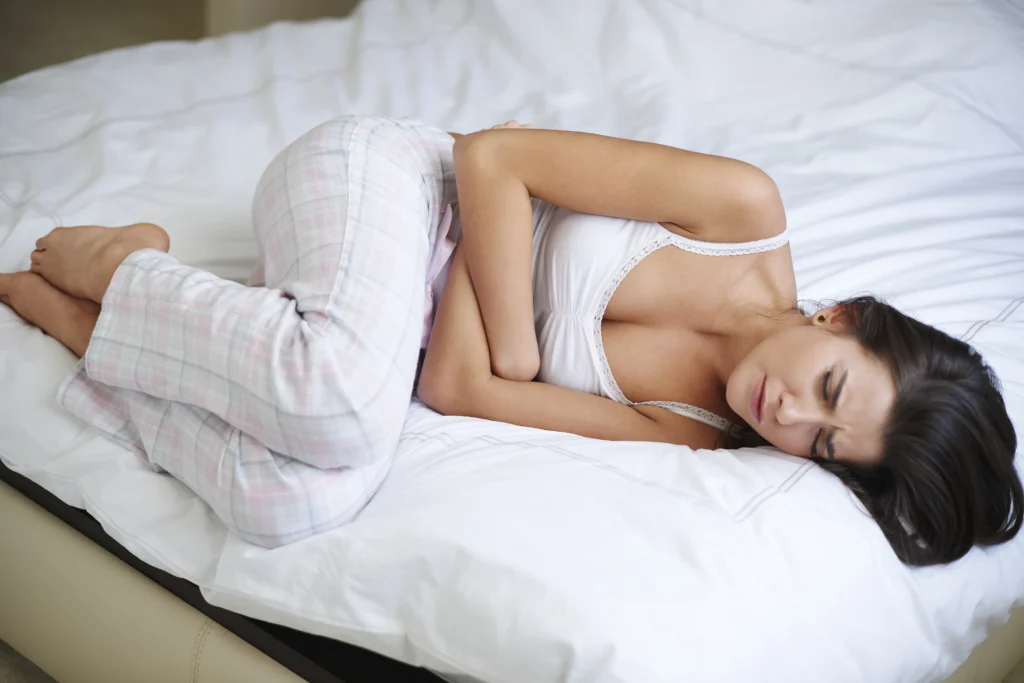
In most women, yes.
Mild to moderate lower back pain that:
- Begins around the start of menstruation
- Lasts one to three days
- Improves with movement or heat
- Does not interfere significantly with daily life
is generally considered a normal symptom of primary dysmenorrhea.
However, pain should not be dismissed if it:
- Becomes more severe each month.
- Persists after your period ends.
- Requires frequent absence from work or school.
- Prevents normal exercise or daily activities.
- Occurs alongside heavy bleeding, infertility, fever, or painful intercourse.
These features suggest that further medical assessment may be needed.
Normal vs Abnormal Lower Back Pain During Periods
| Feature | Usually Normal | Needs Medical Evaluation |
|---|---|---|
| Timing | During menstruation | Before, during, or after periods |
| Duration | 1-3 days | More than 3-5 days or persistent |
| Severity | Mild to moderate | Severe or progressively worsening |
| Response to heat or pain relief | Usually improves | Little or no improvement |
| Daily activities | Mild inconvenience | Prevents work, school, or exercise |
| Heavy bleeding | Occasionally | Frequent or excessive |
| Pain during intercourse | No | Yes |
| Fever or abnormal discharge | No | Yes |
| Fertility problems | No | May be present |
10 Warning Signs Your Lower Back Pain During Periods Shouldn’t Be Ignored
Although mild lower back pain during menstruation is common, certain symptoms may indicate an underlying medical condition rather than normal menstrual cramps.
Recognizing these warning signs can help you seek timely medical care and prevent delays in diagnosis.
1. Your Back Pain Gets Worse Every Month
Normal menstrual back pain usually follows a predictable pattern from one cycle to the next.
If your pain has become progressively more severe over several months or years, it could indicate a condition such as endometriosis or adenomyosis.
Progressively worsening pain should never be dismissed as “just part of getting older.”
2. Pain Starts Before Your Period
Typical menstrual back pain begins around the onset of menstruation.
If your lower back starts hurting several days before your period and continues even after your bleeding ends, an underlying pelvic disorder should be considered.
3. Pain Persists After Your Period Ends
Pain that continues for several days after menstruation or occurs throughout the month is not typical of primary dysmenorrhea.
Persistent lower back pain may be associated with:
- Endometriosis
- Adenomyosis
- Chronic pelvic pain syndrome
- Pelvic floor dysfunction
4. Pain Is So Severe That You Miss Work or School
Menstrual discomfort should not prevent you from carrying out normal daily activities.
If you regularly:
- Call in sick
- Stay in bed
- Avoid social events
- Miss exercise sessions
because of severe lower back pain, it’s important to seek medical advice.
5. Pain During Sexual Intercourse
Pain during or after intercourse (dyspareunia) combined with menstrual back pain is one of the classic symptoms of endometriosis.
This type of pain should always be evaluated by a healthcare professional.
6. Heavy Menstrual Bleeding
Lower back pain accompanied by:
- Passing large blood clots
- Bleeding lasting longer than seven days
- Soaking sanitary products every hour
may suggest adenomyosis, fibroids, or other gynecological conditions.
7. Painful Urination or Bowel Movements During Your Period
Pain while passing urine or having bowel movements during menstruation is not considered a normal symptom.
This may indicate:
- Deep infiltrating endometriosis
- Pelvic inflammatory disease
- Bladder involvement
- Bowel endometriosis
Evidence: Updated international guidelines emphasize that symptoms involving the bowel, bladder, or deep pelvic structures should raise suspicion for endometriosis and warrant appropriate clinical evaluation (European Society of Human Reproduction and Embryology).
8. Fever or Abnormal Vaginal Discharge
Back pain accompanied by:
- Fever
- Chills
- Foul-smelling vaginal discharge
- Severe pelvic tenderness
may indicate an infection such as pelvic inflammatory disease (PID).
Unlike normal menstrual cramps, PID requires prompt medical treatment to reduce the risk of long-term complications.
9. Difficulty Becoming Pregnant
If you’ve been trying to conceive for several months or years while also experiencing severe menstrual back pain, endometriosis or adenomyosis may be contributing factors.
Fertility concerns should always be discussed with a gynecologist.
10. Pain Doesn’t Improve With Self-Care
Most women with primary dysmenorrhea experience at least some improvement with:
- Heat therapy
- Stretching
- Gentle exercise
- NSAIDs
- Adequate rest
If your pain remains severe despite these measures, further evaluation is recommended.
Medical Conditions That Can Cause Severe Lower Back Pain During Periods
Although primary dysmenorrhea is the most common cause, several medical conditions can produce significant lower back pain during menstruation.
Endometriosis
Endometriosis occurs when tissue similar to the uterine lining grows outside the uterus.
It can cause:
- Chronic pelvic pain
- Severe lower back pain
- Painful intercourse
- Pain during bowel movements
- Infertility
- Fatigue
Pain may occur before, during, and after menstruation.
Adenomyosis
In adenomyosis, endometrial-like tissue grows into the muscular wall of the uterus.
Women commonly experience:
- Heavy menstrual bleeding
- Severe cramping
- Pelvic pressure
- Persistent lower back pain
- Enlarged uterus
Symptoms often become more noticeable in women in their 30s and 40s, although younger women may also be affected.
Uterine Fibroids
Fibroids are benign growths that develop within the uterus.
Large fibroids may cause:
- Heavy periods
- Pelvic pressure
- Lower back pain
- Frequent urination
- Constipation
- Pain during menstruation
Pain often results from pressure on nearby muscles, ligaments, and nerves.
Pelvic Inflammatory Disease (PID)
PID is an infection of the female reproductive organs, usually caused by untreated sexually transmitted infections.
Symptoms may include:
- Pelvic pain
- Lower back pain
- Fever
- Painful intercourse
- Abnormal vaginal discharge
- Pain during urination
Unlike normal menstrual pain, PID requires urgent medical assessment and antibiotic treatment.
Pelvic Floor Dysfunction
Persistent menstrual pain can lead to increased tension in the pelvic floor muscles.
Over time, these muscles may become overactive, contributing to:
- Lower back pain
- Hip pain
- Tailbone pain
- Pain during sitting
- Pain during intercourse
A women’s health physiotherapist can assess pelvic floor muscle function and develop an individualized rehabilitation program.
Who Is at Higher Risk?
Certain factors may increase the likelihood of developing severe menstrual back pain or an underlying gynecological condition.
Risk factors include:
- Family history of endometriosis
- Heavy menstrual bleeding
- Early onset of menstruation
- Short menstrual cycles
- Never having been pregnant
- Previous pelvic infections
- Uterine fibroids
- Adenomyosis
- Chronic pelvic pain
- Pelvic surgery
Having one or more of these factors does not necessarily mean you will develop a medical condition, but it may increase your overall risk.
When Should You See a Doctor?
Arrange an appointment with a healthcare professional if you experience:
- Severe lower back pain every menstrual cycle.
- Pain lasting beyond your period.
- Heavy bleeding with severe cramps.
- Pain during sexual intercourse.
- Painful bowel movements or urination.
- Fever or abnormal vaginal discharge.
- Difficulty becoming pregnant.
- Pain that worsens month after month.
- Back pain that limits your ability to work, study, or exercise.
- Little or no relief from over-the-counter pain medication.
Early diagnosis allows more effective treatment and may help prevent long-term complications associated with conditions such as endometriosis or pelvic inflammatory disease.
Evidence: Clinical guidance recommends evaluating women with progressively worsening menstrual pain, persistent pelvic symptoms, infertility, or symptoms suggestive of secondary dysmenorrhea to identify underlying gynecological conditions and initiate appropriate management (American College of Obstetricians and Gynecologists)
Myth vs Fact
Myth
Fact
Lower back pain during periods is always normal.
Mild pain can be normal, but severe, persistent, or worsening pain requires medical evaluation.
Back pain only comes from the spine.
During menstruation, pain can be referred from the uterus and pelvic organs through shared nerve pathways.
Bed rest is the best treatment.
Gentle movement, stretching, walking, and physiotherapy often provide better long-term relief than prolonged bed rest.
Painkillers are the only solution.
A combination of medical treatment, physiotherapy, exercise, and lifestyle changes often provides the best results.
How Is Lower Back Pain During Periods Diagnosed?
If your lower back pain is severe, persistent, or accompanied by symptoms such as:
heavy menstrual bleeding, painful intercourse, fever, infertility, or pain between periods, your healthcare provider will investigate whether an underlying condition is contributing to your symptoms.
The diagnostic process usually begins with a detailed medical history and physical examination, followed by additional tests if necessary.
1. Medical History
Your healthcare provider may ask questions about:
- When your back pain started.
- Whether the pain occurs only during menstruation or throughout the month.
- Pain severity and duration.
- Menstrual cycle length and bleeding patterns.
- Pain during intercourse.
- Painful bowel movements or urination.
- Previous pelvic infections.
- Pregnancy history.
- Family history of endometriosis or fibroids.
Keeping a menstrual symptom diary for two to three months can help identify patterns and assist with diagnosis.
2. Physical Examination
A physical examination may include:
- Assessment of the abdomen and lower back.
- Pelvic examination (when appropriate).
- Evaluation of spinal movement.
- Assessment of hip mobility.
- Screening for muscle tenderness and trigger points.
- Pelvic floor muscle assessment by a trained women’s health physiotherapist if indicated.
The examination helps determine whether the pain is primarily gynecological, musculoskeletal, or a combination of both.
3. Imaging Tests
Depending on your symptoms, your doctor may recommend:
- Pelvic ultrasound
- Transvaginal ultrasound
- MRI for suspected adenomyosis or deep endometriosis
Imaging can identify conditions such as fibroids, ovarian cysts, adenomyosis, or deep infiltrating endometriosis, although some forms of endometriosis may not be visible on routine scans.
4. Laboratory Tests
Blood tests are not used to diagnose menstrual back pain directly, but they may help evaluate:
- Anemia caused by heavy menstrual bleeding.
- Signs of infection.
- Inflammatory markers when clinically indicated.
- Pregnancy, when appropriate.
5. Laparoscopy
If endometriosis is strongly suspected and symptoms persist despite treatment, laparoscopy may be considered in selected cases.
This minimally invasive procedure allows direct visualization of endometrial-like tissue and, if necessary, tissue biopsy to confirm the diagnosis.
Evidence: Current clinical recommendations support combining symptom assessment, pelvic examination, and imaging to evaluate secondary dysmenorrhea, while reserving laparoscopy for selected patients when diagnosis remains uncertain or treatment has not been successful (Burnett et al. 2025).
Best Treatments for Lower Back Pain During Periods
Treatment depends on the underlying cause, symptom severity, and your individual health needs.
1. Heat Therapy
Applying a heating pad or hot water bottle to the lower back helps relax muscles, improve blood circulation, and reduce pain.
Heat therapy is often one of the simplest and most effective non-drug treatments for menstrual back pain.
2. Regular Exercise
Gentle physical activity can:
- Improve circulation.
- Reduce muscle stiffness.
- Increase endorphin release.
- Improve flexibility.
- Reduce stress.
Walking, swimming, stretching, yoga, and Pilates are commonly recommended.
3. Medications
Depending on the cause of your pain, your healthcare provider may recommend:
- Nonsteroidal anti-inflammatory drugs (NSAIDs)
- Hormonal contraceptives
- Progestin therapy
- Other hormonal treatments for endometriosis or adenomyosis
Always take medications as directed by your healthcare provider.
4. Lifestyle Changes
Simple lifestyle modifications may reduce menstrual back pain over time.
Examples include:
- Maintaining regular physical activity.
- Prioritizing good sleep.
- Managing stress.
- Eating a balanced, anti-inflammatory diet.
- Staying hydrated.
- Avoiding smoking.
5. Treating the Underlying Condition
If your back pain is caused by conditions such as:
- Endometriosis
- Adenomyosis
- Fibroids
- Pelvic inflammatory disease
treatment should focus on managing the underlying disorder rather than only relieving symptoms.
Can Physiotherapy Help?
Absolutely.
From a women’s health physiotherapy perspective, lower back pain during periods is often influenced by more than uterine contractions alone.
Muscle tension, joint stiffness, altered posture, movement avoidance, and pelvic floor dysfunction can all contribute to pain.
A physiotherapist may recommend:
Manual Therapy
Hands-on techniques may help reduce muscle tightness and improve mobility in the lumbar spine, hips, and pelvis.
Pelvic Floor Rehabilitation
Women with chronic menstrual pain often develop increased pelvic floor muscle tension.
Treatment may include:
- Pelvic floor muscle relaxation.
- Breathing exercises.
- Biofeedback (where available).
- Relaxation techniques.
Therapeutic Exercise
Individualized exercise programs may include:
- Core stability exercises.
- Hip strengthening.
- Gentle stretching.
- Mobility exercises.
- Functional movement training.
Postural Education
Improving sitting, standing, lifting, and sleeping posture can reduce strain on the lower back and pelvis during menstruation.
Pain Education
Understanding how menstrual pain, muscle guarding, and the nervous system interact can reduce fear of movement and improve confidence in staying active.
Physiotherapy works best as part of a multidisciplinary treatment plan alongside appropriate medical care.
Prevention Tips
Although menstrual pain cannot always be prevented, these strategies may reduce the severity of lower back discomfort:
- Exercise regularly throughout the month.
- Strengthen your core and hip muscles.
- Stretch your lower back and hips routinely.
- Maintain a healthy body weight.
- Use good posture while sitting and working.
- Stay hydrated.
- Get adequate sleep.
- Manage stress through relaxation techniques.
- Avoid smoking.
- Seek medical advice if symptoms worsen over time.
Consistency is more important than intensity.
Small, sustainable lifestyle habits often provide greater long-term benefits than occasional intensive exercise.
Lesser-Known Facts About Period-Related Lower Back Pain
Many women are surprised to learn that lower back pain during menstruation is influenced by multiple body systems, not just the uterus.
Here are some lesser-known facts:
- The uterus and lower back share nerve pathways, which is why uterine cramps can be felt in the lumbar region even when the spine itself is healthy.
- Women with chronic menstrual pain may develop increased sensitivity in the nervous system, making pain feel more intense over time.
- Pelvic floor muscle tension can contribute significantly to lower back pain during menstruation and may persist even after the menstrual cycle ends.
- Regular exercise performed throughout the month is generally more effective for long-term symptom management than exercising only during menstruation.
- Poor sleep and chronic stress can increase pain sensitivity, making menstrual back pain feel worse.
- Persistent lower back pain during periods is not always a spinal problem; in many cases, the source is a gynecological condition requiring appropriate medical evaluation.
Expert Tips from a Women’s Health Physiotherapist
- Stay as active as your symptoms comfortably allow, as prolonged bed rest may increase muscle stiffness.
- Apply heat to the lower back for temporary pain relief.
- Practice diaphragmatic breathing to reduce muscle tension.
- Strengthen your core, hips, and gluteal muscles between menstrual cycles.
- Avoid sitting in one position for long periods.
- Track your symptoms each month using a menstrual diary or mobile app.
- Seek professional assessment if pain progressively worsens or begins affecting your daily activities.
- Remember that severe menstrual back pain is treatable, and you do not have to simply “live with it.”
Conclusion
Lower back pain during periods is a common symptom that often results from uterine contractions, hormonal changes, and referred pain through shared pelvic nerves.
For many women, the discomfort is mild, temporary, and improves with simple self-care measures such as heat therapy, gentle exercise, and adequate rest.
However, severe, persistent, or progressively worsening back pain should never be ignored.
Symptoms accompanied by heavy bleeding, painful intercourse, bowel or bladder problems, fever, or infertility may indicate conditions such as:
endometriosis, adenomyosis, fibroids, or pelvic inflammatory disease.
A comprehensive evaluation by a healthcare professional can identify the underlying cause and guide appropriate treatment.
When combined with medical management, women’s health physiotherapy can help reduce pain, improve movement, restore function, and enhance overall quality of life.
Evidence: Systematic reviews support exercise and physical activity as effective non-pharmacological interventions for reducing menstrual pain and improving physical function in women with primary dysmenorrhea (Matthewman et al. 2018)
Final Thoughts
Lower back pain during periods is common, but it should never be ignored when it becomes severe, persistent, or begins affecting your quality of life. Understanding the difference between normal menstrual discomfort and symptoms of an underlying condition can help you seek timely care. With appropriate medical treatment, physiotherapy, regular exercise, and healthy lifestyle habits, many women can successfully manage menstrual back pain and return to their daily activities with greater comfort and confidence.
Frequently Asked Questions
Is lower back pain during periods normal?
Mild lower back pain lasting one to three days during menstruation is common. Severe or persistent pain should be medically evaluated.
Why does my lower back hurt more than my stomach during my period?
The uterus and lower back share nerve pathways, allowing menstrual cramps to be felt primarily in the lower back through referred pain.
Can endometriosis cause lower back pain?
Yes. Endometriosis commonly causes chronic pelvic pain and lower back pain, especially before, during, and after menstruation.
Can physiotherapy help period-related back pain?
Yes. Women’s health physiotherapy can reduce muscle tension, improve posture, strengthen supporting muscles, and help manage chronic pelvic and lower back pain.
When should I see a doctor?
Consult a healthcare professional if your pain is severe, progressively worsening, associated with heavy bleeding, fever, infertility, painful intercourse, or continues beyond your menstrual period.
Stay tuned with us for more health related topics.
Follow us on LinkedIn and Instagram for more.
More Read


Medical Disclaimer!
This article has been reviewed and written under the guidance of our Head Physiotherapist, Dr. Kruti Raj (PT, MUHS,CPT,CMPT). The information shared is intended for educational purposes only and should not be considered a substitute for personalized medical advice, diagnosis, or treatment.
Please consult us or any other qualified healthcare professional before beginning any exercise program, especially if you are experiencing pain, recovering from injury, or managing a medical condition.


